

Creating Tension with Terrain: How Geography Drives Conflict in Fantasy Worlds
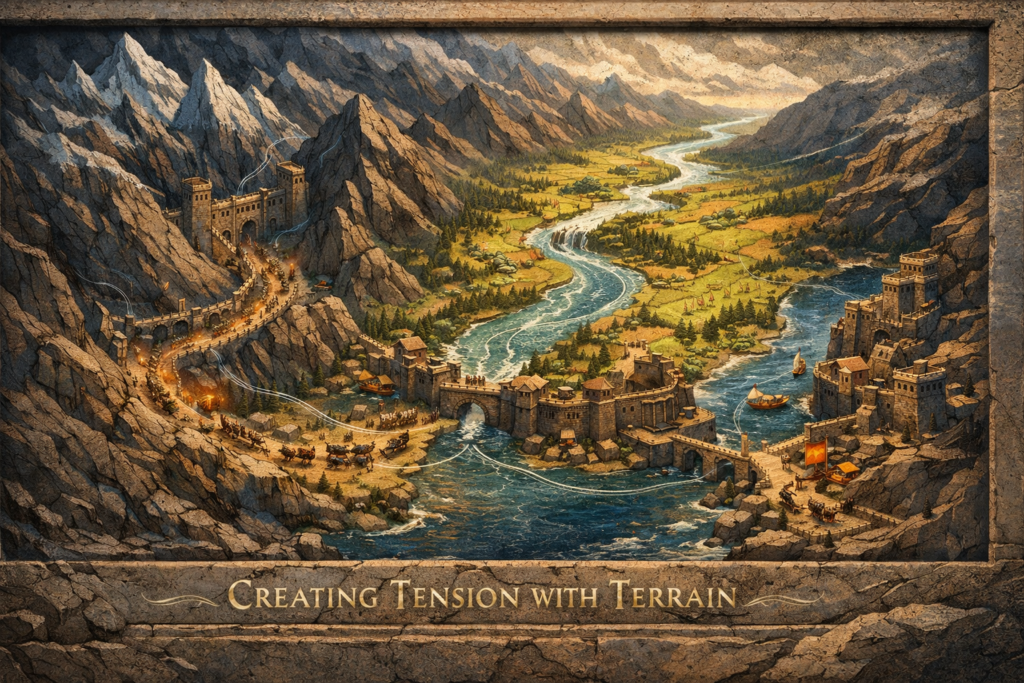
Fantasy conflict is commonly defined in terms of character, politics, or systems of magic, but one of the most perennial sources of conflict is found beneath them all. Geography defines the boundaries of power, speed of war, and the sustainability of cultures. Mountains postpone armies, rivers separate allegiance, deserts make ambition starve, and coastlines beckon invasion. Terrain is not a backdrop. It is an active power that pushes conflict ahead.
This article discusses the tension created by physical landscapes in fantasy worlds and how geography can be utilized by authors to produce realistic and satisfying conflict without the need to always have action or exposition.
Table of Contents
Why Geography Creates Natural Conflict
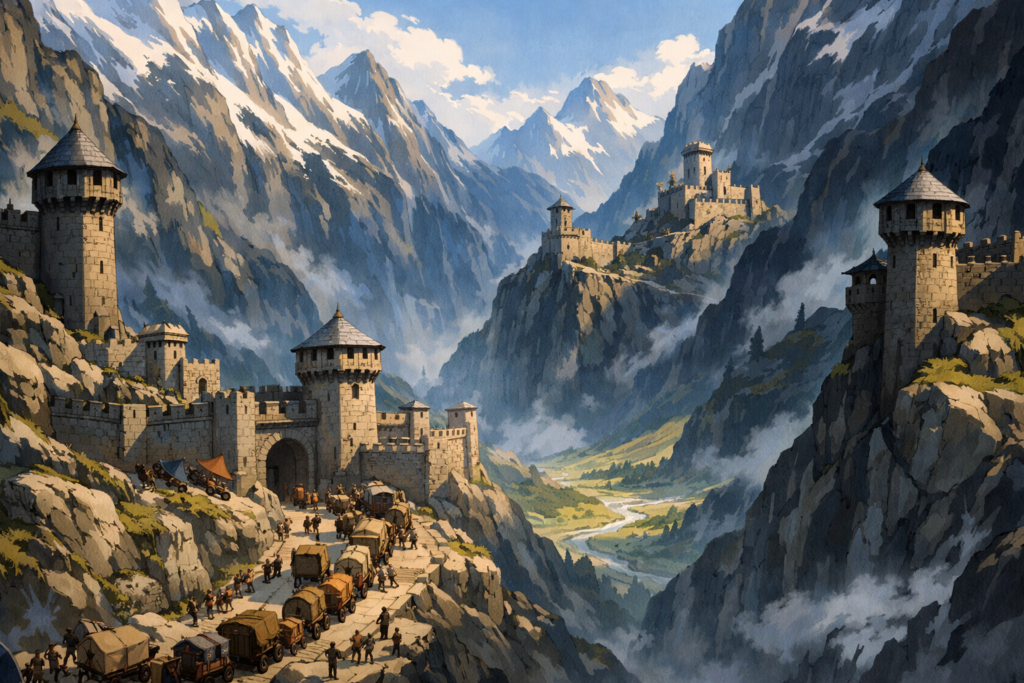
In any world, access is dictated by physical space. Who regulates water governs existence. Who controls the trade is the commander of the mountain passes. Those living on the other side of the natural boundaries are safe at a price.
These pressures are instinctively known to fantasy readers since they are real historical reflections. Conflicts over fertile valleys, trade routes, and defensible terrain seem to cross cultures and centuries. Whenever this logic is reflected in a fantasy world, its conflicts do not seem arbitrary.
Geography imposes restrictions. Restraints are like wearing a thorn. Friction becomes story.
Try Summon Worlds for free.


Mountains as Barriers and Power Filters

Mountain ranges maximize movement, disintegrate cultures, and provide unequal access. One blow can spell out the progress or stalemate of armies. Isolated areas have different identities, dialects, and loyalties in the long run.
With a mountain-based conflict, the stress usually revolves around the possession of small areas. Fortresses, watchtowers, and pass points are exposed as strategic points of pressure. The collapse of the defense may reveal whole areas. An effective counteroffensive can change the state of affairs in a single fight.
Psychology is also a product of mountains. Those cultures that grow up in isolation embrace self-reliance. People who live along mountain borders tend to become suspicious of strangers. Political decisions are made by these traits even before the weapons are drawn.
Rivers as Lines of Division and Connection
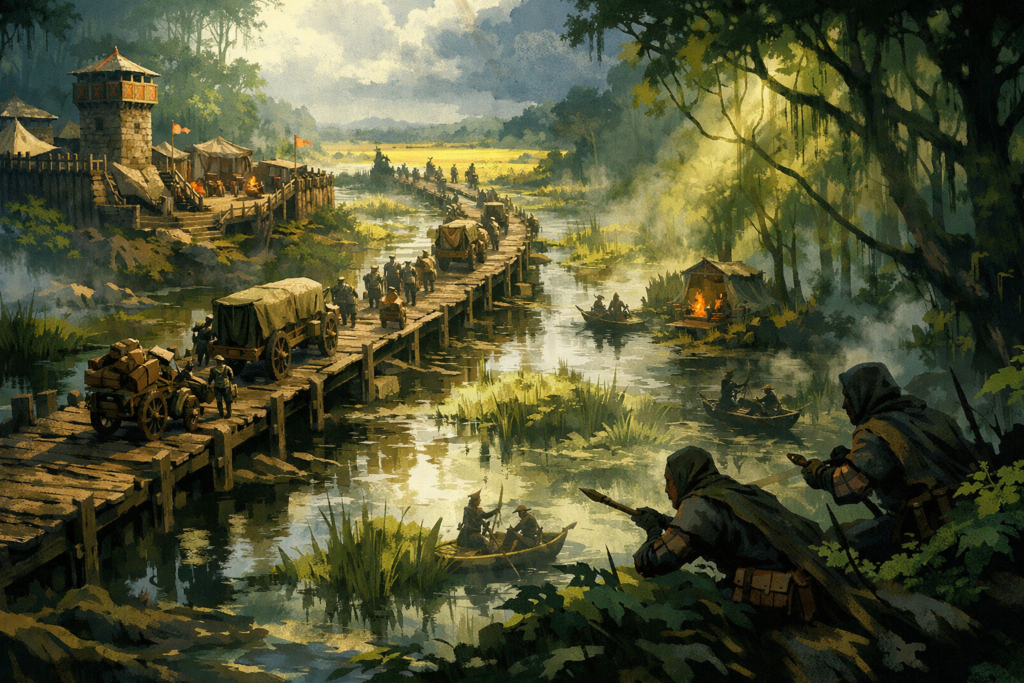
Rivers not only separate land but also bring together faraway places. They facilitate commerce, farming, and transport, but they establish landscapes of nature that become even more concrete political identities.
River wars may be characterized by opposing interests. One state can depend on the river to irrigate its production, and another one can dominate the origin. Population displacement and strained alliances can be caused by seasonal flooding. Bridges are unifying or sabotaged.
The rivers are unpredictable since they change with time. Water boundaries seldom remain in place. This insecurity leads to tension in the long run, even during times of peace.
Deserts and Scarcity-Driven Conflict
The lack of something makes each choice more dramatic. In dry areas, domination of oases, wells, and trade routes is what survival thrives on. Travel becomes dangerous. Supply lines stretch thin. Minor benefits have tremendous weight.
Conflict in the desert tends to be based on survival and not on victory. Nomadic societies embrace the art of movement, whereas established authorities have problems holding armature power. The reason why invasions are unsuccessful is not due to the strength of the enemy but due to the consumption of resources at a higher rate than they can be supplied.
This kind of tension is noiseless. Long before the fighting takes place, hunger, thirst, and distance destroy morale.
Forests and the Threat of the Unknown
Immense forests print out the sight, stifle the creation, and those who are familiar with the earth. They protect ambush, retaliation movements, and concealed settlements.
Forest wars are usually based on asymmetry. Large armies lose advantage. Smaller groups are hit and disappear. Power falls and fades away far beyond swept roads and barricaded cities.
Even forests have a symbolic value. They are areas that are out of control, where the law dies out, and there are more ancient forces about. This doubt breeds fear and gossip, building up the tension without talking face-to-face.
Coastlines and Constant Exposure
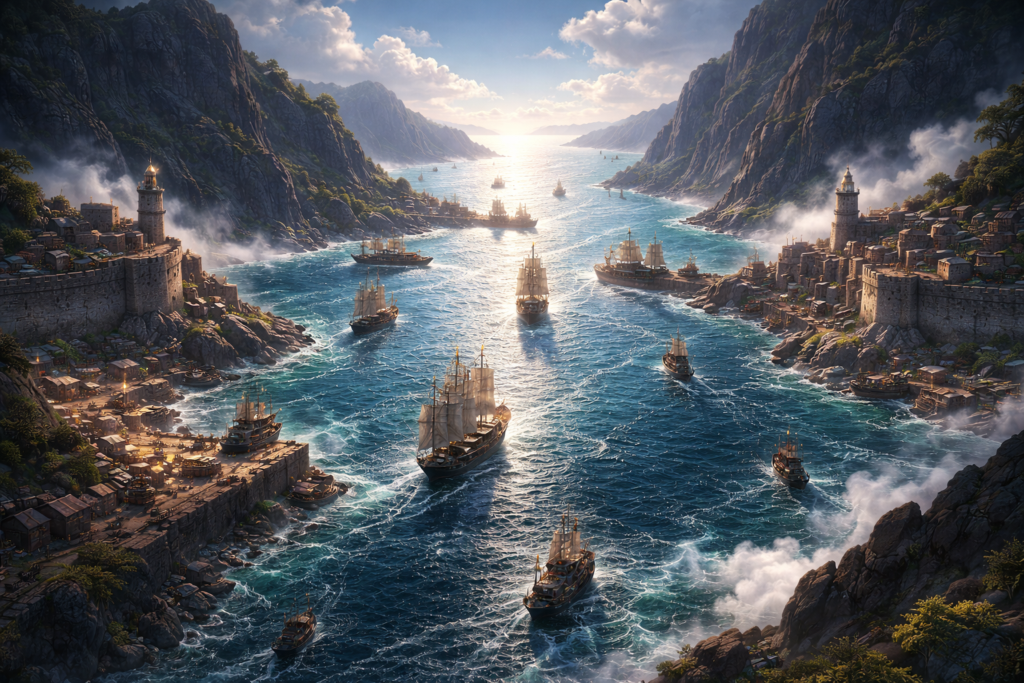
There are opportunities and threats that exist along the coastal regions. The free movement of trade exists, but there is always a threat of an invasion. Ports are equal sources of wealth and war.
Politics is transformed by the naval power. Kingdoms that have powerful fleets exert their influence much further. Individuals who lack access to the sea are reliant on trade with others.
The unpredictabilities are the storms, tides, and seasonal winds. A stalled fleet or missing convoy may destroy alliances or start a war. Even as the diplomacy attempts to decelerate the coastal conflict, geography puts it into motion.
Terrain Shaping Culture and Motivation
Geography is not just a way of tactics. It shapes the worldview. Cultures of the mountain treasure defense. The river cultures appreciate exchange. The desert cultures appreciate endurance. Adaptability is appreciated in forest cultures.
Such characteristics affect the reaction of groups to pressure. A self-defensive society is opposed to change. A society that is trade-oriented sacrifices to maintain flow. In situations where geographically opposite cultures clash, conflict is aggravated by a lack of understanding.
Authors who make cultural behavior correspond with the landscape generate tension that is perceived as natural instead of imposed.
Strategic Geography and Political Stakes
Where there are constrained choices due to geography, political choices become meaningful. A despot might be desirous of peace and be unable to relinquish a boundary gate. An alliance might appear prudent until geographical conditions render co-operation impossible.
Geography forces choice. To have one place naked is to have the other place naked. The protection of fertile soil exposes high ground. These tradeoffs create narrative tension whose effect is not necessitating villains and unexpected twists.
To authors who have to work with dense political environments, it can be convenient to store terrain alongside groups, boundaries, and resources in a systematic worldbuilding tool such as Summon Worlds, where geography exists in the plot of a narrative and not as a map on its own.
Using Terrain to Control Pacing
Terrain is a determinant of the speed at which a conflict is fought. Great distances retard growth. Thin islets increase the speed of the face-off. Time and decision-making are squeezed at natural chokepoints.
A mountain valley siege is not a naval standoff. A pursuit over open country is urgent. An expedition through the forest creates a week-long tension.
Another way that writers manipulate pacing is by using terrain without the need to change the plot.
Conflict Without Constant Violence
Part of the most powerful tension is achieved when violence has not taken place and is only potential. This pressure is maintained by geography.
A river can be the boundary of generations, but with each flood, there is the danger of war. A succession crisis in one of the mountain passes is controlled by treaties. The existence of a route of deserts that is a monopoly of one group makes it resentful even before the time of rebellion.
These slow-burning fights enhance the realism of the world and provide weight to the future events through emotions.
Geography Across Time
Landscapes change. Rivers shift. Forests retreat. Seas rise. Such rearrangements interfere with the balance of power and rekindle ancient antagonisms.
A once defensible city can be exposed. A lost pass can open up trade. Climatic changes drive migration, which generates tension between the outsiders and the natives.
Geography should be left to evolve so that conflict can be dynamic and not stagnant.
Conclusion
Terrain is one of the most reliable engines of tension in fantasy worlds. It limits ambition, shapes culture, and forces conflict to emerge naturally rather than through coincidence.
Writers who treat geography as an active force gain access to layered tension that supports character, politics, and history simultaneously.
Creators who want to align geography with long-term narrative structure often benefit from reviewing a detailed storyworld page of Summon Worlds, where terrain, borders, and cultural tension intersect within a single setting. Explore more!
Those interested in maintaining consistency between landscape-driven conflict and broader world logic may also find value in reading a related blog article focused on sustaining coherence across large fantasy settings. Read more!
When terrain drives conflict, the world itself becomes part of the story, pressing against every decision made upon it.
Start building your World!
Disclaimer: Summon Worlds and the content on summonworlds.com are not affiliated with, endorsed by, or sponsored by Wizards of the Coast LLC. Dungeons & Dragons, D&D, and related terms are registered trademarks of Wizards of the Coast. Any references to D&D game mechanics, settings, or terminology are made for educational, commentary, and fan content purposes only. This blog does not reproduce or distribute official D&D content. All original ideas, characters, and creative content in this post are the intellectual property of OpenForge LLC, the parent company of Summon Worlds.