
From Script to Setting: Worldbuilding for Fantasy Screenwriters
Screenwriting fantasy originates with character and conflict, but what makes people stay believing on screen is the environment that surrounds them. The world may be too thin, too uneven, or too visually disjointed, and a well-written script will be ineffective. Screenwriting, as opposed to prose writing, requires worldbuilding to operate within stringent time, budget, pacing, and visual clarity requirements. Each place should have a story, each rule should be on the screen, and each option of the choice must have its reasons.
This article discusses how fantasy screenplay writers can create worlds that are easily script to setting translation, narrative, production, and long-term story development.
Table of Contents
Worldbuilding Under Screenwriting Constraints
Screenwriters lack the freedom of inner monologue or overexposition. Action, dialogue, environment, and implication are the aspects of worldbuilding that must be externalized. The setting will last as long as the camera can legitimize it.
This limitation is a stimulus to efficiency. Each detail in the world has to serve several purposes. A place must display culture, power relations, as well as conflict. A prop ought to convey history, status, or belief without clarification.
Even the best screen worlds are not full of details but discerning in meaning.
Try Summon Worlds for free.


Starting with Function, Not Lore

In fantasy worlds, a lot of precedent is usually created through a long history, but screenwritings require the reverse. Begin with what the world has to do with the story.
Inquire about the stresses that the environment puts on the characters. Ask about the hindrance of movement by geography. Ask what cultural rules cause tension and not texture.
The lore that is not shown on screen cannot be narrated. In the case when a rule has no impact on action or choice, it should not be part of the script.
This does not imply that there is no depth. It refers to the fact that depth is suggested by implication as opposed to description.
Designing Locations That Carry Story
Any place setting in a screenplay ought to respond to a dramatic need. A city is an expression of a power system. A borderland is indicative of instability. A ruin is a representation of lost or lost power.
Places ought to change as the story does. A location presented as secure can turn into dangerous due to the change in alliances. A battlefield can then be seen to be empty, which presents expenditure without communication.
The use of screen settings is most effective when they alter their meaning with time.
Visual Rules and Internal Logic
When it comes to fantasy screen worlds, there must be rules that can be recognized by audiences in a short period. The magic systems, the level of technology, and social classes should be the same.
Graphical continuity is important in addition to narrative continuity. Identity and allegiance can be indicated in costumes, architecture, and color palettes. Immersion is interrupted when these cues change without any explanation.
Consistency is not repetition. It means clarity. Even when the boundaries of the world are crossed, the viewers need to know them.
Worldbuilding Through Action
Action discloses the structure of the world more quickly than explication. Who is the keeper of a gate tells who the controller is. Who eats first displays order. Power is expressed through who speaks freely.
The screenwriters are encouraged to seek the places where the characters are exposed to the surrounding. Fighting the ground, or getting acclimatized to the climate, or coping with new manners of doing things, is a natural expression of world logic.
The world is real in the sense that characters have to react to it.
Cultural Detail Without Exposition
Culture is manifested not in words, but in deeds. Rituals that one only peeps through a window are more real than ceremonies that are completely described. Social norms can be seen through the accent, greetings, and gestures.
There should be no dialogue that leads to an explanation of the world to the audience. Rather, allow characters to share knowledge. Meaning is made by the viewers based on the context. Subtlety builds trust.
Time, History, and Visual Memory
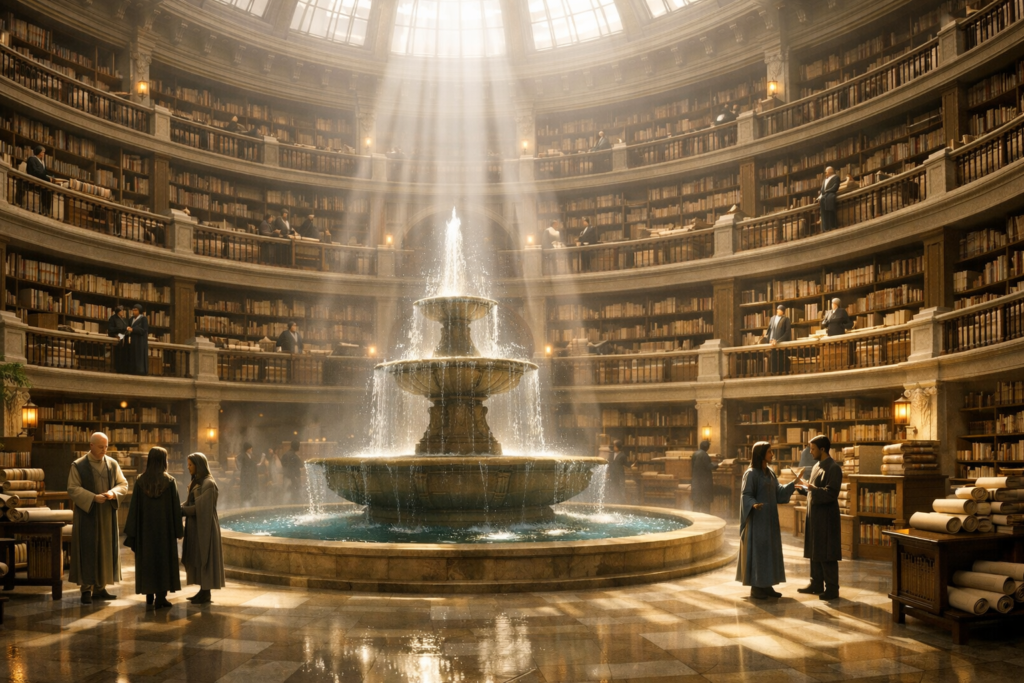
Screen worlds are advantageous in visible history. Scars, ruins, and piled-up architecture imply conflict in the past, but no flashbacks.
Even in an unseen way, time should be present. Change of season, fading of costumes, and changing places suggest time.
This continuity facilitates long-form narratives, particularly in episodic formats.
Adapting World Scale to Production Reality
Fantasy screenwriting is within pragmatic boundaries. The world should be large enough so as to be expansive and contained enough so as to be producible.
The screenwriters devising malleable locations are reusable and transformable. One set can be used to depict several areas in terms of lighting, framing, and story context.
Production reality worldbuilding enhances the chances of adaptation.
Collaboration and Shared World Logic
Screenwriters do not normally work alone as novelists do. The world is interpreted not only by the directors but also by the designers or even producers.
The fragmentation is avoided by clear world rules. Departmental alignment of vision is achieved through shared reference documents.
The ability to arrange world elements, timelines, and location logic using structured platforms, such as Summon Worlds, has helped many screenwriters keep the narrative systems in the story intact instead of being dispersed across drafts and notes. Collaboration is enhanced by consistency.
Worldbuilding Across Episodes and Films
In long running fantasy series, the world must support expansion without contradiction. In a fantasy series that lasts long, the world must be able to promote expansion without contradiction. New destinations are to be more of an extension than an invention.
Decisions of the world are reverberating. There is a border drawn in one episode that defines the conflict season in later episodes. A cultural taboo presented in a casual way can form a plot.
Screenwriters are not supposed to think in a lengthy scope but in layers.
Audience Orientation and Trust
The lack of consistency is easily noticed by fantasy audiences. Trust is lost when there is a change of rules to suit. With erratic settings, tension is reduced.
Orientation matters. Within seconds of being in a scene, the viewers must know where they are, why it is important, and what is at stake. Transparency favors emotional capital.
The World as Narrative Pressure
A good fantasy setting is not one that essentially has conflict. It creates it. Terrain blocks escape. Culture restricts choice. History limits forgiveness.
When the environment works against the desire of the character, the story comes as it is.
This strategy eliminates the use of artificial barriers and abrupt turns.
Conclusion
Fantasy screenwriters do not need to do worldbuilding in terms of volume or spectacle. It is of purpose, articulateness, and outcome. An effective screen world is a visual, structural, and emotional reinforcement of the story, which does not need a lot of exposition.
Screenwriters interested in exploring the interaction between setting, culture, and narrative within a richer environment, explore more!
The individuals who might be interested in being consistent throughout scripts, episodes, or adaptations can also take help from our blog on How Writers Built Entire Universes and What Tools They Use.
A world that transitions well between script and setting is more than merely that. It actually gets included in the flow of the story, the meaning that is felt even after the scene is over.
Start building your World!
Disclaimer: Summon Worlds and the content on summonworlds.com are not affiliated with, endorsed by, or sponsored by Wizards of the Coast LLC. Dungeons & Dragons, D&D, and related terms are registered trademarks of Wizards of the Coast. Any references to D&D game mechanics, settings, or terminology are made for educational, commentary, and fan content purposes only. This blog does not reproduce or distribute official D&D content. All original ideas, characters, and creative content in this post are the intellectual property of OpenForge LLC, the parent company of Summon Worlds.