WorldsThe 100 - The Ark'S Legacy
The 100 - The Ark'S Legacy
Locations
Browse the public locations that belong to this world. Select a card to read more.
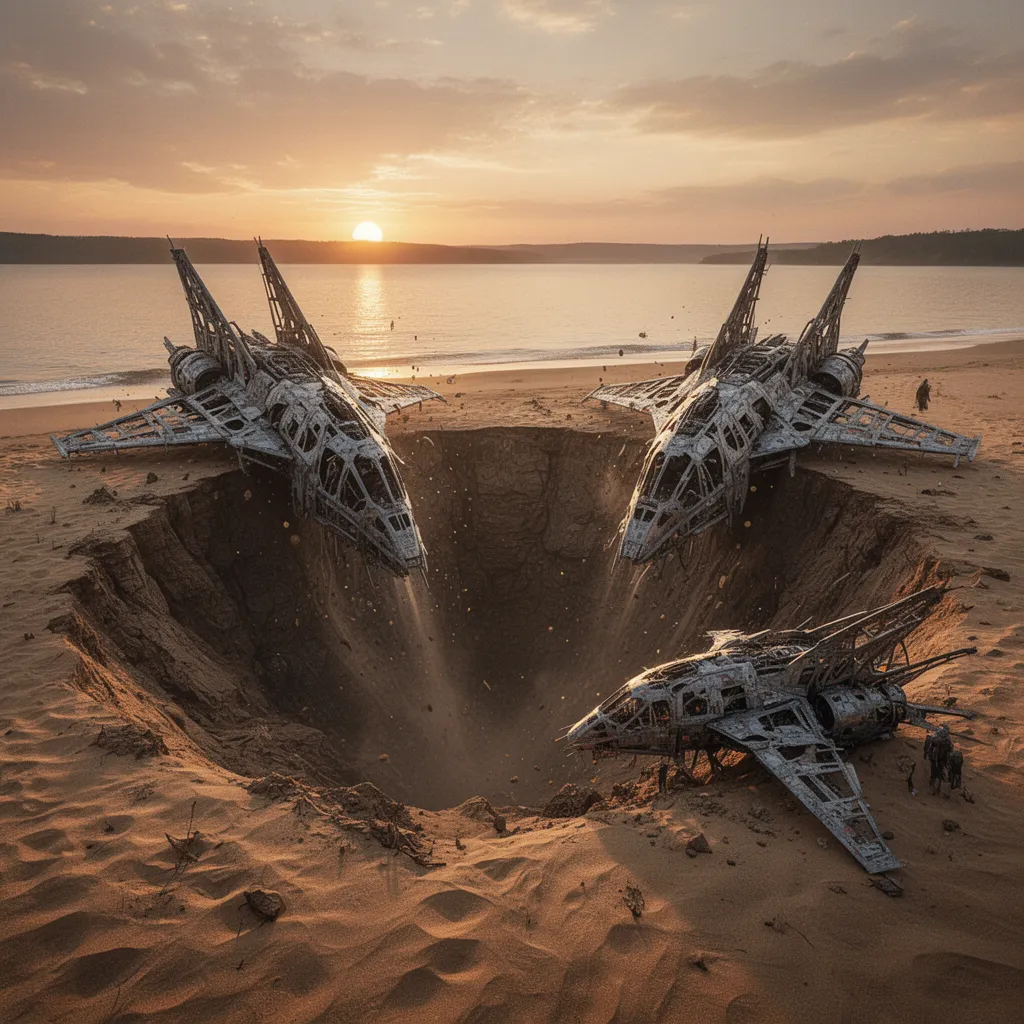
The Landing Beach
The Landing Beach stretches across miles of pristine golden sand along the western shore of Lake Meridian, forever marked by the catastrophic arrival of the colonial vessel *Pathfinder* three decades ago. The massive impact crater still dominates the landscape, its scarred earth a stark reminder of that fateful day when the first settlers descended from the skies, leaving behind a wound in the earth that has slowly begun to heal with encroaching vegetation and shifting sands. The skeletal remains of the drop ship still rest near the crater's edge, now serving as a monument and gathering place for the settlement's most important ceremonies and historical commemorations. Scattered across the beach are fragments of hull plating and machinery, some partially buried in sand, others polished smooth by years of wind and water, creating an unintended archaeological record of humanity's desperate journey to this world. The local Meridian tribes, who inhabited these shores long before the arrival, have woven the beach's dramatic history into their oral traditions, viewing the landing site as a place where two worlds collided and, against odds, found coexistence. Traders and travelers from across the realm now frequent The Landing Beach, drawn by its historical significance and the thriving port settlement that has flourished around it, making it a crossroads of commerce and culture. At dusk, the beach transforms into something transcendent, bathed in warm amber light that casts long shadows across the crater and illuminates the drop ship's metallic hull in shades of gold and copper. The vast lake stretches endlessly toward the horizon, its mirror-like surface reflecting the sunset and creating an atmosphere of profound possibility, where the struggles of the past give way to the promise of futures yet unwritten.
View details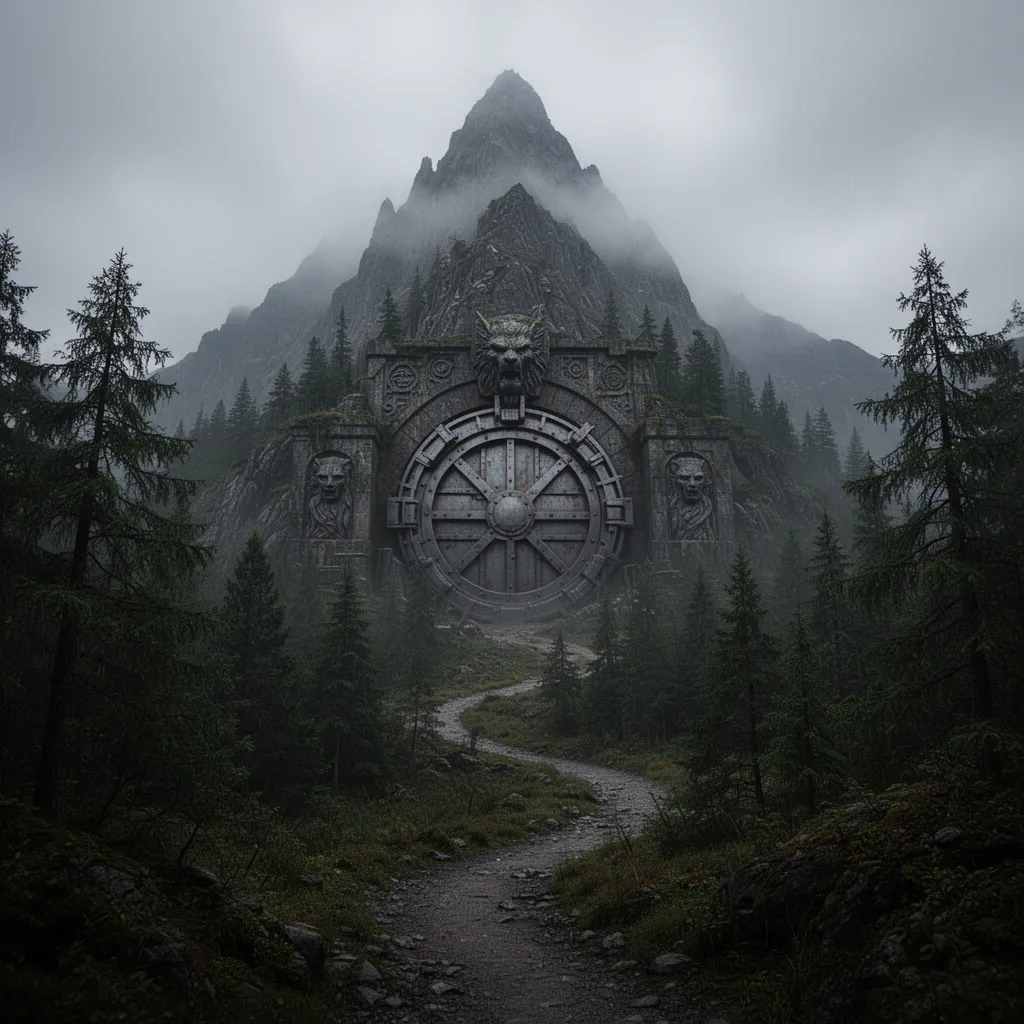
Mount Weather
Rising dramatically from the heart of an ancient wilderness, Mount Weather stands as one of the most formidable natural fortifications in the known world. The towering peak, shrouded perpetually in mist and low-hanging clouds, has long served as a refuge for those seeking protection from the chaos of the realm below. Carved deep into the mountain's stone heart lies a vast subterranean complex, its entrance marked by an enormous blast door of reinforced steel that has withstood centuries of weathering and conflict. The colossal door, embedded directly into the rock face, bears the scars of countless failed sieges and speaks to the immense resources once devoted to its construction. A narrow, winding road cuts through the surrounding dense forest, serving as the sole approach to this mysterious stronghold, its path worn smooth by generations of careful passage. The thick woodland that envelops Mount Weather has grown wild and untamed over the ages, creating a natural barrier that both conceals and protects the installation from prying eyes. Legends speak of the underground chambers within as repositories of forbidden knowledge and ancient power, though few who have entered its depths have ever returned to share what lies within. The perpetual overcast that hangs above the mountain adds to its ominous reputation, casting long shadows across the landscape and lending credence to whispered warnings of danger lurking beneath. Mount Weather represents an age when great civilizations possessed the capability to reshape mountains themselves, a testament to ambitions both noble and sinister.
View details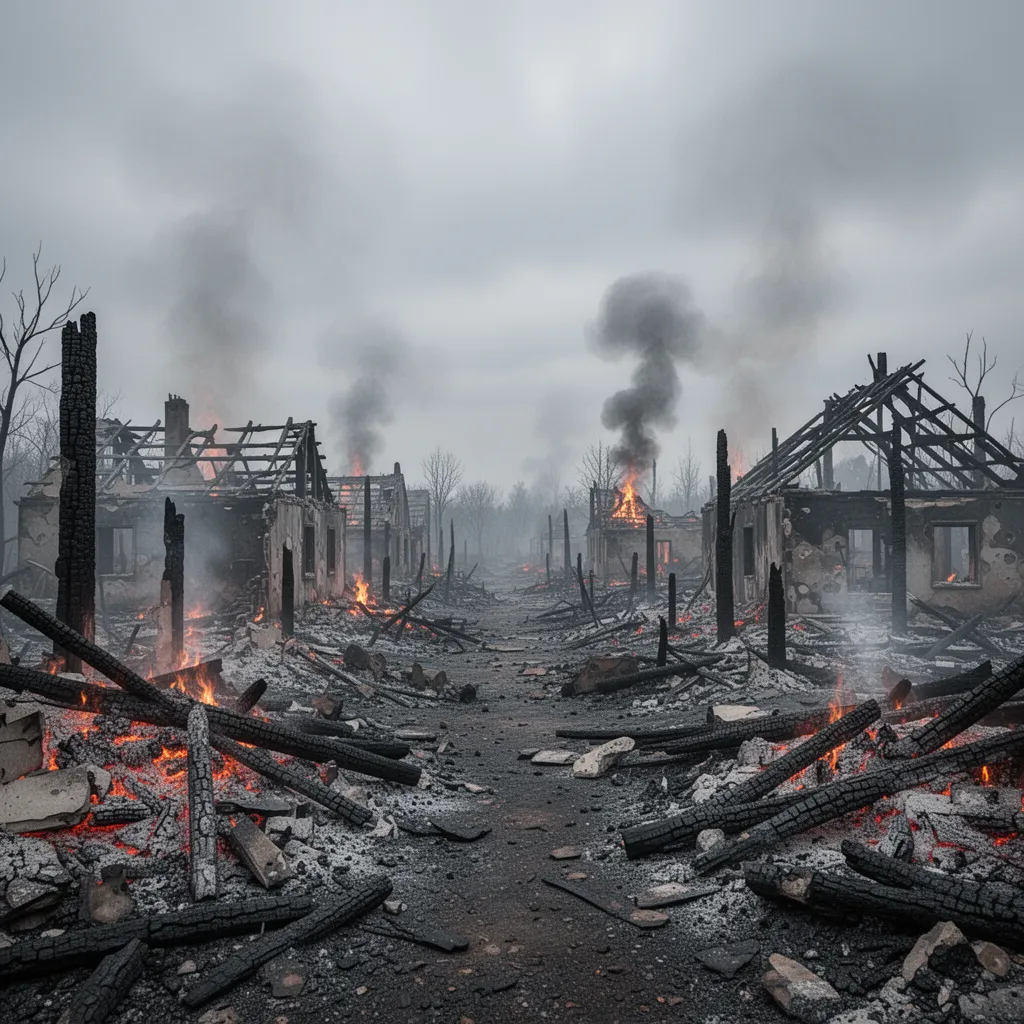
The Burned Village
The Burned Village stands as a haunting testament to devastation and loss, its skeletal remains scattered across a once-thriving settlement. Charred wooden structures jut from the blackened earth like broken bones, their frames still smoldering with embers that refuse to fully extinguish. The ground itself bears the scars of the catastrophe, covered in a thick blanket of gray ash mixed with darker soot that crunches underfoot. Scattered throughout are remnants of daily life—fragments of pottery, tools, and personal belongings—now reduced to worthless debris among the ruins. Thin plumes of smoke continue to rise from various points across the village, suggesting fires that still burn beneath the surface, consuming what little remains. The overcast sky hangs heavy and oppressive above, its gray pallor reflecting the tragedy below and casting everything in perpetual shadow. This desolate location stands as a grim memorial to the Grounder community that once flourished here, their culture and history consumed in a single catastrophic event. The eerie silence broken only by the occasional crack of burning wood creates an atmosphere of profound loss and despair. Nature has begun its slow reclamation, with ash-dusted vegetation struggling to survive in the contaminated soil surrounding the village perimeter.
View details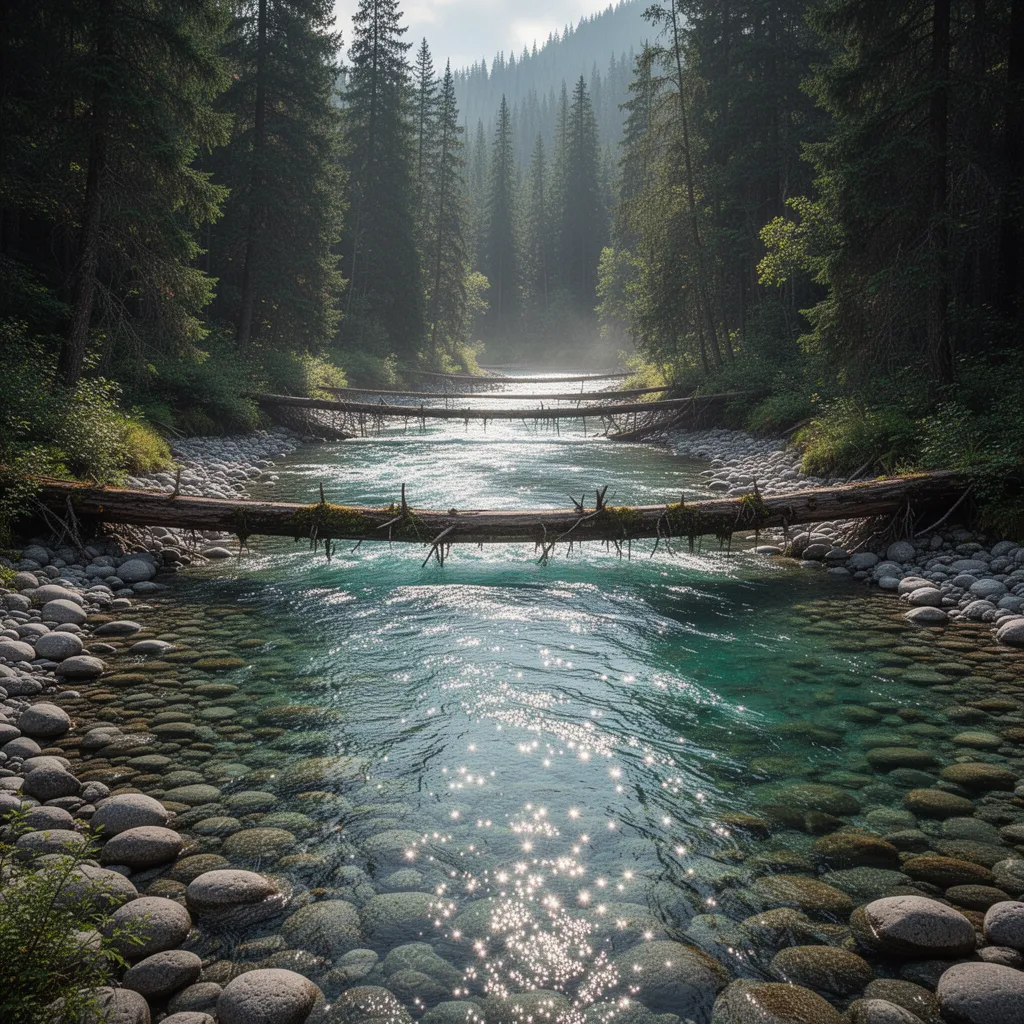
The River
The River stands as one of the most vital geographical features of the known world, a powerful watercourse that has shaped civilizations and trade routes for millennia. Its distinctive turquoise waters flow with remarkable velocity, fed by pristine mountain springs and underground aquifers that maintain both its clarity and striking coloration year-round. The riverbanks are lined with countless smooth stones, worn to perfection over centuries by the relentless current, creating natural pathways for travelers and merchants who navigate its crossing points. Throughout its course, massive fallen logs span the waters like ancient bridges, some reinforced and maintained by local settlements as crucial infrastructure for passage between divided territories. Dense forest vegetation flourishes on both sides of the watercourse, creating a lush corridor of life that supports diverse ecosystems and provides resources to the communities dwelling nearby. Sunlight dances perpetually across the surface, creating a mesmerizing display of reflections that mirror the surrounding canopy and create an almost dreamlike quality to the landscape. The atmosphere here carries a peculiar duality—while the natural beauty inspires peaceful contemplation, an undercurrent of watchfulness pervades the area, as if the forest itself remains eternally vigilant. The River winds through vast stretches of untamed wilderness, its landscape untouched by extensive civilization, making it both a place of wonder and a reminder of nature's raw power.
View details
The Woods
The Woods represent one of the most ancient and primordial forests known to civilization, with towering pine sentinels that have stood for millennia, their massive trunks weathered by countless seasons. The forest floor remains perpetually shrouded in a mystical haze that clings to the earth, creating an otherworldly atmosphere that has spawned numerous legends among local inhabitants throughout recorded history. Thick underbrush and dense vegetation form an almost impenetrable barrier on either side of the narrow, well-worn trail that cuts through the woodland, its path worn smooth by generations of travelers seeking passage through this formidable terrain. Massive moss-covered boulders dot the landscape, ancient remnants of geological upheaval that now serve as landmarks for those navigating the forest's labyrinthine passages. The canopy overhead is so densely woven that sunlight struggles to reach the forest floor, though when it does break through, it creates dramatic golden shafts that pierce the shadows like celestial spears, illuminating particles of mist in breathtaking displays. The Woods have long been regarded as a boundary between the civilized world and the untamed wilderness, earning a reputation as both a source of valuable resources and a place of genuine danger. Travelers report an unsettling quiet within its depths, broken only by the distant calls of unseen creatures and the soft crunch of earth beneath their feet. The forest's combination of beauty and menace has made it a place of mystery, attracting adventurers, scholars, and those fleeing civilization in equal measure.
View details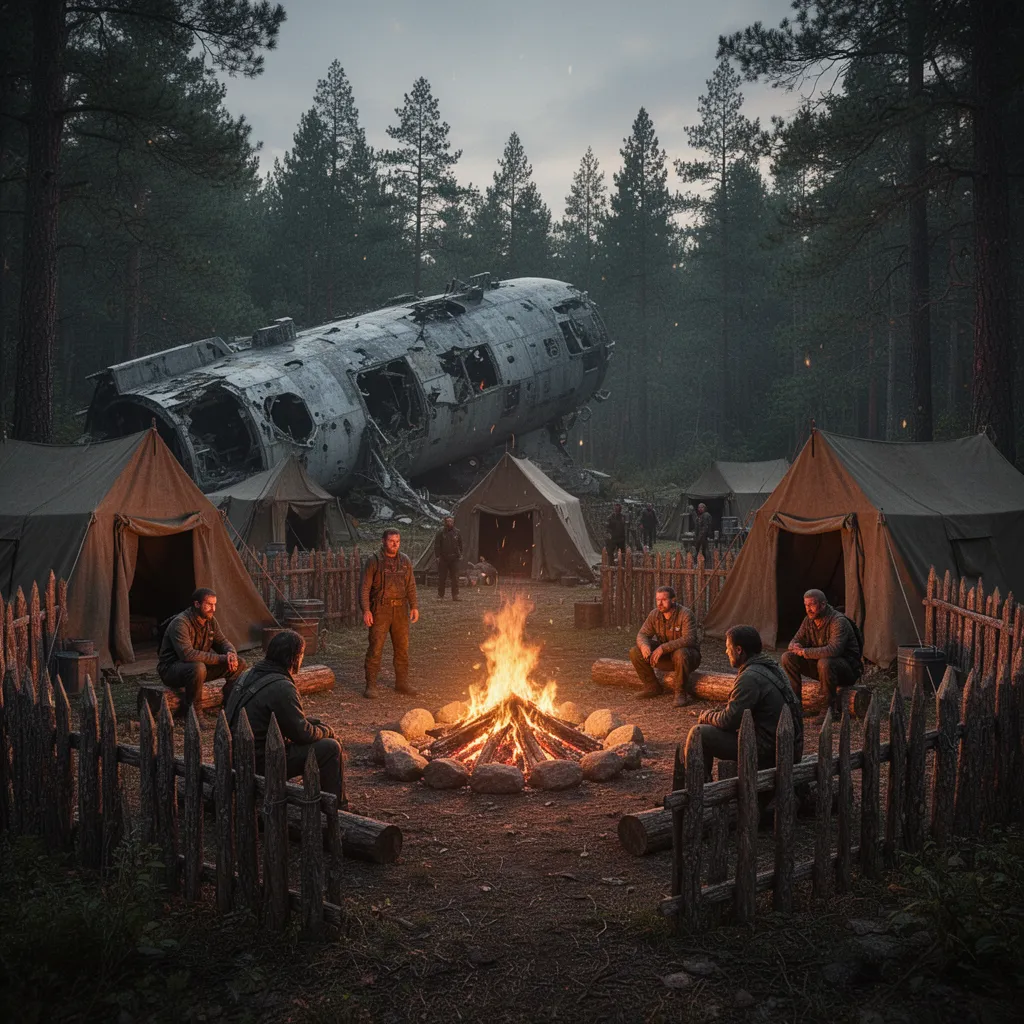
The 100s' Camp
The 100s' Camp stands as a testament to human resilience in the heart of an untamed wilderness, built around the skeletal remains of a massive metallic vessel that crash-landed generations ago in a sprawling forest clearing. Survivors have ingeniously repurposed the ship's hull as both shelter and symbol, constructing a network of canvas tents and weathered tarps that cling to the wreckage like moss on ancient stone. Defensive wooden palisades and elevated watchtowers encircle the settlement, their rough-hewn logs standing sentinel against both the unknown dangers of the surrounding forest and the threats posed by rival factions. A roaring central campfire serves as the heart of the community, its thick plume of smoke rising into the evening sky as residents gather for warmth, sustenance, and the comfort of companionship. The clearing itself bears the scars of habitation—muddy paths wind between supply caches, scattered equipment, and makeshift workshops where the community maintains their precarious foothold on survival. Dense forest walls the camp on all sides, creating a natural fortress that simultaneously shelters and isolates the inhabitants from the wider world. As darkness descends, the warm amber glow of firelight dances across weathered faces and cast-iron cookware, while long shadows stretch across the camp, lending an air of both hope and underlying tension to this fragile outpost of civilization.
View details
The Drop Ship
The Drop Ship stands as a stark monument to catastrophe within a verdant forest clearing, its massive spherical hull blackened by the intense heat of atmospheric reentry and scarred by the violent impact of its crash landing. The vessel's exterior bears the unmistakable marks of its harrowing descent—deep gouges, melted sections of metal, and charred plating that contrast dramatically against the surrounding emerald wilderness. A mechanical ramp extends downward from the pod's lower section, its hydraulics still struggling to function as wisps of smoke continue to curl from damaged vents and fractured seams in the hull. Flickering red warning lights pulse weakly across the vessel's surface, their urgent glow a reminder that critical systems remain unstable despite the craft's final resting place. The clearing itself has become a convergence of two worlds: the technological remnants of advanced civilization lay surrounded by towering ancient trees whose canopy filters golden sunlight down onto the wreckage below. Lush vegetation encroaches upon the crash site, nature already beginning its slow reclamation of the intrusive metal structure. The contrast between the destroyed machinery and the vibrant forest creates a haunting tableau—a testament to the violent arrival of something otherworldly in this isolated pocket of pristine woodland. Local wildlife has grown cautious of the strange presence, though some brave creatures have begun investigating the mysterious structure that has altered their forest forever.
View details
The Ark
The Ark stands as humanity's last refuge, a sprawling orbital station comprising twelve distinct national modules that remain tethered together in a delicate dance around Earth. Each module represents a different nation's contribution to this desperate sanctuary, though the original political boundaries have long since blurred into mere administrative divisions. The station's labyrinthine corridors stretch for kilometers, their narrow metal passages lined with exposed conduits and reinforced plating that groans under the constant stress of maintaining structural integrity. Fluorescent panels flicker intermittently throughout the complex, casting harsh white light that leaves deep shadows in every corner and contributes to the pervasive sense of unease among the population. The heart of The Ark contains state-of-the-art medical facilities where scientists work tirelessly to treat radiation exposure and the countless ailments born from prolonged microgravity exposure, while the command center dominates the central hub with its array of holographic displays tracking every system's degrading performance. Vast agricultural chambers sustain the station's inhabitants through genetically modified algae farms, a pale green reminder that survival depends entirely on these engineered ecosystems. The Grand Council Chamber, where representatives from all twelve modules convene, has witnessed countless heated debates over dwindling resources and impossible choices about who receives priority access to life support. The constant mechanical hum of failing life support systems serves as an omnipresent reminder that The Ark itself is dying, each day bringing humanity closer to its final reckoning among the stars.
View details