WorldsThe Curse of the Black Pearl
The Curse of the Black Pearl
Locations
Browse the public locations that belong to this world. Select a card to read more.
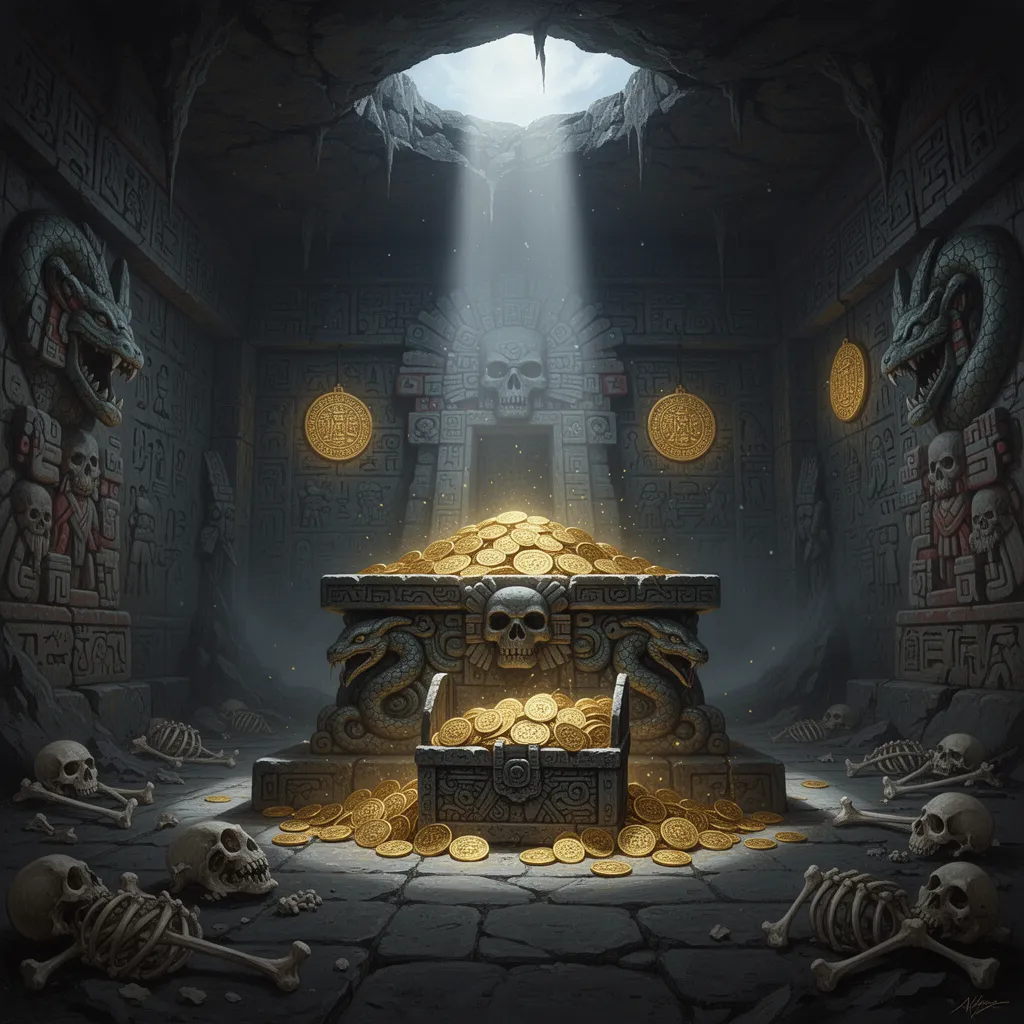
The Aztec Gold Chamber
Deep beneath the windswept cliffs of Isla de Muerta lies The Aztec Gold Chamber, a monumental sepulcher carved from living rock thousands of years ago as a sacred vault for the empire's most precious treasures. The chamber's walls are inscribed with thousands of intricate glyphs documenting the fateful encounter between Spanish conquistadors and the Aztec priesthood, along with depictions of divine retribution and eternal punishment that scholars believe were meant as warnings to grave robbers. At the chamber's heart stands an imposing stone altar, its surface dominated by carved serpent motifs and stylized skulls that seem to writhe in the dancing light, serving as the spiritual centerpiece of this cursed sanctuary. A single stone coffer overflows with precisely 882 gold medallions, each bearing the image of an Aztec deity, their surfaces radiating with an otherworldly luminescence that defies natural explanation. The floor is scattered with the remains of countless previous expeditions—bleached bones, corroded armor, and shattered artifacts that serve as grim reminders of the treasure's lethal guardianship. A solitary shaft of pale moonlight penetrates through a narrow fissure far above, creating an ethereal silver column that bathes the altar in supernatural radiance and casts writhing shadows across every surface. The air itself feels oppressive and frigid, as though the chamber exists in perpetual winter, while the constant whisper of shifting gold and the rhythmic echo of water droplets create an unsettling symphony of desolation. Centuries of accumulated curse hang heavy in this place, a palpable malevolence that seems to coil around any living creature that dares to disturb the temple's ancient peace.
View details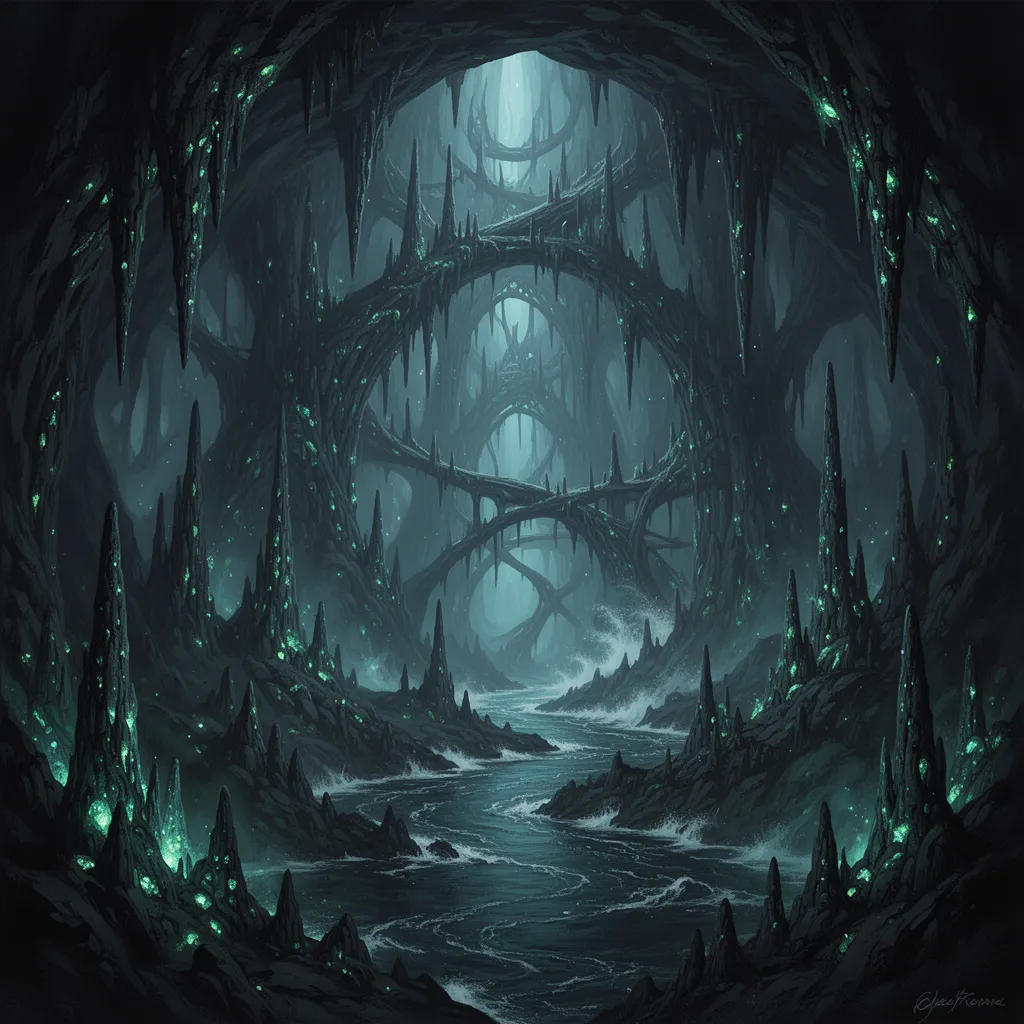
The Caves Of Isla De Muerta
The Caves of Isla de Muerta form one of the world's most treacherous and mysterious underground systems, a geological marvel carved over millennia by relentless tidal forces and underground waterways. Vast cathedral-like chambers dominate the cavern network, their ceilings adorned with countless stalactites that hang like stone daggers, while massive stalagmites rise from the floor like the fossilized remains of some forgotten civilization. Ancient subterranean rivers of obsidian-dark water flow through the lowest passages, their currents carrying echoes of the island's maritime history and occasionally revealing the weathered bones of ships that ventured too close to the island's treacherous shores. The labyrinthine passages twist without warning, creating a maze where even experienced explorers have become hopelessly lost, their fates sealed by the suffocating darkness and disorienting silence. An ethereal blue-green luminescence emanates from phosphorescent minerals embedded within the stone, casting an otherworldly glow that provides minimal visibility and fills visitors with an unsettling sense of dread. The air itself feels ancient and oppressive, thick with dampness and cold that penetrates to the bone, while the constant percussion of water droplets echoes through the chambers like a heartbeat counting down to something unknown. Local legends speak of entities that dwell in these depths—ancient guardians or cursed spirits said to watch the shadows with malevolent hunger, preying upon those foolish enough to venture into the darkness unprepared.
View details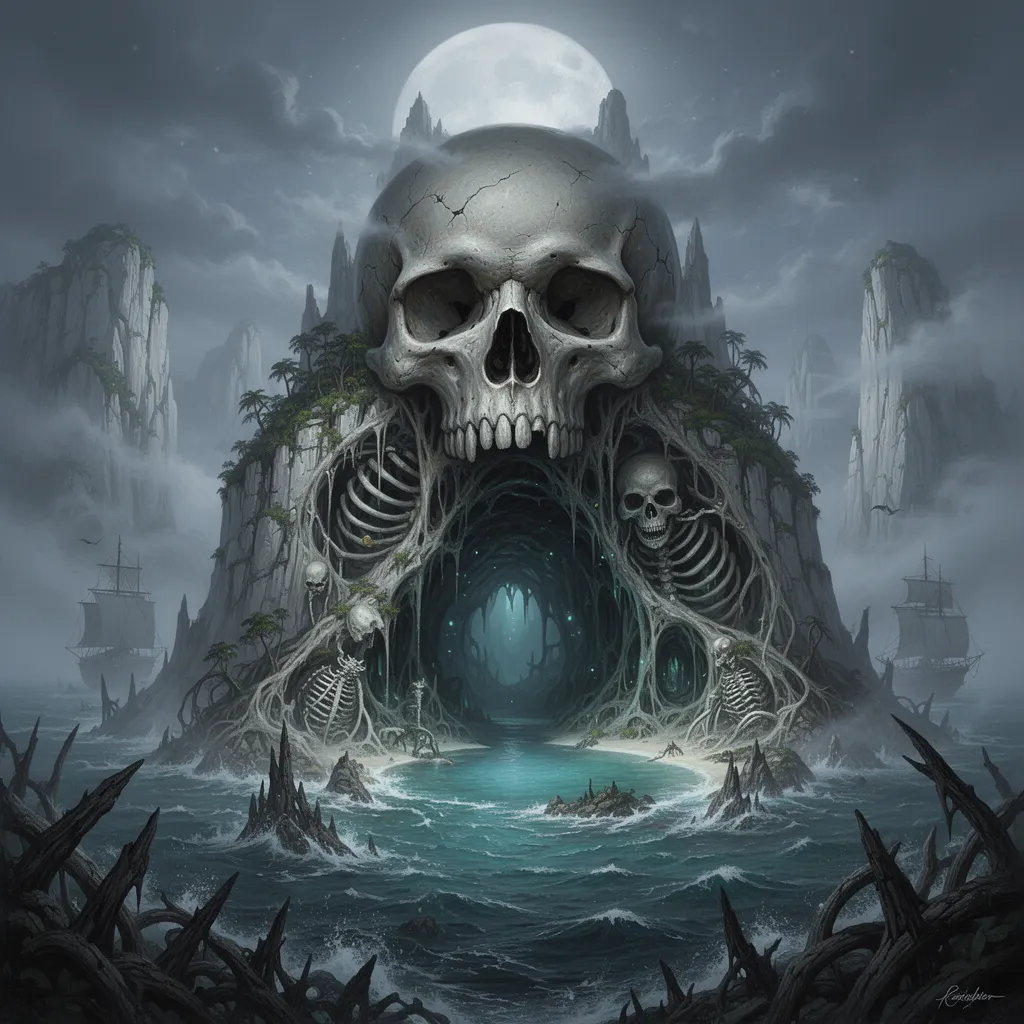
Isla De Muerta
Rising from the Caribbean depths like the weathered cranium of some colossal leviathan, Isla De Muerta has long been the subject of maritime legend and dread. The island's distinctive silhouette—with its prominent stone formations resembling eye sockets and a cavernous opening at its base that gapes like a skeletal mouth—has claimed countless vessels upon the razor-sharp reefs that encircle its shores like jagged teeth. Perpetual mists cling to its sheer limestone cliffs, which have been sculpted by millennia of relentless wave action into tortured, otherworldly shapes. Beneath the surface lies a hidden lagoon, accessible only to those brave or foolish enough to navigate the submerged passages that wind through the island's depths, their treacherous currents having drowned many who sought its secrets. The interior of Isla De Muerta is a labyrinth of ancient caves and tunnels, their walls bearing the scars of time and water, echoing endlessly with the drip of mineral-laden droplets that have accumulated over countless centuries. When moonlight breaks through the perpetual cloud cover, it casts an eerie pallor across the bone-white rock, creating phantasmal shadows that seem to writhe and shift with malevolent intent. The very air surrounding the island carries an inexplicable chill, thick with an oppressive atmosphere that speaks of ancient sorcery and curses that have festered since time immemorial. Local folklore speaks of a dark pact sealed in blood, a curse that awaits only the correct sacrifice to finally release its grip on this forsaken realm.
View details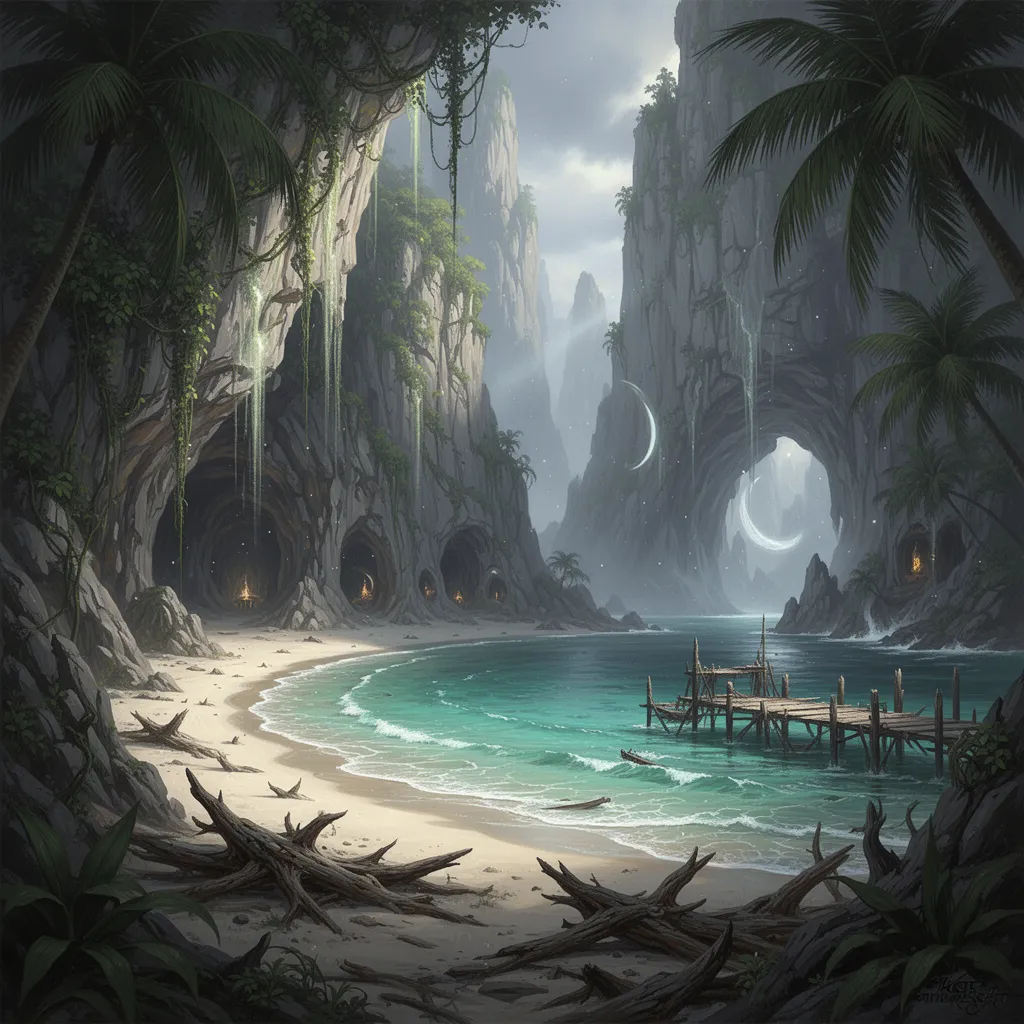
Smugglers' Cove
Nestled along a treacherous stretch of jagged coastline, Smugglers' Cove has served as a haven for maritime traders operating beyond the law for nearly three centuries. The bay's distinctive crescent shape provides natural protection from both naval patrols and the fierce storms that batter the outer shores, making it an ideal sanctuary for vessels seeking to avoid detection. Towering limestone cliffs rise dramatically from the water's edge, their sheer faces weathered by salt spray and adorned with cascading vines that effectively conceal the cove from passing ships. The narrow strip of pale sand below is perpetually scattered with driftwood and debris—remnants of both legitimate shipwrecks and hastily abandoned cargo runs. Countless caves and hollowed passages honeycomb the cliff walls, having been expanded and fortified over generations to serve as secure storage for contraband ranging from rare spices to stolen artifacts. A single dilapidated wooden pier, barely distinguishable from the surrounding rocks when viewed from open water, provides the only formal landing point for the small, nimble vessels that frequent these waters. The cove's shallow turquoise waters allow for swift beachings and quick escapes, while the perpetual dampness and cool air—combined with dappled sunlight filtering through dense palm fronds overhead—create an atmosphere thick with mystery and danger. Local legend speaks of countless fortunes hidden within the cove's depths and a complex network of smugglers' codes passed down through generations of those who profit from its secrecy.
View details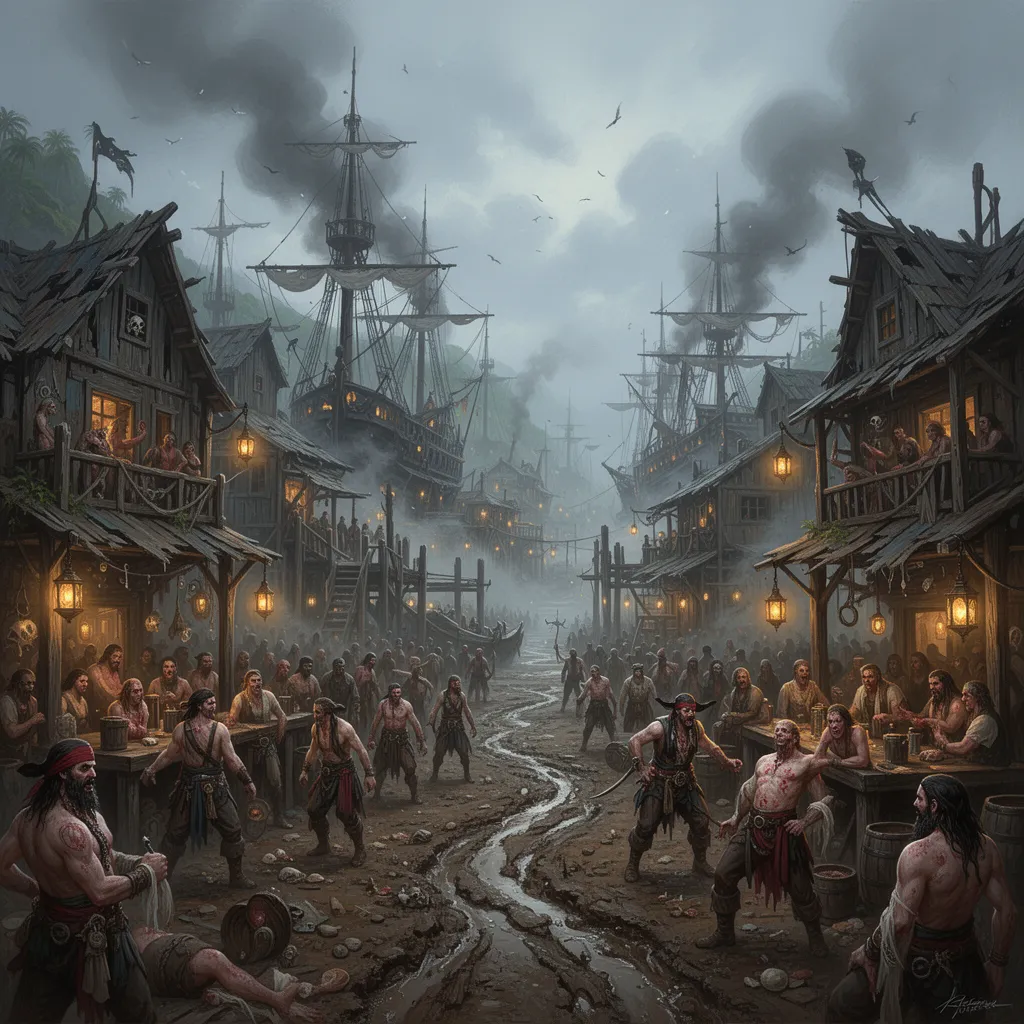
Tortuga
Tortuga stands as the most notorious maritime stronghold in the known world, a lawless island sanctuary where the dregs of the ocean congregate beyond the reach of any legitimate authority. The settlement sprawls haphazardly across rocky terrain, its ramshackle wooden structures lashed together with rope and desperation, creating a labyrinthine warren of narrow, mud-caked streets that wind between crumbling warehouses and dilapidated taverns. The harbor bristles with vessels of every conceivable type—from sleek brigantines to weathered merchant ships stripped of their cargo—their masts creating a skeletal forest against the perpetually smoke-hazed sky. Centuries of piracy have shaped Tortuga's brutal culture, where fortunes are won and lost in blood-soaked card games, and the strongest cutthroats command respect through violence and cunning rather than any code of law. The island's fetid air perpetually reeks of spilled rum, decomposing fish, acrid gunpowder smoke, and the unwashed bodies of thousands crammed into inadequate spaces, creating an almost tangible miasma that clings to everything. Flickering lanterns and smoky torches cast dancing orange shadows across the chaotic scenes of drunken debauchery—brawling sailors, cackling prostitutes, and scheming merchants conducting their illicit trades in darkened corners and shadowed alleys. The constant symphony of Tortuga's depravity echoes from the taverns: the crash of breaking glass, the off-key wailing of sea shanties, the roar of fighting men, and underneath it all, the eternal rhythm of waves crashing against the rocky shore. This is a place where ambition breeds treachery, where yesterday's allies become tomorrow's corpses, and where the only law is the law of the cutlass and the pistol.
View details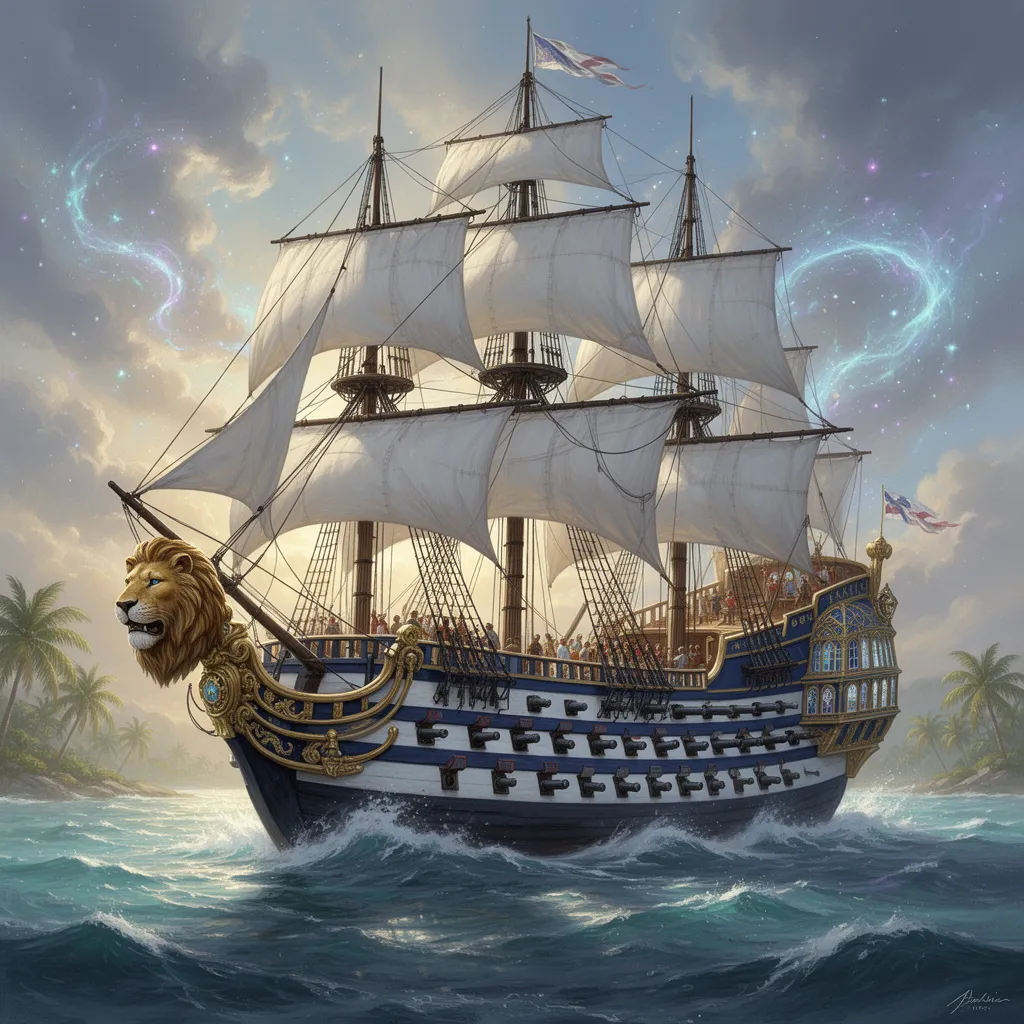
The Dauntless
The Dauntless stands as one of the most formidable naval vessels ever to grace the Caribbean waters, a ship-of-the-line that has served as the flagship of Commodore Norrington's distinguished fleet for nearly two decades. Her three towering masts stretch skyward like the spires of a maritime cathedral, perpetually crowned with billowing white canvas that catches the trade winds with remarkable efficiency. The vessel's hull displays the immaculate craftsmanship of master shipwrights, painted in striking white and dark blue that gleams under the relentless Caribbean sun, while her polished brass fittings reflect light like captured stars across her weathered decks. A magnificent lion figurehead adorns her bow, carved with such pride and ferocity that it has become the symbol of naval dominance throughout the region. Her two full gun decks bristle with over seventy cannons of varying caliber, making her a floating fortress capable of reducing enemy vessels to splinters in a matter of minutes. The spacious captain's cabin occupies the stern, featuring expansive windows that provide commanding views of the ocean and allow Commodore Norrington to observe his domain from his seat of authority. Within her hull, the constant rhythm of naval life echoes—officers barking orders, marines executing their drills with precision, signal guns booming across the harbor, and the ever-present aromas of tar, salt-soaked rope, and sea spray that define life at sea. When she rides at anchor, her massive frame dominates the harbor with an imposing presence that reminds all who witness her of the naval power she represents.
View details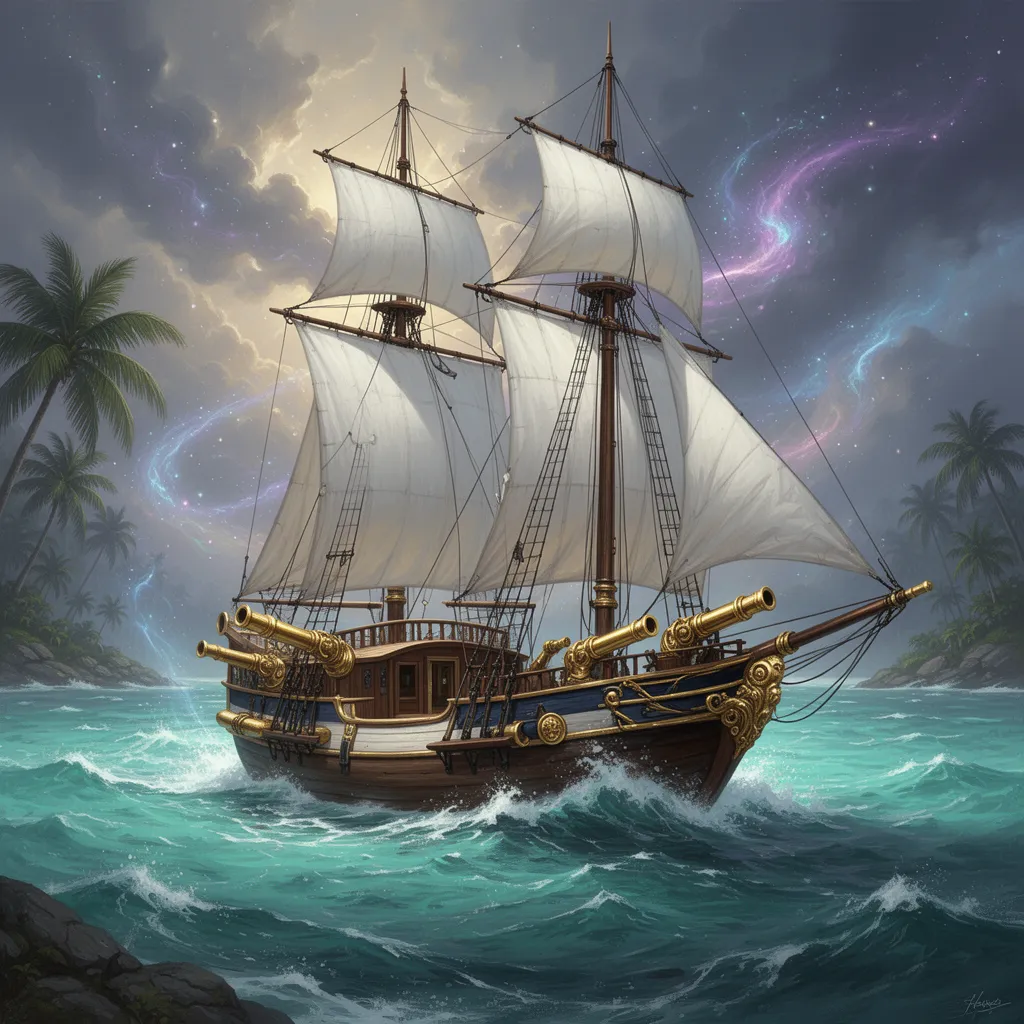
The Interceptor
The Interceptor stands as a testament to maritime engineering excellence, a sleek British naval schooner that has carved her reputation through the treacherous waters of the Caribbean and beyond. Her design prioritizes speed and maneuverability over the cumbersome bulk of traditional galleons, with a shallow draft that permits her to slip through narrow straits and navigate the perilous shoal systems where deeper vessels dare not venture. Two towering masts rise from her single continuous deck, crowned with pristine white canvas that catches even the gentlest breeze, while the raised forecastle and quarterdeck provide commanding vantage points for navigation and reconnaissance. Along her rails, brass swivel guns gleam in the tropical sunlight, their polished surfaces reflecting the azure waters below—practical armaments that grant her surprising defensive capabilities despite her modest crew complement. Below deck, a simple but functional cabin serves as quarters and command center, stripped of unnecessary luxuries in favor of efficiency and speed. Her lines cut through the turquoise waters with remarkable grace, each plank and timber working in concert to produce a vessel that seems to dance across the ocean's surface. The very air around her thrums with maritime life—the constant snap and billow of canvas, the rhythmic creaking of wooden rigging, and the urgent calls of her determined crew as they work in perfect synchronization. Bright sunlight glints brilliantly off her polished brass fittings, creating a dazzling display that makes her visible for miles across the open sea, a beacon of both elegance and prowess.
View details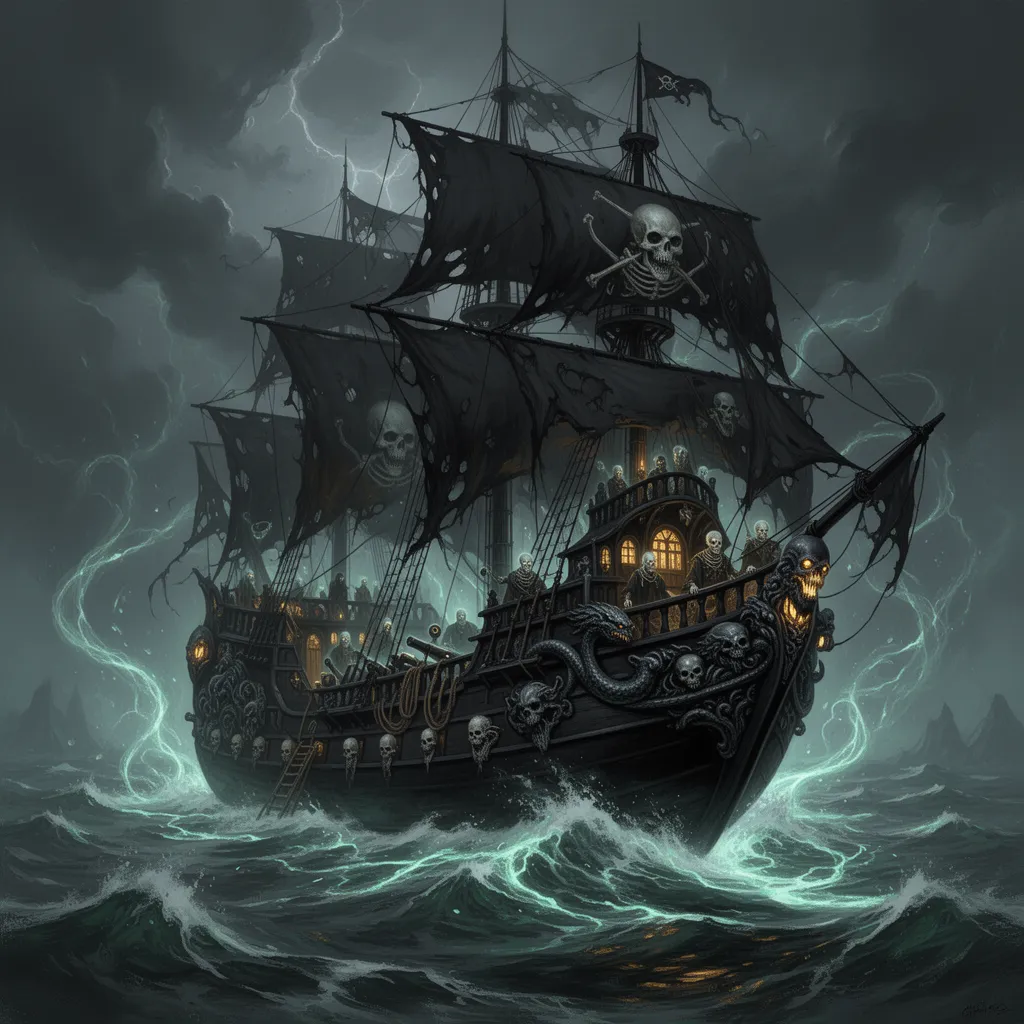
The Black Pearl
The Black Pearl stands as one of the most infamous vessels ever to sail the world's oceans, a galleon whose very name strikes terror into the hearts of seasoned mariners and coastal settlements alike. Her hull, constructed from timber that seems to drink in light rather than reflect it, presents a sleek and predatory silhouette that cuts through the waters with unnatural grace. The ship's sails, tattered and dark as a starless night, billow with an otherworldly presence that appears to absorb the moonlight itself, leaving an eerie phosphorescent trail of ghostly luminescence in her wake. Her railings bear intricate carvings of sea monsters, skeletal figures, and memento mori imagery that speak to centuries of maritime tragedy and supernatural mystery. The sterncastle looms high above the main deck, its captain's quarters shrouded in perpetual dimness despite the daylight hours, while the sprawling gun deck below bristles with loaded cannons ready for combat. An inexplicable aura of dread surrounds the vessel, as if reality itself recoils from her presence, manifesting as an oppressive cold and an overwhelming sense of ancient malevolence. The crew moves about their duties in haunting silence, their pale forms drifting across the decks without sound, their origins lost to the mists of time and dark sorcery. The constant groaning of her ancient timbers and the mournful whisper of wind through her decaying canvas create a symphony of maritime horror that has inspired countless legends and cautionary tales throughout coastal cultures.
View details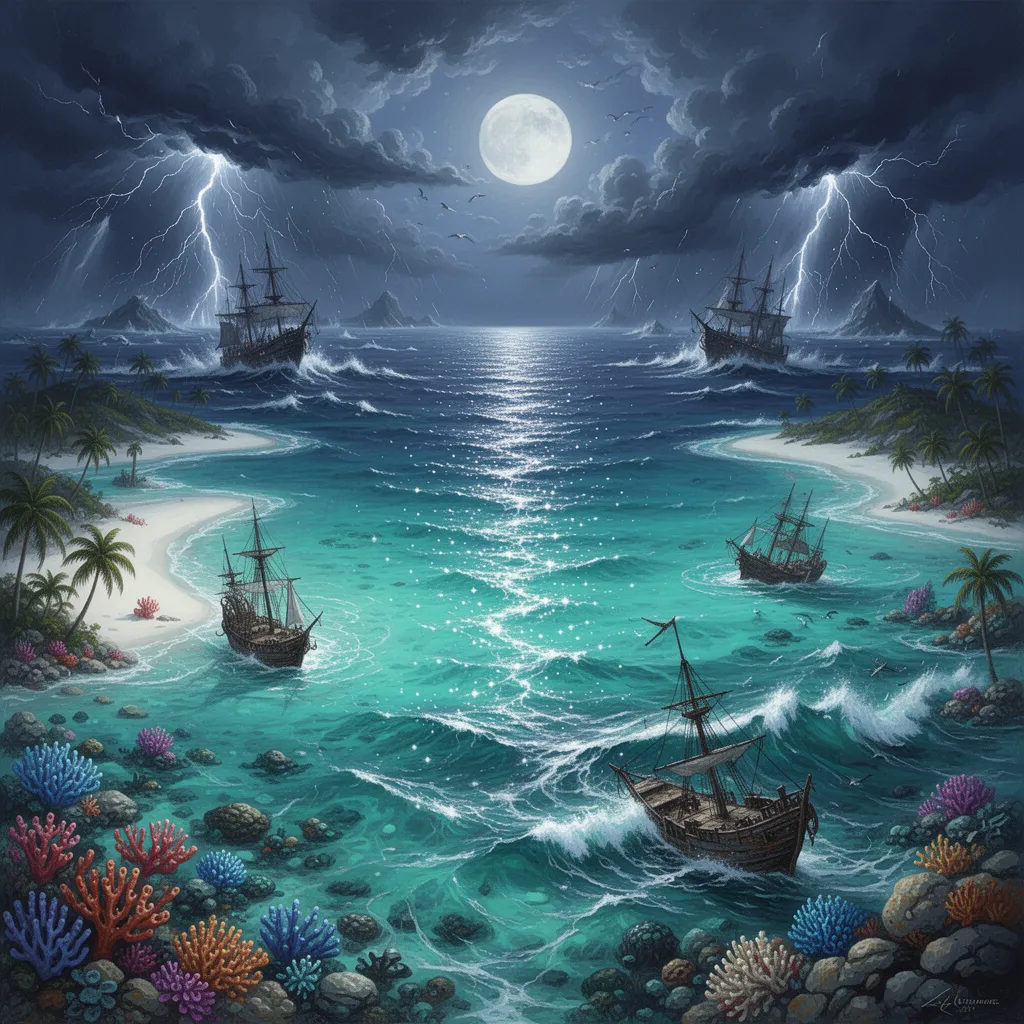
The Caribbean Sea
The Caribbean Sea sprawls across vast stretches of crystalline waters, where turquoise shallows gradually deepen into rich azure depths that seem to touch the very horizon. Countless islands emerge from these waters like jewels scattered across an emerald canvas, each surrounded by pristine white-sand beaches and vibrant coral gardens that teem with exotic marine life. The sea's temperament is notoriously unpredictable—calm, glassy waters can transform within hours into churning, violent storms that test the resolve of even the most seasoned seafarers. Beneath the deceptively beautiful surface lurk treacherous shoals, submerged reefs, and underwater passages that have claimed countless vessels throughout history, earning this realm a fearsome reputation among navigators and traders. By daylight, the sun's brilliant rays dance across the wave-tops in a thousand dancing sparkles, while moonlit nights paint a silver pathway across the dark waters, creating an enchanting landscape that draws adventurers and merchants alike. The soundtrack of the sea is constant and ever-present: the mournful cries of gulls wheeling overhead, the creaking and groaning of wooden ship timbers laboring against the swells, and the haunting whistle of wind through tangled rigging. Ancient trade routes crisscross these waters, connecting thriving port cities where diverse cultures have flourished for generations, their influences blending in the local customs, languages, and cuisines. Legends speak of hidden treasures scattered across sunken vessels and forgotten island coves, drawing fortune-seekers and explorers to test their luck against the sea's capricious nature. The Caribbean Sea remains a place where natural beauty and mortal danger dance together in an eternal, mesmerizing waltz.
View details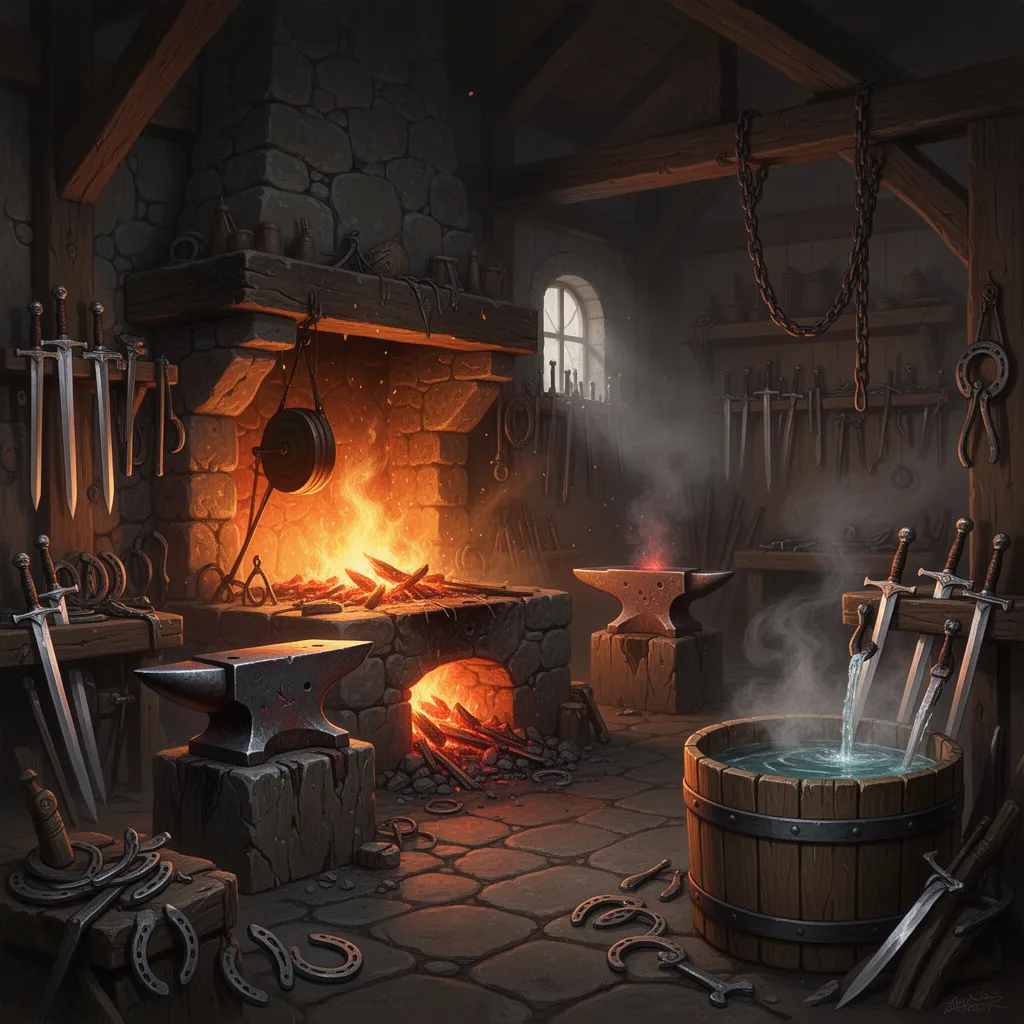
Will Turner'S Blacksmith Forge
Situated within the bustling maritime district of Port Royal, Will Turner'S Blacksmith Forge stands as one of the colonial settlement's most vital establishments, where skilled metalworkers have crafted weapons, ship fittings, and tools for generations. The workshop's centerpiece is an imposing stone forge, its belly perpetually glowing with intense heat, fed by a constant supply of coal and tended by powerful bellows that drive rhythmic gusts of air through the flames. Multiple anvils, their surfaces deeply pitted and scarred from decades of relentless hammer strikes, are stationed throughout the space, each one a testament to countless hours of metalworking labor. The walls are lined with wooden racks displaying an array of works in progress—partially forged swords, horseshoes destined for the colony's cavalry mounts, and intricate metal fixtures for the naval vessels that frequent Port Royal's harbor. Overhead, wooden beams support an impressive collection of specialized tools and heavy chains, organized in a system known only to the master craftsmen who work within these walls. A large wooden water trough occupies a prominent position, its surface perpetually steaming as hot metal is plunged into its depths, the violent hissing a constant backdrop to the forge's symphony of industry. The dramatic interplay of firelight bathes the interior in shifting hues of orange and crimson, while narrow streams of daylight pierce through shuttered windows, creating an atmosphere both warm and shadowy. The forge's sensory character is unmistakable—the sharp metallic scent of iron mingles with acrid coal smoke, while the rhythmic percussion of hammer against steel echoes continuously, defining the very heartbeat of Port Royal's metalworking tradition.
View details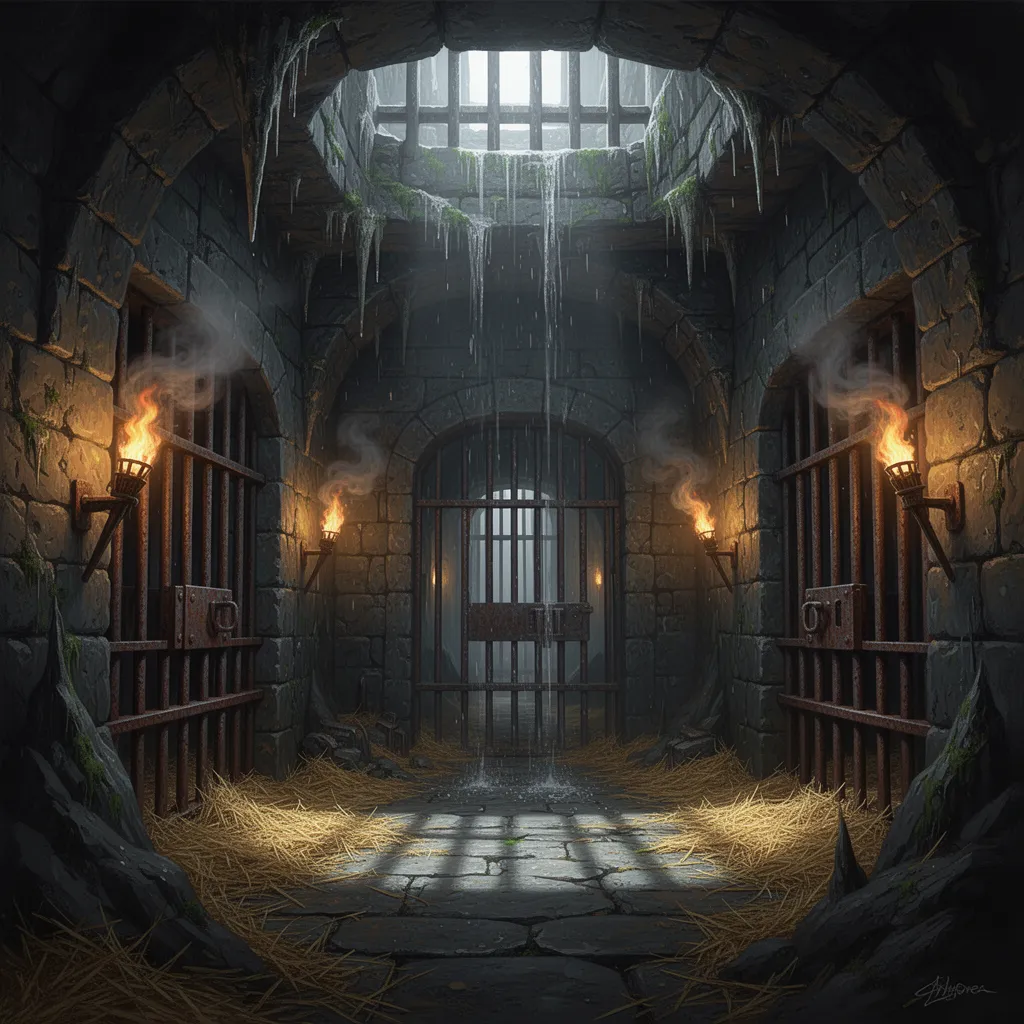
The Dungeons Of Fort Charles
The Dungeons of Fort Charles represent one of the oldest and most notorious detention facilities in the realm, a sprawling network of stone chambers hewn directly from the bedrock that lies beneath the fortress's imposing foundation. Built over three centuries ago during the reign of King Aldric II, these subterranean halls have housed countless prisoners of war, political dissidents, and condemned criminals throughout the kingdom's turbulent history. The thick stone walls, carved laboriously by master stoneworkers, weep constantly with groundwater that seeps through fissures in the rock, creating an environment of perpetual dampness and decay that has claimed many lives through illness and despair. Rusted iron bars divide the dungeon into numerous cramped cells, each barely large enough for a single occupant to lie down upon the thin layer of rotting straw that covers the unforgiving stone floor. The only light penetrates these depths through a handful of narrow iron grates positioned high above street level, allowing pale daylight to filter down in thin slivers that do little to dispel the pervasive gloom. Rows of iron torches, perpetually burning with smoky flames, cast writhing shadows across the walls and illuminate the faces of guards making their rounds through the labyrinthine passages. The constant drip of water from stalactites overhead creates an incessant rhythm that echoes through the cells, a mournful soundtrack to captivity that drives many prisoners to madness. The air itself seems toxic, thick with the mingled stench of mildew, corroded metal, human waste, and the ineffable scent of hopelessness that clings to those condemned to this forsaken place.
View details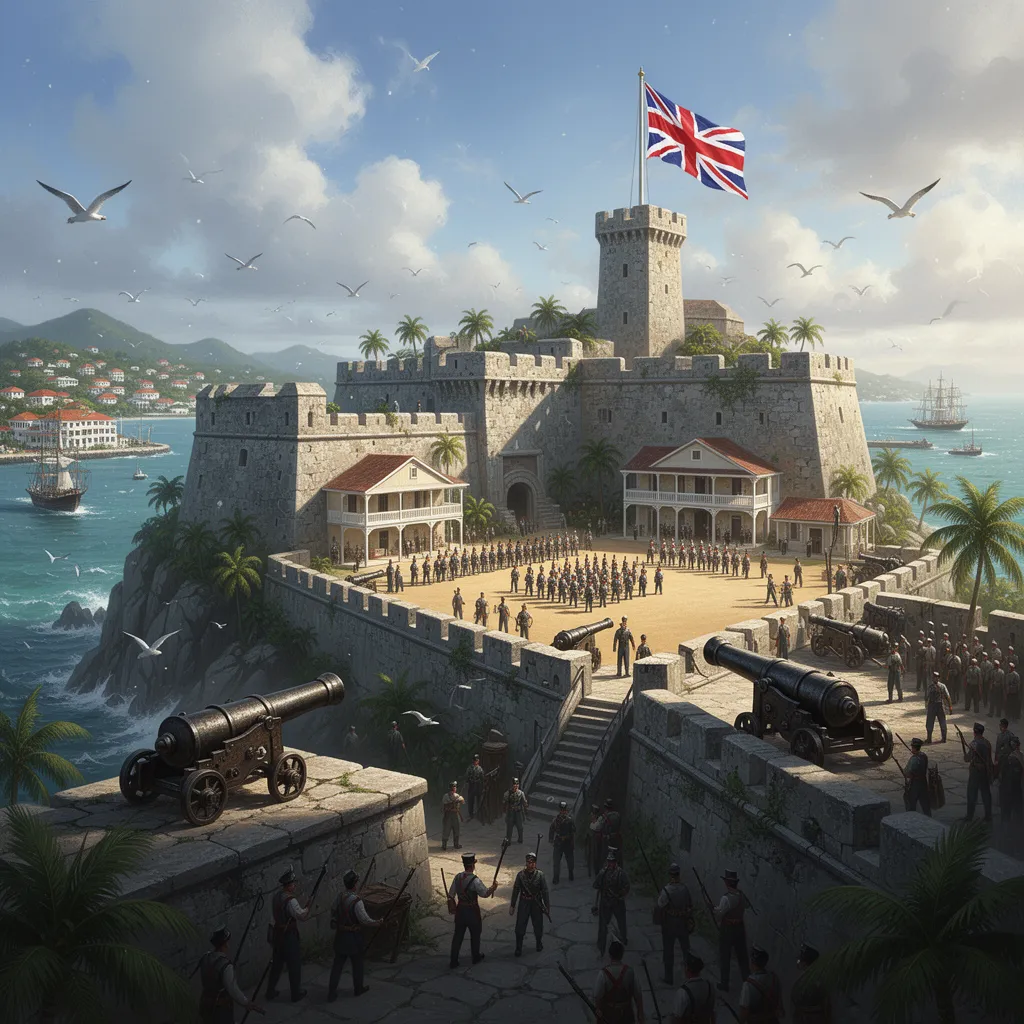
Fort Charles
Dominating the eastern headland of Port Royal harbor, Fort Charles stands as a formidable testament to centuries of maritime power and colonial ambition. The fortress was established in the late 1600s as a strategic stronghold to protect merchant vessels and maintain dominion over the bustling Caribbean trade routes, and its limestone ramparts have withstood countless tropical storms, naval sieges, and the ravages of time itself. Massive iron cannons remain mounted along the weathered battlements, their barrels permanently trained seaward in silent vigilance, a reminder of the fierce naval conflicts that once raged across these waters. The compound's interior features a sprawling parade ground where soldiers once drilled in rigid formation under the relentless Caribbean sun, flanked by elegant officer quarters complete with deep verandas designed to capture the ocean breezes and provide respite from the sweltering heat. A tall flagpole rises from the fort's center, perpetually flying the Union Jack above the crenellated walls, visible for miles across the harbor and serving as a beacon of imperial authority. The midday light here is unforgiving, casting razor-sharp shadows across the stone fortifications and creating a landscape of intense contrasts between blinding brightness and deep shadow. Life within the fort pulses with the rhythm of military discipline—the constant percussion of marching boots echoing across the parade ground, the distant wails of ship horns from the harbor below, and the haunting cries of seabirds that wheel endlessly overhead, seeking scraps from the busy port. The fortress remains a living monument to an era when naval supremacy shaped the destiny of empires.
View details