WorldsBattlefront Sol
Battlefront Sol
Locations
Browse the public locations that belong to this world. Select a card to read more.
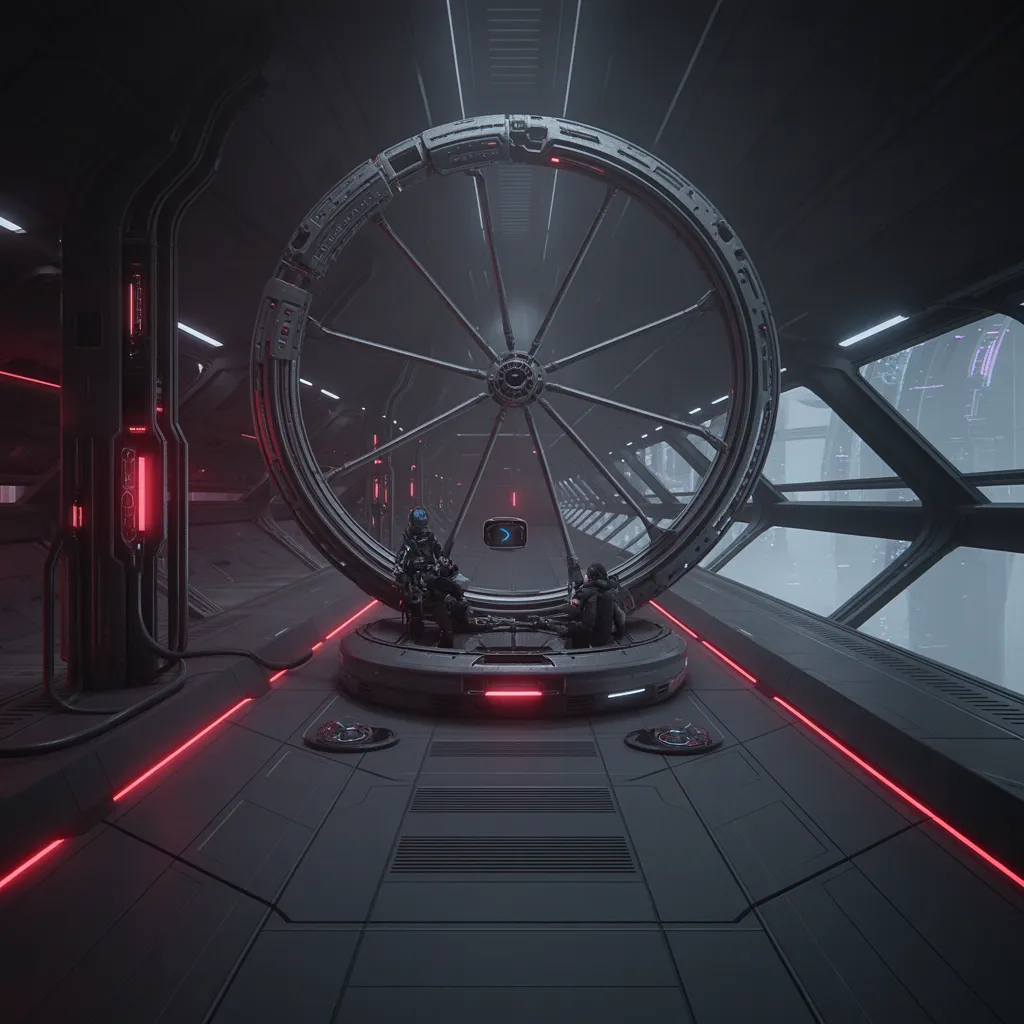
Marrow's End
Marrow's End orbits a barren, lifeless world as a haunting testament to both scientific ambition and catastrophic failure. Once a modest research installation dedicated to studying the dead planet below, the station was catastrophically damaged a century ago when a devastating meteor shower pierced its hull and crippled its primary systems. The facility's distinctive ring structure, connected by skeletal spokes to a central hub, now bears the scars of that ancient bombardment—its dark metal surface pitted and cratered, a landscape of decay floating in the void. The central docking station serves as the primary point of entry, heavily fortified with guard posts and surveillance systems that scrutinize every vessel attempting to dock. Sporadic crimson lights flicker throughout the ring's corridors and observation decks, casting an ominous glow that has become the station's defining characteristic and a warning to those who approach. For the past decade, Marrow's End has served as the operational headquarters of the Red Skulls, a ruthless mercenary faction known throughout the outer rim of the galaxy for their brutal tactics and questionable contracts. The station's isolated location, combined with its defensible architecture and remote planetary orbit, makes it an ideal base for those conducting business beyond the reach of legitimate authorities. Multiple docking ports remain under constant guard, their airlocks sealed with biometric locks and monitored by hardened mercenaries who permit only trusted allies passage. The remnants of the original research station's laboratories and archives still exist within the ring, though most have been repurposed into barracks, armories, and interrogation chambers.
View details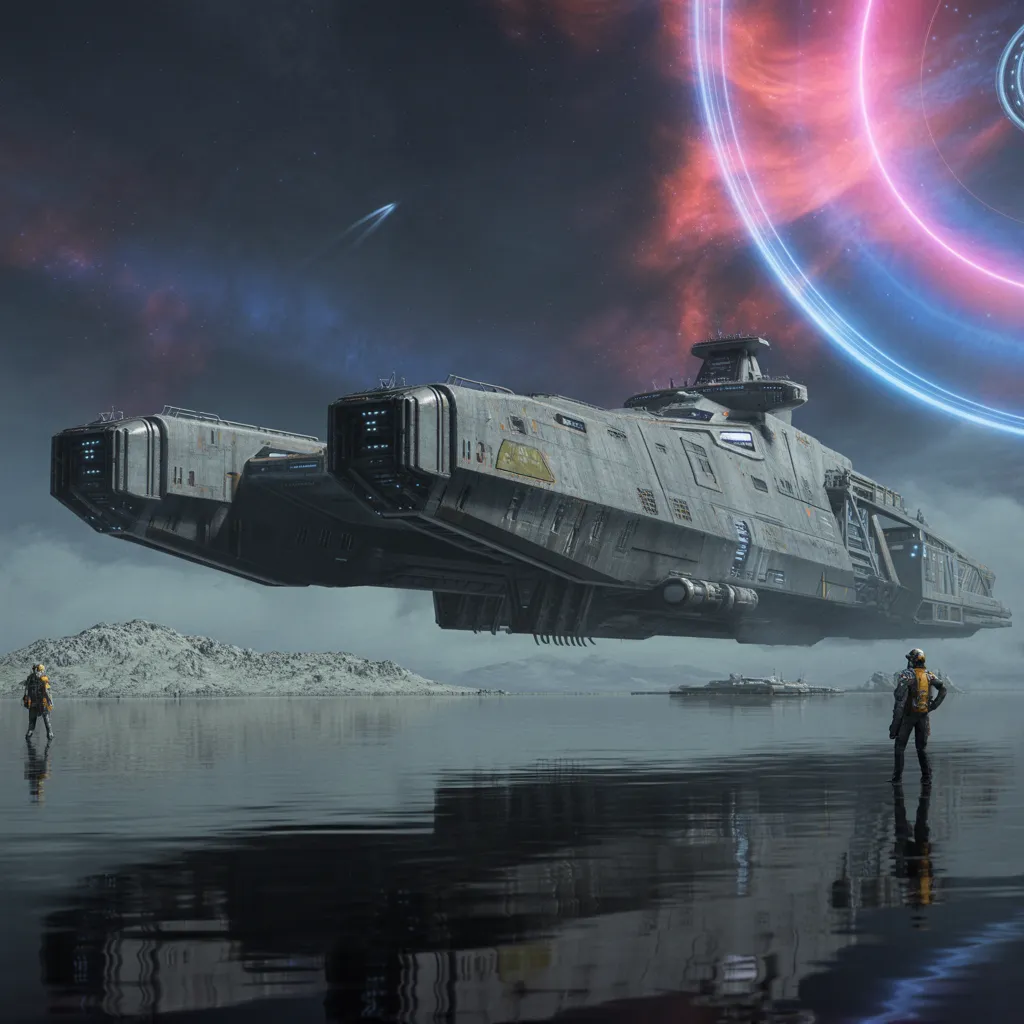
The Vestige
The Vestige stands as a formidable testament to both industrial engineering and ruthless adaptation, its massive corvaire-class hull dominating the cosmic expanse as it cuts through the swirling gases of the Meridian Nebula. Originally constructed as a legitimate deepspace freighter, this vessel once served the vital function of transporting supplies and personnel between distant colonial outposts scattered across the galaxy's outer rim. The ship's reinforced plating bears the scars of its transformation, now bristling with an array of ramguns mounted across its superstructure—a far cry from its days as a peaceful merchant vessel. Its nuclear fission engines, upgraded far beyond their original specifications, propel the massive freighter with surprising speed and agility for a craft of its size. Seized and commandeered by the notorious pirate collective known as the Red Skulls approximately seven years ago, The Vestige has been extensively retrofitted with augmented docking ports designed to facilitate rapid boarding operations and cargo seizures. Today, the ship serves as the flagship of their marauding operations, striking terror into merchant convoys and isolated colonial settlements throughout the outer rim territories. The vessel's dark grey exterior absorbs the ethereal light of surrounding nebulae, making it a ghost-like specter that often appears without warning before unleashing devastating assaults on unsuspecting targets. Countless worlds have fallen victim to raids launched from this vessel, making The Vestige a symbol of chaos and lawlessness in regions where legitimate authority struggles to maintain order.
View details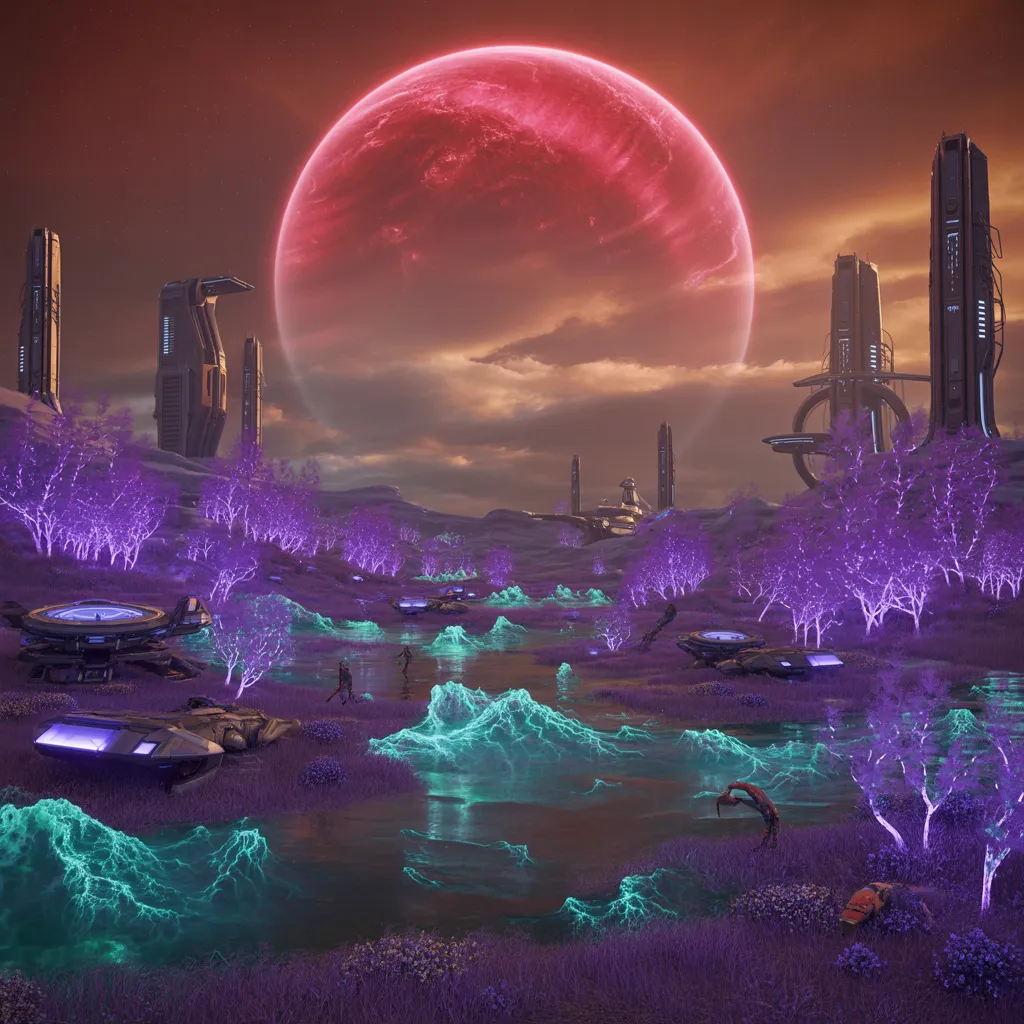
Moon Of Galashan
The Moon of Galashan orbits a massive crimson gas giant, casting an ethereal glow across its untamed surface throughout its perpetual cycle. This celestial body remains largely unexplored by settled civilization, its vast terrain dominated by towering forests of bioluminescent vegetation that shift between deep purples and emerald hues. Turbulent oceans churn across nearly two-thirds of the moon's surface, their waters infused with minerals that create violent, unpredictable storm systems of staggering intensity. The native fauna and flora represent entirely alien evolutionary pathways, with creatures and plants unlike anything documented in known space, many displaying predatory or defensive adaptations to the moon's harsh environmental conditions. The pristine wilderness was violently disrupted when the Human Expeditionary Fleet engaged the Kirovan Collective's warships in a devastating orbital conflict above the moon's atmosphere. Debris from the intense space battle rained down upon the surface, and numerous vessels from both factions were forced to crash-land across the moon's remote regions. Pockets of Human and Kirovan survivors now find themselves stranded in this alien wilderness, forced to navigate not only the treacherous native ecosystem but also potential encounters with their former enemies. The Moon of Galashan has transformed from an untouched scientific curiosity into a hostile frontier where survival itself remains uncertain.
View details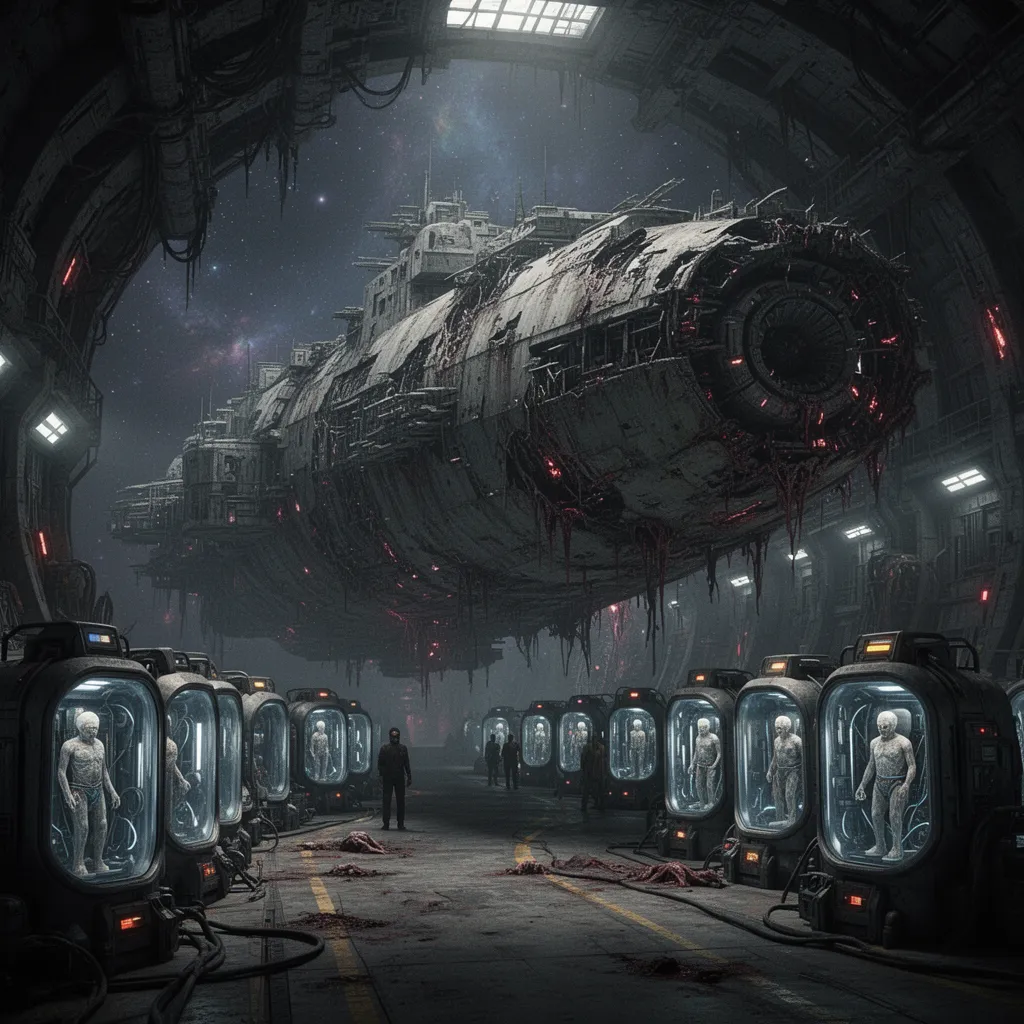
Kvn Warbiff
The Kvn Warbiff stands as one of the most haunting derelicts ever discovered orbiting the Sol System, a massive military transport vessel designed in an era of interstellar expansion when Kirovans dared to project power further across the cosmos than ever before. Originally constructed to serve as a Swingbelly-class dropship, this colossal craft was engineered to transport entire battalions—approximately two thousand soldiers, support personnel, and their accompanying war machines—across the vast distances between worlds. The vessel's hull, scarred and weathered by cosmic radiation and stellar debris, bears silent testimony to its catastrophic encounter with an ion storm that claimed it nearly a century ago, stranding it in the void between known space and the outer reaches of civilized territory. When the Kvn Warbiff mysteriously emerged from its dimensional anomaly and entered orbit around Sol, initial surveys suggested the ship had survived its ordeal intact, its structural integrity seemingly preserved by fortune or fate. However, more detailed scans revealed a far more disturbing truth: the stasis pods that lined the vessel's cavernous holds contained thousands of awakening occupants whose minds had fractured during the extended suspension, leaving them as hollow shells driven only by primal hunger and base survival instincts. The slow, inevitable resurrection of these consciousness-shattered soldiers transformed the Kvn Warbiff from a marvel of engineering into a floating tomb of shambling horrors, trapped between life and death, making any salvage operation an exercise in existential dread. Today, the derelict remains a cautionary monument to the dangers of pushing too far into the unknown reaches of space.
View details
UED Archimedes
The UED Archimedes drifts through the cosmic void like a ghost ship, a monument to conflict and mystery suspended near the swirling depths of a dark orange nebula. This massive military vessel, now three decades abandoned, bears the unmistakable scars of devastating warfare—its hull cratered with impact marks and energy weapon burns that tell stories of desperate battles during the catastrophic First Contact War. The ship vanished from all known records three decades ago while engaged in fierce skirmishes against unknown hostile forces, its sudden disappearance spawning countless theories and classified investigations. Recently rediscovered far beyond established space routes by deep-range explorers, the UED Archimedes remains structurally intact and theoretically capable of flight, defying explanation for how it survived so long in the harsh radiation of deep space. The vessel's interior presents an eerie tableau—all 200 crew members have vanished without trace, leaving behind their stations, personal quarters, and equipment as if they simply ceased to exist. The ship's logs and communication systems remain inactive, offering no clues to the fate of its personnel or the circumstances of their disappearance. Salvage teams have explored its corridors cautiously, finding no signs of violence, struggle, or emergency evacuation procedures. The UED Archimedes now serves as a haunting reminder of the dangers lurking beyond charted space and the unsolved mysteries that persist in the vast darkness between stars.
View details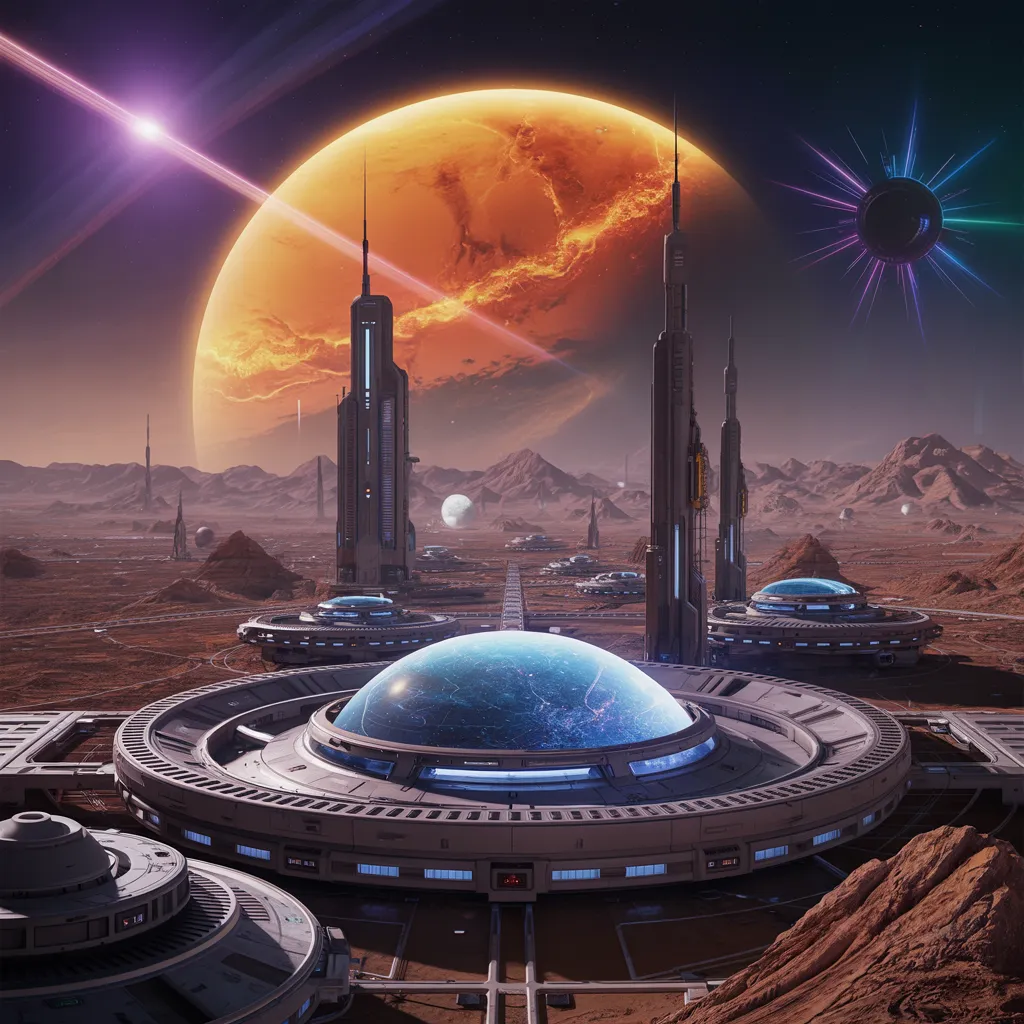
Sol System
The Sol System in 2376 represents the pinnacle of human expansion across the celestial realm, a sprawling civilization that has transformed the once-isolated worlds into interconnected bastions of culture and industry. Earth itself groans beneath the weight of twelve billion souls, its continents, oceans, and atmosphere teeming with life as never before, with gleaming megacities rising from every habitable landmass and submerged domes dotting the seafloor. The Moon, Earth's ancient companion, has been thoroughly colonized with established metropolitan centers that serve as crucial trade hubs and launching points for deeper exploration into the void. Mars, the rusty neighbor world, hosts thriving settlements and research institutes where scholars study the planet's geological mysteries, research new technologies and alien artifacts, and work to terraform its surface for future generations. Beyond these major population centers, a network of outposts and scientific stations orbit near Venus, Mercury, Jupiter, Saturn, and their moons, each serving specialized purposes from resource extraction to astronomical observation. The space between worlds pulses with constant traffic—merchant vessels, passenger transports, and exploration craft maintaining the delicate supply lines that bind humanity's far-flung domains together. The Sol System has become a unified realm of breathtaking technological achievement, where the boundaries between worlds have blurred and humanity's destiny stretches across the cosmic ocean.
View details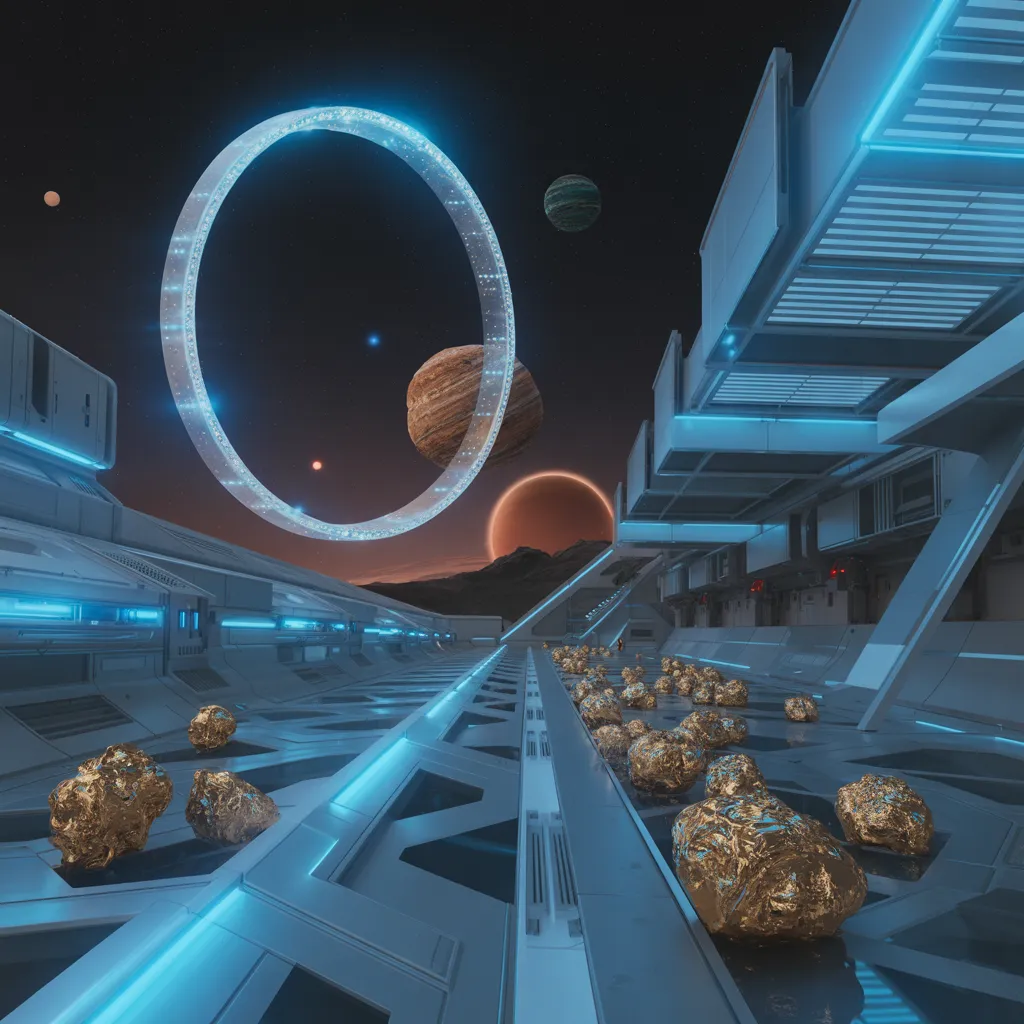
Rings Of Vyrule
The Rings of Vyrule form a spectacular celestial phenomenon orbiting the star Vyrule, composed of countless asteroids, crystalline ice formations, and cosmic dust suspended in vast concentric bands around the system's primary sun. These luminous rings stretch across millions of kilometers, their composition creating a breathtaking display of colors—deep blues and silvers from the ice, rich golds and coppers from metallic ore deposits, and russet browns from ancient rock. Beyond this magnificent ring system, the distant gas giant Korven continues its slow orbital dance, occasionally visible as a pale sphere on the horizon of the mining stations. For centuries, hardy spacers and independent prospectors have carved out a solitary existence here, extracting valuable metals and harvesting frozen water from the asteroids to sustain their operations and trade with distant settlements. The mining communities developed a culture of self-reliance and isolation, preferring minimal contact with outsiders while they methodically worked the rich deposits scattered throughout the rings. However, this era of relative peace has fractured in recent years as organized pirate fleets and mercenary raiders have begun launching coordinated attacks on mining operations, drawn by rumors of substantial wealth accumulated in the region. The once-quiet spacers now face an unprecedented threat, their traditional way of life disrupted by violence and the constant danger of sudden raids that strike from the darkness between asteroids.
View details
Congen Corporation Headquarters
# Congen Corporation Headquarters Rising majestically from the heart of Paris stands the Congen Corporation Headquarters, a monument to technological ambition and industrial prowess. The structure itself is a breathtaking fusion of crystalline glass and burnished steel, its geometric facade reflecting the Seine's waters and the city's luminous skies. Surrounding the tower is an elegant courtyard featuring verdant gardens interspersed with fountains and sculptural installations that commemorate the company's legendary achievements. Over the past century, Congen has transformed from a modest engineering firm into one of the world's most influential enterprises, pioneering revolutionary construction projects that reshaped entire nations. The company's expansion into aerospace engineering marked a pivotal moment in human history, as their revolutionary propulsion systems enabled the first successful interplanetary expeditions and established permanent settlements beyond Earth. Their spacecraft designs, still displayed in the courtyard's exhibition halls, represent the pinnacle of exploration technology from that golden age of discovery. In recent decades, Congen has boldly ventured into the emerging field of biomechanics, establishing state-of-the-art laboratories within the headquarters where scientists work to merge organic and mechanical systems. The innovation district surrounding the main tower hums with activity, attracting the world's brightest minds and serving as a beacon of progress in the modernized City of Light. Visitors to the headquarters witness not merely a corporate center, but a living chronicle of humanity's relentless drive to transcend its limitations and reach toward the stars.
View details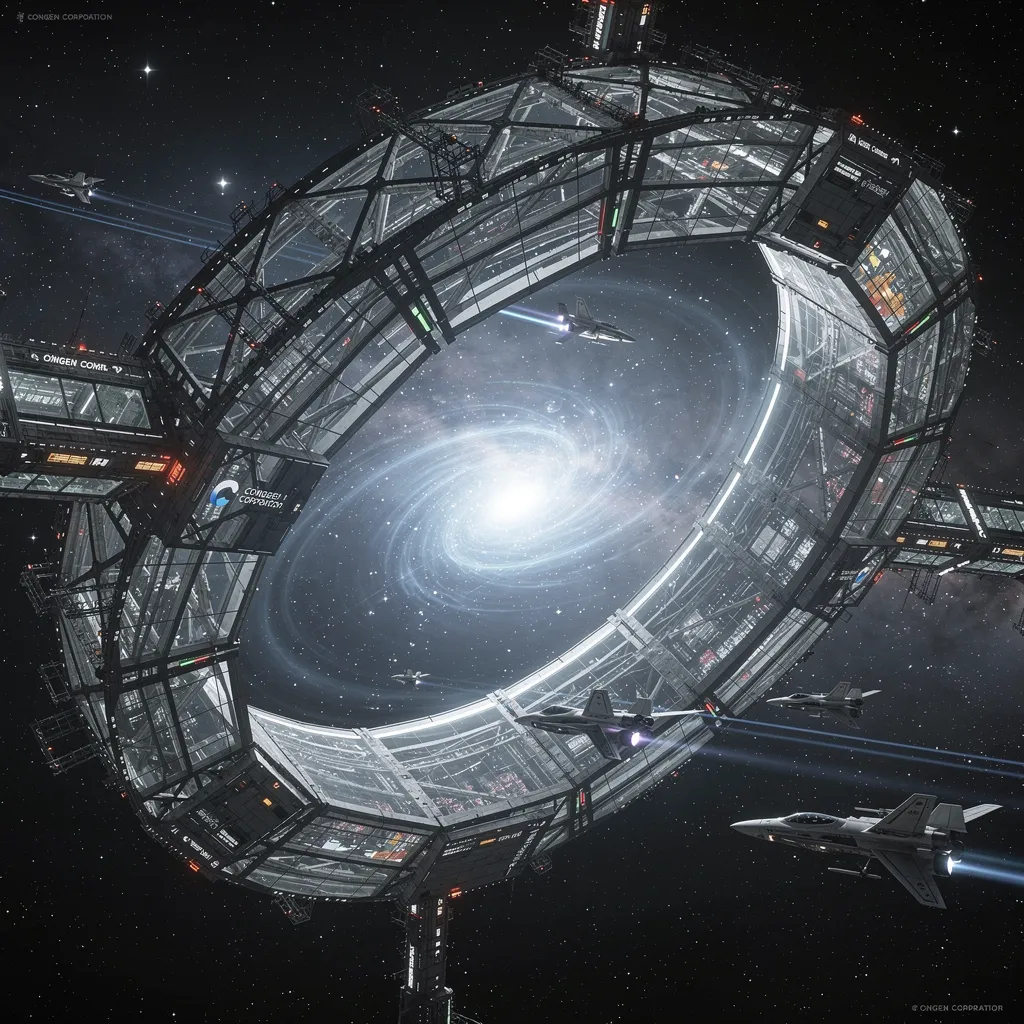
Fargate Station
# Fargate Station Fargate Station stands as humanity's greatest achievement in interstellar engineering, a colossal ring-shaped megastructure suspended in the void between worlds. Constructed over decades by the visionary Congen Corporation, this gleaming monument of glass and polished metal spans nearly twenty kilometers in diameter, its surface catching starlight in brilliant cascades. At the station's heart lies the Threshold—a shimmering spatial anomaly that pulses with an ethereal blue-white glow, a tear in space itself that defies conventional physics. The initial trials to activate the Threshold claimed the lives of seventeen brave test pilots and scientists, their sacrifice forever honored in the Memorial Gardens that ring the station's outer corridors. Yet from their courage came triumph: Fargate Station ultimately achieved full operational status, fundamentally transforming humanity's place in the cosmos. Today, the station serves as the primary gateway through which vessels from the Sol system launch their journeys to distant star systems, its docking rings perpetually bustling with cargo haulers, exploration vessels, and passenger ships. The station's rotating sections create artificial gravity while maintaining the precise gravitational conditions necessary for the Threshold's stability, a delicate balance maintained by thousands of automated systems. Home to over fifty thousand permanent residents—engineers, merchants, pilots, and administrators—Fargate Station has developed its own vibrant culture, distinct from Earth and the colonies beyond. The station's observation decks have become pilgrimage sites where travelers pause to witness the swirling anomaly before stepping through to new worlds.
View details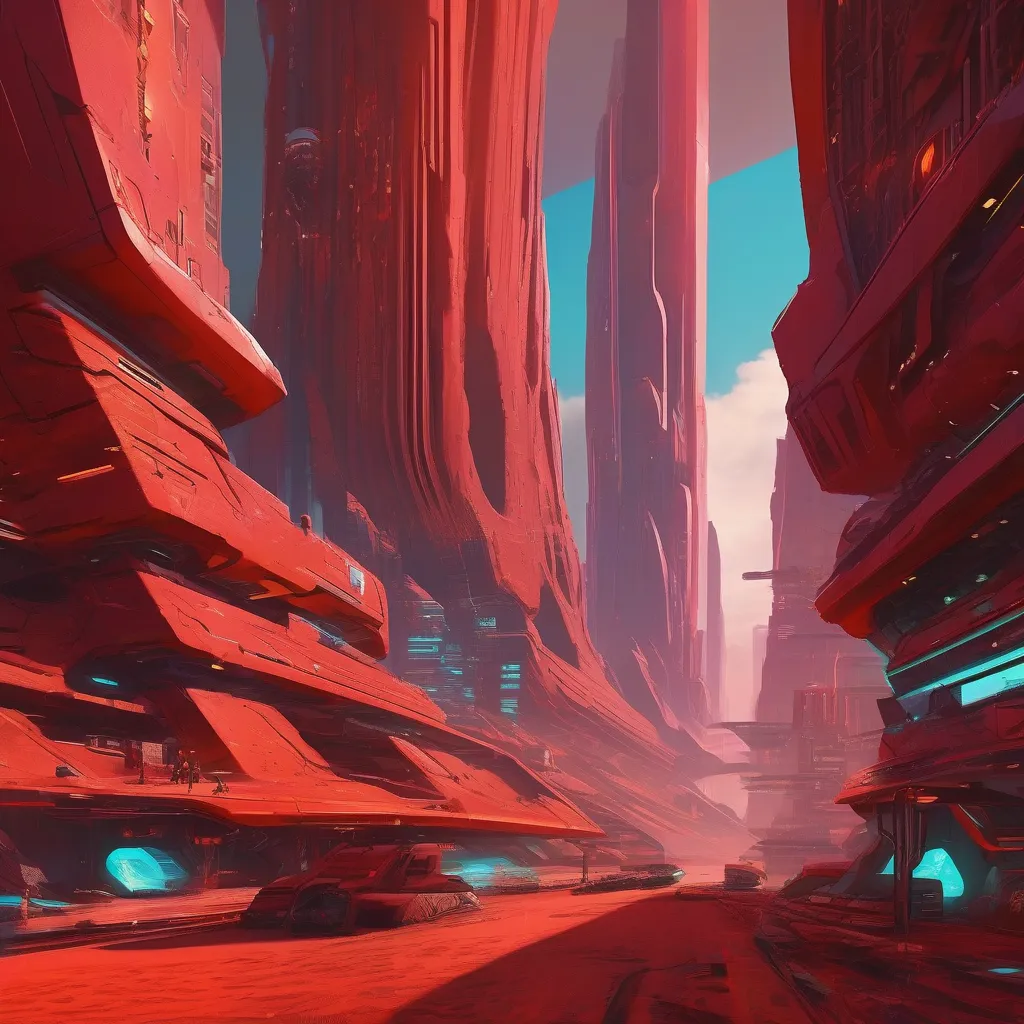
Redrock
Redrock is a bustling, futuristic city nestled amidst the vast, arid expanse of a distant planet. The city's skyline is dominated by towering structures made of a unique blend of steel and a striking, red-hued rock, giving the entire settlement a rugged, otherworldly appearance. The streets of Redrock twist and turn, weaving through the cityscape like a labyrinth, with sand constantly swirling in the air, carried by the relentless winds that sweep across the planet's surface. This harsh environment has forged a resilient and resourceful population, drawn from the dregs of distant civilizations, who eke out an existence in the city's shadowy underbelly. Redrock is the largest settlement on the planet and the only one with a functional spaceport, making it a hub for smugglers, traders, and those seeking to escape their pasts. The city's taverns and back-alley establishments are rife with shady dealings, secret bargains, and occasional bursts of violence, as the inhabitants navigate the complex web of power and intrigue that permeates every aspect of life in this unforgiving, futuristic outpost. Despite the challenges, Redrock is a place of resilience and adaptability, where the strong and the cunning thrive amidst the neon-lit streets and the ever-present threat of danger. It is a testament to the human spirit, a place where the dreams and ambitions of the desperate and the daring converge, shaping the destiny of this remarkable, otherworldly city.
View details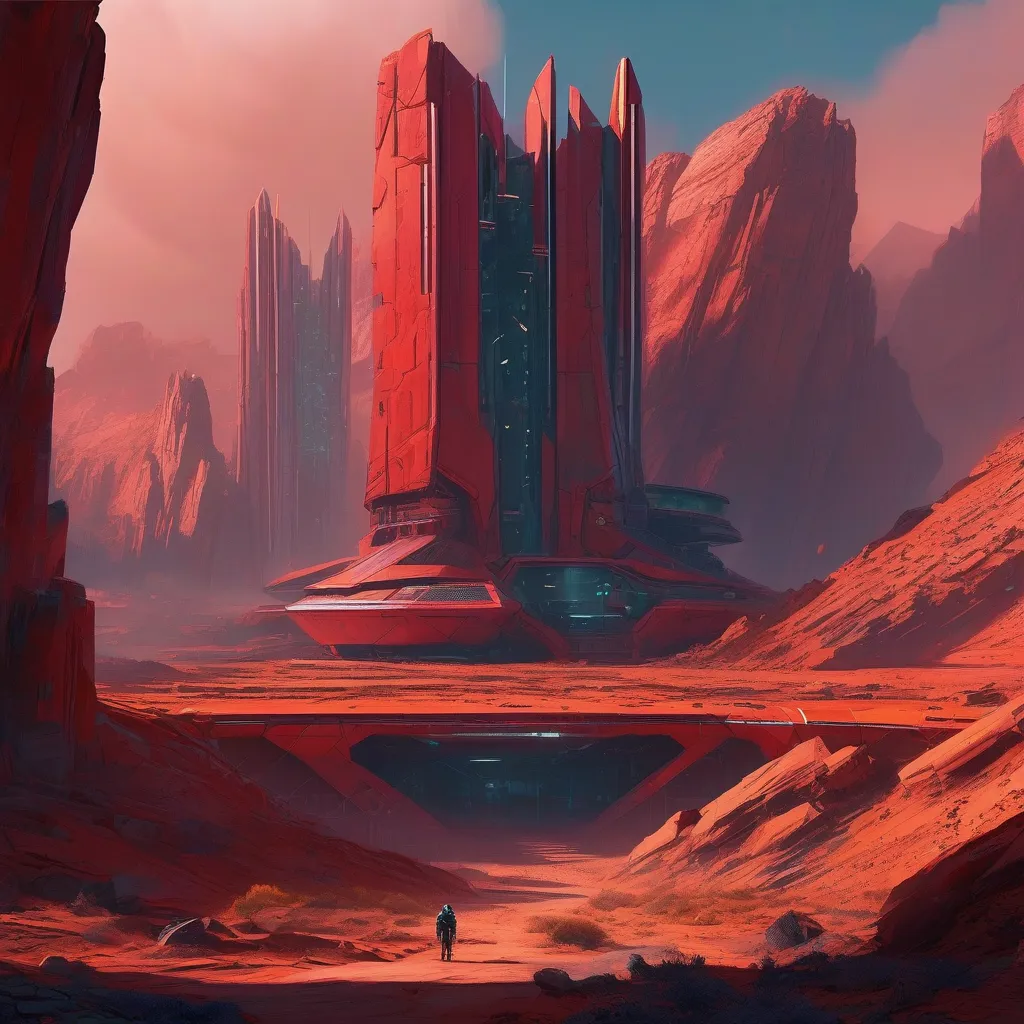
Forgotten Citadel of Dynn
The Forgotten Citadel of Dynn stands as a testament to the ambition and folly of its former inhabitants. Carved into the face of a towering red rock formation, this once-thriving scientific outpost now lies in a state of eerie abandon. The corridors within are lined with dusty steel, their surfaces marred by the passage of time. Futuristic chambers, once bustling with activity, now sit in silence, their defunct computers flickering with a faint, ghostly light. The air is thick with the scent of decay and the faint hum of forgotten machinery. Venture deeper into the Citadel, and you'll find yourself in the bowels of the structure, where the true horror lies. Here, in the darkest recesses of the facility, an abomination waits, a twisted result of the scientists' misguided attempts to fuse a powerful AI with an unsuspecting animal. Its presence lingers, a haunting reminder of the dangers that lurk in the pursuit of knowledge. Despite the Citadel's abandoned state, a sense of foreboding pervades the air, as if the very walls whisper of the secrets they hold. Explorers who dare to venture within do so at their own peril, for the Forgotten Citadel of Dynn is a place of both wonder and terror, a testament to the fragility of human ambition.
View details
Balastar
Balastar is a harsh and unforgiving desert world, a realm of extremes and harsh contrasts. This remote and isolated planet lies far from the main trade routes, a forgotten corner of the galaxy where only the most daring and desperate dare to venture. The surface of Balastar is a vast expanse of arid landscapes, dominated by towering red rock mesas and rolling sand dunes that stretch to the horizon. Scattered across this desolate terrain are hidden oases, small pockets of lush greenery and crystalline pools that offer respite from the relentless sun. These rare sources of water are fiercely guarded by the indigenous inhabitants, a hardy and resilient people who have learned to eke out an existence in this harsh environment. The history of Balastar is a tale of struggle and survival, marked by the arrival of outlaws, smugglers, and castaways seeking to escape the scrutiny of the law. Over the centuries, these outcasts have carved out their own communities, establishing hidden outposts and fortified enclaves among the rocky outcroppings and desert valleys. Here, they eke out a living through illicit trade, scavenging, and the occasional raid on passing caravans. Despite its harsh and unforgiving nature, Balastar is home to a rich tapestry of cultures, each with its own unique traditions and ways of life. From the nomadic desert tribes who roam the dunes on the backs of hardy beasts, to the sedentary oasis dwellers who cultivate the rare and precious water sources, the people of Balastar have adapted to the challenges of their environment with remarkable resilience and ingenuity.
View details