WorldsFractured Wreath Of The Aurora Wards
Fractured Wreath Of The Aurora Wards
Locations
Browse the public locations that belong to this world. Select a card to read more.

The Isles Of Green Hills
The Isles Of Green Hills stand as a testament to the enduring spirit of two distinct but inextricably linked cultures. Divided geographically and culturally between the Irish settlements of the western reaches and the Scottish territories to the east, these verdant islands have long been shaped by the fierce pride and traditions of their respective peoples. The rolling emerald landscape, dotted with ancient stone circles, weathered fortifications, and Celtic monuments, tells stories spanning centuries of migration, settlement, and cultural flourishing. Despite a historical rivalry that has occasionally flared into conflict, both populations have recently found common cause in defending their shared homeland against the expansionist ambitions of the warlord Damian Spitfire, whose forces threaten to subjugate the entire archipelago. The islands are renowned throughout the known world for their exceptional livestock and the succulent, richly flavored meats that sustain both communities, prized by traders and nobles alike. A distinctive architectural heritage defines the isles, where ingeniously constructed hillside dwellings nestle seamlessly into the slopes, their stone facades blending harmoniously with the natural terrain. Countless taverns and public houses serve as cultural anchors, where both Irish and Scottish traditions are celebrated through music, storytelling, and the consumption of locally crafted beverages. The Isles Of Green Hills remain a beacon of resilient cultural identity, where ancient heritage and present struggle intertwine against a backdrop of breathtaking natural beauty.
View details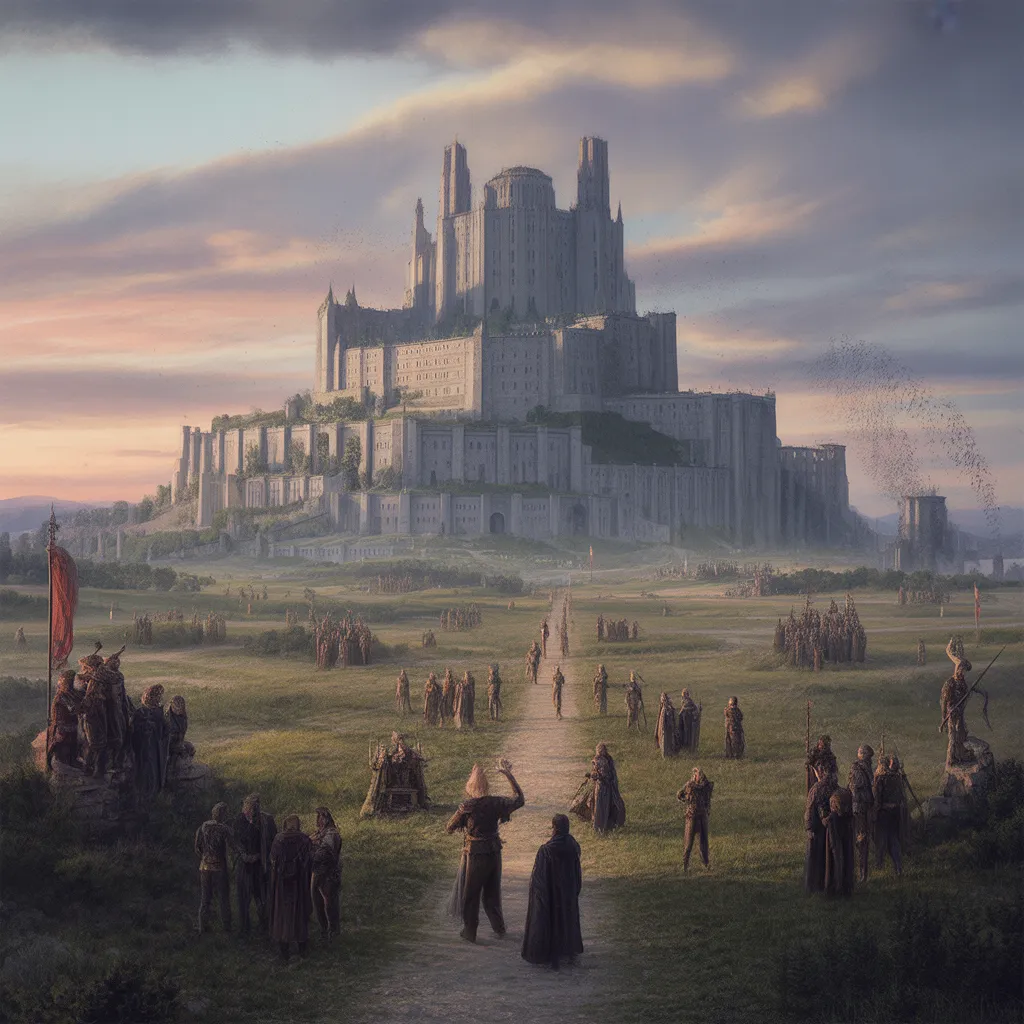
Kingdom Anowona
The Kingdom of Anowona stands as a sprawling continental power built upon rigid hierarchical structures and centralized authority, modeled after the great imperial systems of old. Under the iron-fisted rule of Damian Spitfire, an ageless elven autocrat known for his magnetic charisma and ruthless pragmatism, the kingdom has systematized conquest into doctrine, seeking to absorb neighboring territories through military might and political coercion. The realm operates through a labyrinthine bureaucracy of state apparatus and collective labor systems, where individual freedoms are subordinated to the kingdom's expansionist ambitions. Damian's personal depravities—his insatiable appetite for romantic conquest and his willingness to eliminate entire populations deemed obstacles to his vision—have become the stuff of whispered legend among both nobility and commoners. Despite the dictator's iron grip, resistance movements have coalesced in the kingdom's shadowy underbelly, with underground networks of rebels organizing clandestine operations to destabilize the regime from within. The landscape itself reflects Anowona's authoritarian character: monolithic fortresses dominate the skyline, vast collective estates stretch across fertile plains, and state monuments commemorate military victories and territorial acquisitions. Ancient feudal traditions have been perverted into tools of state control, with a pseudo-noble class serving as Damian's appointed administrators. The culture remains fractured between those who benefit from the regime's plunder and those crushed beneath its boot heel, creating a society perpetually on the knife's edge between obedience and revolution.
View details