WorldsPale Frontier
Pale Frontier
Locations
Browse the public locations that belong to this world. Select a card to read more.
Coltgrave Junction
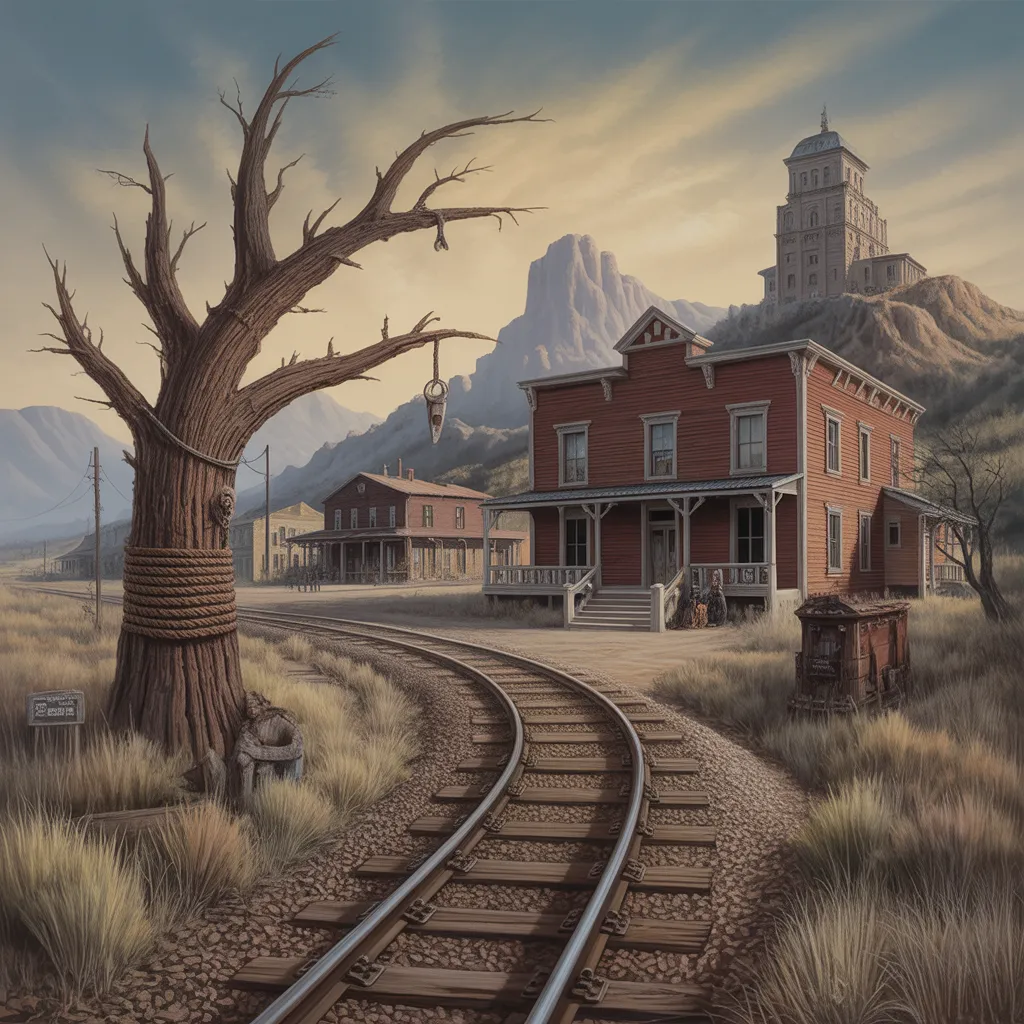
Coltgrave Junction sprawls across a dusty crossroads where two major rail lines converge with the Old Merchant's Road, creating a vital trading hub that has grown prosperous and sinister in equal measure. For three decades, Sheriff Wendel Crove has maintained iron-fisted control over this frontier town, having methodically eliminated each of his predecessors to consolidate power—a rise he euphemistically refers to as "promotion." The courthouse perches atop the highest hill overlooking the settlement, and beside it stands a grotesque monument: a cottonwood tree, long since killed and drained of life, kept vertical only by the deep grooves worn into its remaining branches from countless ropes. Each spring, the impossibly dead tree bears small, black fruit the size of apples—leathery, organic, undeniably alive—which the deputies hastily bury before word spreads to passing travelers. The law enforcement here operates under a doctrine of absolute authority, with each badge forged from the melted brass casings of bullets the office deems "justified," and the current tally numbers eight hundred and seventy-two. A grim reputation clings to Coltgrave Junction: in the thirty-one years of Crove's tenure, not a single fugitive has ever escaped south from the town alive. The railroad brings commerce and strangers, yet few linger long once they sense the corruption that has calcified into the very foundation of local governance. Those who call Coltgrave Junction home do so out of necessity rather than choice, bound by economic dependence to a place where justice has become indistinguishable from murder.
View details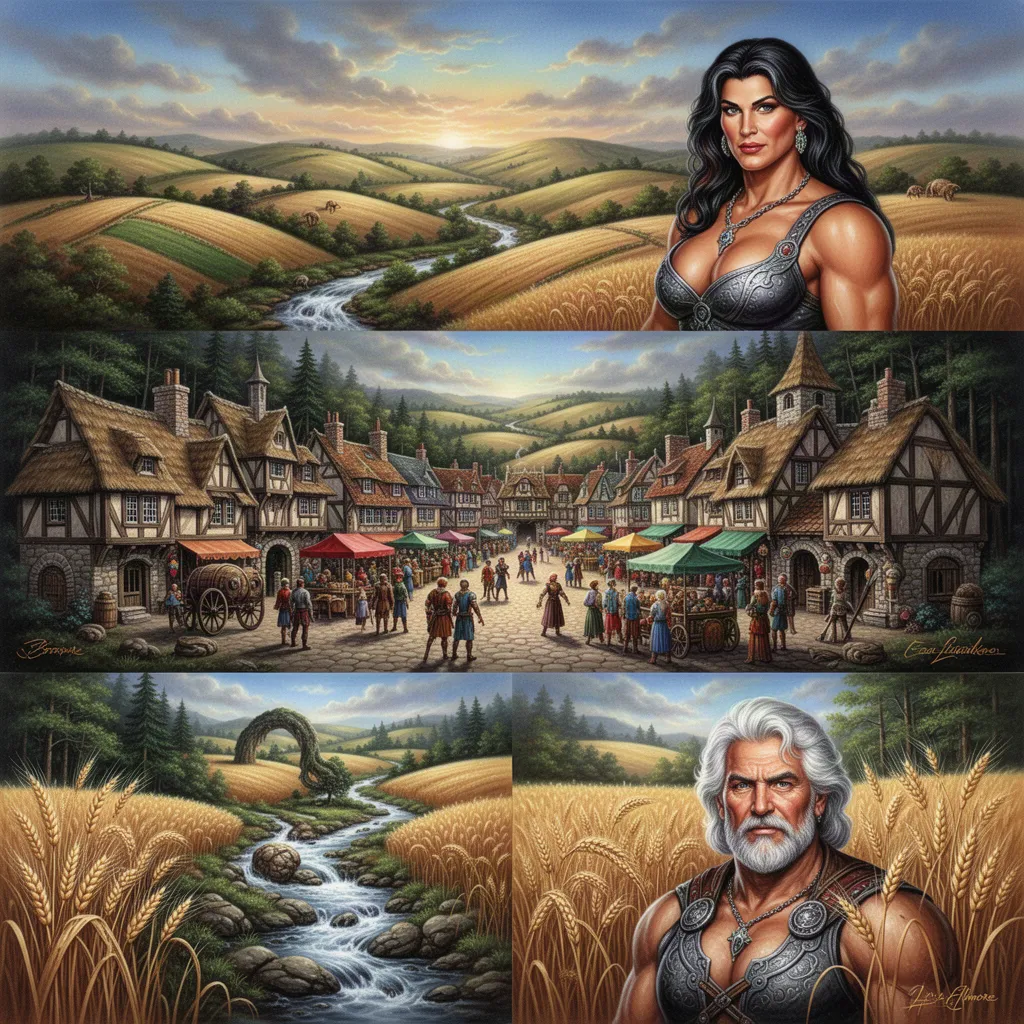
Ordinary Lands
The Ordinary Lands represent the heartland of civilization, a vast expanse of rolling countryside dotted with modest settlements where the majority of the realm's population conducts their daily affairs. These regions exist largely removed from the dramatic conflicts and power struggles that define the borderlands and fortified strongholds, instead serving as the economic and cultural foundation upon which the greater kingdoms are built. Small farming communities cultivate grain and livestock across fertile plains, their rhythms dictated by the seasons and the requirements of harvest and planting. Market towns serve as gathering points where merchants, craftspeople, and farmers exchange goods and news, their modest town squares hosting weekly commerce and seasonal festivals that bring neighboring villages together. The architecture here reflects practicality rather than grandeur—sturdy timber-frame cottages, stone marketplaces, and functional mills demonstrate the pragmatic ingenuity of ordinary people solving everyday problems. Forests and streams intersperse the farmland, providing timber, water, and hunting grounds that sustain local populations without drawing the attention of those who seek to control or conquer. The inhabitants—blacksmiths, bakers, healers, scholars, and laborers—rarely achieve legendary status, yet their collective efforts maintain the social fabric that allows kingdoms to function. Local traditions, family histories, and community bonds run deep, creating a tapestry of distinct cultures that vary from region to region while sharing common values of hospitality and mutual survival.
View details