WorldsThe Realm Between
The Realm Between
Locations
Browse the public locations that belong to this world. Select a card to read more.
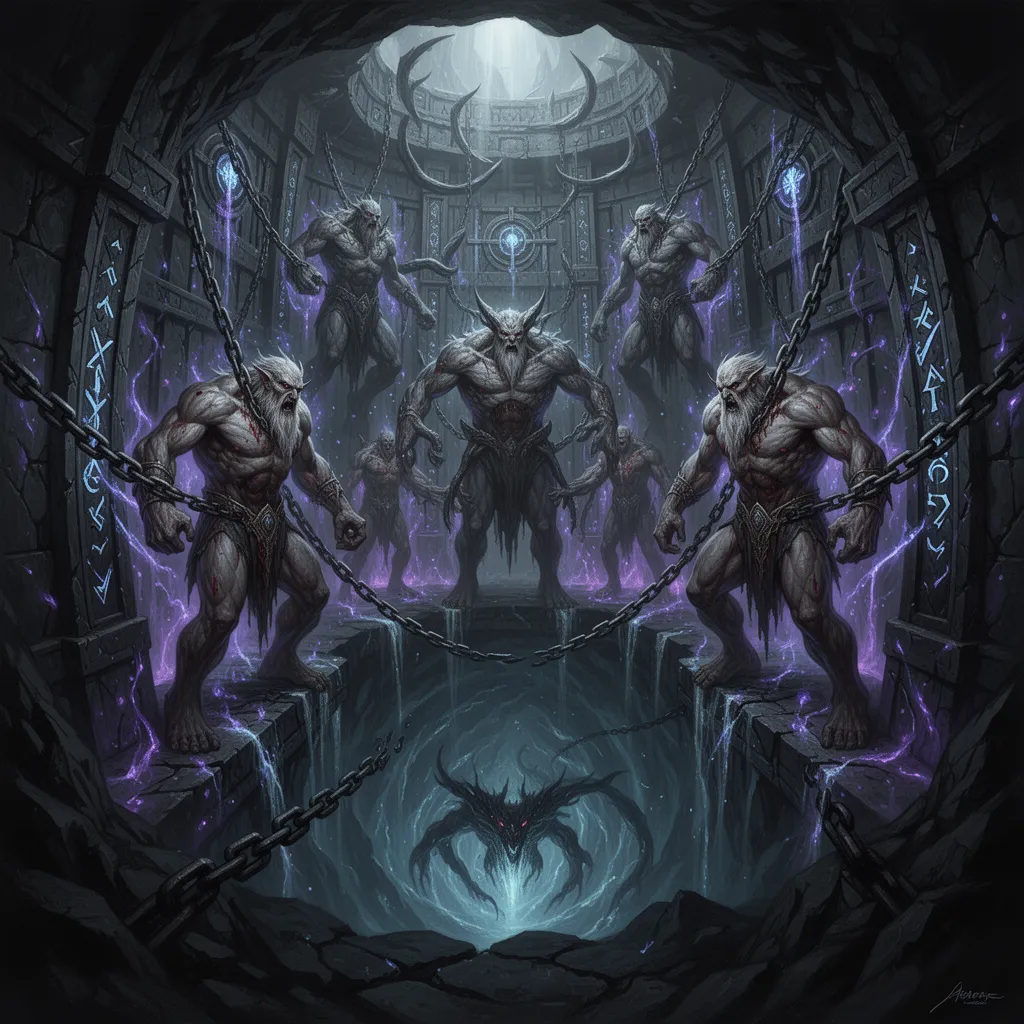
Tartarus
Tartarus stands as the most feared and impenetrable prison realm, situated far beneath the Underworld's already-dark depths. This nightmarish abyss serves as the ultimate detention center for the most dangerous entities in existence—monstrous abominations, defeated Titans of immense power, and mortals whose transgressions against divine authority were deemed beyond redemption. The fortress was established eons ago by the earliest ruling powers, who first imprisoned the Hecatoncheires, hundred-armed giants of terrifying strength, and the Elder Cyclopes within its unbreakable walls. Following the catastrophic ten-year war between the Titans and the Olympian gods, the victorious Zeus ordered the mass imprisonment of his own father Cronus and numerous vanquished Titans to Tartarus, securing their eternal confinement. The pit's reputation grew even more sinister when Zeus later consigned Typhon, a colossal hybrid monstrosity of apocalyptic proportions, to its depths after an attempted uprising threatened the divine order. The very architecture of Tartarus seems designed by forces antithetical to escape, with walls of adamantine stone, enchanted chains of impossible strength, and layers of supernatural sealing that defy any attempt at breach. Time itself moves differently within this accursed realm, extending suffering across eternities. Few mortals have ever glimpsed Tartarus and lived to tell of it, and those who have speak only of an overwhelming sense of dread and hopelessness that permeates every shadow of the place.
View details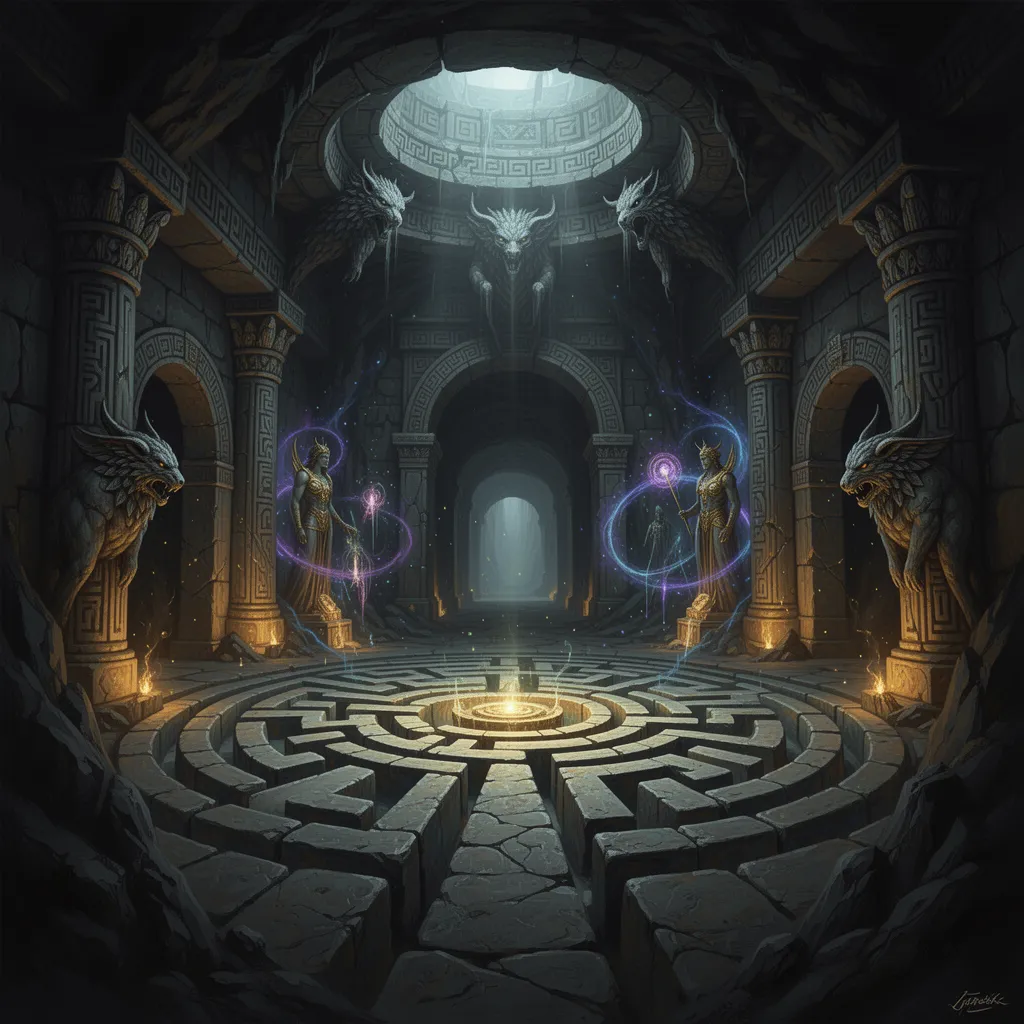
The Labyrinth
The Labyrinth stands as one of the ancient world's most formidable architectural achievements, constructed deep beneath the island of Crete by the legendary craftsman Daedalus at the behest of King Minos. This sprawling network of corridors and chambers was engineered with such deliberate complexity that no mortal mind could navigate its passages without becoming hopelessly lost within its confounding walls. The structure served a dual purpose: to conceal the most dangerous and forbidden knowledge possessed by the Olympian pantheon, secrets so volatile that their exposure could unravel the very foundations of reality itself. Within its darkest depths, the Labyrinth imprisoned beings of incomprehensible power—creatures whose very existence threatened to tear asunder the delicate threads of fate that bind all worlds together. Over centuries, the Labyrinth became shrouded in myth and terror, with countless tales of adventurers and heroes attempting to breach its walls, only to vanish into its eternal darkness. The structure's design incorporates both natural caverns and deliberately constructed passages, creating a hybrid maze that defies conventional mapping. The air within grows colder and more oppressive the deeper one ventures, as if the Labyrinth itself resists intrusion. To this day, scholars debate whether Daedalus truly sealed away divine secrets or if something far more sinister lies at its heart, waiting in patient silence for the day its prison walls might finally crumble.
View details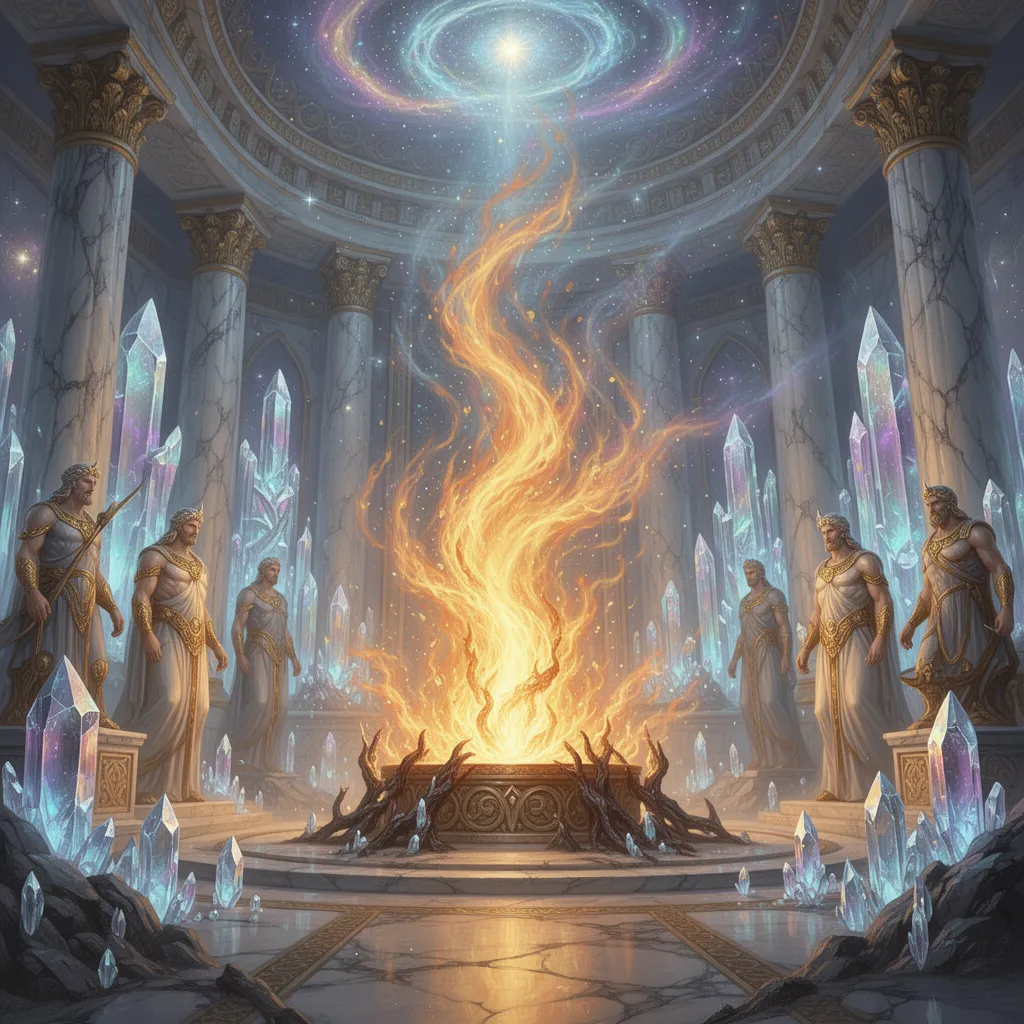
The Flame Of Olympus
Nestled within the innermost sanctum of Mount Olympus stands The Flame of Olympus, a celestial phenomenon that transcends the comprehension of mortals and immortals alike. This primordial fire burns with an ethereal luminescence, casting dancing shadows across marble halls and crystalline chambers that have existed since the world's creation. Though the Olympian deities draw their authority and dominion from this ancient source, none among them can claim true mastery over it, for The Flame of Olympus exists beyond their reach and understanding. Any being—god, titan, or mortal—who dares to make contact with its mesmerizing blaze risks instantaneous annihilation, their essence consumed entirely by its incomprehensible power. Throughout the ages, countless legends speak of heroes and ambitious immortals who sought to harness its energy, only to perish in their hubris. The Flame serves as the fundamental wellspring from which all magical energies flow across the realm, sustaining divine miracles, enchantments, and the very fabric of reality itself. Should this eternal fire ever be extinguished or diminished, the consequences would be catastrophic—magic would wither, the gods would lose their immortality, and the world would descend into primordial chaos. Guarded by both divine law and natural consequence, The Flame of Olympus remains the greatest mystery and most jealously protected treasure of the classical pantheon.
View details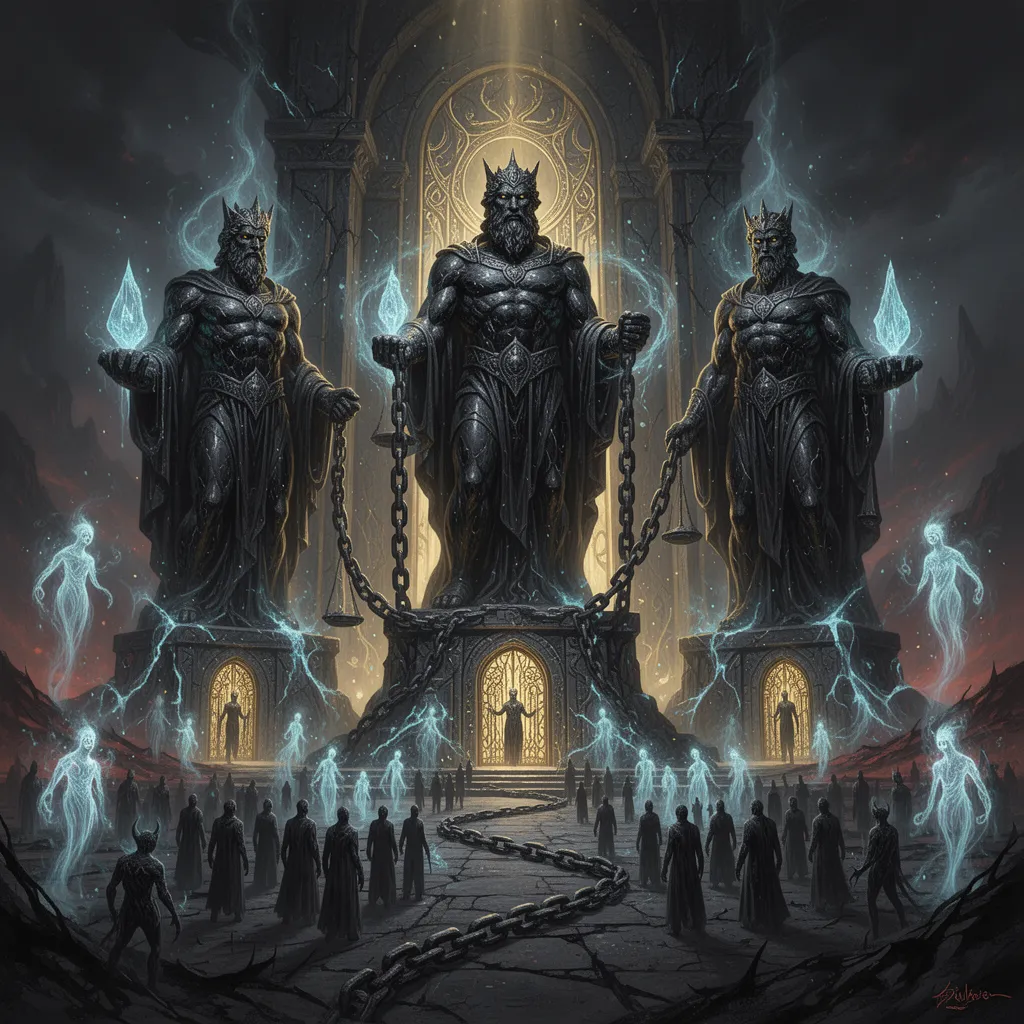
The Three Judges
Deep within the shadowed realm of the Underworld stands one of the most awe-inspiring and terrifying monuments ever constructed—the Three Judges, three colossal statues carved from obsidian and luminescent stone that tower hundreds of feet above the ashen plains. These magnificent sculptures depict King Minos, Aeacus, and Rhadamanthus, the legendary rulers whose wisdom and justice transcended mortality itself, granting them eternal authority over the fates of the dead. The statues are positioned around the legendary Chain of Balance, an ancient artifact of immense power that determines the moral weight of each soul passing through the Underworld. All spirits must stand before these monumental figures and submit to their judgment, a sacred process that has remained unchanged since the realm's founding. Those deemed worthy by the Three Judges are permitted to pass through the golden gates beyond and enter the peaceful Elysian Fields, where blessed souls enjoy eternal rest and contentment. Conversely, those found wanting in virtue are bound by the Chain itself and dragged toward the fiery depths of Tartarus, where they face torment proportional to their earthly transgressions. The surrounding landscape is barren and oppressive, with the ground itself seeming to acknowledge the gravity of these divine proceedings. Countless spirits gather eternally in this desolate plaza, awaiting their moment before the judges, creating an atmosphere thick with anticipation and dread.
View details
Elysium Fields
Elysium Fields represents the ultimate sanctuary for those souls deemed worthy of eternal peace, situated beyond the mortal realm in a place where the boundaries between day and night have dissolved into perpetual twilight. The landscape stretches across boundless emerald meadows adorned with white lilies and crimson poppies, through which crystal-clear streams flow with waters said to carry the echoes of cherished memories and forgotten songs. Ancient olive and cypress groves provide shelter beneath towering canopies, their branches releasing fragrances of sea salt, rain-kissed earth, and blooming wildflowers that drift eternally on gentle winds. Marble pathways traced with veins of gold lead toward magnificent temples and secluded pavilions where legendary heroes, celebrated poets, and unsung champions gather in fellowship, untouched by the passage of time or the weight of mortality. The celestial sky glows with starlight even as golden sunlight bathes the realm, as though the heavens themselves have chosen to remain present in this sacred place. Here, suffering finds no purchase—physical pain dissolves, emotional burdens lift, and the scars of hardship transform into silver marks before fading entirely from memory. The Eternal Tree stands at Elysium's heart, its luminous boughs extending infinitely upward, with each radiant leaf embodying a soul that has finally achieved the rest it earned through trials and perseverance. Within this realm, laughter resonates with genuine joy, conversations feel like the rekindling of ancient bonds, and the profound silence beneath all beauty serves as a testament that true paradise represents not the absence of struggle, but rather its transcendence.
View details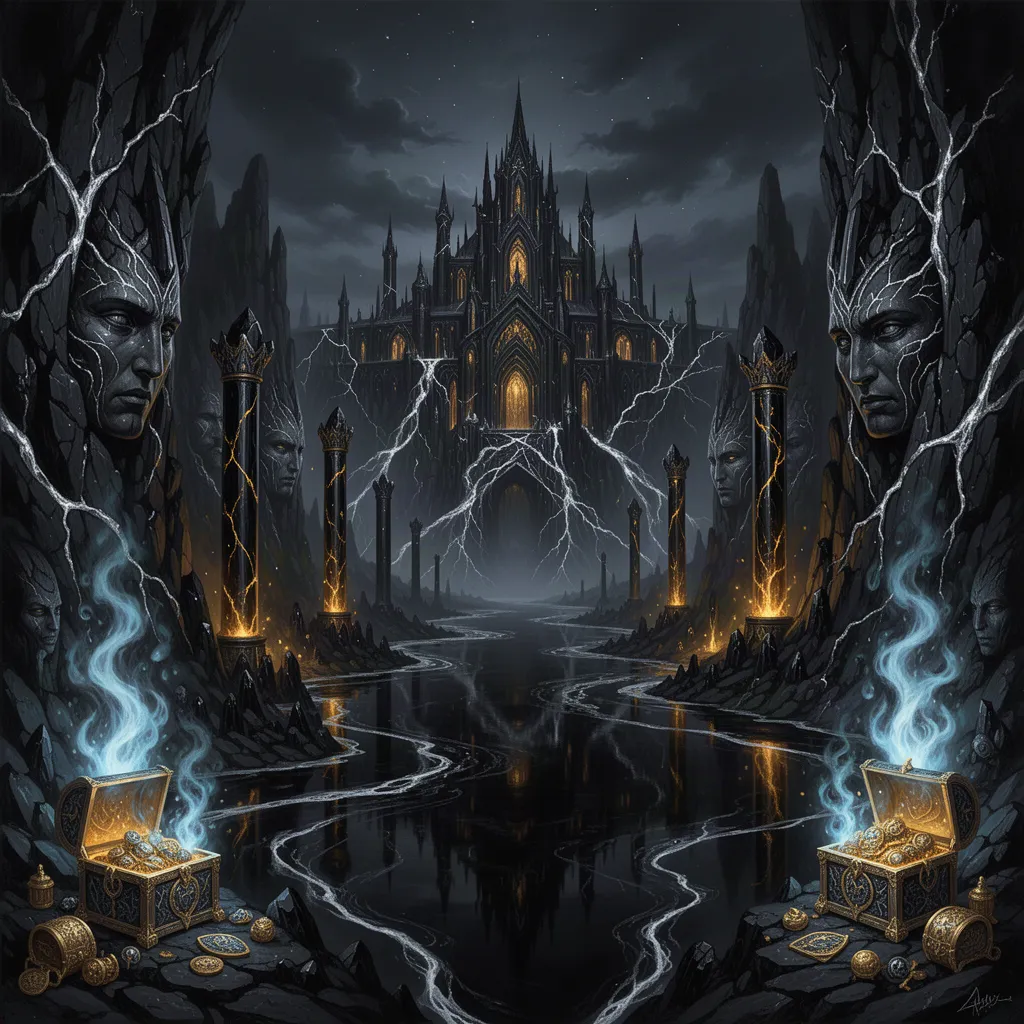
The Palace Of Hades – Throne Of The Sile
The journey to this legendary fortress begins with an unsettling silence that consumes all sound, leaving only the ethereal echo of countless departed souls whispering through the void. The River Styx transforms into an obsidian mirror of impossible stillness, its surface so perfectly reflective that it reveals a sky that ceased to exist ages ago. Colossal cliffs of black stone line the riverbanks, their surfaces intricately carved with the visages of every soul who has crossed into the Underworld, their sorrowful eyes seeming to track each passerby with ancient recognition. The palace itself defies conventional architecture—rather than being constructed, it appears to have grown organically from the very bedrock, a sprawling fortress of midnight stone veined with luminous silver that stretches endlessly across the horizon. Massive columns of pure onyx rise to support vaulted ceilings that fade into impenetrable shadow, while channels of molten gold flow through the walls like living arteries, casting an otherworldly glow across thousands of statues chronicling the rise and fall of forgotten civilizations. The entire structure gleams with an unsettling polish that reflects visitors not as they currently stand, but as they once were or might have become under different circumstances. Throughout the endless halls drift pale blue flames of soulfire, drifting slowly like celestial bodies and illuminating corridors lined with infinite shelves bearing the accumulated treasures of ages—ancient texts, corroded weapons, fractured regalia, and the cherished possessions of emperors, warriors, and terrible beings alike. Every artifact within these walls carries within it a profound and irreplaceable history.
View details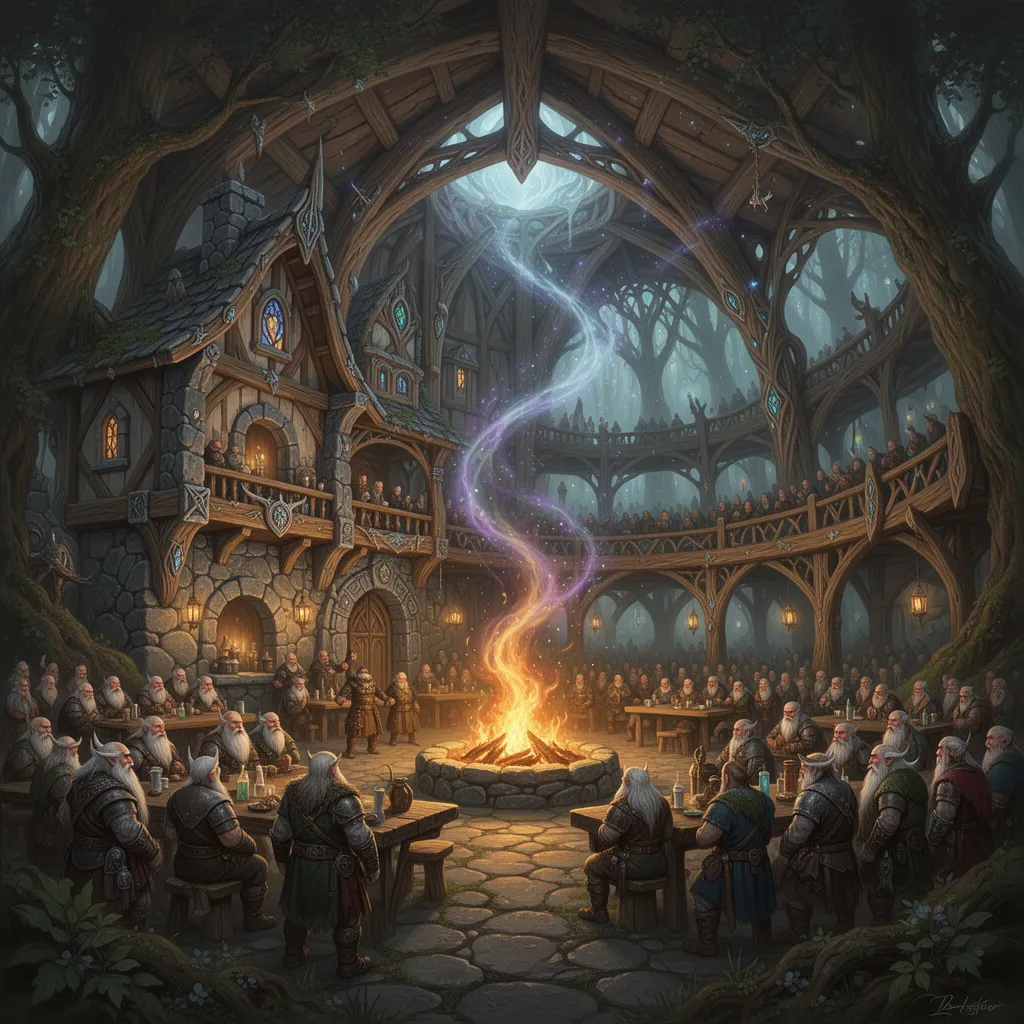
The Tavern Between Realms
Nestled at the convergence of four ancient trade routes, The Tavern Between Realms stands as one of the most peculiar architectural achievements in the known world. Its exterior appears deceptively modest, constructed from mismatched stone and timber that somehow blends dwarven granite foundations with elvish carved oak frames and Viking-style wooden beams reinforced with human craftsmanship. Legend suggests the tavern was built collaboratively during a rare period of peace between the four cultures, each contributing their own building techniques and materials to create something wholly unique. The interior defies all logical explanation, containing vast halls, multiple levels, and numerous alcoves that could never physically fit within the modest exterior walls—a phenomenon scholars attribute to ancient enchantments woven into the very structure during its construction. The main hall features a soaring vaulted ceiling supported by massive pillars carved with interlocking dwarven runes, elvish script, and Viking iconography, while a colossal hearth burns perpetually at its center. Hundreds of travelers, merchants, warriors, and adventurers can be comfortably seated throughout its seemingly endless chambers without ever feeling crowded. Over centuries, The Tavern Between Realms has hosted legendary meetings, peace treaties, and the forging of unlikely alliances, earning its reputation as neutral ground respected by all civilized peoples. The tavern's proprietors have maintained strict traditions of impartiality and hospitality, making it a sanctuary where former enemies can share food and drink without fear of violence.
View details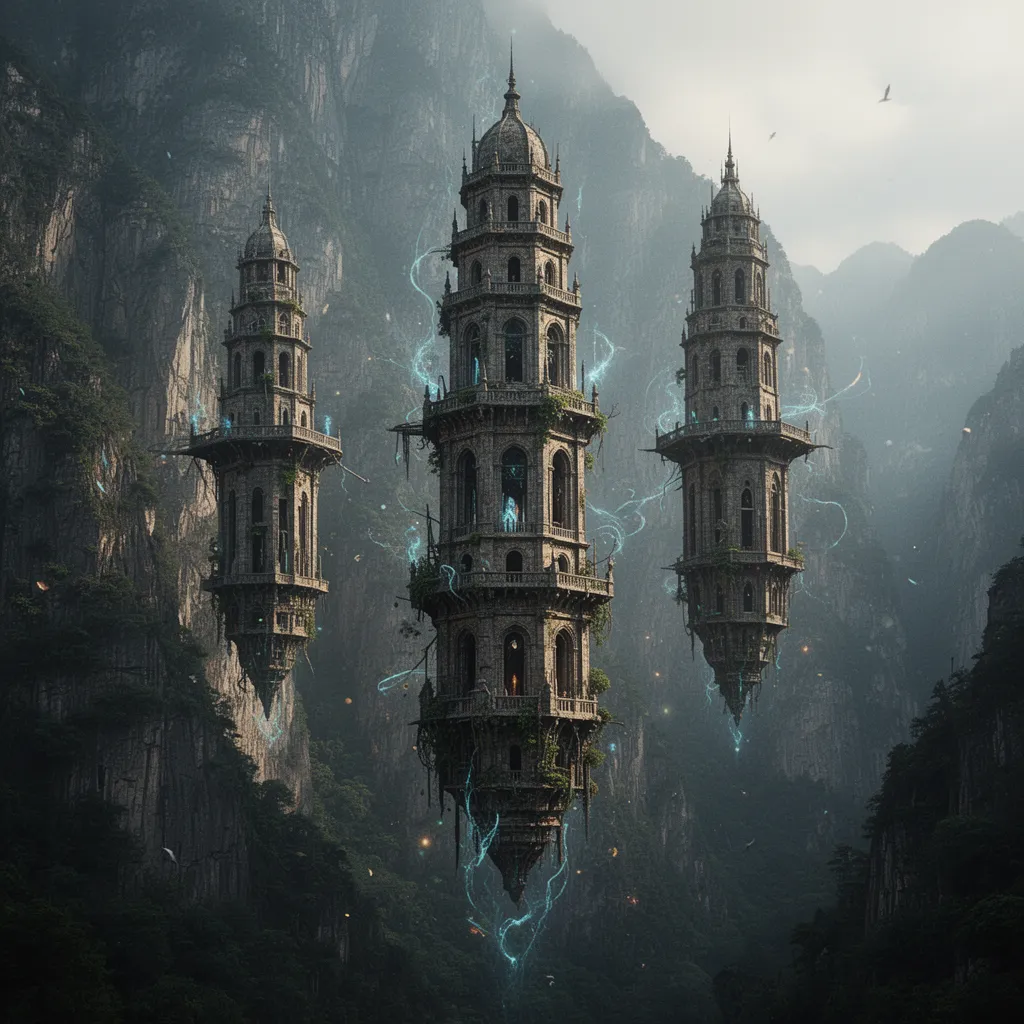
The Towers That Hang (Cloned)
The Towers That Hang represent one of the world's most enigmatic architectural marvels, their origins lost to antiquity and subject to countless historical theories. Scattered across the jagged peaks and cliff faces of the Meridian Mountains, these towering structures defy conventional understanding of physics and gravity, jutting from rock faces at acute angles or hovering freely in the air without visible support. Some towers stand nearly vertical, their foundations embedded impossibly within the stone itself, while others extend horizontally like petrified spines protruding from the mountainside, and a select few drift in the currents of air as though held aloft by ancient sorcery. Local legends speak of their construction by a civilization that existed before recorded history, built to contain forces and entities too dangerous to roam freely across the mortal realm. Each tower serves a distinct purpose—some function as prisons for otherworldly beings bound by wards and seals that weaken with each passing century, while others conceal portals to distant realms or lost dimensions. Scholars and adventurers have long sought to unlock the mysteries held within these structures, discovering that many contain elaborate mechanisms, cryptic inscriptions, and architectural impossibilities that suggest knowledge far beyond contemporary understanding. The few who have ventured into The Towers That Hang speak of temporal distortions, shifting corridors, and the palpable sense of ancient power thrumming through their stone walls. Whether monument, prison, or gateway, The Towers That Hang remain one of the world's greatest unsolved mysteries.
View details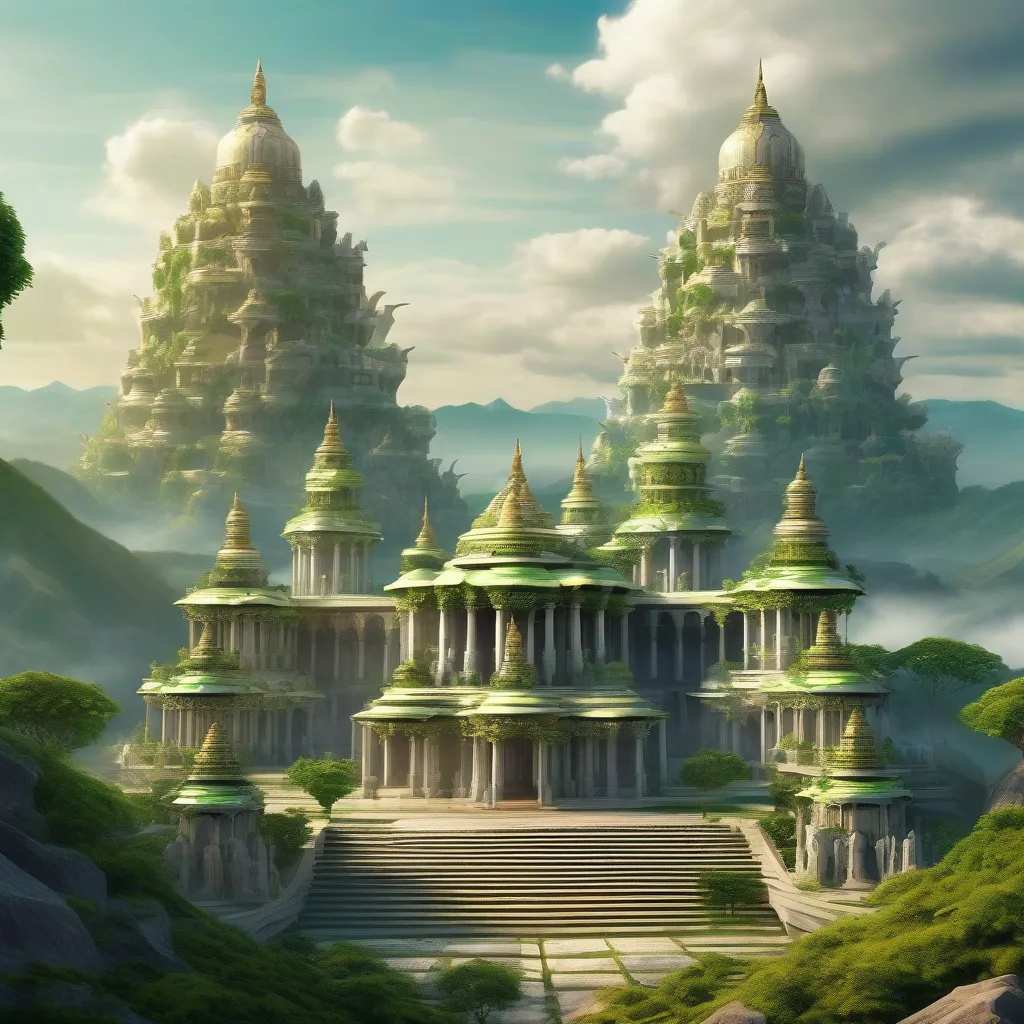
The Parthenon
The Parthenon is an ancient and revered site located at the heart of the Hellenian Empire, serving as the gateway to the fabled lands of Greece. This grand temple, constructed of gleaming marble and adorned with intricate sculptures, stands as a testament to the might and ingenuity of the Hellenian people. The Parthenon's history dates back to the golden age of the Hellenian civilization, when the empire was at the height of its power and influence. The temple was commissioned by the ruling council, who sought to create a structure that would symbolize the strength and grandeur of their nation. Over the centuries, the Parthenon has witnessed countless important events, from the coronation of Hellenian kings to the signing of historic treaties. Towering above the surrounding landscape, the Parthenon is a true architectural marvel. The temple's imposing columns and ornate pediments have become iconic symbols of Hellenian culture, inspiring awe and wonder in all who gaze upon them. The interior of the Parthenon is equally impressive, with intricate murals and statues depicting the gods and heroes of Hellenian mythology. Beyond its historical significance, the Parthenon is also renowned for its natural beauty. The temple is situated atop a lush, rolling hill, offering breathtaking views of the surrounding countryside. The area is home to a diverse array of plant and animal life, including fragrant wildflowers and majestic birds of prey. The Parthenon is not merely a physical landmark, but a cultural and spiritual center for the Hellenian people. Pilgrims from across the empire and beyond make the journey to the temple, seeking to connect with the divine and to honor the legacy of their ancestors. The Parthenon's influence extends far beyond its borders, shaping the beliefs
View details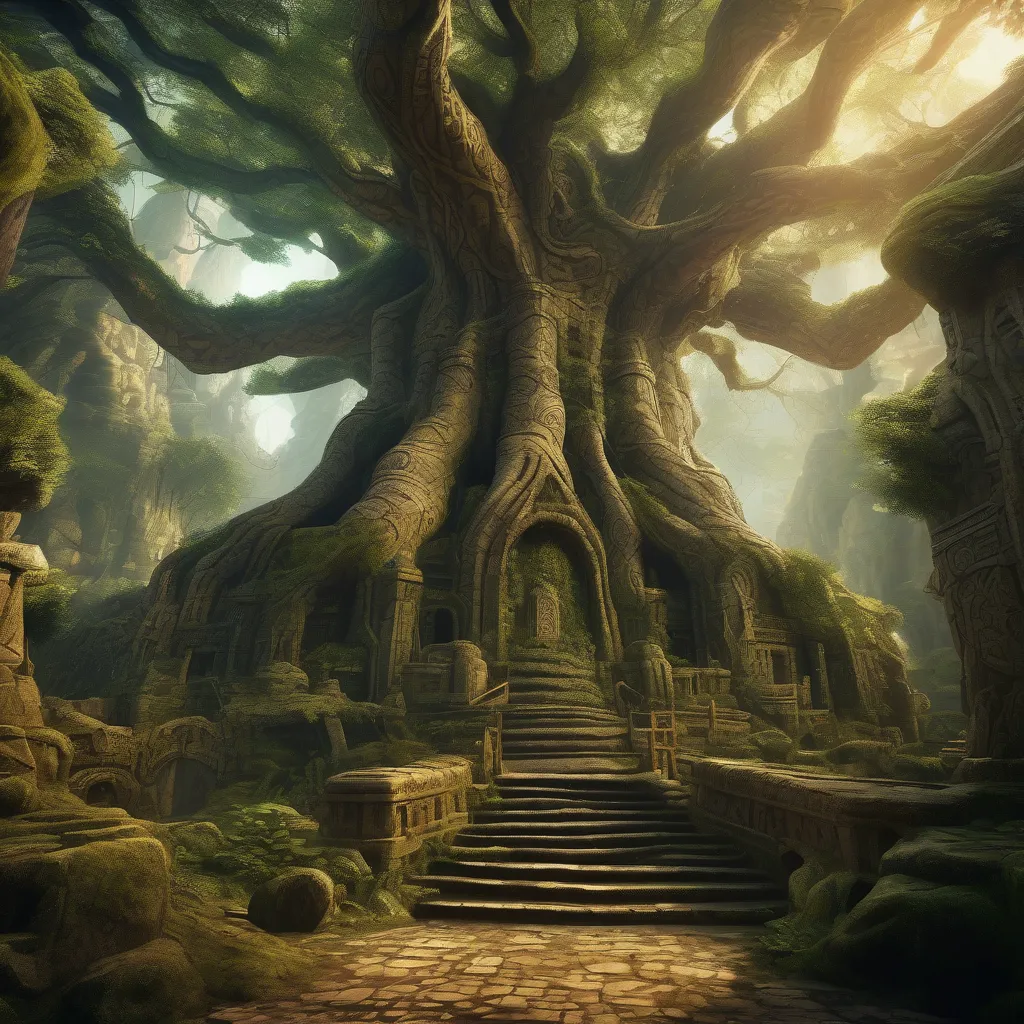
The Roots Of The Nine
The Roots Of The Nine is a renowned and ancient sanctuary that serves as the gateway to the mystical realms of Norse mythology. This sacred site is situated deep within a sprawling, primeval forest, where the towering trees seem to whisper the secrets of the ages. The temple itself is a magnificent structure, its walls adorned with intricate carvings and runes that tell the story of the gods and their cosmic struggles. At the heart of this hallowed place lies a grand, subterranean chamber, where a massive, gnarled tree takes root, its branches reaching up towards the heavens. This is the Yggdrasil, the World Tree that binds the nine realms of the Norse pantheon together. It is here that the high priests of the temple perform their rituals, communing with the divine forces that govern the cosmos. The Roots Of The Nine has a long and storied history, dating back to the dawn of human civilization in these lands. It is believed to have been established by the earliest Norse settlers, who sought to honor the gods and ensure the stability of the cosmos. Over the centuries, the temple has weathered many challenges, from the ravages of war to the erosion of time, yet it has endured, standing as a testament to the enduring power of faith and tradition. Today, the Roots Of The Nine remains a place of great significance, drawing pilgrims and scholars from across the realm. Its halls echo with the chants of the faithful, and its libraries hold countless tomes of ancient lore, waiting to be unlocked by those with the courage and wisdom to unravel their mysteries.
View details