WorldsYggdrasil
Yggdrasil
Locations
Browse the public locations that belong to this world. Select a card to read more.

The Great Tomb Of Nazarick
The Great Tomb of Nazarick stands as one of the most formidable and mysterious strongholds in the known world, a colossal underground complex that extends far beneath the grasslands near the Great Forest of Tob. From the surface, visitors encounter an imposing rectangular mausoleum approximately 200 meters in width, encircled by towering defensive walls and surrounded by an extensive cemetery filled with weathered tombstones and elaborate statues that speak to ages past. This ten-level subterranean fortress represents centuries of architectural ambition and magical innovation, originally conceived as a six-floor defensive structure before its expansion into the sprawling complex it is today. The upper levels descend through dark catacombs and vast underground caverns, including the legendary underground lake of Gargantua and a perpetually frozen glacial domain wracked by eternal blizzards. Deeper within lie ecosystems of artificial creation—a thriving jungle with its own illumination cycle and combat arenas, alongside volcanic chambers where magma flows endlessly. The lower levels house the administrative heart of the stronghold, featuring luxurious quarters for the ruling elite and an ornate throne room of breathtaking grandeur. The tomb's defenses are legendary, protected by intricate magical barriers, countless mechanical and arcane traps, and commanded by powerful entities of immense capability. Few who enter without permission have ever emerged, and the tomb remains an impenetrable symbol of authority and supremacy in the region.
View details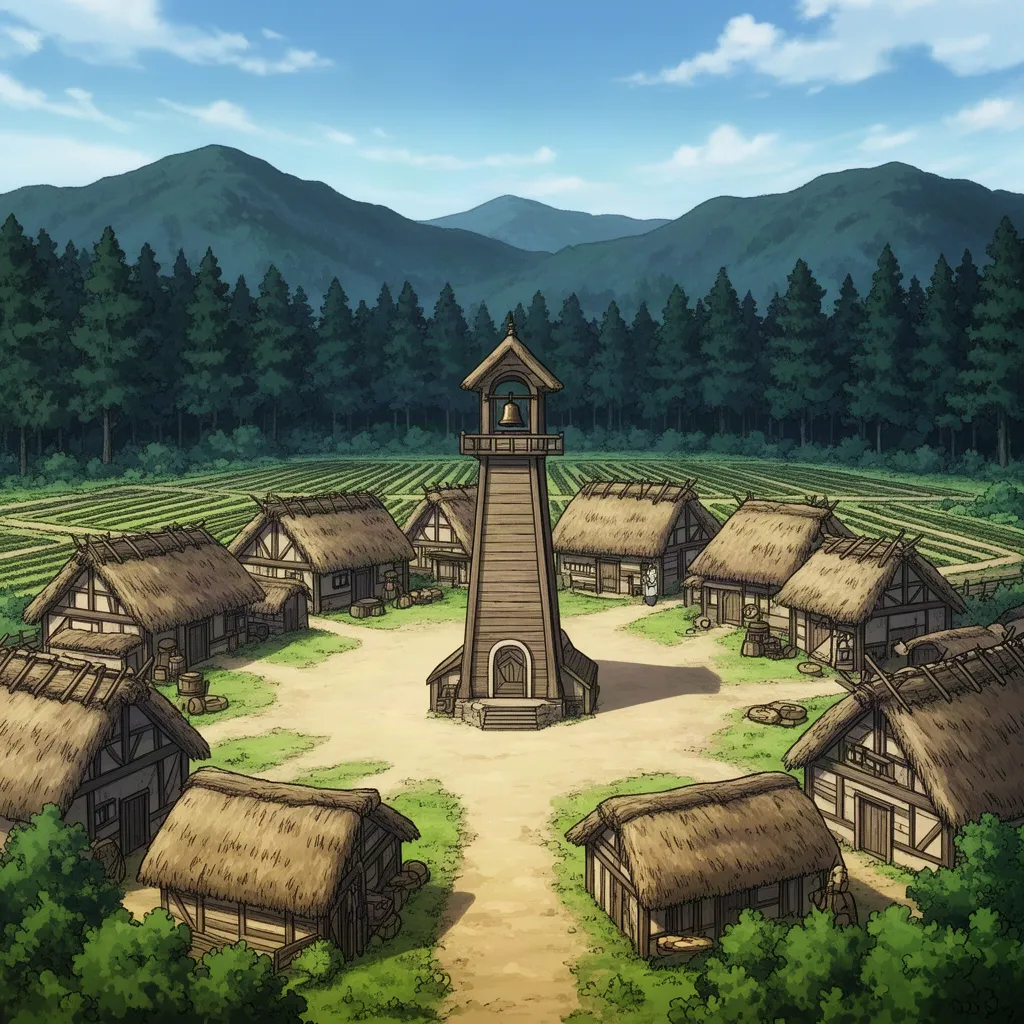
Carne Village
Carne Village stands as a modest frontier settlement in the New World, positioned strategically between the territorial boundaries of the former Re-Estize Kingdom and the Baharuth Empire. Founded approximately a century ago by the pioneering settler Thomas Carne, this humble community has maintained its character as a primarily agricultural hub, home to roughly 120 inhabitants distributed across some 25 family households. Nestled in the shadow of the Azerlisia Mountains to the north and adjacent to the sprawling darkness of the Great Forest of Tob, the village occupies a location of both opportunity and vulnerability, situated merely 10 kilometers from the mysterious Great Tomb of Nazarick and roughly 50 kilometers from the fortified city of E-Rantel. The settlement's architecture reflects its rustic origins, featuring simple wooden structures with thatched or timber roofs arranged organically around a central plaza, where a prominent bell serves as the community's timekeeper and alarm. Cultivated fields and medicinal herb gardens radiate outward from the village proper, creating a buffer of human industry between the modest homes and the impenetrable forest that looms at its borders. Historically, Carne Village experienced little disruption from the outside world, with visitors limited to wandering herb gatherers and the annual visit of imperial tax collectors, allowing its residents to pursue their quiet existence largely undisturbed. The village's economy revolves around subsistence farming and the harvesting of valuable forest resources, with dirt pathways connecting residences and small storage structures scattered throughout the settlement. Though it lacks any permanent military garrison, recent transformations have gradually fortified the community, reshaping it from a purely agricultural village into a mixed settlement better equipped to face the uncertainties of its precarious frontier location.
View details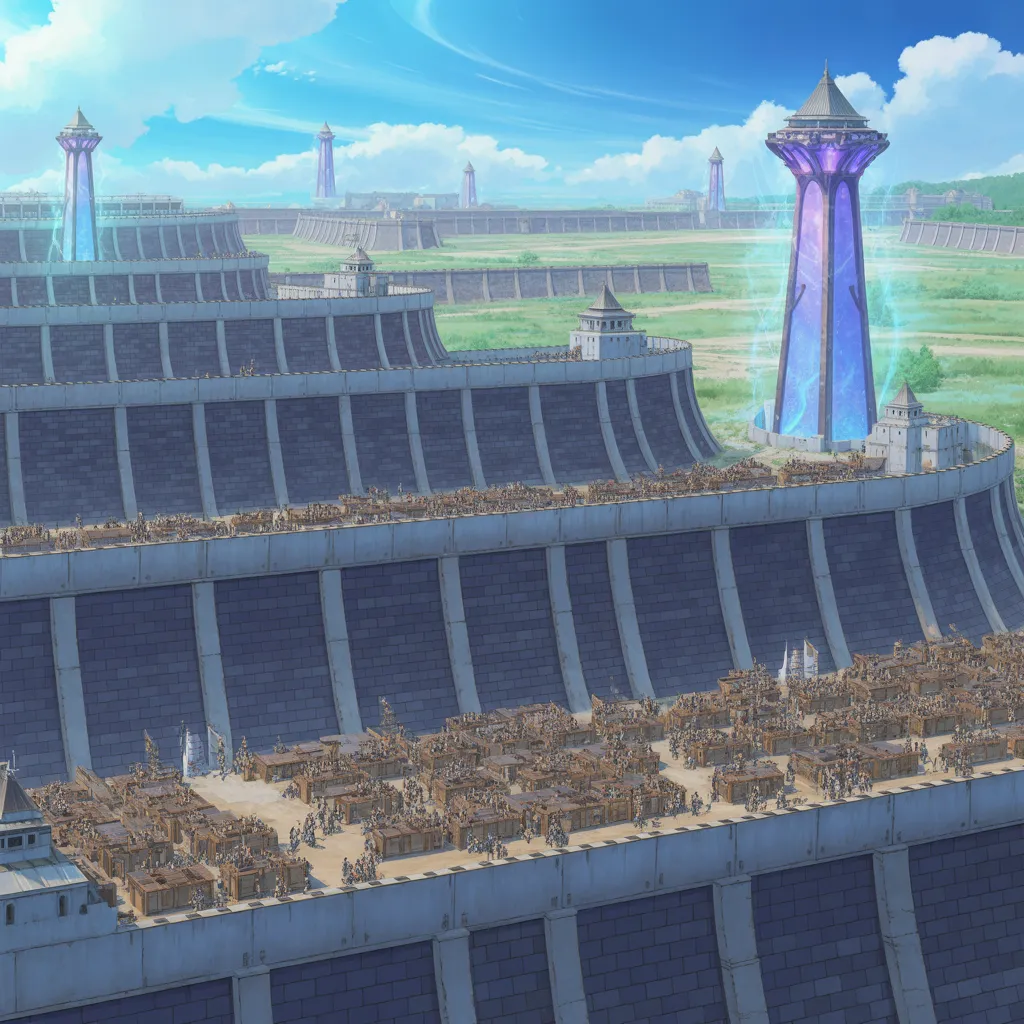
E-Rantel
E-Rantel stands as a formidable fortress city and the beating heart of the Sorcerer Kingdom, commanding a strategic position near the convergence of three major political boundaries. Originally constructed as a vital military stronghold by the Re-Estize Kingdom, the city spent generations serving as the kingdom's primary bulwark against imperial aggression, with the sprawling Katze Plains stretching before it as the traditional theater of seasonal warfare. The city's architecture reflects its martial heritage through an impressive system of three concentric defensive walls, each ring representing centuries of fortification development and strategic refinement. The outermost zone maintains extensive military barracks, training grounds, and massive grain storage facilities designed to sustain large garrison forces during prolonged conflicts. Within the middle ring, a thriving commercial district has flourished, where merchants from across the realm trade goods and services, while residential quarters provide homes for thousands of citizens and skilled craftspeople. The innermost sanctum contains the administrative heart of the kingdom, where governance and high-level decisions shape the realm's future. E-Rantel has earned regional renown for its exceptional agricultural output and advanced food preservation techniques, ensuring prosperity even during times of hardship. Most notably, the city has become a renowned center of pharmaceutical excellence, attracting master alchemists and healers from distant lands who produce recovery potions of unmatched quality and potency. Since its transformation into the Sorcerer Kingdom's capital, E-Rantel has undergone a remarkable renaissance, blending its martial traditions with new magical innovations and governance structures.
View details
The Great Forest Of Tob
The Great Forest of Tob stands as one of the most formidable and perilous wilderness regions in the known world, stretching across vast territories south of the former Re-Estize Kingdom's borders. This immense woodland, spanning roughly one-fifth the area of the defunct kingdom, emerged into prominence following the mysterious appearance of the Great Tomb of Nazarick in the grasslands along its northern frontier. The forest teems with an extraordinary diversity of dangerous fauna, ranging from organized goblinoid tribes and massive ogres to more exotic threats such as nagas, treants, and dryads, alongside countless magical beasts whose origins remain largely unknown. Beneath the forest floor lies an extensive labyrinth of cave systems that have resisted thorough exploration for generations, likely harboring creatures and treasures yet undiscovered. The region's turbulent history saw dark elves once reign supreme until their dominion was shattered by the emergence of the Evil Tree Zy'tl Q'ae, a parasitic treant that drained life from the surrounding land. For approximately two centuries, three powerful entities divided the forest's territories among themselves: the hibernating Evil Tree and its dryad attendant Pinison Pol Perlia controlled the north, the enigmatic Wise King—revealed to be a giant magical hamster named Hamsuke—ruled the south, and the formidable Naga clan under the Demon Snake of the West commanded the western reaches. Today, frontier settlements such as Carne Village serve as vital outposts and supply bases for the brave adventurers and material gatherers who venture into Tob's depths seeking rare alchemical components and magical artifacts.
View details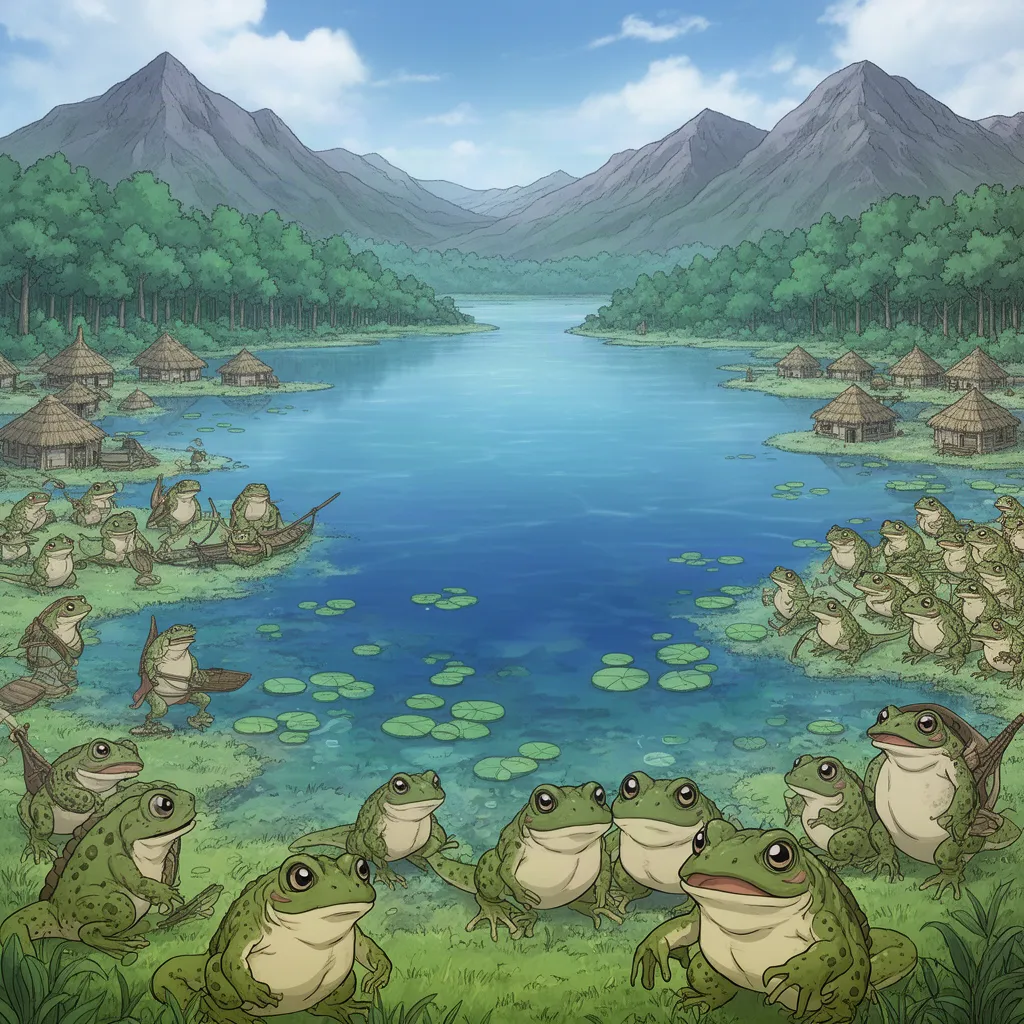
The Great Lake
The Great Lake stands as one of the most significant bodies of water in the New World, stretching approximately twenty kilometers across and displaying a distinctive inverted calabash shape that has inspired countless local legends and cartographic studies. Located at the confluence of the Great Forest of Tob to the south and the towering Azerlisia Mountains to the north, this vast lake has served as a natural boundary and meeting point for civilizations across the ages. The lake's geography divides naturally into two distinct regions: the deeper Upper Lake, which teems with massive aquatic creatures and remains largely unexplored, and the shallower Lower Lake, more accessible to settlement and commerce. The southern terminus dissolves gradually into an extensive wetland system where water and marsh intertwine seamlessly, creating a unique ecosystem that has sustained diverse populations for generations. Historically, five major lizardmen tribes—the Green Claw, Red Eye, Dragon Tusk, Razor Tail, and Small Fang—established their settlements throughout the southern wetlands, developing rich cultures adapted to the region's challenging environment. Following a pivotal military conflict that reshaped the region's political landscape, these tribes came under new governance, with their strongest warriors honored through resurrection and given positions of authority. The northern reaches of the lake became home to the toadmen civilization, who developed their own distinct traditions and architectural styles. Today, the entire Great Lake region remains under unified administrative control, with the area serving as a crucial center of trade, culture, and military strength, making it one of the most important territories in the known world.
View details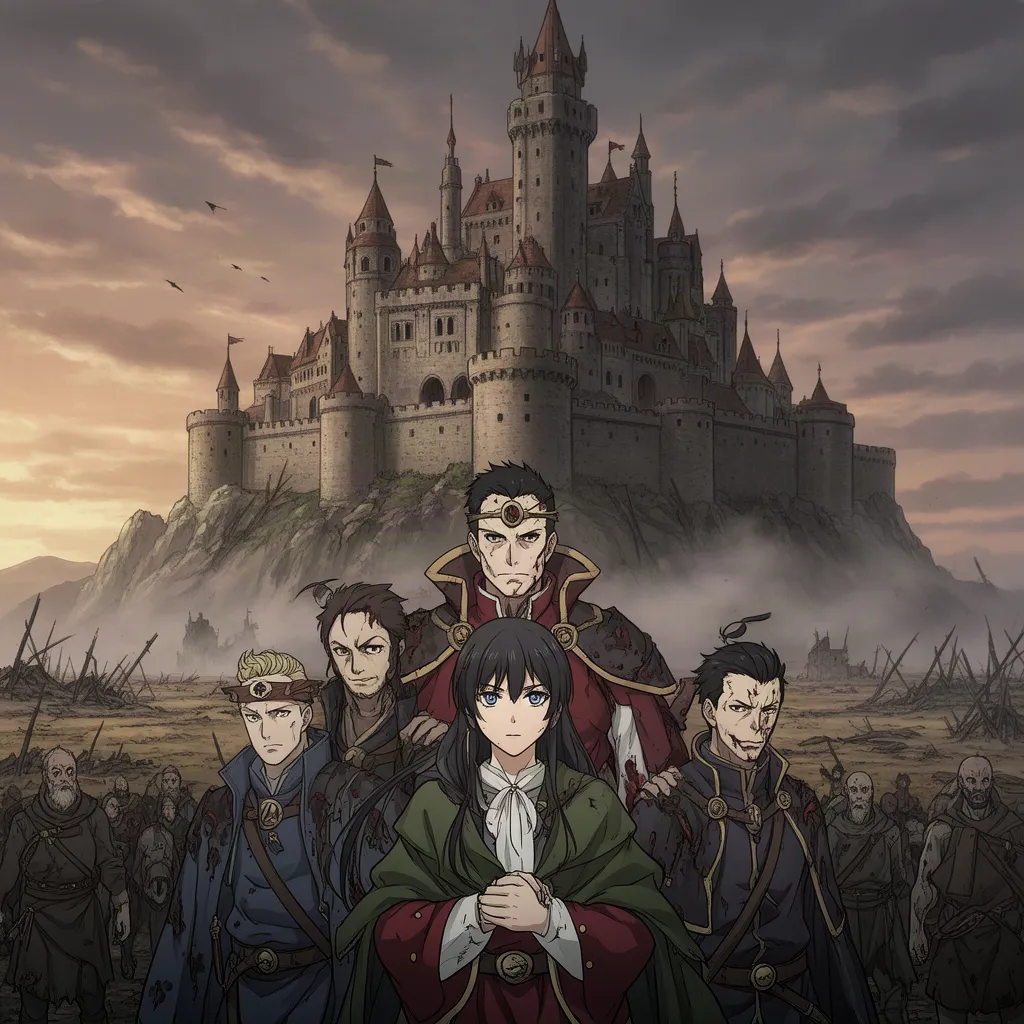
Re-Estize Kingdom
The Re-Estize Kingdom stands as one of the most prominent human realms of the New World, sprawling across vast territories west of the Azerlisia Mountains and positioned strategically northwest of the mysterious Nazarick. With a population exceeding nine million souls, the Kingdom maintains considerable influence among the three major human nations that border the enigmatic Nazarick region. Governed through a feudal monarchical system under the reign of King Ramposa III, the realm has long struggled with deep fractures between the Royal Court and the powerful Noble Houses, whose competing interests have fractured governmental coherence. Centuries of political maneuvering have bred widespread corruption throughout the kingdom's institutions, while the shadowy criminal syndicate known as Eight Fingers operates with near-impunity, further weakening the state's authority and stability. The realm's military strength, though numerically impressive, consists largely of poorly disciplined and inadequately trained soldiers, relying dangerously upon the exceptional skill of the legendary warrior Gazef Stronoff and his elite combat unit to maintain any semblance of martial credibility. Year after year, the Kingdom exhausts its treasury and manpower in the brutal Annual Wars fought against the neighboring Baharuth Empire across the blood-soaked Katze Plains, a seemingly endless cycle of conflict that perpetually drains national resources. Princess Renner has emerged as a reformist voice, championing progressive changes to strengthen governance and reduce corruption, yet her initiatives consistently encounter fierce resistance from entrenched noble interests determined to preserve their privileges. The Kingdom teeters precariously between maintaining its status as a major power and descending into irrelevance, its future uncertain amid internal decay and external military pressures.
View details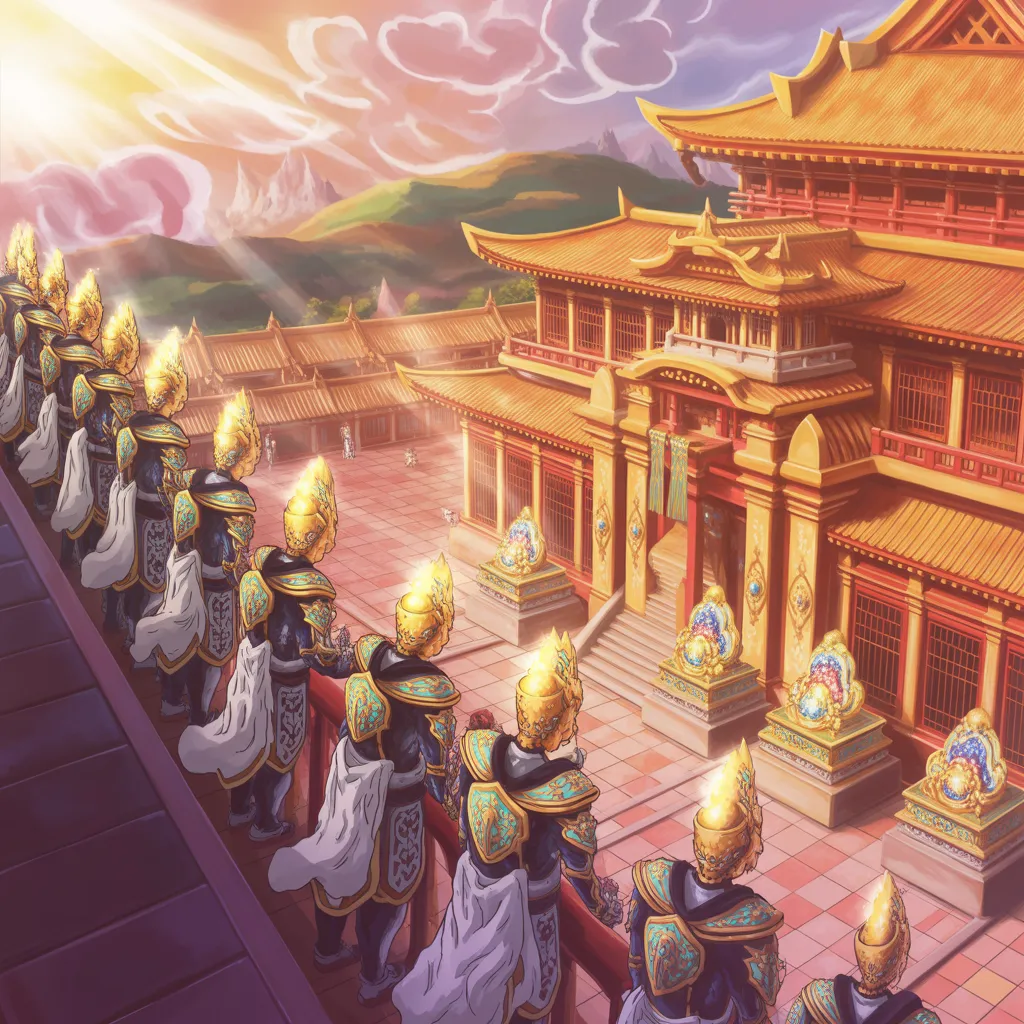
Slane Theocracy
The Slane Theocracy stands as one of the most formidable human civilizations in the known world, positioned strategically south of the fallen Re-Estize Kingdom and commanding significant influence over the surrounding regions. Established approximately six centuries ago, this powerful nation emerged from humanity's darkest hour when six divine saviors—worshipped as the Fire, Water, Earth, Wind, Light, and Darkness deities—delivered their people from annihilation and eternal despair. What distinguishes the Theocracy from all other nations is its unwavering religious devotion to all six gods simultaneously, making it the sole power to maintain such comprehensive theological unity. The bloodlines of these divine beings, preserved through careful genealogical stewardship, produce the God-kin—demigods who embody sacred power and form the spiritual and martial backbone of their civilization. Governance intertwines completely with religious authority, with a Pontifex Maximus elected by the Six Cardinals serving as supreme ruler, advised by the Supreme Executive Council in all matters of state and faith. The nation's military prowess extends far beyond conventional knighthood, with standard knights already surpassing those of rival empires, while the legendary Six Scriptures—elite specialized units including the devastating Black Scripture and the purifying Sunlight Scripture—represent the true pinnacle of organized martial strength. These sacred orders fulfill distinct purposes ranging from demi-human extermination and dragon-lord combat to espionage, infiltration, and internal security. The Theocracy jealously guards ancient divine relics and possesses at least one legendary World Item of immense power, cementing its position as a civilization capable of reshaping continental politics through both faith and force.
View details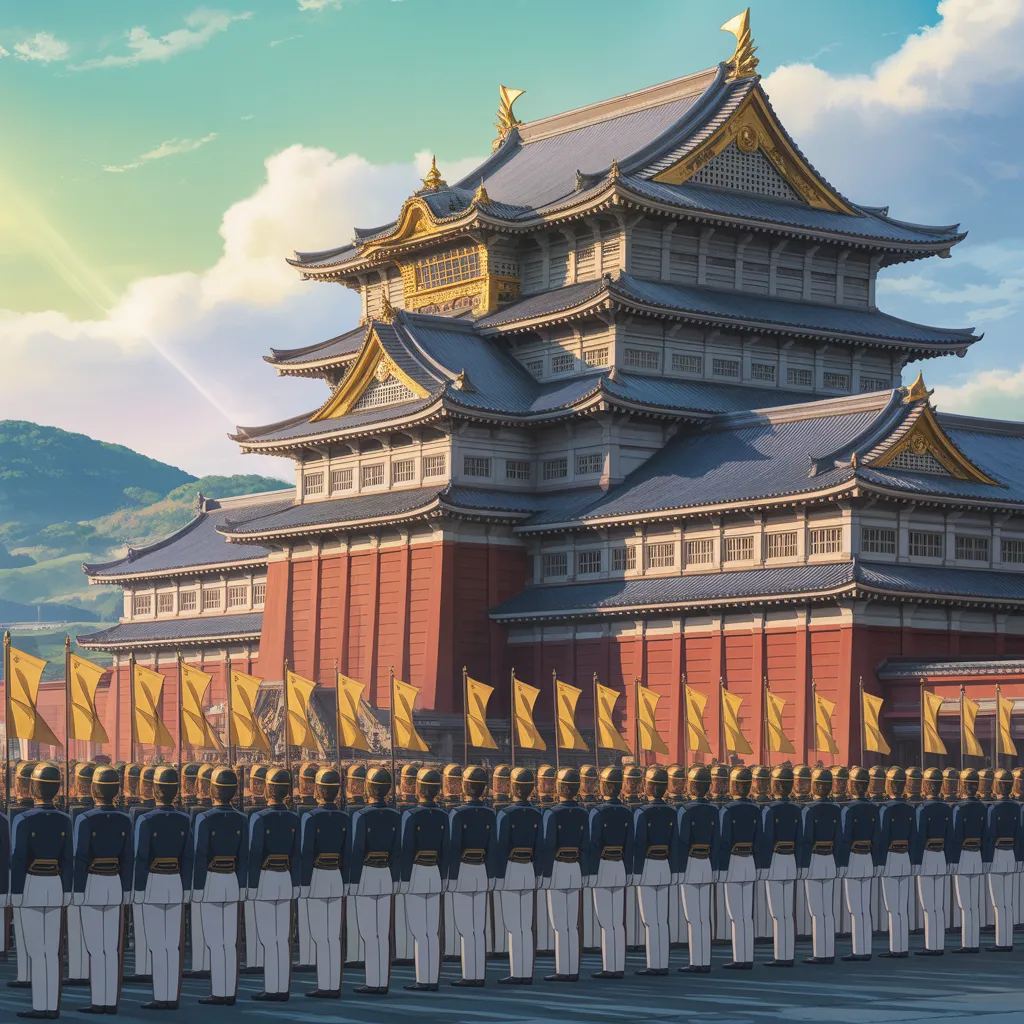
Baharuth Empire
The Baharuth Empire stands as one of the most formidable human nations on the continent, distinguished by its transformation from a fragmented feudal realm into a centralized absolute monarchy. Three generations ago, the young Emperor Jircniv orchestrated a dramatic consolidation of power, systematically dismantling the old noble families—even his own relatives—who resisted modernization and unified rule. Rather than merely replacing corrupt aristocrats with others of their ilk, Jircniv revolutionized the Empire's governance by elevating talented individuals from common backgrounds to positions of influence, creating an efficient administrative system that rivals any neighboring state. The Baharuth military represents the pinnacle of professional soldiery in the region, composed of career soldiers rigorously trained and equipped with superior arms and armor, making their smaller force far more devastating than the numerically superior armies of rival kingdoms. The Four Imperial Knights, legendary warriors of exceptional skill, serve as both the Emperor's personal protectors and symbols of imperial might. For generations, the Empire pursued a calculated strategy of annual border conflicts against the Re-Estize Kingdom along the Katze Plains, gradually weakening its neighbor through sustained military pressure in preparation for eventual conquest. However, when workers dispatched by the Empire ventured into the mysterious underground fortress of Nazarick and were annihilated without trace, Emperor Jircniv was forced to confront a power far beyond his comprehension. The catastrophic massacre that unfolded on the Katze Plains revealed the true extent of Nazarick's supremacy, compelling the pragmatic Emperor to abandon his continental ambitions and instead seek protection through vassalage to this overwhelming force.
View details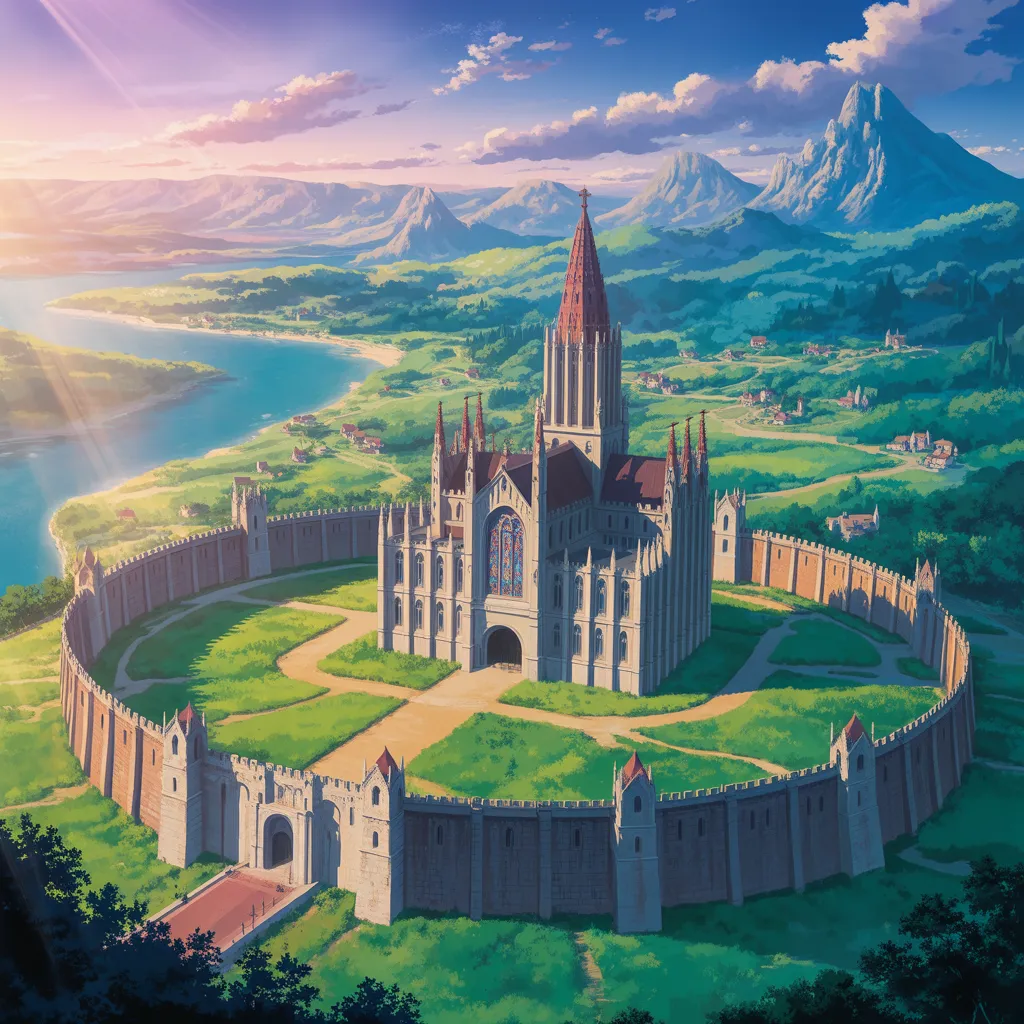
Roble Holy Kingdom
The Roble Holy Kingdom stands as a prominent human nation positioned to the southwest of the former Re-Estize Kingdom, separated by vast stretches of frontier land. Established approximately two centuries ago, this realm has developed a distinctive geography, bisected by an expansive bay that divides its territories into northern and southern regions, each with their own distinct character and governance traditions. The kingdom's capital, Hoburns, serves as the political and spiritual center of this devoutly religious state. The nation's identity is deeply rooted in religious monarchy and the venerable paladin tradition, with an institutional prejudice against demi-human populations and undead entities that shapes both policy and cultural attitudes. To fortify against the relentless incursions from the demi-human communities inhabiting the nearby Abelion Hills, the kingdom commissioned construction of the formidable Great Wall, an engineering marvel that nonetheless failed to prevent periodic breaches and attacks throughout its history. The realm experienced significant upheaval under Holy Queen Calca Bessarez, its first female sovereign, whose progressive leadership earned her widespread popular support despite fierce opposition from the conservative southern nobility. A catastrophic conflict erupted when coordinated demi-human forces breached the Great Wall, devastating the northern territories and resulting in the deaths of Queen Calca and numerous high-ranking officials. In the aftermath, surviving nobles and military leaders established a Liberation Army and sought external assistance from the neighboring Sorcerer Kingdom. Following the resolution of this devastating war, the kingdom's governance structure underwent dramatic transformation, ultimately becoming a vassal state under foreign dominion. The Holy Kingdom's tumultuous recent history has fundamentally altered its political landscape and international standing.
View details