👉
Learn fantasy city design techniques used by worldbuilders, RPG creators, and fantasy writers. Discover how to build cities that feel alive and generate locations instantly with AI tools like Summon Worlds.
Most fantasy cities in books, RPG campaigns, and games have the same problem.
They look amazing on a map…
But they feel completely dead.
The streets are empty.
The taverns are generic.
The citizens feel like background props.
If you want your fantasy world to feel real, your cities must behave like living organisms.
They need politics. Trade. Rivalries. Neighborhoods. Hidden secrets.
In this guide, you'll learn how to design fantasy cities that feel alive, whether you're a writer, dungeon master, or RPG creator. You'll also see how AI tools like Summon Worlds can help you generate entire cities, characters, and locations in minutes instead of weeks.
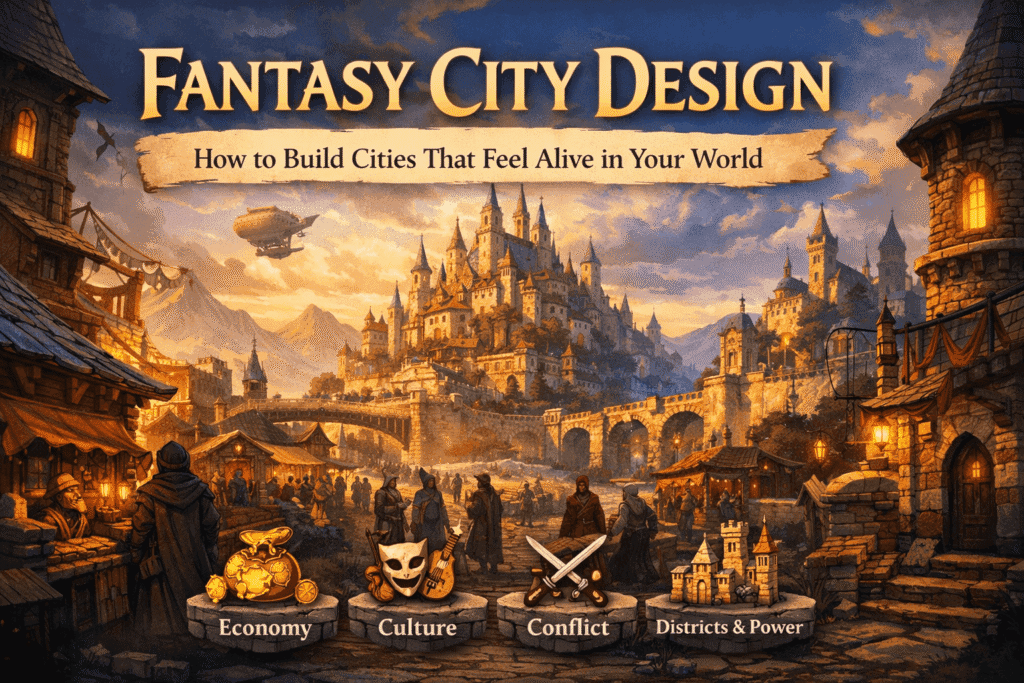
What Makes a Fantasy City Feel Alive?
A fantasy city feels alive when it has dynamic systems that interact with each other, such as economy, culture, politics, and daily life.
In other words:
A living city isn't just a location, it's a network of stories waiting to happen.
Great fantasy cities include:
- Distinct districts with purpose
- Conflicting factions and politics
- Active trade and economy
- Cultural traditions and beliefs
- Characters that shape the city's identity
Think about cities like:
- King's Landing (Game of Thrones)
- Ankh-Morpork (Discworld)
- Baldur's Gate (D&D)
They feel real because every street suggests new stories, quests, or secrets.
Try Summon Worlds for free.
The 5 Elements Every Living Fantasy City Needs

If your city includes these five elements, it will instantly feel more immersive.
1. Economy (Why the City Exists)
Every real city exists for a reason.
Ask yourself:
Why was this city built?
Examples:
- Trade port between kingdoms
- Mining city near magical crystals
- Religious capital built around a sacred temple
- Military fortress guarding a mountain pass
Your city's economy determines:
- Who lives there
- What goods are traded
- Which factions gain power
For example:
A port city will have:
- sailors
- smugglers
- merchants
- dockside taverns
The economy creates stories automatically.
2. Culture and Identity
Cities feel alive when they have unique cultural traits.
Ask questions like:
- What festivals happen here?
- What foods are famous?
- What religion dominates the city?
- What language or slang do locals use?
Small cultural details make cities memorable.
Example:
A desert city might have:
- night markets instead of daytime markets
- water rituals
- lantern festivals
Culture turns a location into a place people remember.
3. Conflict (The Engine of Stories)
No great fantasy city is peaceful.
Conflict drives everything.
Possible city conflicts include:
- noble houses competing for power
- religious factions arguing over prophecy
- criminal guilds controlling the streets
- rebellion against a tyrant ruler
- magical disasters hidden by authorities
Conflict creates:
- quests
- plot hooks
- character motivations
Without conflict, a city is just scenery.
4. Districts and Neighborhoods
Real cities have distinct districts with different personalities.
Your fantasy city should too.
Common district types:
- merchant quarter
- noble district
- slums
- temple district
- harbor
- mage academy
- black market
Each district should feel like a different world.
Example:
A noble district might feature:
- marble towers
- guarded gates
- political intrigue
Meanwhile, the slums might have:
- hidden gangs
- secret tunnels
- underground resistance
Districts make cities explorable.
5. Power Structures
Who really controls the city?
Official rulers are rarely the only power.
Your city may include:
- kings or governors
- merchant councils
- religious leaders
- crime syndicates
- secret magical orders
Sometimes the real power is hidden.
Example:
The king rules publicly…
But the thieves guild controls the city from the shadows.
These power dynamics create endless story opportunities.
The Biggest Mistakes When Designing Fantasy Cities
Many worldbuilders accidentally create cities that feel fake.
Here are the biggest mistakes to avoid.
Mistake 1: Cities Without Purpose
If you can't answer why the city exists, the location will feel shallow.
Always define:
- trade
- resources
- strategic importance
Mistake 2: One-Note Locations
If your city has only one defining trait, it becomes boring.
Example:
"City of Wizards."
That's not enough.
Instead create layers:
- magical university
- anti-magic rebellion
- illegal spell market
Now the city feels complex.
Mistake 3: Too Much Planning
Ironically, overplanning kills creativity.
Many writers spend weeks building city lore…
but never use it in stories.
Instead, design a few strong systems and let the rest emerge naturally during storytelling.
How AI Tools Can Help You Design Fantasy Cities Faster
Modern worldbuilders are starting to use AI worldbuilding tools to speed up creative work.
Instead of spending hours brainstorming locations, you can generate:
- fantasy city concepts
- districts and locations
- NPC characters
- factions and guilds
- city artwork
- lore descriptions
This dramatically reduces worldbuilding burnout.
Platforms like Summon Worlds allow creators to instantly generate locations, characters, and AI artwork for entire cities inside one creative ecosystem.
For example, you can:
- create a city location
- generate characters who live there
- produce AI artwork for districts
- roleplay with NPCs to expand lore
All inside one app.
The result is faster worldbuilding and deeper storytelling.
Creating Your First Fantasy City with Summon Worlds
If you want to build a living fantasy city quickly, here’s a simple workflow used by many creators.
Step 1: Generate a City Location
Use AI to generate your city concept.
Example prompt:
"Ancient port city built on floating islands connected by chains and bridges."
The AI generates:
- location description
- artwork
- lore ideas
Step 2: Create Key Characters
Populate your city with characters.
Examples:
- harbor master
- smuggler queen
- temple priest
- rebellious noble
Summon Worlds allows you to create characters with AI-generated backstories and personalities.
Step 3: Build Districts
Create several important locations such as:
- harbor district
- royal palace
- criminal underground
- mage academy
Each location becomes a storytelling hub.
Step 4: Roleplay and Expand Lore
One of the most powerful features is AI character chat.
You can talk with characters and develop storylines dynamically.
For example:
Ask the smuggler:
"Who controls the docks?"
Now the world begins expanding naturally.
This turns worldbuilding into interactive storytelling instead of static planning.
Final Thoughts: Cities Are Stories Waiting to Happen
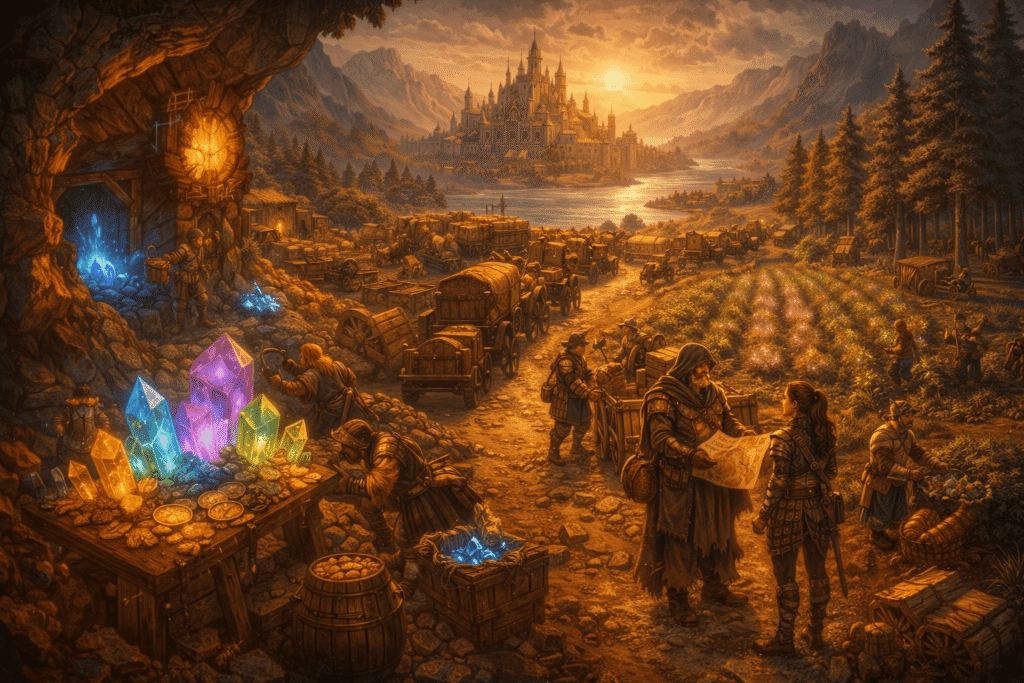
A fantasy city should never feel like a static backdrop.
It should feel like a living ecosystem of stories.
The best cities include:
- active economies
- unique cultures
- political conflict
- memorable districts
- powerful factions
When these elements interact, your city becomes a place players or readers want to explore.
And if you want to accelerate the entire process, tools like Summon Worlds let you generate characters, locations, artwork, and lore instantly, helping creators focus on storytelling instead of tedious setup.
If you're ready to bring your fantasy worlds to life, try creating your first city today.
Download Summon Worlds and start building your universe.
Start building your World!