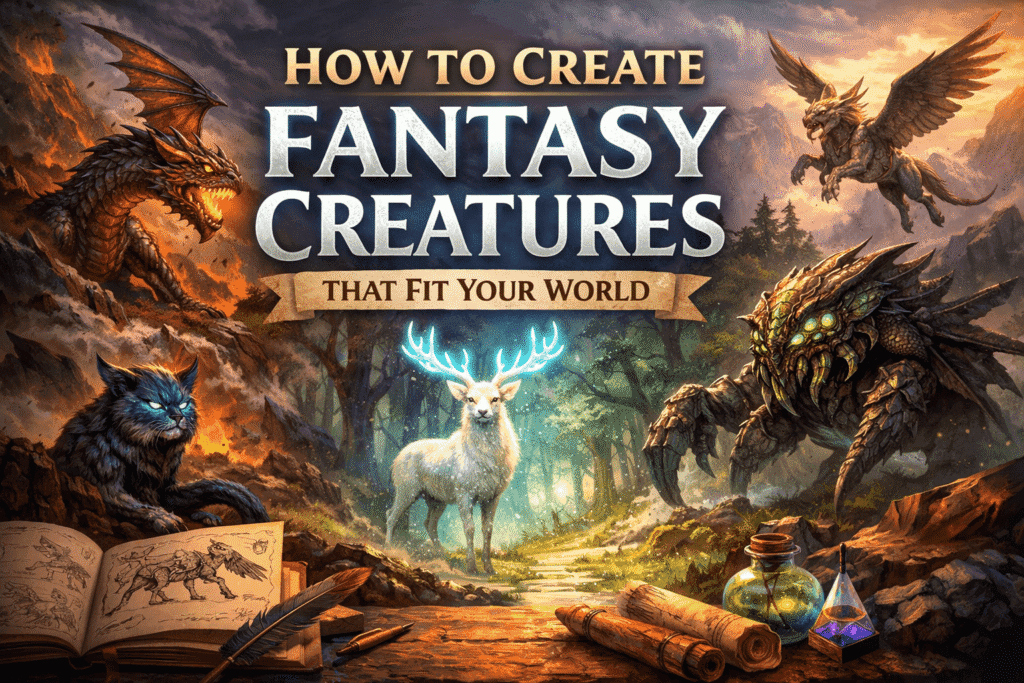
👉Learn how to create fantasy creatures that truly fit your world. This step-by-step fantasy creature design guide shows writers and RPG creators how to build unique monsters, plus how AI tools like Summon Worlds can generate creature art, lore, and characters instantly.
What makes a fantasy creature feel real instead of random?
The difference isn’t the number of horns, wings, or glowing eyes. The difference is context.
The best fantasy creatures feel like they belong in the world they inhabit. Dragons in Game of Thrones, the creatures of The Witcher, or Pokémon all work because they follow the rules of their worlds.
If you’re building a fantasy world, running a D&D campaign, or writing a novel, designing creatures that fit your setting is one of the most powerful tools you have.
In this guide, you’ll learn:
- How to design creatures that feel natural in your world
- The biggest mistakes fantasy creators make
- A simple 5-step creature design framework
How AI tools can generate creature art and lore instantly
What Makes a Fantasy Creature “Fit” a World?
A creature fits a fantasy world when it follows the same rules as the rest of the setting.
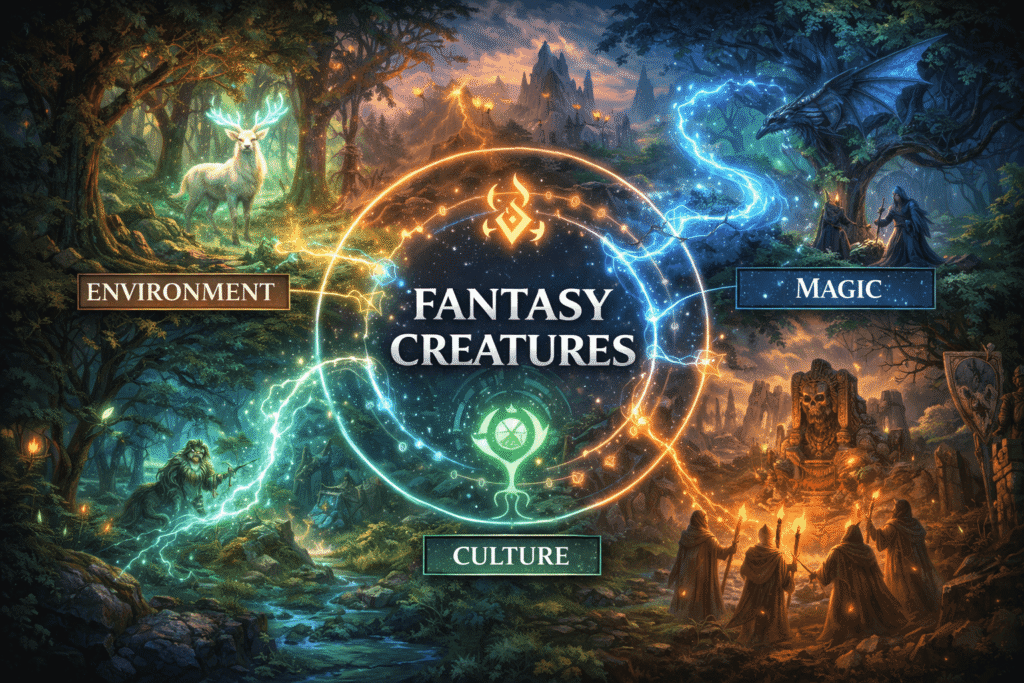
In practical terms, this means the creature connects to three key elements:
1. Environment
Where does the creature live?
- frozen mountains
- enchanted forests
- desert kingdoms
- underwater civilizations
Creatures evolve around their environment just like animals in the real world.
Example:
A swamp creature might have
- webbed limbs
- camouflage skin
- bioluminescent eyes for fog
2. Magic System
Every fantasy world has rules about magic.
Ask:
- Was the creature created by magic?
- Does it generate magic?
- Is it immune to magic?
A creature tied to your magic system will automatically feel more believable.
3. Culture and Lore
The most memorable creatures affect the people in your world.
They might be:
- sacred animals
- feared monsters
- war mounts
- ancient gods
When creatures influence culture, they stop being “monsters” and become part of the world’s ecosystem.
Try Summon Worlds for free.
The Biggest Mistake Creators Make With Fantasy Creatures
Most beginner worldbuilders design creatures like this:
“What would look cool?”
Cool designs are fun, but without context they feel random.
A dragon with three heads, glowing wings, and lightning claws might look impressive.
But if the creature has no role in the world, readers or players subconsciously feel something is wrong.
Instead, ask a different question:
“Why does this creature exist in my world?”
Once you answer that, everything else becomes easier.
The 5-Step Framework for Fantasy Creature Design
Here is a simple framework professional worldbuilders often use.
Follow these five steps and your creatures will instantly feel more believable.
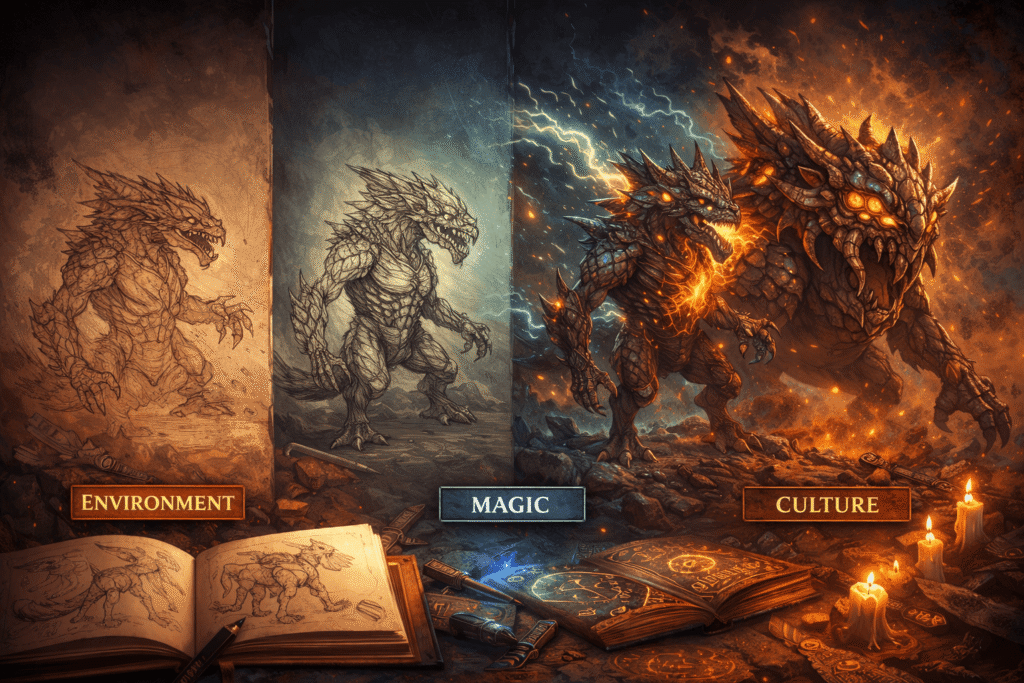
Step 1: Start With the Environment
The environment shapes the creature.
Ask yourself:
- What terrain does it live in?
- What predators exist there?
- What food sources are available?
Example:
A creature from volcanic regions might have:
- heat resistant scales
- fire breathing abilities
- rock-like camouflage
Environment-first design prevents creatures from feeling random.
Step 2: Define the Creature’s Role
Every creature needs a function in the ecosystem.
Possible roles include:
- apex predator
- scavenger
- magical guardian
- symbiotic companion
- domesticated animal
- mythological symbol
Example:
If the creature is a guardian of ancient ruins, it might:
- live underground
- be bound to magical artifacts
- attack intruders
Now it has narrative purpose.
Step 3: Design Physical Traits That Make Sense
Physical traits should solve problems.
Ask:
- How does the creature hunt?
- How does it defend itself?
- How does it survive?
Example traits:
Trait
Purpose
Night vision
Hunting in darkness
Wings
Traveling long distances
Armored scales
Protection
Poison
Defense against predators
Design follows function.
Step 4: Create Lore and Mythology
This is where creatures become legendary.
Ask:
- How do people view this creature?
- Is it feared or worshipped?
- Are there myths about it?
Example lore:
“The Ember Stag appears only once every hundred years, and wherever it walks, forests grow again.”
Suddenly the creature becomes part of the world's history.
Step 5: Visualize the Creature
Finally, bring the creature to life visually.
This includes:
- sketches
- creature portraits
- 3D environments
- world map placement
Visual design helps writers, players, and readers connect emotionally with the creature.
Today, many worldbuilders use AI art tools to generate creature visuals instantly.
How AI Tools Are Changing Fantasy Creature Design
Creating creatures used to take days of sketching and writing.
Now AI tools can generate complete creature concepts in minutes.
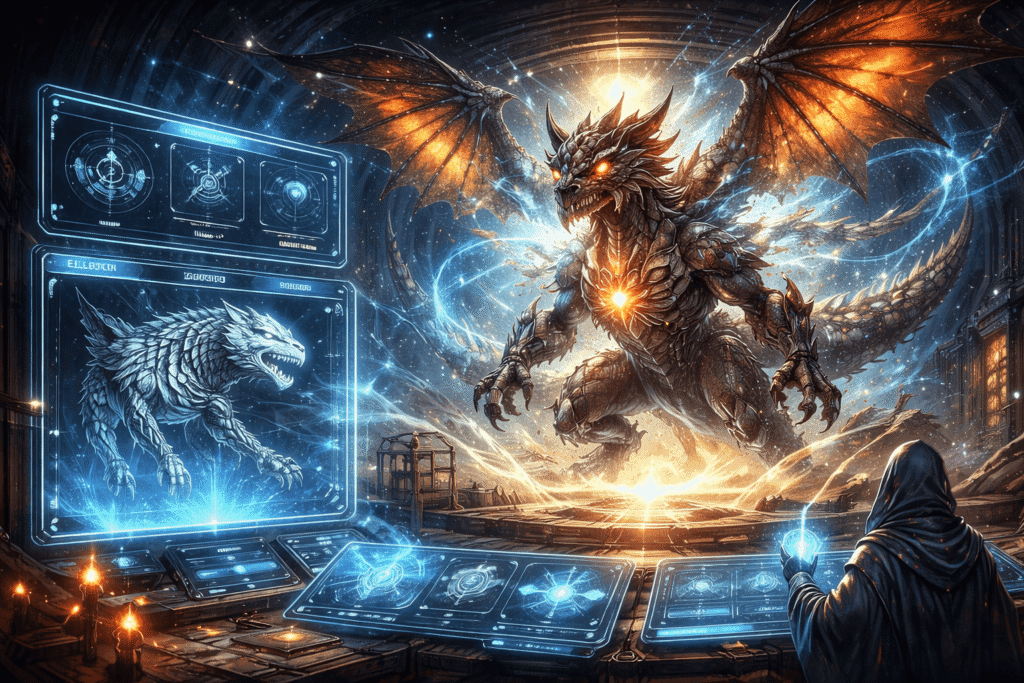
Modern worldbuilding platforms allow you to:
- generate creature artwork
- create backstories
- build RPG stat sheets
- roleplay with AI characters
For example, Summon Worlds lets creators generate fantasy characters, creatures, and items using AI prompts and art styles like epic fantasy, anime, or steampunk.
Inside the app you can:
- generate creature artwork
- assign abilities and stats
- bind creatures to locations in your world
- interact with them through AI chat
The platform even allows characters to understand the world, location, and equipment around them, creating immersive roleplay scenarios.
For writers and game masters, this dramatically speeds up the creative process.
Instead of spending hours designing a monster, you can generate multiple concepts instantly and refine the best one.
Example: Turning a Simple Idea Into a Fantasy Creature
Let’s apply the framework.
Starting Idea
“A glowing deer creature.”
Not very exciting yet.
Step 1: Environment
Ancient enchanted forest.
Step 2: Role
Protector of sacred groves.
Step 3: Traits
- glowing antlers
- silent footsteps
- ability to teleport through trees
Step 4: Lore
Villagers believe seeing the creature means the forest spirits are watching.
Hunters who harm it are cursed.
Step 5: Visualization
Using an AI art generator, you might create:
- bioluminescent antlers
- moss-covered fur
- floating leaves around the creature
Now you have a complete fantasy creature that fits the world.
Why Unique Creatures Make Worlds More Memorable
Think about the most famous fantasy worlds.
They all have iconic creatures:
- dragons
- balrogs
- white walkers
- griffins
- Pokémon
Creatures act as symbols of the world itself.
They represent its:
- magic
- danger
- history
- mythology
The more unique your creatures are, the more memorable your world becomes.
Key Takeaways
Designing fantasy creatures isn’t about making the most powerful monster.
It’s about building creatures that feel like they evolved inside your world.
Follow these rules:
- Start with the environment
- Give the creature a role
- Design traits with purpose
- Create mythology around it
- Visualize it with art and storytelling
And if you want to accelerate your worldbuilding process, AI tools can help generate creature art, lore, and characters instantly.
Platforms like Summon Worlds allow you to create creatures, generate fantasy artwork, and interact with your creations through AI roleplay, turning your ideas into a living fantasy universe.
If you're building a world, running a campaign, or writing a fantasy novel, it might be the fastest way to bring your creatures to life.
Start building your World!