Earth- 001
Locations
Browse the public locations that belong to this world. Select a card to read more.
Public locations roster
Ruins Of Paris
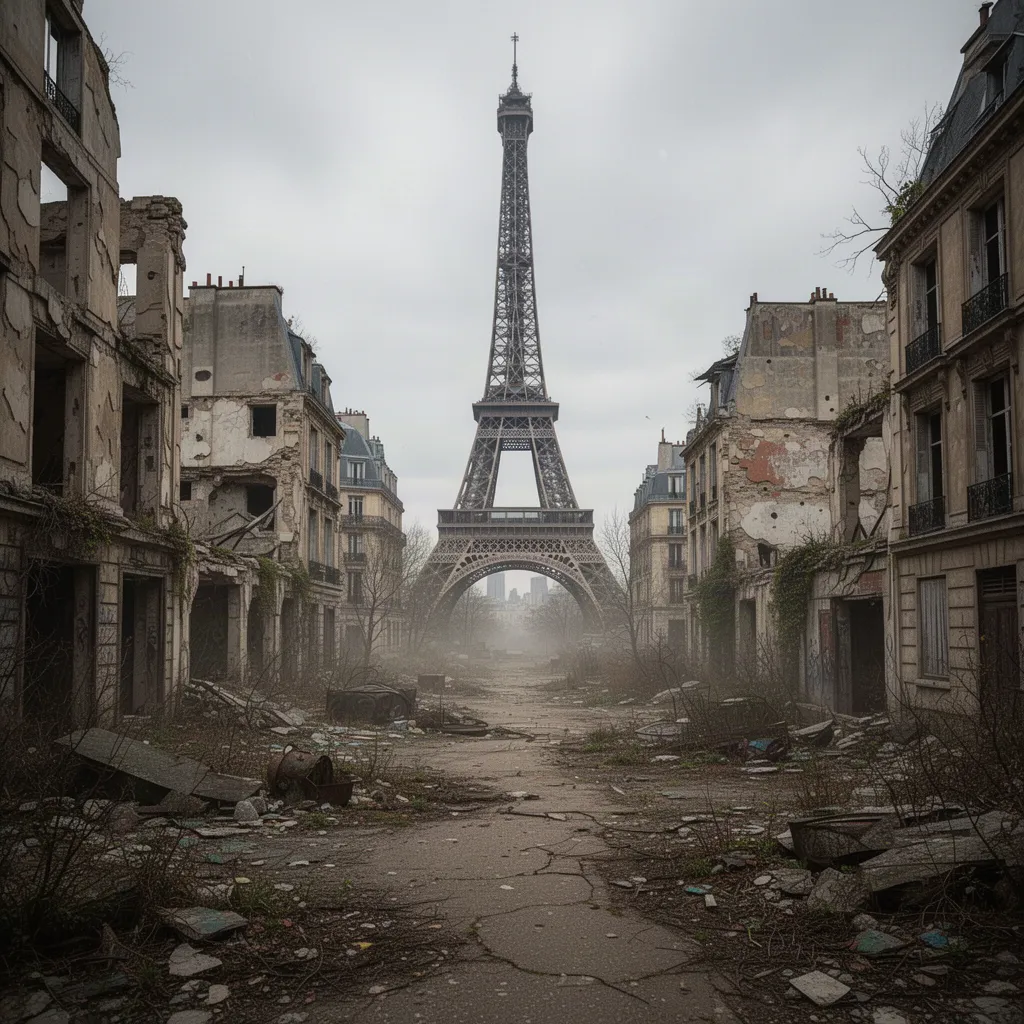
The sprawling metropolitan expanse of Paris stands as a haunting monument to civilization's collapse, its once-thriving population of two million now reduced to scattered survivors clinging to existence amid crumbling architecture and urban decay. The city has become a lawless frontier where roving scavengers, feral creatures, and opportunistic raiders pick through the skeletal remains of the old world, searching for salvageable technology and forgotten resources. Pockets of desperate humanity persist throughout the ruins—makeshift settlements huddled in defensible structures, transient bandit camps controlling key territories, and isolated family groups barricaded within fortified homes—yet these communities remain fragile and constantly threatened. The Commonwealth, the dominant European power, regularly deploys expeditions into the city to extract valuable pre-collapse machinery and artifacts, though their leader Allen Rispin has declared that permanent resettlement remains generations away, contingent upon the violent factions within Paris either evacuating or annihilating one another. The night sky above the city frequently erupts in chaotic violence—distant gunfire echoing through abandoned streets, explosions illuminating the darkness as territorial disputes and resource wars rage between rival groups. At the city's heart stands the iconic Eiffel Tower, miraculously still upright despite centuries of neglect, now repurposed as a profane temple by the fanatical cult known as Napoleon's Light, whose members are known for savage rituals and brutal territorial defense. The combination of structural hazards, violent inhabitants, and the unpredictable presence of both cultists and Commonwealth forces makes Paris an exceptionally perilous destination for any who would dare venture into its depths.
View details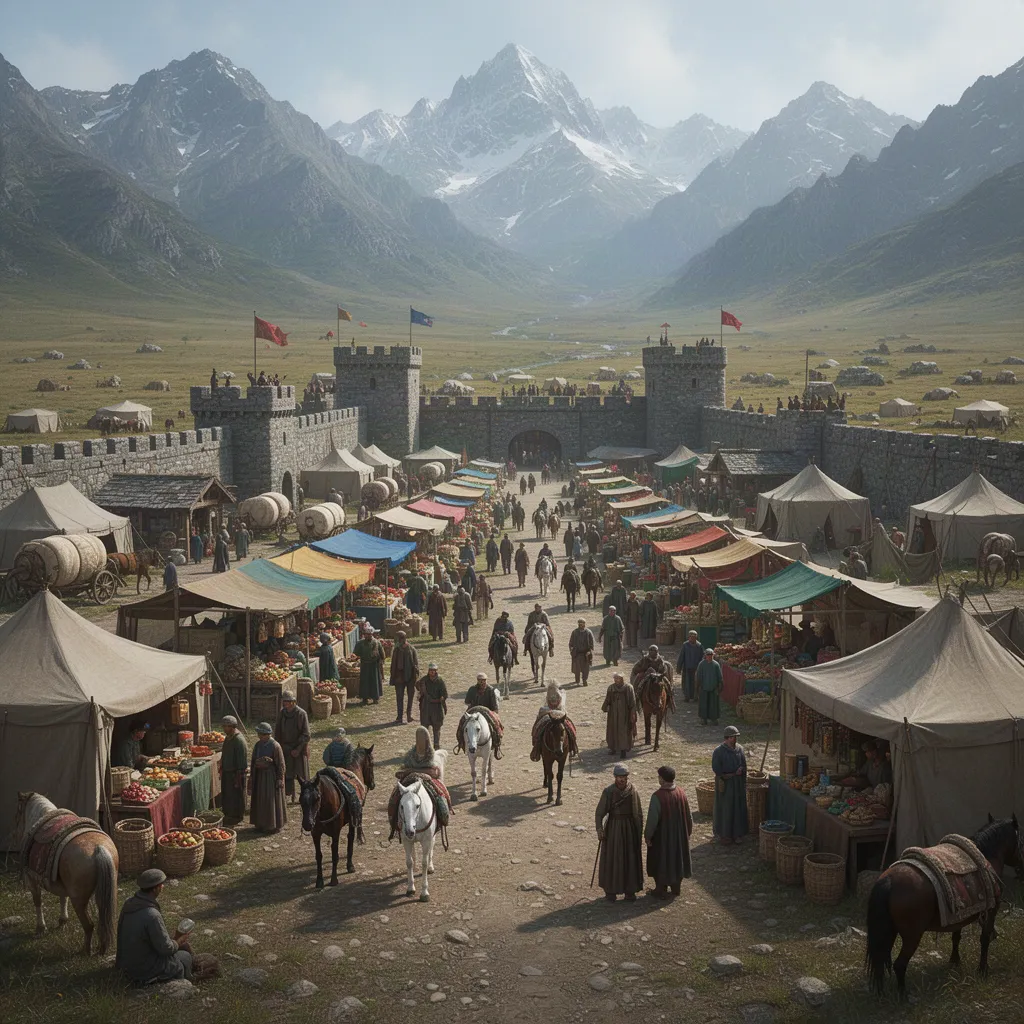
Kovissai Markets
Spanning the vast expanse from Eastern Manchuria across the steppes toward western Russia, the Kovissai Markets represent one of the world's most vital—and treacherous—commercial corridors. Born from centuries of relative regional stability, the markets evolved organically as merchants and traders established semi-permanent settlements along established trade routes, transforming what were once seasonal encampments into thriving commercial hubs that rival the legendary Silk Road in both scale and significance. The markets serve as the primary lifeline for goods flowing to the Swiss Commonwealth, with caravans carrying everything from rare minerals and textiles to exotic spices and weaponry across thousands of miles of challenging terrain. The Shimazu Territory, which borders the markets to the south, maintains a complex relationship with this commercial network, both benefiting from its prosperity and bearing responsibility for its security. However, the Kovissai Markets remain fundamentally unstable in their outer reaches, where organized bandit networks and independent raiders exploit the merchants' vulnerability in remote stretches. Both the Shimazu and the Swiss Commonwealth maintain permanent military garrisons and regularly dispatch armed expeditions to protect vital supply convoys, as unescorted travel through certain sections has become virtually suicidal. Despite these dangers, the markets continue to attract ambitious traders and fortune-seekers, creating a unique culture of calculated risk and hard-won profit margins. The infrastructure remains decidedly mixed—fortified trading posts and established towns punctuate stretches of ramshackle tent villages and hastily constructed wayhouses—reflecting the precarious balance between settlement and survival that characterizes this ambitious commercial enterprise.
View details
Crashsite
Crashsite marks the location where an immense celestial vessel breached Earth's atmosphere approximately three decades ago, leaving a massive crater spanning nearly two miles across in what was once fertile farmland. The impact fundamentally altered the region's geography, creating jagged spires of fused rock and metal that pierce the sky like broken teeth, while toxic gases periodically vent from deep fissures in the scarred earth below. Since the initial catastrophe, an extraterrestrial species known as the Watchers has established dominion over the area, using their advanced technology to subjugate the local population and bend powerful individuals to their will through insidious neural implants. The landscape now resembles a nightmarish amalgamation of natural devastation and alien architecture, with crystalline structures of unknown purpose jutting from the ground alongside the wreckage of the original vessel. Entire settlements have been repurposed as processing centers where the Watchers identify and convert those with latent abilities, transforming them into enslaved soldiers who patrol the perimeter with vacant, glowing eyes. The few survivors who remain in the surrounding regions live in constant fear, their communities reduced to scavenging operations that carefully avoid detection by roving patrols. Rumors speak of resistance movements operating in the deeper caverns beneath Crashsite, though confirmation remains elusive as the Watchers' surveillance network grows increasingly sophisticated. The very air around the impact zone crackles with otherworldly energy, causing strange mutations in wildlife and rendering standard navigation tools unreliable for those foolish enough to venture too close.
View details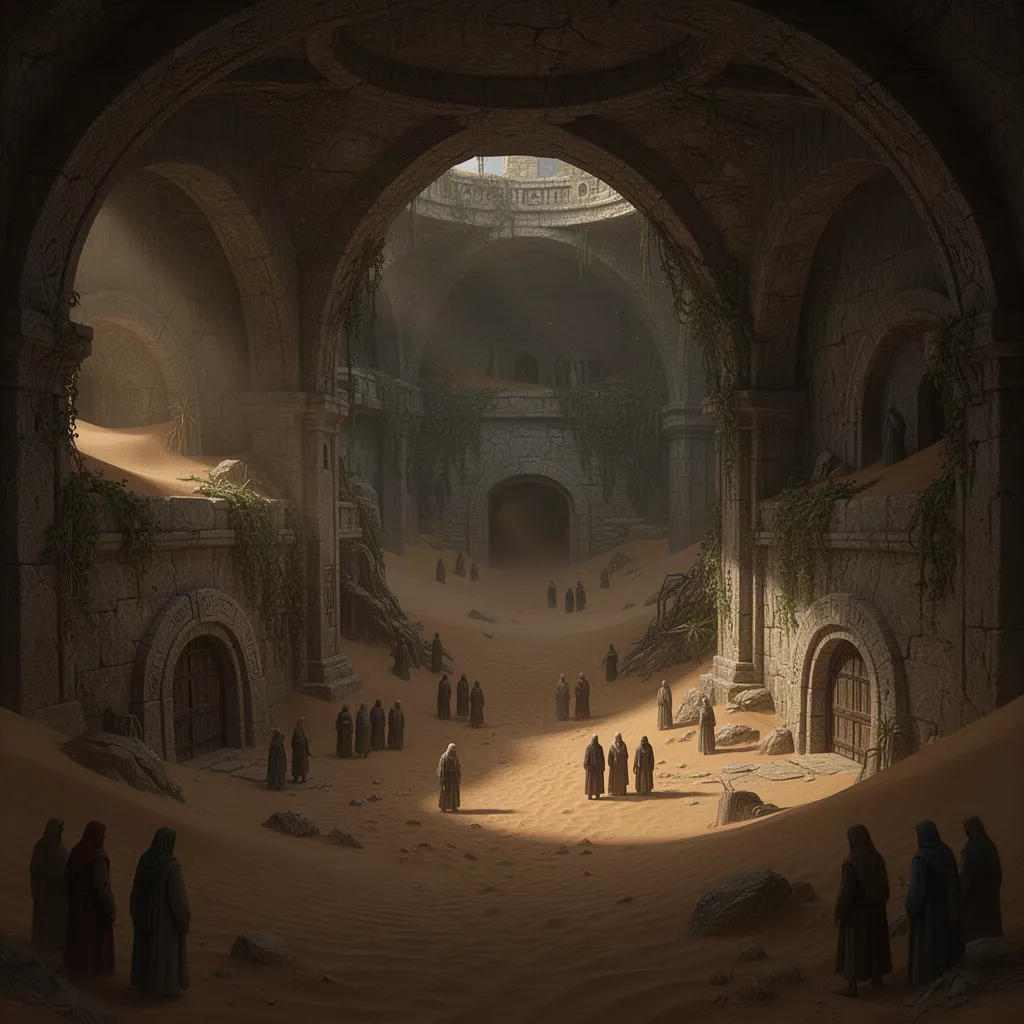
Indra
Buried beneath the scorching sands of the Middle Eastern desert lies Indra, a sprawling underground complex that once served as a research facility for an ancient civilization's greatest minds. The Deviants seized control of this labyrinthine structure centuries ago, transforming its halls of learning into a shadowy headquarters shrouded in mystery and secrecy. The facility's true population remains unknown, with estimates ranging wildly as new members are constantly recruited or vanish into its deepest chambers, their numbers deliberately obscured from outsiders. Indra's architecture blends the original panetheon design—featuring grand vaulted chambers and intricate stone carvings—with newer constructions that hint at ongoing expansion and experimentation. The surface reveals nothing but endless desert dunes, with only a handful of concealed entrances known to those who seek admission to this clandestine stronghold. Within its depths, advanced laboratories continue operating in shadow, their purposes unknown to the world above, while residential quarters and meeting halls accommodate the growing population of devoted followers. Strange sounds echo through the corridors at night—some attributing them to machinery, others to forces less easily explained. The few travelers who have glimpsed Indra's existence speak in hushed tones of a place where knowledge is hoarded and boundaries of reality seem to bend. Access to Indra remains strictly controlled, with layers of magical and physical security protecting its secrets from discovery. The location has become legendary among certain circles, representing both enlightenment and danger to those aware of its existence.
View details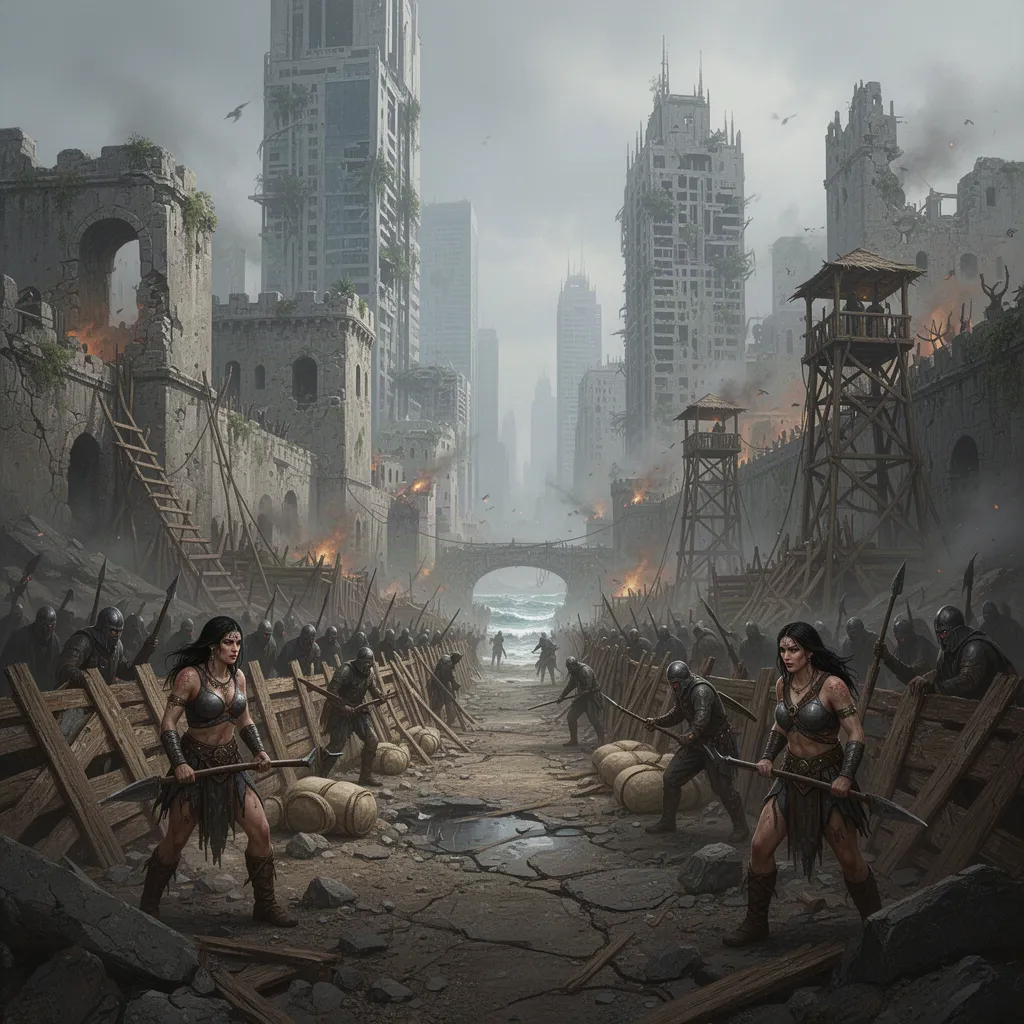
Kingdom Of The Sun
Perched upon the ruins of the ancient city of Sidney, the Kingdom of The Sun stands as a beacon of resilience in a war-torn land. This nation of approximately 3,600 inhabitants is uniquely governed by Queen Cleopatra and populated predominantly by women of extraordinary martial prowess, each possessing superhuman abilities honed through generations of conflict. The kingdom's architecture blends remnants of the old world with fortified structures built to withstand constant siege, its streets scarred by decades of relentless warfare against two formidable enemies—the disciplined Shimazu forces and the chaotic Deviants. Crumbling skyscrapers serve as watchtowers and defensive bastions, while underground tunnels and networks provide shelter and supply routes for the beleaguered population. The citizens possess an indomitable spirit born from perpetual battle, their culture steeped in martial tradition and tactical excellence. Despite the ongoing devastation, the kingdom maintains its rigid hierarchy and military discipline, with Queen Cleopatra's strategic genius the only force keeping invasion at bay. The landscape surrounding Sidney bears the scars of countless engagements—cratered earth, scorched vegetation, and fortified perimeters marking the unstable boundaries of their territory. Resources are stretched perilously thin, with maintenance of both weapons and infrastructure demanding constant attention from an exhausted population. The Kingdom of The Sun endures not through hope of peace, but through the unshakeable determination of its warrior women to defend their homeland against annihilation.
View details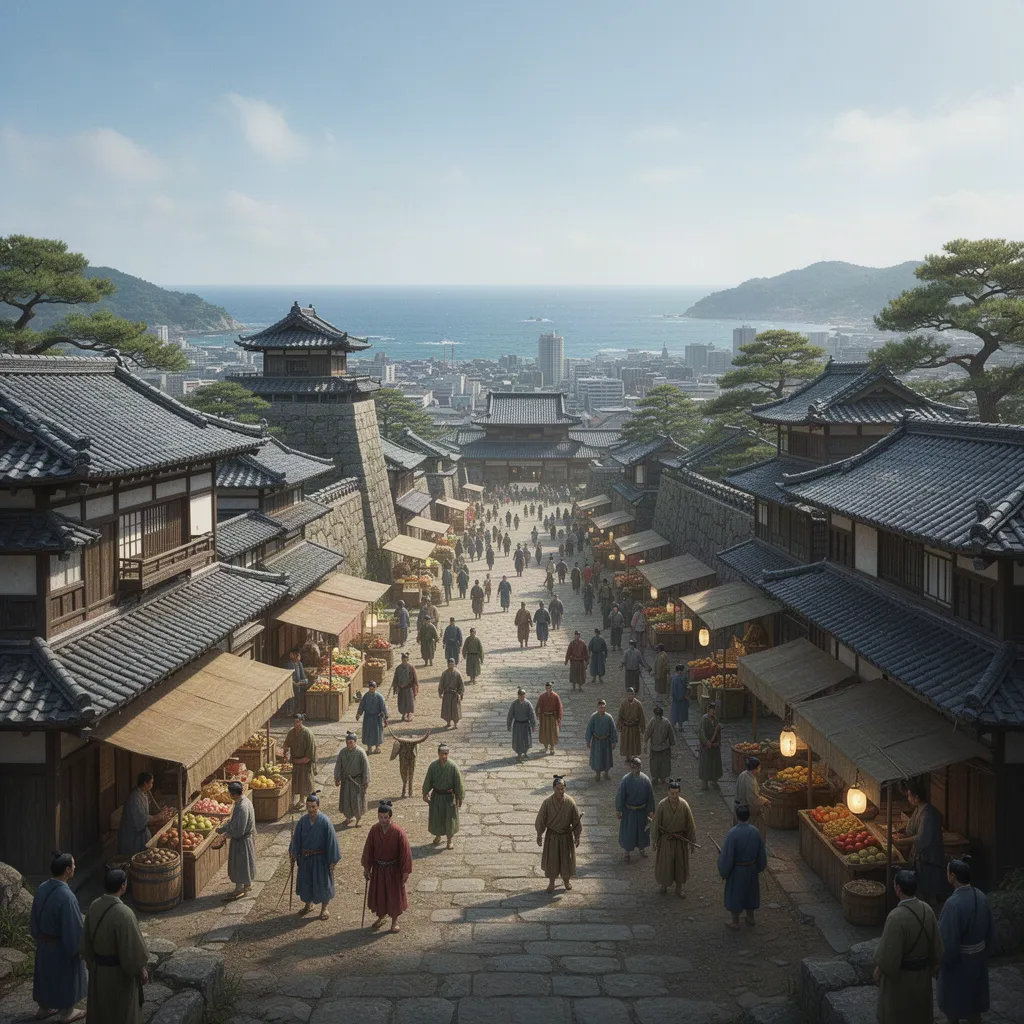
Shimazu
Shimazu stands as a remarkable testament to cultural revival, a meticulously reconstructed city nestled in the southern reaches of the old Satsuma province. Founded by the visionary Toyoshia Shimazu following a cataclysmic period, the city embodies the principles and aesthetics of Japan's storied Warring States era, with its fortified districts, traditional architecture, and rigid feudal hierarchy faithfully restored. Under Toyoshia's leadership and that of his remarkably gifted offspring, Shimazu expanded into a sprawling network of settlements across the Asian continent—establishing strongholds throughout Korea, mainland China, the Philippine archipelago, and numerous island territories. Despite their modest population of merely eight thousand two hundred souls spread across these vast territories, the Shimazu clan maintains iron-fisted control through military prowess and an unwavering commitment to their traditional code. The city remains locked in a protracted stalemate with the Kingdom of the Sun, their rival powers engaging in calculated skirmishes and border disputes that neither side can definitively resolve. The formation of the League of Hope has inadvertently stabilized this conflict, as both nations redirect resources toward combating the increasingly dangerous Deviants who threaten the broader world order. Within Shimazu's walls, daily life proceeds with remarkable normalcy—markets operate efficiently, craftspeople maintain their traditional trades, and the administration functions with clockwork precision under clan oversight. The city's strategic position and stable governance make it a crucial anchor point in the region's delicate geopolitical balance, neither fully at war nor entirely at peace.
View details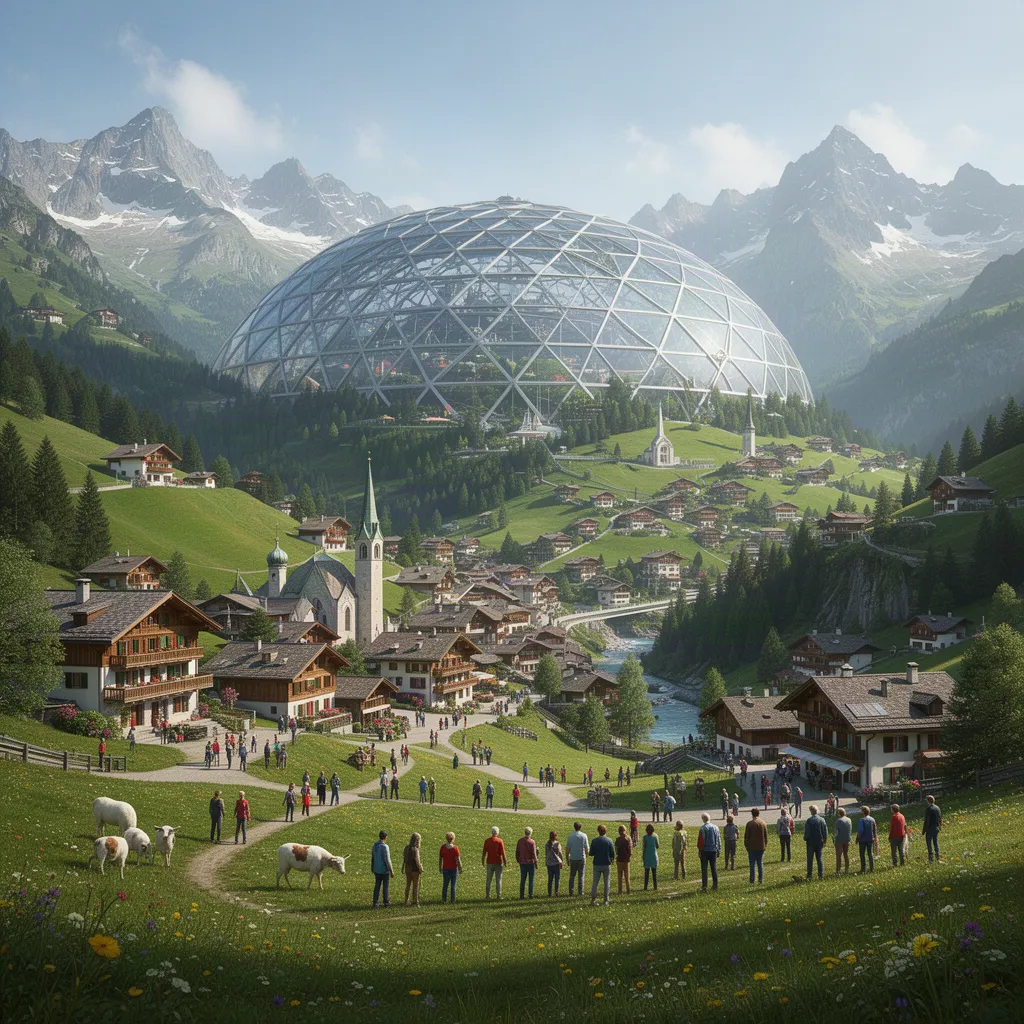
Swiss Commonwealth
Nestled within the Alpine valleys of central Europe, the Swiss Commonwealth represents humanity's determined resurgence following the catastrophic pandemic that reshaped the continent. Founded approximately three decades ago by settlers from the greater Yara civilization, this modest nation was deliberately established in the mountainous regions of Switzerland, where natural barriers provided exceptional defensive advantages during the perilous early reconstruction period. The settlement's most distinctive feature is its protective dome structure—a functional, if less sophisticated, adaptation of Yara's advanced architectural designs—which spans roughly two kilometers and shields the thriving community of approximately 4,200 inhabitants from the unpredictable environmental hazards that plague the surrounding landscape. The dome's placement within a mountain basin creates a natural fortress, with narrow passes and steep terrain serving as additional safeguards against unwanted intrusion. The Commonwealth's founders deliberately cultivated a policy of exclusivity, actively discouraging powered individuals and supernatural entities from settling within their borders, thereby preserving their enclave as a beacon of ordinary human achievement and self-determination. Today, the compact city flourishes with functional markets, workshops, agricultural greenhouses, and administrative centers that demonstrate the viability of human civilization without reliance on extraordinary abilities. Trade routes now connect the Swiss Commonwealth to neighboring settlements, bringing goods and cautious cultural exchange while the community maintains strict neutrality in regional conflicts. Visitors and new settlers arrive regularly, drawn by the promise of genuine safety and the opportunity to participate in rebuilding a society grounded in pragmatism and collective human resilience.
View details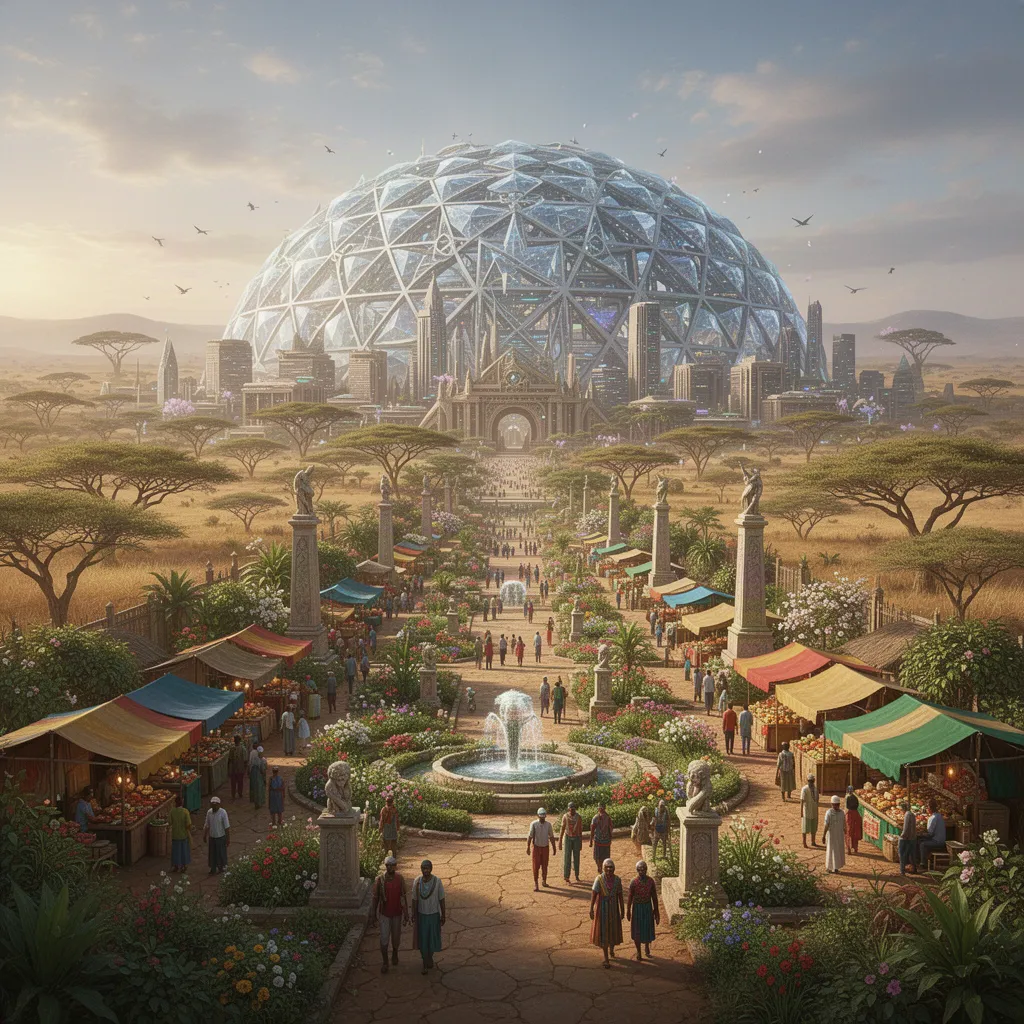
Yara
Nestled in the heart of the African continent, Yara stands as a marvel of post-apocalyptic engineering—a sprawling settlement enclosed within an enormous crystalline dome that rises majestically above the surrounding savanna. The visionary George Wright conceived this sanctuary during humanity's darkest hour, transforming the interior landscape into a carefully maintained ecosystem of grasslands, forests, and water sources that sustain its diverse population. What began as an emergency bunker sheltering five thousand desperate survivors has blossomed into a thriving city of ten thousand inhabitants who have built a stable, prosperous society within the protective dome. The transparent walls filter sunlight while maintaining controlled climate conditions, creating an eternal spring that allows agriculture and natural wildlife to flourish in deliberate harmony. Yara's infrastructure showcases remarkable advancement, with interconnected districts featuring markets, workshops, residential quarters, and communal gathering spaces that reflect the collaborative spirit of its founding principles. The city honors Wright's legacy through monuments and historical archives, though his death during the final years of the plague remains a solemn chapter in Yara's chronicles. Today, visitors encounter a vibrant culture where survivors and their descendants have forged new traditions, blending memories of the old world with hope for the future. The surrounding savanna, visible through the great dome's transparent panels, serves as both a reminder of the dangers beyond and a testament to Yara's achievement in creating an oasis of civilization and safety.
View details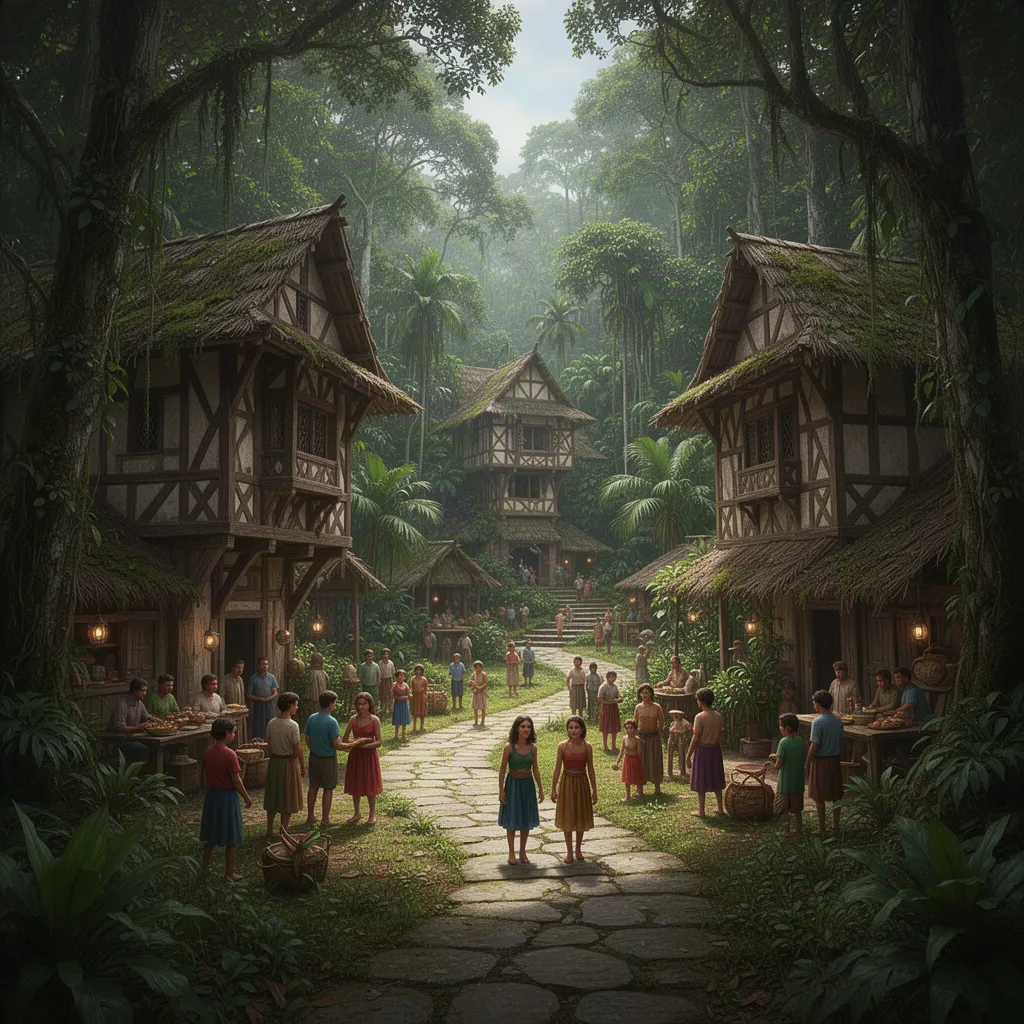
Brazillian Sanctuary
Nestled deep within the Amazon rainforest, the Brazillian Sanctuary remains one of the world's most remote and carefully concealed settlements, known only to those who venture far beyond the bustling coastal cities of Brazil. Home to approximately 2,234 inhabitants, this hidden community has deliberately maintained a Renaissance-era level of technology, relying on craftsmanship, manual labor, and natural resources rather than modern innovations. The sanctuary's architecture reflects this choice, with structures built from locally harvested timber and stone, connected by narrow pathways that wind through the dense jungle canopy. Over centuries, the settlement has developed a rich culture blending indigenous traditions with European influences, creating unique customs around agriculture, medicine, and governance that have been passed down through generations. The surrounding rainforest provides abundant resources—medicinal plants, game, and timber—which sustain the community while also offering natural protection from outside intrusion. Due to its isolation and reputation for harboring those seeking refuge, the Brazillian Sanctuary has become an unofficial haven for adventurers, scholars, and heroes in need of sanctuary from their pursuers or a base for planning their next endeavors. The local population, while welcoming to trustworthy visitors, maintains strict discretion about the sanctuary's location and inhabitants. Dangers lurk in the untamed wilderness beyond the settlement's borders, where exotic creatures, treacherous terrain, and unpredictable weather pose constant threats to those unfamiliar with jungle survival.
View details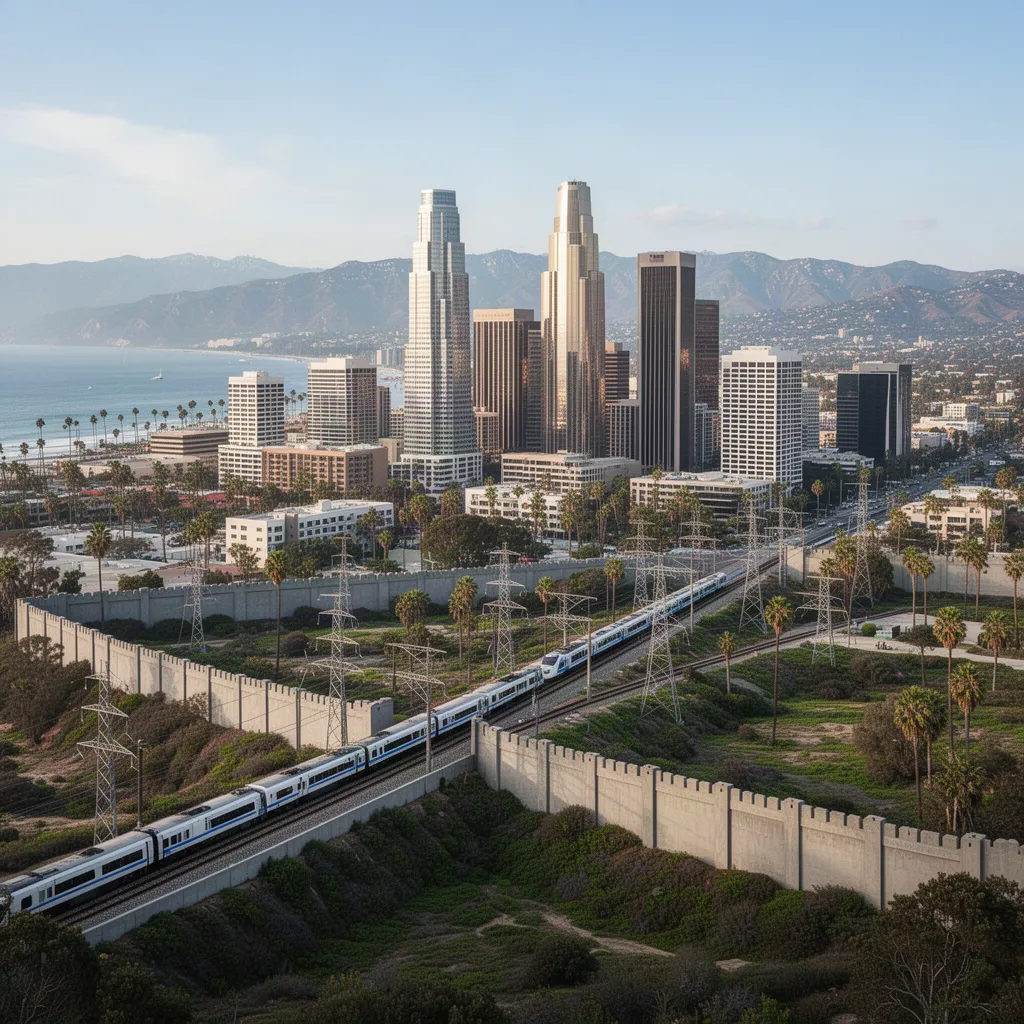
Republic Of Los Angeles
Nestled along the coast of Southern California, the Republic of Los Angeles stands as humanity's most remarkable beacon of civilization in a transformed world. Once a sprawling metropolis of millions, this resilient city has been meticulously rebuilt and fortified into a compact urban center housing approximately 6,200 inhabitants, more than half of whom possess extraordinary abilities that serve as both guardian and foundation of their society. The gleaming skyline features restored skyscrapers powered by functioning electrical grids and supported by sophisticated water reclamation systems that rival any pre-collapse infrastructure, making it the technological pinnacle of surviving North American settlements. The city operates a network of rapid transit trains that connect its districts efficiently, while carefully maintained armories contain weapons and defense systems salvaged from the old world—relics that have proven invaluable in protecting their borders against external threats. As the headquarters of the League of Hope, the Republic functions as a beacon of stability and organized governance, drawing refugees seeking sanctuary and opportunity within its reinforced perimeter. The culture blends reverence for preserved history with pragmatic innovation, as citizens work collaboratively to maintain their advanced systems while training new generations in both technological expertise and the responsible use of their inherent powers. Beyond the city walls, the Southern California landscape remains partially reclaimed by nature, creating a stark contrast between the thriving urban center and the wild borderlands that surround it. Today, the Republic of Los Angeles thrives as a living testament to human resilience and cooperation, offering hope that civilization can not only survive but flourish in this new era.
View details