How to Create Fantasy Factions and Power Struggles
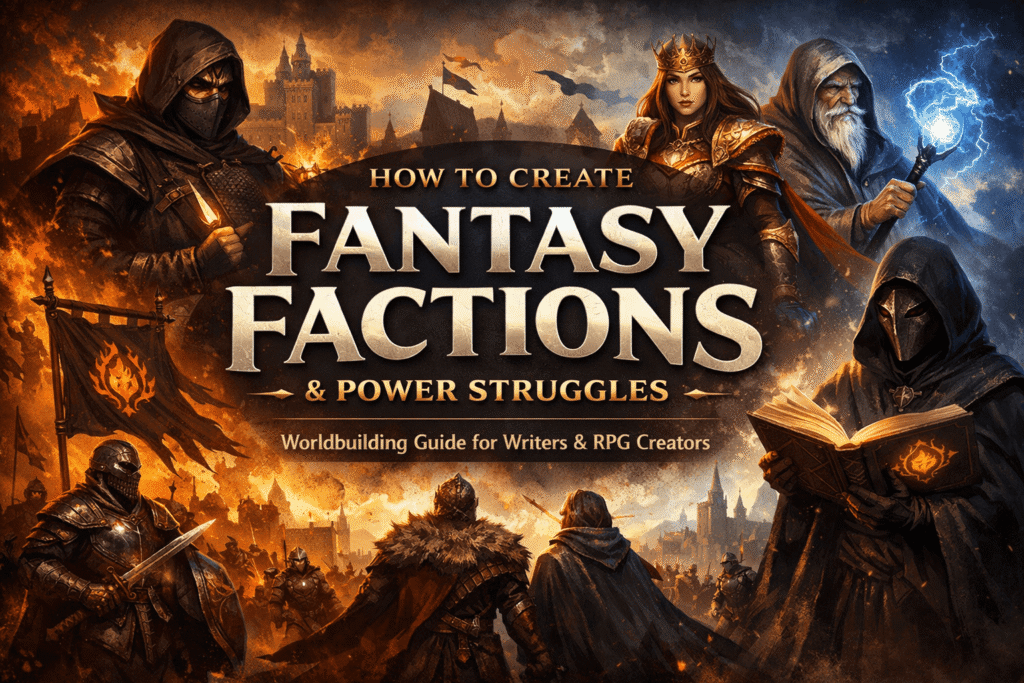
Every great fantasy world has one thing in common:
Someone wants power.
Maybe it’s a secret guild controlling trade routes, a religious order shaping the kingdom’s laws, or a rebellious faction trying to overthrow the empire.
These competing interests create conflict, and conflict creates story.
If you’re building a fantasy world for a novel, RPG campaign, or roleplay setting, learning how to create compelling fantasy factions and power struggles is one of the fastest ways to make your world feel alive.
In this guide, you’ll learn:
- How fantasy factions work in worldbuilding
- Why political power struggles make stories more immersive
- A simple system to design believable factions
- How AI tools like Summon Worlds help generate factions, characters, and story conflicts instantly
Table of Contents
What Are Fantasy Factions in Worldbuilding?
A fantasy faction is a group of characters united by a shared goal, ideology, or power structure.
They might be:
- Political organizations
- Religious orders
- Merchant guilds
- Rebel groups
- Secret societies
- Military alliances
In worldbuilding, factions create systems of influence.
Instead of a static world where events just happen, factions create a world where groups actively compete for control.
For example:
Faction | Goal | Power Source |
The Iron Council | Control all trade routes | Wealth |
The Moon Clerics | Spread religious doctrine | Faith |
The Ember Rebellion | Destroy the monarchy | Popular support |
Now your world instantly has:
- political tension
- alliances
- betrayals
- story hooks
This structure is what transforms a setting into a living ecosystem of power.
Try Summon Worlds for free.


Why Power Struggles Make Fantasy Worlds Feel Real
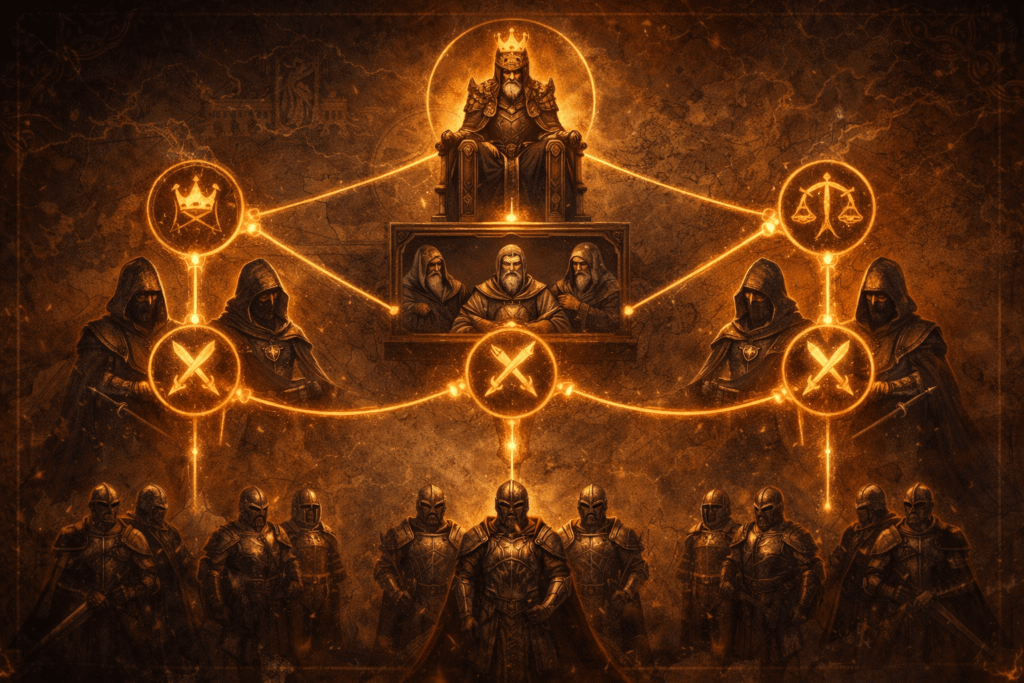
Readers and RPG players instinctively understand power struggles because they mirror real history.
Kingdoms rise and fall.
Empires compete.
Religions clash.
When factions fight for influence, your world gains three powerful storytelling advantages:
1. Natural Conflict
Instead of inventing plot events, factions naturally generate them.
Example:
A merchant guild raises taxes → farmers revolt → rebels gain support.
Boom. Story.
2. Moral Complexity
Factions are rarely purely good or evil.
A religious order might protect the poor but suppress magic users.
A rebel group might fight tyranny but commit brutal acts.
This gray area makes worlds feel deeper and more believable.
3. Endless Story Hooks
Each faction becomes a story engine.
Possible plot hooks:
- espionage missions
- political marriages
- assassination attempts
- trade wars
- secret alliances
For RPG campaigns or roleplay worlds, factions create unlimited quests.
Common Mistakes When Creating Fantasy Factions
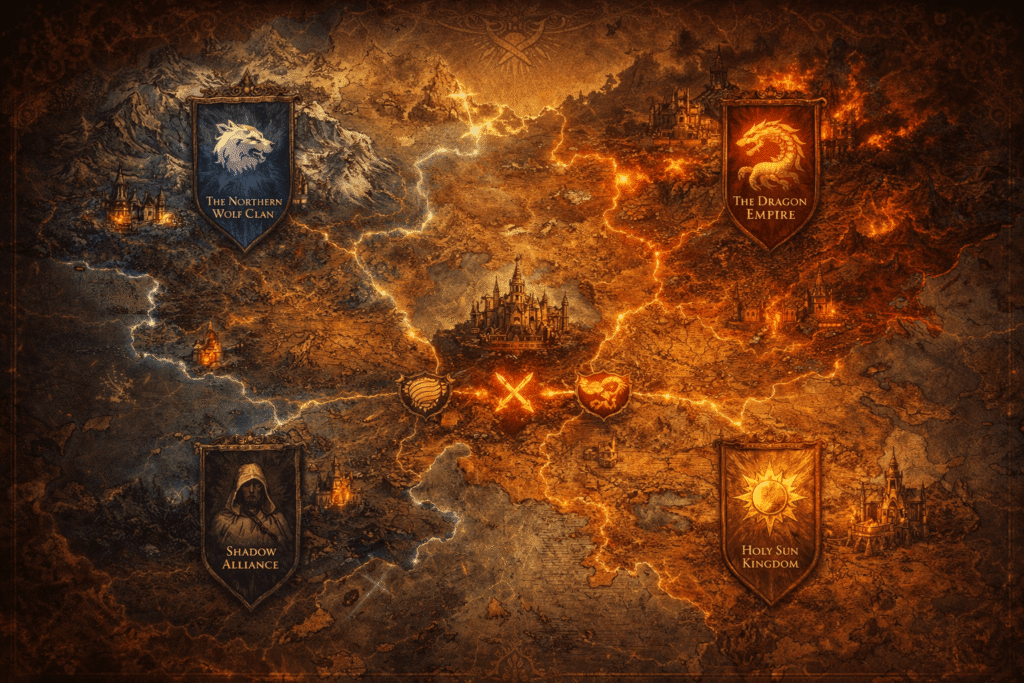
Many worldbuilders unintentionally make factions feel shallow.
Here are the biggest mistakes to avoid.
1. “Good vs Evil” Factions
If one faction is purely good and the other purely evil, the world becomes predictable.
Instead, give every faction a reason they believe they’re right.
2. No Resources or Power
A faction without influence is just a club.
Ask yourself:
- What resources do they control?
- Who funds them?
- What territory do they influence?
Power always comes from something.
3. No Internal Conflict
Real organizations fight internally.
Examples:
- rival leaders
- ideological splits
- corruption scandals
Internal tension adds realism and plot potential.
4. Factions That Never Interact
The most interesting worlds happen when factions collide.
If your factions never interfere with each other, they feel isolated.
Power struggles require constant friction.
5 Steps to Build Powerful Fantasy Factions
Here’s a simple framework used by many RPG writers and worldbuilders.
Step 1: Define the Faction’s Core Ideology
Ask:
What does this faction believe?
Examples:
- Magic should be controlled
- The monarchy must fall
- Knowledge should belong to scholars
- Only warriors deserve power
Ideology drives every action the faction takes.
Step 2: Give Them Resources
Power comes from resources.
Your faction might control:
- armies
- trade networks
- magical artifacts
- political influence
- secret information
Example:
A spy network might control knowledge, making them incredibly powerful without armies.
Step 3: Create Rival Factions
A faction becomes interesting only when it faces opposition.
For every faction, create:
- a rival
- an ally
- a neutral party
This triangle instantly generates complex politics.
Step 4: Add Internal Conflict
Even powerful factions have weaknesses.
Possible internal conflicts:
- corrupt leaders
- ideological disagreements
- hidden traitors
- power struggles within leadership
These tensions create unexpected story twists.
Step 5: Show How They Affect the World
Finally, ask:
How does this faction change everyday life?
Examples:
- taxes increase
- magic becomes illegal
- trade routes become dangerous
- religious laws reshape culture
When factions influence the world around them, the setting feels dynamic.
Using AI to Create Fantasy Factions Faster
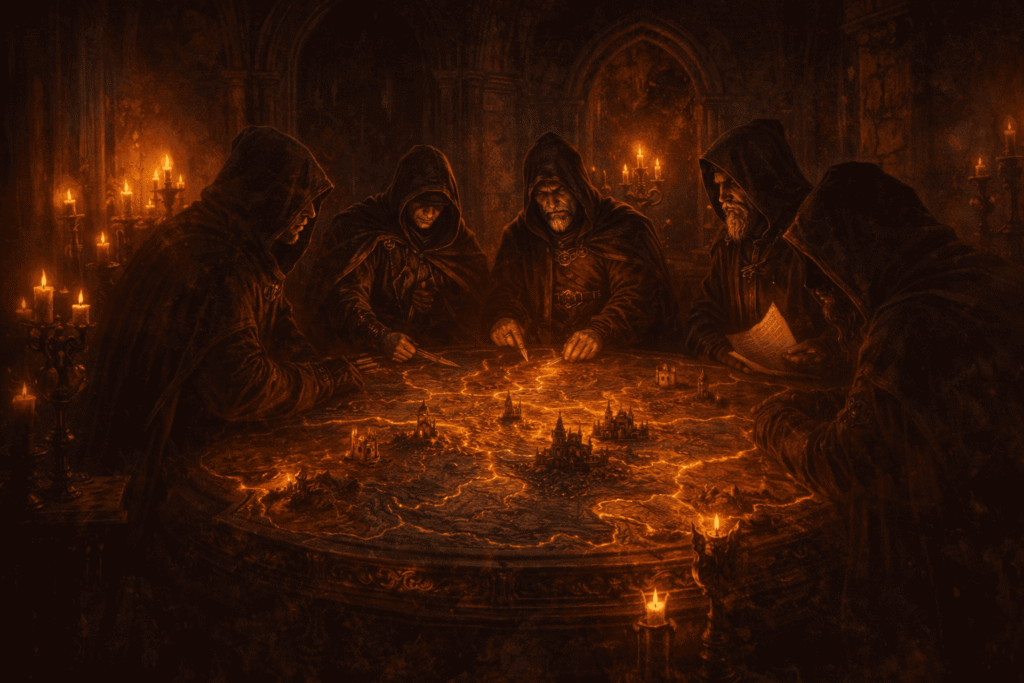
Designing factions manually can take hours.
You have to invent:
- leaders
- lore
- rivalries
- symbols
- characters
- visual designs
This is where AI worldbuilding tools change the game.
Apps like Summon Worlds let creators instantly generate:
- faction leaders
- faction characters
- faction artwork
- lore descriptions
- faction locations
Because the platform combines AI character generation, worldbuilding, and roleplay, you can test faction dynamics instantly.
For example, you can:
- generate a faction leader
- chat with them in character
- create faction members
- generate faction locations
- visualize the faction’s armor, weapons, and symbols
All inside a single worldbuilding environment.
Summon Worlds was specifically designed for fantasy creators, RPG players, and storytellers building immersive worlds.
Example: Creating a Fantasy Faction With AI
Let’s build a faction using this system.
Faction Name
The Obsidian Archive
Ideology
Knowledge must be controlled to prevent magical disasters.
Resources
- ancient libraries
- magical artifacts
- secret archives
Rivals
- rebel mages seeking forbidden knowledge
Internal Conflict
Some members believe knowledge should be shared freely.
Visual Identity
- black robes
- obsidian masks
- arcane sigils
Using an AI worldbuilding tool, you could instantly:
- generate members of the faction
- create their magical artifacts
- design their headquarters
- roleplay conversations with faction leaders
This speeds up worldbuilding dramatically.
Start building your World!
Disclaimer: Summon Worlds and the content on summonworlds.com are not affiliated with, endorsed by, or sponsored by Wizards of the Coast LLC. Dungeons & Dragons, D&D, and related terms are registered trademarks of Wizards of the Coast. Any references to D&D game mechanics, settings, or terminology are made for educational, commentary, and fan content purposes only. This blog does not reproduce or distribute official D&D content. All original ideas, characters, and creative content in this post are the intellectual property of OpenForge LLC, the parent company of Summon Worlds.