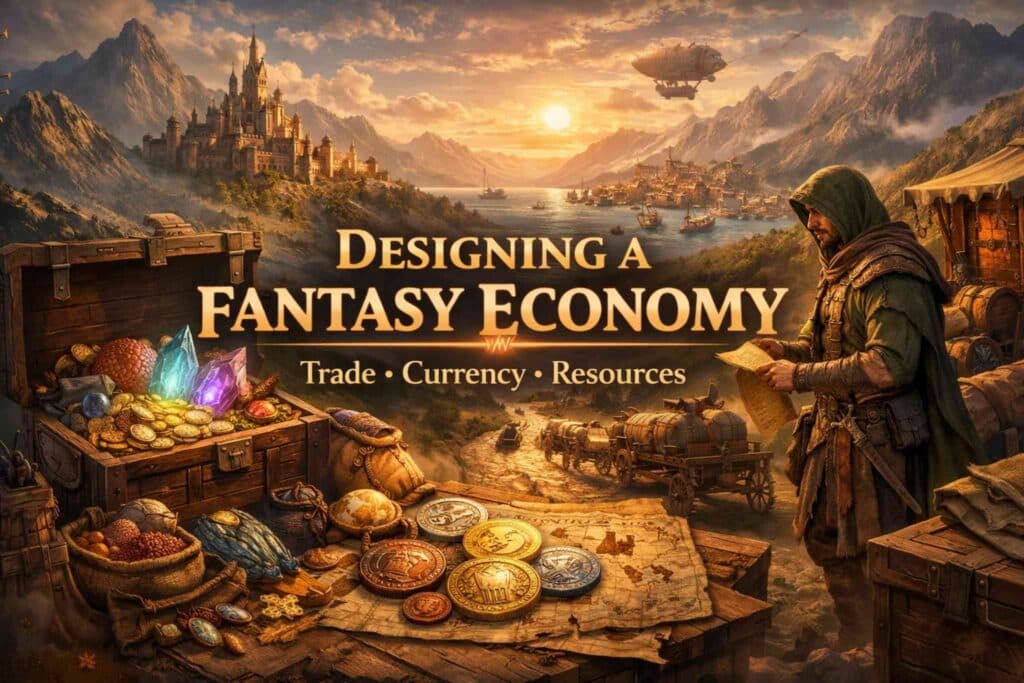
👉Learn how to design a fantasy economy with trade routes, currency systems, and resources. Build realistic RPG worlds faster using AI worldbuilding tools like Summon Worlds.
A king commands armies, cities flourish, merchants travel continents — yet no one ever explains how the economy actually works.
But if you're writing a novel, building a D&D campaign, or designing an RPG world, economics quietly shapes everything:
- Why kingdoms fight wars
- Why cities exist in certain places
- Why rare materials are valuable
- Why certain guilds control power
A believable fantasy economy makes your world feel alive.
And the good news?
You don’t need a PhD in economics. You just need three core systems working together:
- Resources
- Currency
- Trade
Let’s break it down.
What Is a Fantasy Economy?
A fantasy economy is the system that explains how resources, trade, and currency move through your world.
In simple terms, it answers three questions:
- What does your world produce? (resources)
- How do people exchange value? (currency)
- How do goods move between regions? (trade)
When these systems connect logically, your world stops feeling like a stage set and starts feeling like a living civilization.
Try Summon Worlds for free.
The 3 Pillars of Fantasy Economies
1. Resources: What Your World Produces
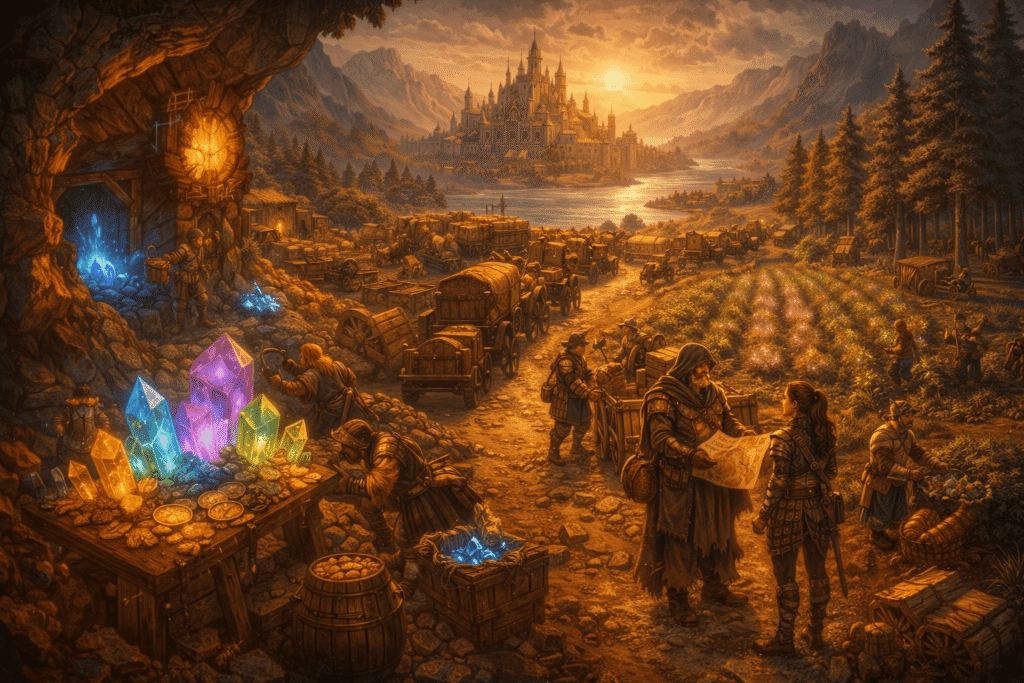
Every economy begins with resources.
Different regions should specialize in different materials based on geography.
Examples:
Region
Resource
Why
Mountain kingdoms
Iron, gold, gemstones
Natural mineral deposits
Coastal cities
Fish, salt, trade goods
Maritime trade routes
Forest regions
Timber, herbs, magical plants
Dense natural ecosystems
Desert kingdoms
Rare spices, glass, artifacts
Harsh climate creates rarity
These differences create interdependence between nations, which leads to trade, alliances, and conflict.
Example worldbuilding logic:
- A kingdom rich in iron becomes a weapons powerhouse.
- A neighboring forest nation supplies rare magical herbs.
- Both depend on each other economically.
Suddenly your world has politics, trade disputes, and economic alliances.
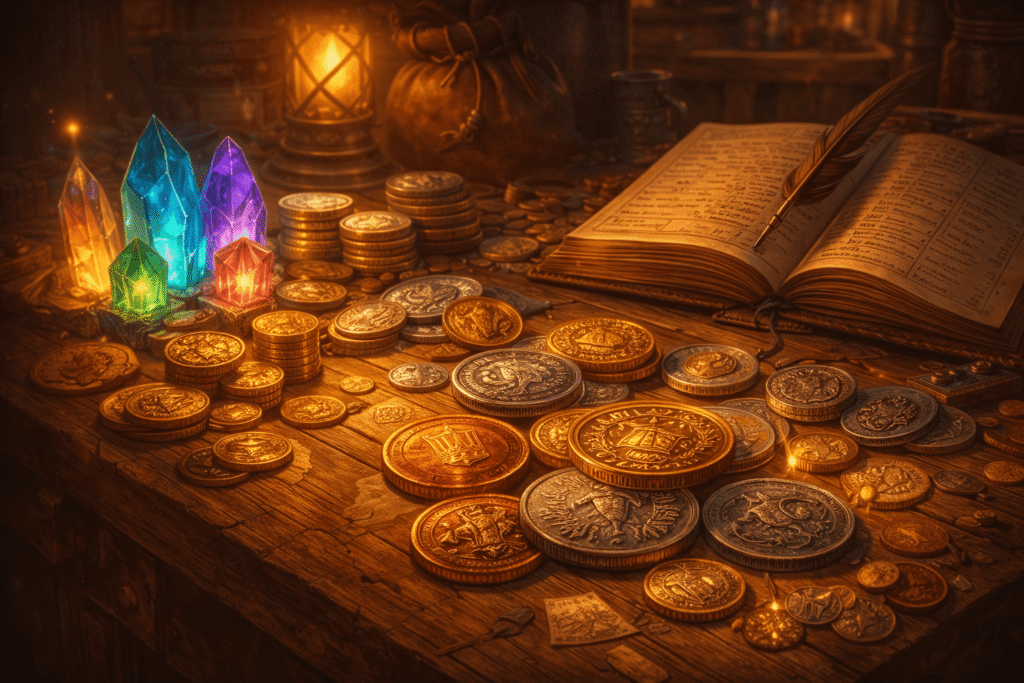
2. Currency: How Value Is Measured
Currency defines how wealth moves through your world.
Most fantasy settings default to gold coins, but that’s often the least interesting option.
Try thinking about what your society values most.
Examples of fantasy currency systems:
Metal Currency
Classic RPG style.
- Copper (everyday purchases)
- Silver (trade)
- Gold (wealth)
Example: D&D style economies.
Resource-Based Currency
Some societies use valuable materials instead of coins.
Examples:
- Crystals infused with magic
- Rare dragon scales
- Alcanite ore used in spellcasting
This makes currency part of the world lore.
Cultural Currency
Some civilizations value reputation or service.
Examples:
- Favor tokens from nobles
- Guild contracts
- Magical debt markers
This creates fascinating political storytelling.
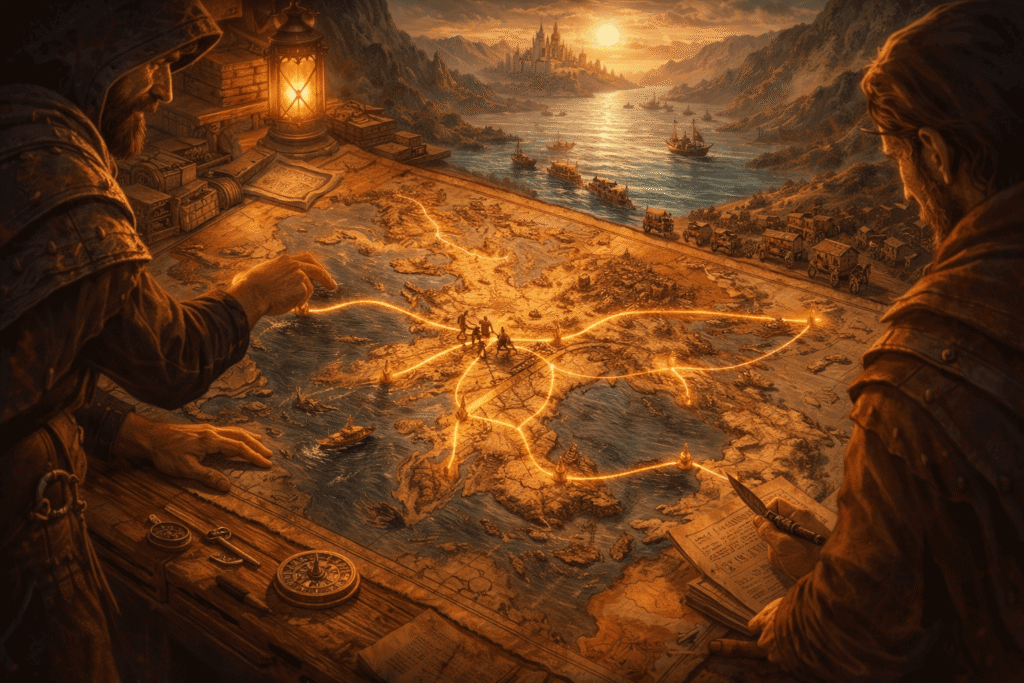
3. Trade Routes: How Goods Move
Trade routes are the veins of your world.
They determine where cities grow and why kingdoms become wealthy.
Trade routes usually follow:
- Rivers
- Coastlines
- Mountain passes
- Magical teleportation gates
Example:
A city located where three major trade routes intersect becomes an economic powerhouse.
That’s exactly why cities like:
- Constantinople
- Venice
- Alexandria
became rich in the real world.
The same logic works in fantasy.
Common Fantasy Economy Mistakes
Many worlds feel unrealistic because of these mistakes.
Mistake 1: Every Region Produces Everything
If every kingdom has:
- food
- metal
- magic
- timber
Then trade becomes pointless.
Economies thrive on specialization.
Mistake 2: Cities Exist Without Trade
Cities need economic purpose.
They usually exist because they are:
- Trade hubs
- Resource extraction centers
- Political capitals
- Strategic ports
If your city has no economic reason to exist, readers will subconsciously notice.
Mistake 3: Magic Breaks the Economy
Magic often destroys economic logic.
Examples:
If wizards can create gold, why does currency matter?
If teleportation is common, why do trade routes exist?
The key is limits.
Magic should have costs.
How AI Makes Economic Worldbuilding Faster
Designing an economy manually can take hours.
You must think about:
- resources
- locations
- factions
- cities
- trade networks
- political alliances
That’s where AI worldbuilding tools can help.
Instead of writing everything manually, you can generate:
- cities
- locations
- characters
- resources
- factions
- artwork
inside a single creative workflow.
Apps like Summon Worlds allow creators to build these interconnected elements quickly using AI-generated characters, locations, and items.
Designing a Fantasy Economy in Summon Worlds
Inside Summon Worlds, you can structure your economy naturally through worldbuilding elements.
The app allows you to create:
- Worlds
- Locations
- Characters
- Items
- Equipment
- Spells
all connected within a single world structure.
Here’s how creators often build economic systems inside the app.
Step 1: Create Resource Locations
Example locations:
- Ironpeak Mines
- Whisperwood Herb Forest
- The Sapphire Coast
Each location produces different resources.
Step 2: Add Characters or Guilds
Examples:
- Merchant guilds
- Caravan traders
- Mining companies
- Pirate factions
These characters become the economic actors in your world.
Step 3: Generate Items and Resources
You can create:
- magical ore
- enchanted weapons
- rare potions
- trade artifacts
Each item becomes part of the economic ecosystem.
Step 4: Use AI Art to Visualize Resources
The AI art generator lets creators generate visuals for:
- weapons
- trade goods
- artifacts
- locations
This turns abstract ideas into visual storytelling assets.
Step 5: Roleplay Economic Events
With AI character chat, you can simulate interactions like:
- trade negotiations
- guild disputes
- political deals
- black market transactions
The characters remember their world context, making the storytelling immersive.
Key Takeaways
A compelling fantasy economy doesn’t require complicated math.
It only needs three systems working together:
Resources → Currency → Trade
Once those elements connect logically:
- cities gain purpose
- politics become believable
- conflicts feel natural
- your world feels alive
And with modern AI tools like Summon Worlds, creators can build entire economic systems faster — generating locations, items, characters, and visual assets all inside one collaborative worldbuilding platform.
If you’re building a fantasy world, campaign, or RPG setting, try designing your economy next.
You might discover it unlocks new story possibilities you never expected.
Start building your World!