👉 Learn how to design compelling fantasy political systems that create conflict, alliances, and unforgettable stories. Discover how AI worldbuilding tools like Summon Worlds help writers and RPG creators build kingdoms, factions, and power struggles faster.
Most fantasy worlds have dragons, magic, and epic battles.
But strangely… they often have boring politics.
A king sits on a throne.
Everyone obeys.
And the story moves on.
Real worlds, and great fantasy stories, are far messier.
Power shifts.
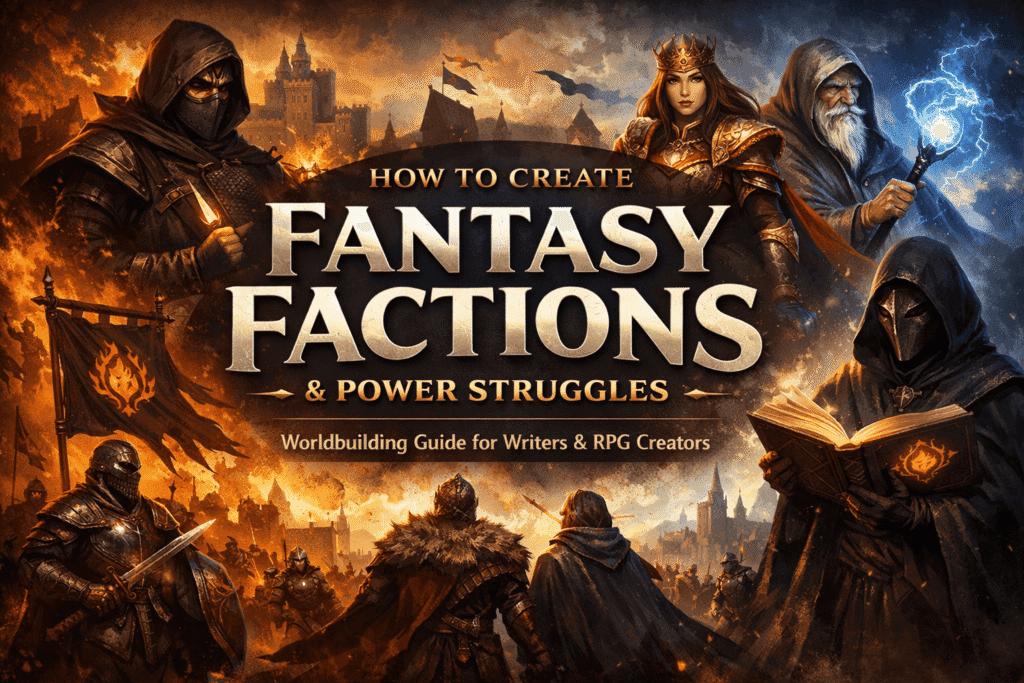
Factions clash.
Allies betray each other.
Politics is where stories truly ignite.
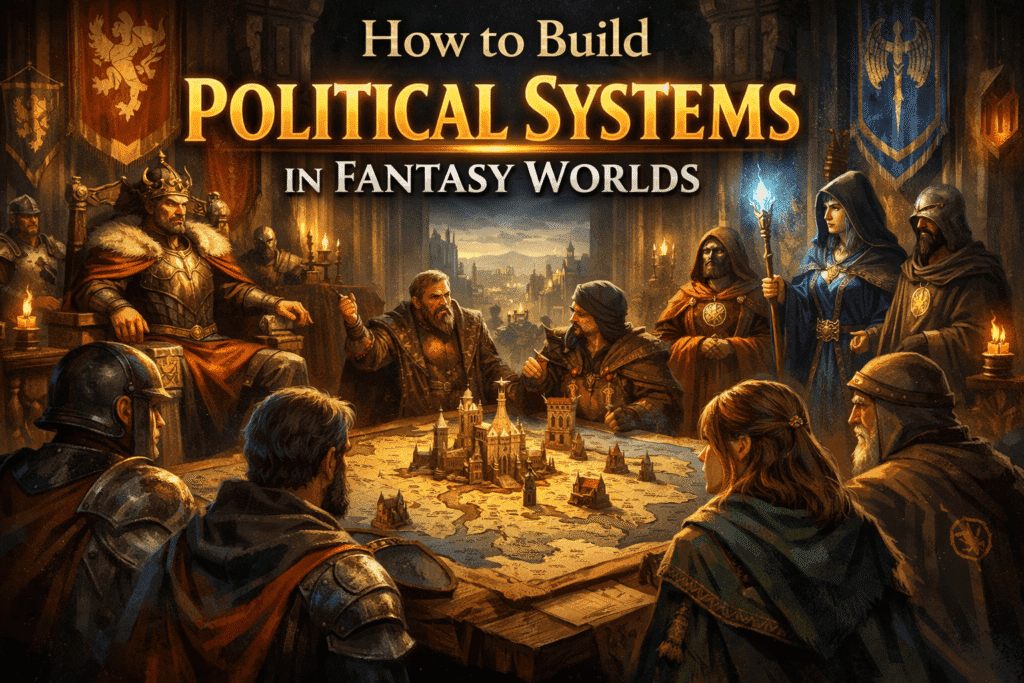
If you're a fantasy writer, RPG creator, or dungeon master, learning how to build believable political systems can transform your world from a static setting into a living ecosystem.
In this guide, you'll learn:
- How fantasy political systems work
- The biggest mistakes worldbuilders make
- 5 powerful political structures you can use immediately
- How AI tools can help you generate complex governments faster
Let’s dive in.
What Is a Political System in a Fantasy World?
A fantasy political system defines who holds power and how decisions are made in your world.
It answers questions like:
- Who rules the kingdom?
- How are leaders chosen?
- What groups compete for influence?
- What happens when someone challenges authority?
Political systems shape everything:
- wars
- alliances
- character motivations
- economic systems
- cultural conflicts
Without politics, a fantasy world becomes a static backdrop instead of a dynamic environment.
Great fantasy worlds use politics as story engines.
Examples include:
- Game of Thrones → feudal power struggles
- Dune → noble houses competing for resources
- The Witcher → fragile alliances between kingdoms
Your political structure determines where the tension lives.
Try Summon Worlds for free.
Common Mistakes When Designing Fantasy Politics
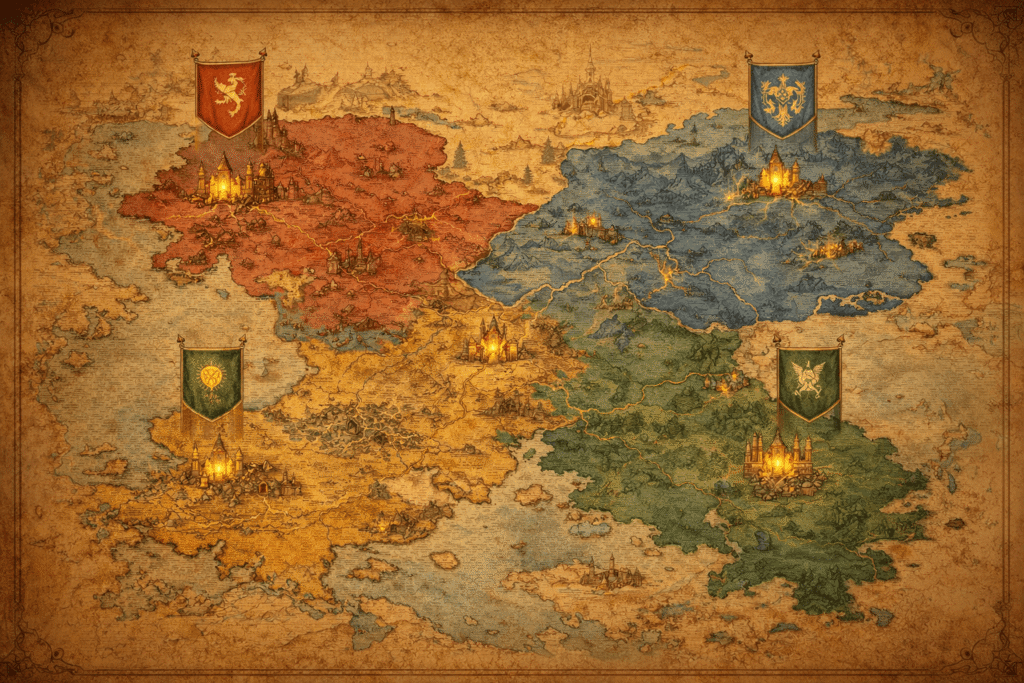
Many worldbuilders overcomplicate lore but oversimplify power.
Here are the most common mistakes.
1. The “Perfect King” Problem
Many fantasy worlds assume rulers are absolute and uncontested.
But power is never that stable.
Even powerful monarchies face:
- noble rivalries
- religious pressure
- economic influence
- rebellions
Conflict creates story fuel.
2. No Political Factions
Real politics always involves groups competing for influence.
Your world should include factions such as:
- noble houses
- merchant guilds
- religious orders
- military commanders
- magical academies
These groups give your world internal tension.
3. Governments That Never Change
Political systems evolve.
Wars, revolutions, and disasters reshape governments constantly.
If your world has existed for centuries, its political structure should show historical layers.
4. Politics That Don’t Affect Characters
The best political systems impact the characters directly.
Examples:
- A knight must choose loyalty between crown and family.
- A wizard council bans certain magic.
- A merchant guild controls trade routes.
Politics should shape character choices.
5 Political Systems That Work Perfectly for Fantasy Worlds
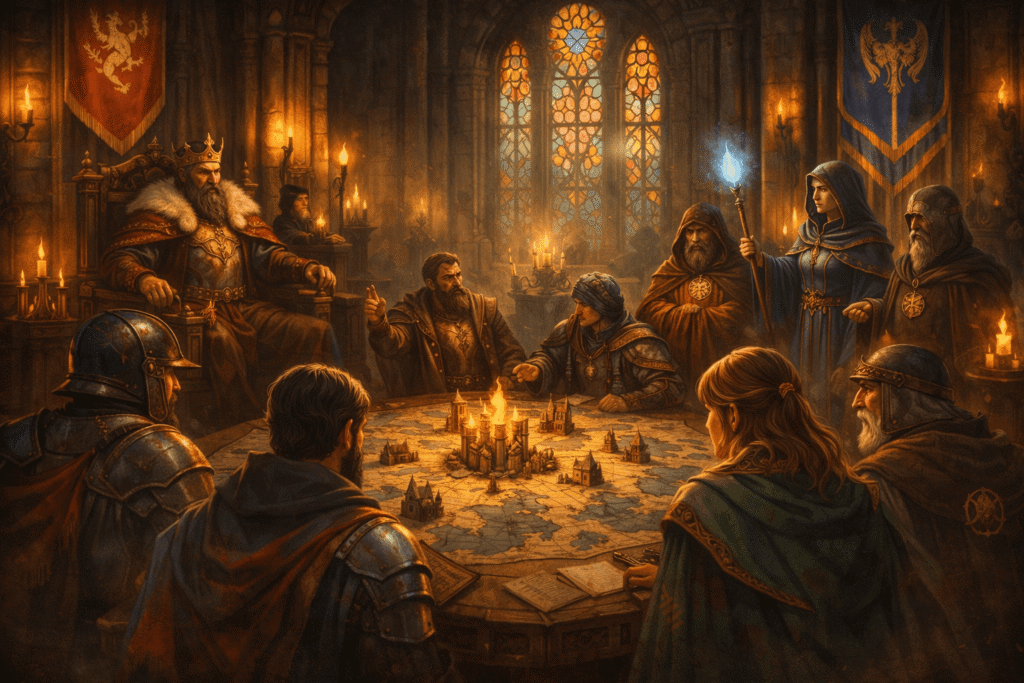
You don’t need to reinvent politics.
Some systems consistently produce strong narrative tension.
1. Feudal Monarchies
This is the classic fantasy structure.
A king rules, but powerful nobles control regions.
Power struggles occur between:
- royal families
- noble houses
- regional lords
This system naturally creates alliances, betrayals, and succession wars.
Great for:
- epic fantasy
- medieval worlds
- political intrigue stories
2. Mage Councils
In magic-heavy worlds, spellcasters may control government.
Power belongs to a council of powerful mages who regulate magic and influence politics.
Conflict often arises from:
- forbidden magic
- magical experimentation
- rivalry between magical schools
Perfect for worlds where magic is the dominant power.
3. Merchant Republics
Trade empires are an underrated fantasy political system.
Instead of kings, wealthy merchant families control the state.
Power depends on:
- trade routes
- economic alliances
- political bribery
This system produces stories about wealth, influence, and espionage.
4. Religious Theocracies
In this system, the ruling authority is a religious order.
The government claims divine authority.
Conflicts emerge from:
- heresy accusations
- religious wars
- rival interpretations of prophecy
This creates strong moral and ideological tension.
5. Fractured Kingdoms
Instead of one government, the land is divided into competing territories.
Think:
- independent cities
- rival clans
- warring kingdoms
This system creates a world where no one truly controls everything.
Perfect for RPG campaigns.
How AI Tools Help You Build Fantasy Governments Faster
Designing complex political systems can take hours.
Or days.
But AI tools can dramatically speed up the process.
Platforms like Summon Worlds allow creators to build structured fantasy worlds where politics, characters, and locations connect organically.
Instead of writing endless notes, you can:
- generate political factions
- create ruling characters
- visualize kingdoms and locations
- test story conflicts through AI character chat
Summon Worlds acts like a creative worldbuilding studio in your pocket.
You can:
- generate AI characters with detailed backstories
- create locations tied to political factions
- visualize rulers, armies, and cities with AI art
- roleplay political conflicts through AI chat
Everything connects within a structured World → Location → Character hierarchy, making it easier to track relationships and power dynamics.
Instead of juggling spreadsheets, your entire political ecosystem lives inside one interactive
Example: Building a Fantasy Political System Step-by-Step
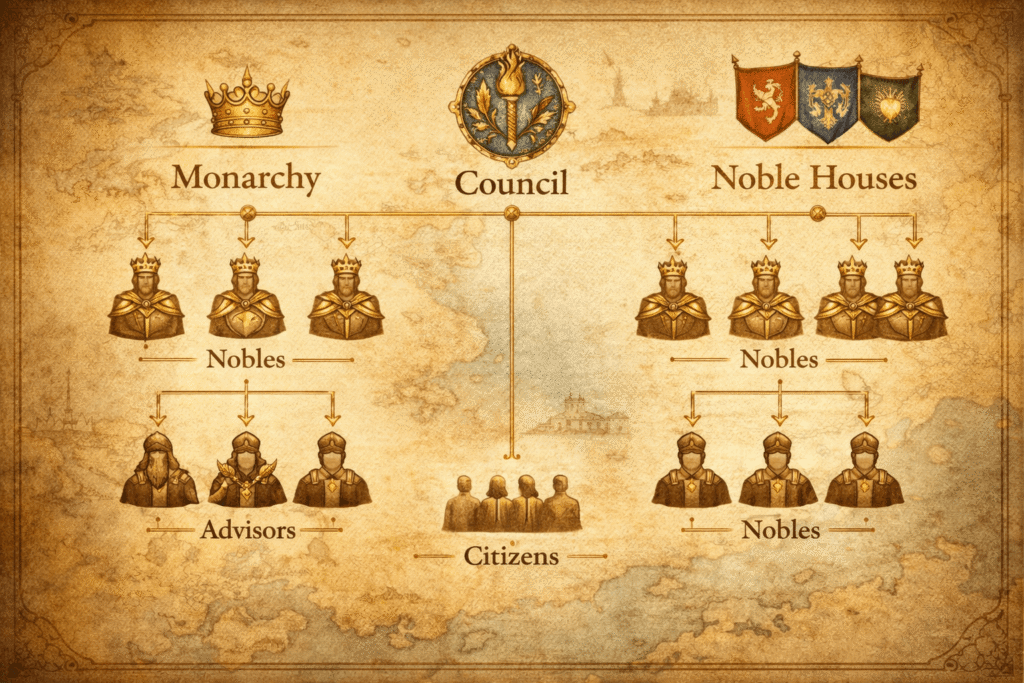
Here’s a simple framework you can use.
Step 1: Choose the Core Government
Example:
The Kingdom of Valdris is ruled by a monarch.
But the king must answer to five powerful noble houses.
Step 2: Add Competing Factions
Create groups with competing interests.
Example factions:
- House Arven — controls the army
- House Virell — controls trade routes
- The Sun Church — controls religion
- The Arcane College — controls magic
Now power is divided.
Step 3: Create Political Conflict
Conflict drives story.
Example:
- The church wants to outlaw magic.
- The Arcane College secretly supports rebellion.
- Merchant guilds finance both sides.
Suddenly, the political system generates story arcs automatically.
Step 4: Populate the World
Add characters who represent each faction.
Examples:
- a conflicted prince
- a radical archmage
- a merchant spy
- a religious inquisitor
With tools like Summon Worlds, you can generate these characters instantly and even roleplay conversations between them to test story ideas.
Your political system becomes interactive storytelling.
Conclusion: Politics Makes Worlds Feel Alive
Magic may attract readers.
But politics keeps them invested.
When your world has real power structures, every decision matters.
A single vote, betrayal, or alliance can reshape the entire story.
That’s why strong political systems turn good fantasy worlds into legendary ones.
If you want to build deeper worlds faster, tools like Summon Worlds help you create characters, factions, and entire political ecosystems in minutes.
Instead of staring at a blank page, you can generate, visualize, and roleplay your world instantly.
Start building your world today.
Download Summon Worlds and bring your fantasy universe to life.
Start building your World!