

About this world
In 2038, a catastrophic containment breach at a subterranean research complex unleashed a weaponized pathogen into the world, forever altering the course of human civilization. The genetically engineered virus ravaged populations with terrifying speed, transforming infected humans and primates into grotesque, mindless abominations driven by primal hunger and aggression. Within months, the infrastructure of modern society crumbled as governments collapsed and institutions fell into chaos, leaving behind only skeletal remnants of humanity's former glory. Now five years later, nature has reclaimed the shattered remnants of urban centers, with sprawling metropolises now consumed by vegetation and decay, their towering structures standing as monuments to a lost era. Crumbling highways snake through overgrown wastelands where mutated horrors prowl among abandoned vehicles and forgotten settlements, creating a nightmarish landscape of danger at every turn. The few survivors who endured the initial outbreak have banded together in desperate communities or roving companies, struggling to maintain their humanity while navigating a world where the line between civilization and savagery has been irrevocably erased. In this forsaken Earth, hope seems lost and survival fleeting.
The guide below reflects the creator-shared categories and records currently available for public browsing. Private and unpublished material is not included.
At a glance
Public world profile
- Public creations
- 19
- Populated categories
- 5 of 6
- World creator
- Kstarfireheart3583
- Public views
- 24
- Inspirations
- 0
- Last updated
- Jul 17, 2026
Creator-shared records
Public roster preview
This world currently connects 19 public creations across 5 populated categories. The preview introduces one creator-shared record from each available category.
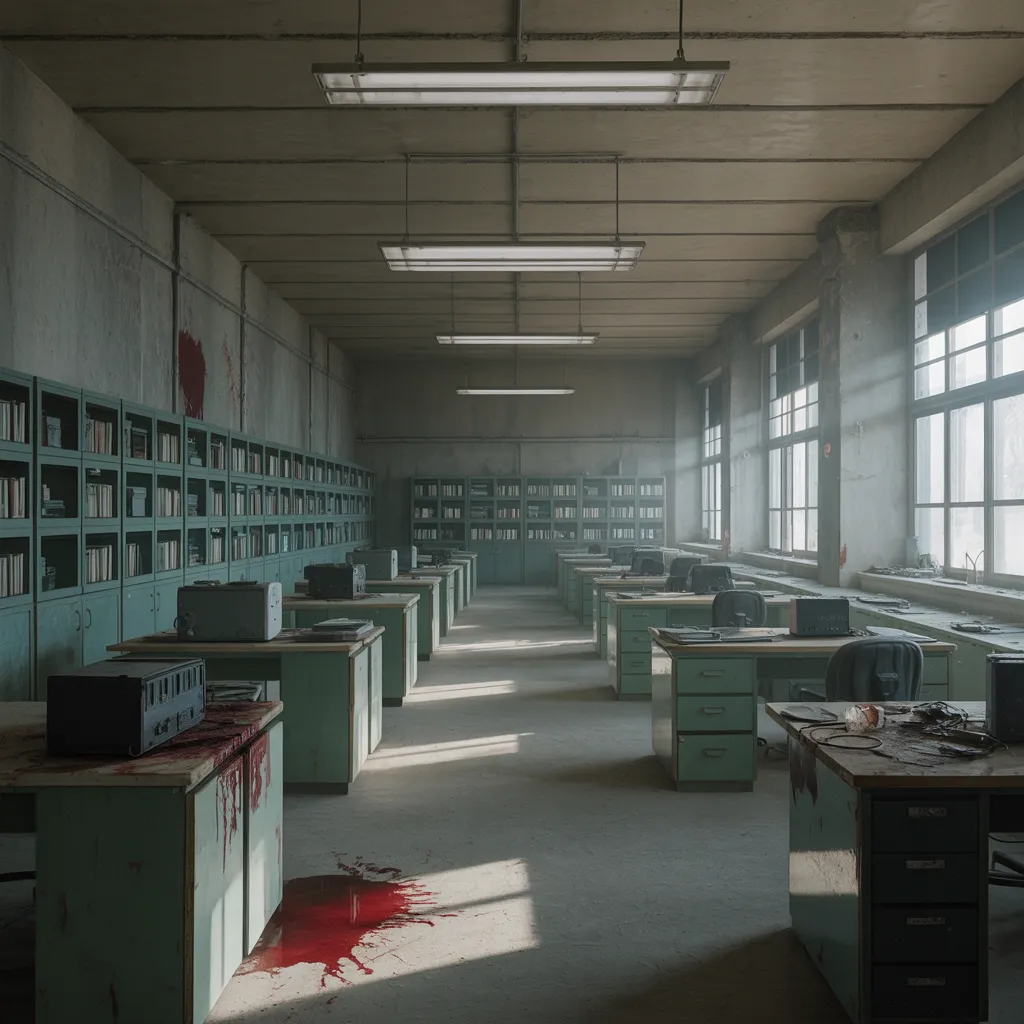
Gencorp Office Level
The Gencorp Office Level exists deep beneath the Coleville Office Center, a sprawling underground complex dedicated to genetic research and data management. Five years have elapsed since the catastrophic accident that resulted in the uncontrolled release of the T-virus throughout the facility, an event that forced the immediate and permanent abandonment of this subterranean workspace. The level remains a haunting tableau of sudden desertion and catastrophy, with rows of computer workstations and cubicles standing empty, their monitors long since powered down and gathering dust alongside scattered paperwork and office supplies that litter the floors in chaotic disarray. False walls of monitors still depict a peaceful view of Coleville that is now lays in ruins. Glass-walled offices line the perimeter, once housing senior researchers and administrators, now serving as silent monuments to the lives and work abruptly interrupted. Dark stains of dried blood mark several walls and surfaces throughout the complex, grim reminders of the panic and violence that accompanied the initial outbreak. Overhead, flickering fluorescent lights struggle against the encroaching darkness, their irregular pulses casting dancing shadows across the desolate workspace. The air itself feels heavy and stale, broken only by the occasional mechanical whir of ventilation systems and air filters that continue their tireless work, maintaining a sterile atmosphere despite the absence of any living inhabitants. An eerie, oppressive silence dominates the level, interrupted only by these sporadic sounds of machinery—a stark contrast to the vibrant energy that once characterized this hub of scientific innovation and administrative activity.
View details
Grihm
Explore this character from the world.
View details
Am Radio Receiver
This weathered grey receiver bears the unmistakable marks of desperate improvisation, its chassis a patchwork of salvaged components welded together with crude ingenuity. A prominent red frequency dial dominates the front face, its numbers worn but still legible, while an eerie blue glow emanates from the display screen—one of the few functional pieces that survived the collapse. The speaker, though fractured and weakened by age and use, still crackles to life with the voices of distant survivors broadcasting across the wasteland. A hand crank mechanism protrudes from the side, serving as both battery charger and lifeline, requiring steady manual effort to power the device when conventional electricity is but a distant memory. The radio's construction speaks to the resourcefulness of its creator, Willy, who painstakingly assembled this vital tool from the gutted remains of multiple receivers found in the ruins. This device has become an extension of Willy himself, his only reliable connection to the scattered remnants of human civilization still clinging to existence. Through its crackling speakers, hope and information flow to those desperate enough to listen.
View details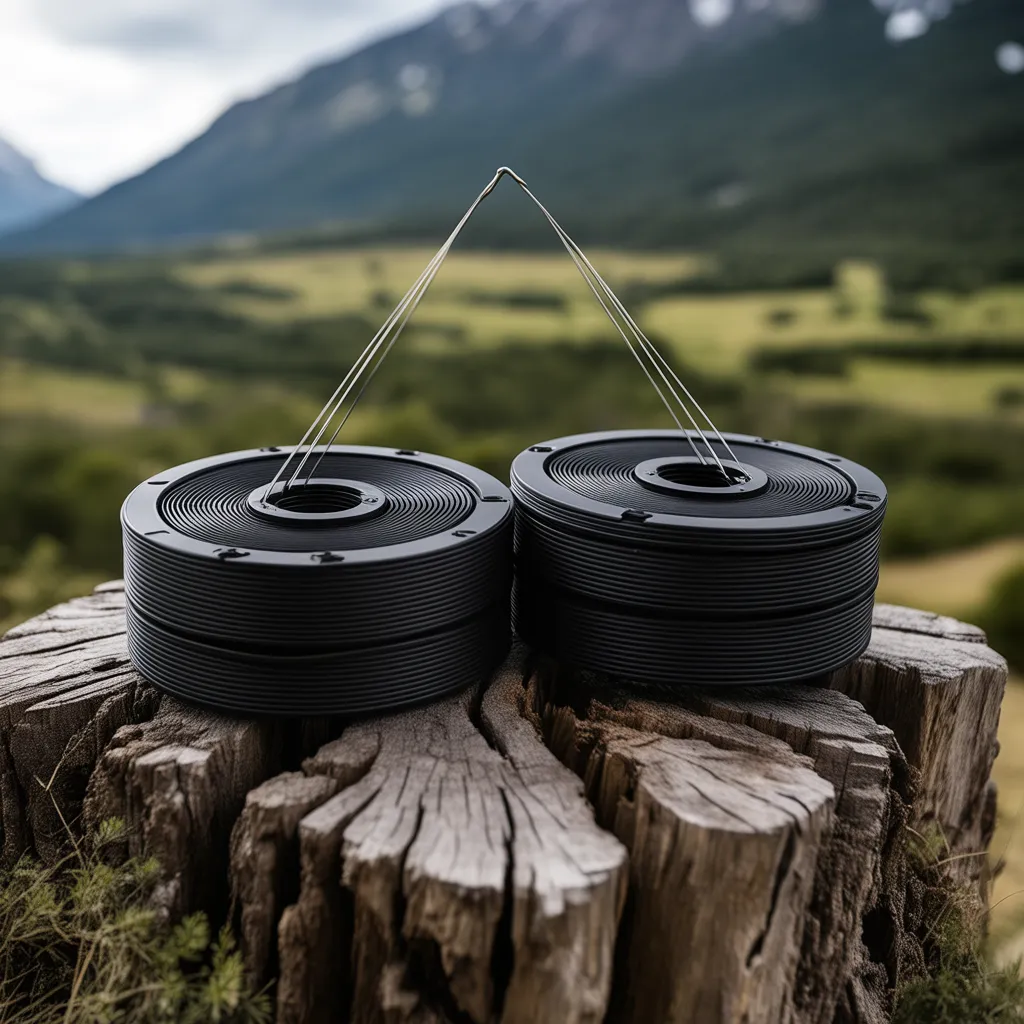
Scythe Wire
This insidious weapon consists of an impossibly thin titanium filament of exceptional sharpness, held taut between two palm-sized discs of reinforced obsidian-black polymer. Each disc can be driven deep into wood or stone surfaces with surprising ease, or magnetically affixed to metal walls and structures, creating a deadly trap or cutting barrier. The wire itself is nearly invisible when properly positioned, making it a favored tool of mercenaries and Black-ops, those who favor cunning over direct confrontation. When drawn across flesh, the wire cuts with devastating efficiency, capable of severing limbs and vital arteries with minimal resistance. A creature struck by the Scythe Wire must succeed on a Dexterity saving throw or take 3d12 slashing damage; on a failure of 5 or more, the target also loses a limb of the wielder's choosing. The weapon's dual-disc design allows for creative deployment, from creating tripwires across doorways to fashioning portable cutting barriers. Due to its extreme fragility despite its sharpness, the wire requires careful handling and cannot be used in traditional melee combat without risking breakage. Those who master the Scythe Wire understand that its true power lies not in direct confrontation, but in preparation and positioning.
View details
Kevlar Vest And Arm Protection
This reinforced black and green kevlar flak jacket features integrated protective arm guards connected seamlessly along the shoulders and upper limbs. The garment provides exceptional defense against both slashing weapons and piercing attacks, granting the wearer a +2 bonus to their Armor Class. After a devastating assault by mutated humans on the Air Base, Lieutenant Dunne commissioned a series of enhancements to several standard flak jackets to better protect soldiers in the field. The augmentations infuse the kevlar fibers with protective fibers that create an barrier against infection and disease transmitted through cuts and punctures. The arm guards are articulated to allow for full mobility while maintaining complete coverage over vulnerable joints and exposed skin. The construction is lightweight enough for extended wear during combat operations, yet durable enough to withstand repeated impacts from both conventional and mutant threats. This piece of equipment has become invaluable to those defending against the ongoing mutant incursions threatening the base and surrounding area.
View detailsWorld guide
Explore the world
Locations3Browse the public places and settings connected to this world.Open category →Characters11Browse the public character profiles connected to this world.Open category →Items1Browse the public objects and artifacts connected to this world.Open category →Weapons3Browse the public weapon profiles connected to this world.Open category →Armor1Browse the public armor profiles connected to this world.Open category →