summon worlds ai art
  • Home
    • About Summon Worlds
    • AI Image Generator | Summon Worlds
    • Fantasy AI Worldbuilding
    • AI Chat Roleplay | Summon Worlds
    Epic fantasy party lineup featuring a muscular armored bear warrior, a wise old wizard in a pointed hat, a radiant winged female elf with glowing armor, and a noble white dragon humanoid – set against a surreal alien twilight landscape with jagged mountains and multiple moons, perfect for immersive AI-powered roleplay and worldbuilding.
    About Us
    Expansive floating city with futuristic towers and a colossal suspended orb, surrounded by clouds and cascading waterfalls at sunrise – AI-generated fantasy world perfect for collaborative storytelling and immersive worldbuilding.
    Fantasy AI Worldbuilding
    Mystical fairy with luminous wings and a jeweled headpiece, gazing through the twilight with a glowing green serpent coiled across her shoulder—an ethereal guide to realms where magic and danger intertwine in Summon Worlds.
    AI Art
    Futuristic biker racing across a dusty alien landscape with towering rock formations, scattered meteors, and a massive ringed planet looming overhead, an adrenaline-charged moment in an AI-generated world perfect for sci-fi storytelling and off-world adventure campaigns.
    AI Chat Roleplay
  • Worlds
    • Create a World with AI | Summon Worlds
    • Summon Worlds For Dungeon Masters
    • Summon Worlds For Writers
    create an ai art world

    Create a World

    Design stunning worlds with the help of AI

    dnd masters

    For Dungeon Masters

    Transform your D&D campaign preparation

    ai art storytelling

    For Writers

    Create immersive fantasy worlds through interactive roleplay

  • Resources
    • Blog
    • Summon Worlds Community Updates
  • Plans
    • Pricing Plans for Worldbuilders and Storytellers
  • Guidebook
    • Guidebook
Join Us!
summon worlds ai art
  • Home
    • About Summon Worlds
    • AI Image Generator | Summon Worlds
    • Fantasy AI Worldbuilding
    • AI Chat Roleplay | Summon Worlds
    Epic fantasy party lineup featuring a muscular armored bear warrior, a wise old wizard in a pointed hat, a radiant winged female elf with glowing armor, and a noble white dragon humanoid – set against a surreal alien twilight landscape with jagged mountains and multiple moons, perfect for immersive AI-powered roleplay and worldbuilding.
    About Us
    Expansive floating city with futuristic towers and a colossal suspended orb, surrounded by clouds and cascading waterfalls at sunrise – AI-generated fantasy world perfect for collaborative storytelling and immersive worldbuilding.
    Fantasy AI Worldbuilding
    Mystical fairy with luminous wings and a jeweled headpiece, gazing through the twilight with a glowing green serpent coiled across her shoulder—an ethereal guide to realms where magic and danger intertwine in Summon Worlds.
    AI Art
    Futuristic biker racing across a dusty alien landscape with towering rock formations, scattered meteors, and a massive ringed planet looming overhead, an adrenaline-charged moment in an AI-generated world perfect for sci-fi storytelling and off-world adventure campaigns.
    AI Chat Roleplay
  • Worlds
    • Create a World with AI | Summon Worlds
    • Summon Worlds For Dungeon Masters
    • Summon Worlds For Writers
    create an ai art world

    Create a World

    Design stunning worlds with the help of AI

    dnd masters

    For Dungeon Masters

    Transform your D&D campaign preparation

    ai art storytelling

    For Writers

    Create immersive fantasy worlds through interactive roleplay

  • Resources
    • Blog
    • Summon Worlds Community Updates
  • Plans
    • Pricing Plans for Worldbuilders and Storytellers
  • Guidebook
    • Guidebook
Join Us!
  • Home
    • About Summon Worlds
    • AI Image Generator | Summon Worlds
    • Fantasy AI Worldbuilding
    • AI Chat Roleplay | Summon Worlds
    Epic fantasy party lineup featuring a muscular armored bear warrior, a wise old wizard in a pointed hat, a radiant winged female elf with glowing armor, and a noble white dragon humanoid – set against a surreal alien twilight landscape with jagged mountains and multiple moons, perfect for immersive AI-powered roleplay and worldbuilding.
    About Us
    Expansive floating city with futuristic towers and a colossal suspended orb, surrounded by clouds and cascading waterfalls at sunrise – AI-generated fantasy world perfect for collaborative storytelling and immersive worldbuilding.
    Fantasy AI Worldbuilding
    Mystical fairy with luminous wings and a jeweled headpiece, gazing through the twilight with a glowing green serpent coiled across her shoulder—an ethereal guide to realms where magic and danger intertwine in Summon Worlds.
    AI Art
    Futuristic biker racing across a dusty alien landscape with towering rock formations, scattered meteors, and a massive ringed planet looming overhead, an adrenaline-charged moment in an AI-generated world perfect for sci-fi storytelling and off-world adventure campaigns.
    AI Chat Roleplay
  • Worlds
    • Create a World with AI | Summon Worlds
    • Summon Worlds For Dungeon Masters
    • Summon Worlds For Writers
    create an ai art world

    Create a World

    Design stunning worlds with the help of AI

    dnd masters

    For Dungeon Masters

    Transform your D&D campaign preparation

    ai art storytelling

    For Writers

    Create immersive fantasy worlds through interactive roleplay

  • Resources
    • Blog
    • Summon Worlds Community Updates
  • Plans
    • Pricing Plans for Worldbuilders and Storytellers
  • Guidebook
    • Guidebook
ai art generator
ai art generator
  • Home
    • About Summon Worlds
    • AI Image Generator | Summon Worlds
    • Fantasy AI Worldbuilding
    • AI Chat Roleplay | Summon Worlds
    Epic fantasy party lineup featuring a muscular armored bear warrior, a wise old wizard in a pointed hat, a radiant winged female elf with glowing armor, and a noble white dragon humanoid – set against a surreal alien twilight landscape with jagged mountains and multiple moons, perfect for immersive AI-powered roleplay and worldbuilding.
    About Us
    Expansive floating city with futuristic towers and a colossal suspended orb, surrounded by clouds and cascading waterfalls at sunrise – AI-generated fantasy world perfect for collaborative storytelling and immersive worldbuilding.
    Fantasy AI Worldbuilding
    Mystical fairy with luminous wings and a jeweled headpiece, gazing through the twilight with a glowing green serpent coiled across her shoulder—an ethereal guide to realms where magic and danger intertwine in Summon Worlds.
    AI Art
    Futuristic biker racing across a dusty alien landscape with towering rock formations, scattered meteors, and a massive ringed planet looming overhead, an adrenaline-charged moment in an AI-generated world perfect for sci-fi storytelling and off-world adventure campaigns.
    AI Chat Roleplay
  • Worlds
    • Create a World with AI | Summon Worlds
    • Summon Worlds For Dungeon Masters
    • Summon Worlds For Writers
    create an ai art world

    Create a World

    Design stunning worlds with the help of AI

    dnd masters

    For Dungeon Masters

    Transform your D&D campaign preparation

    ai art storytelling

    For Writers

    Create immersive fantasy worlds through interactive roleplay

  • Resources
    • Blog
    • Summon Worlds Community Updates
  • Plans
    • Pricing Plans for Worldbuilders and Storytellers
  • Guidebook
    • Guidebook

Category: Blog

fantasy creature design
March 13, 2026
by Andrea ChavezBlog

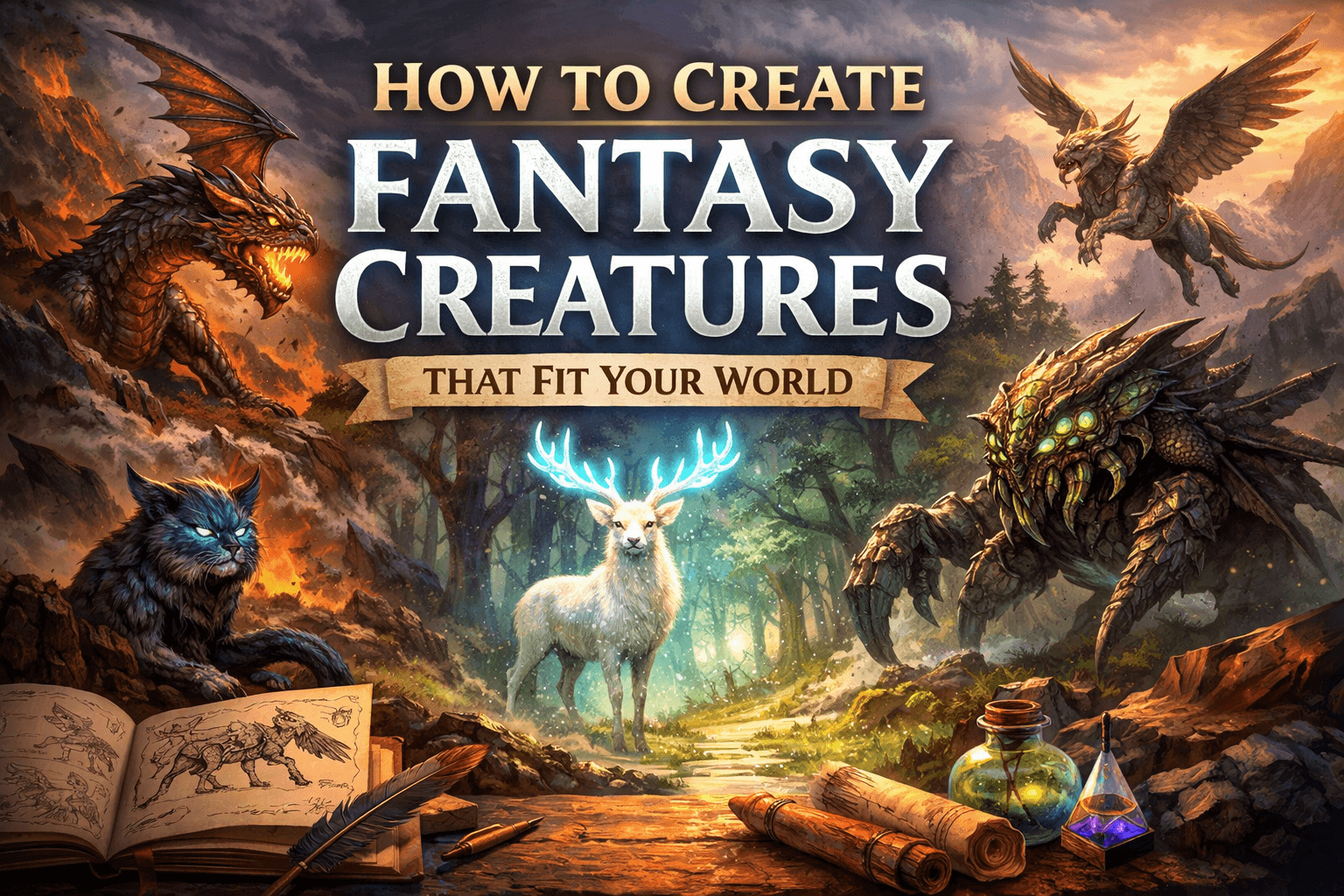
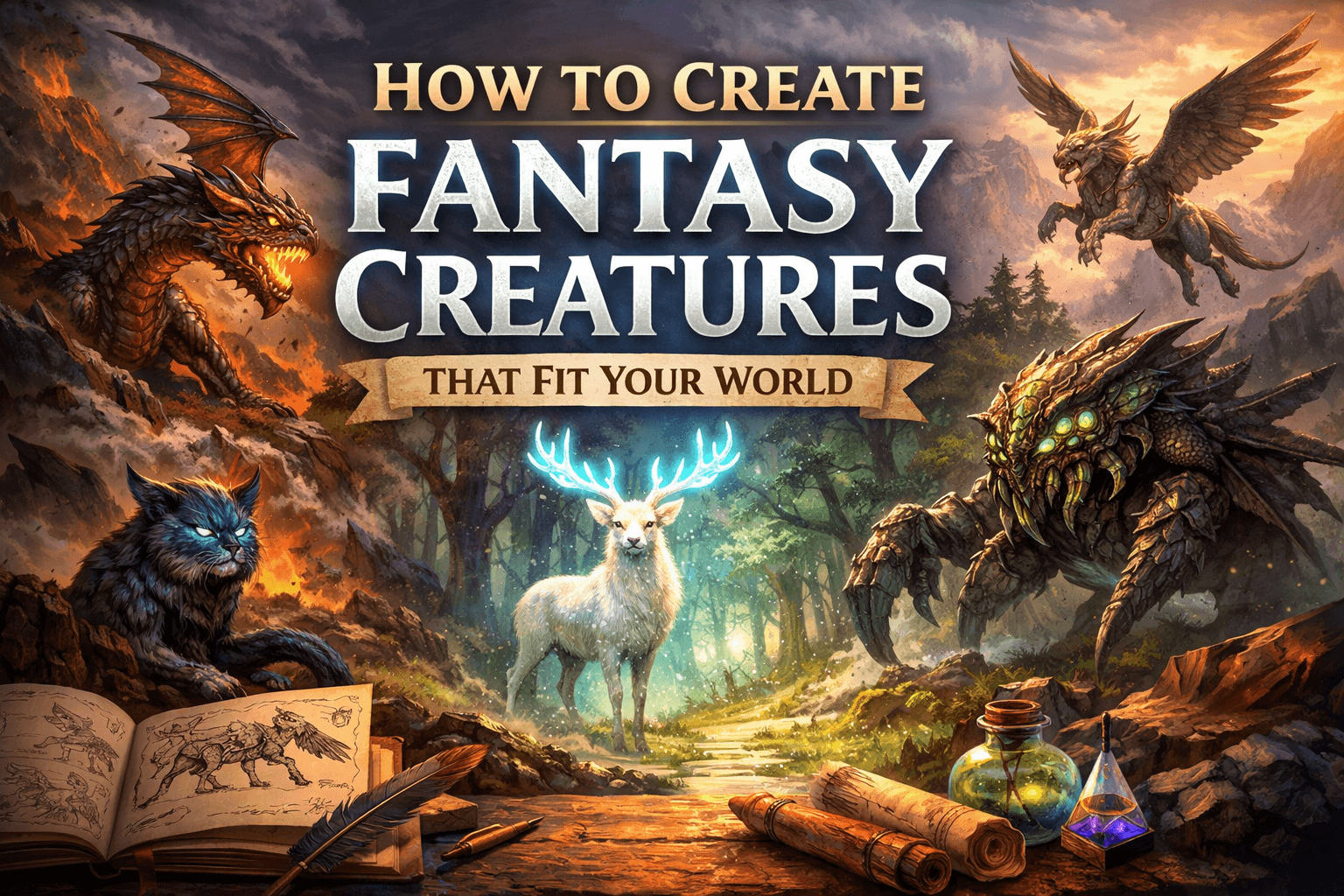
How to Create Fantasy Creatures That Fit Your World
How to Create Fantasy Creatures That Fit Your World

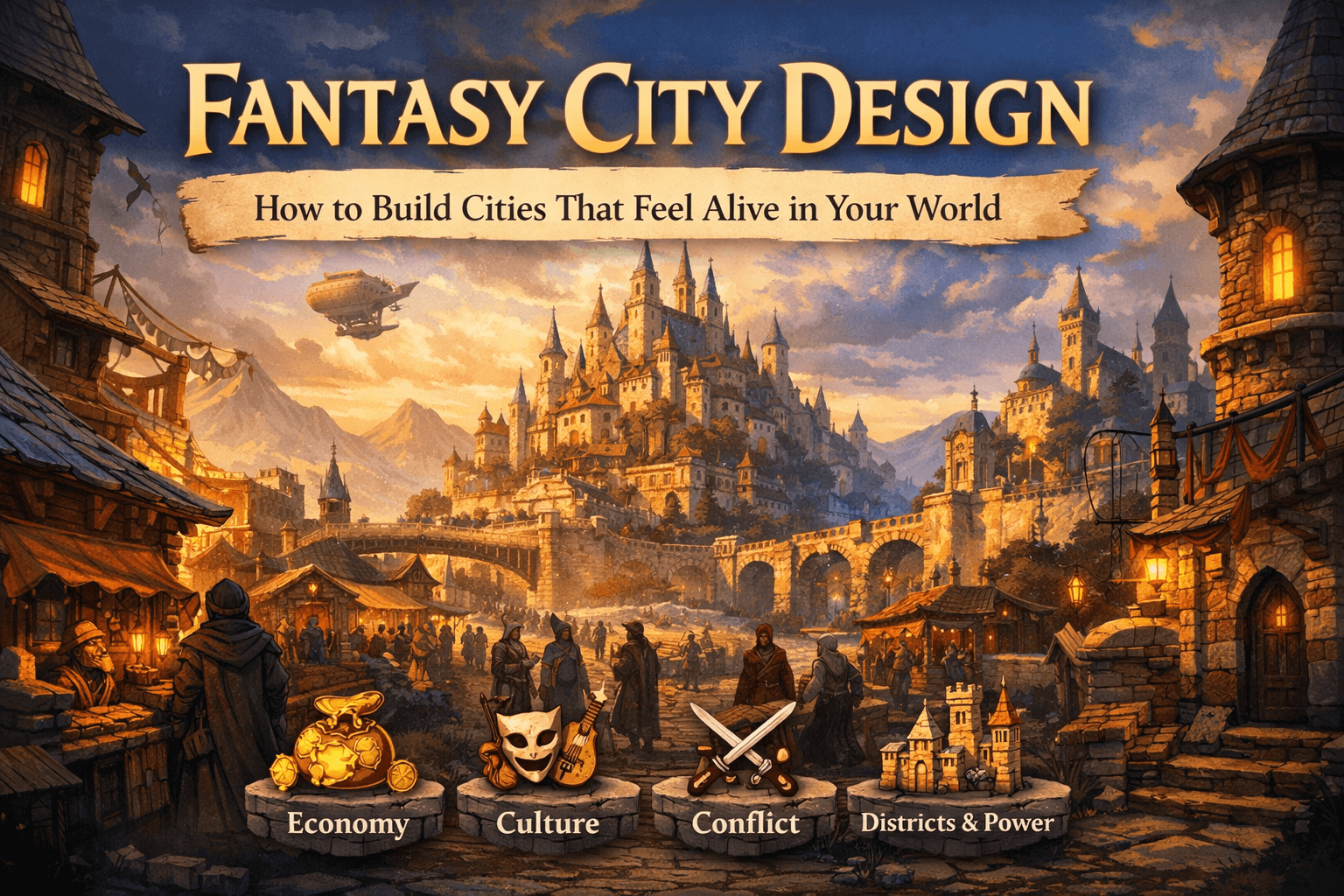
fantasy city design

👉

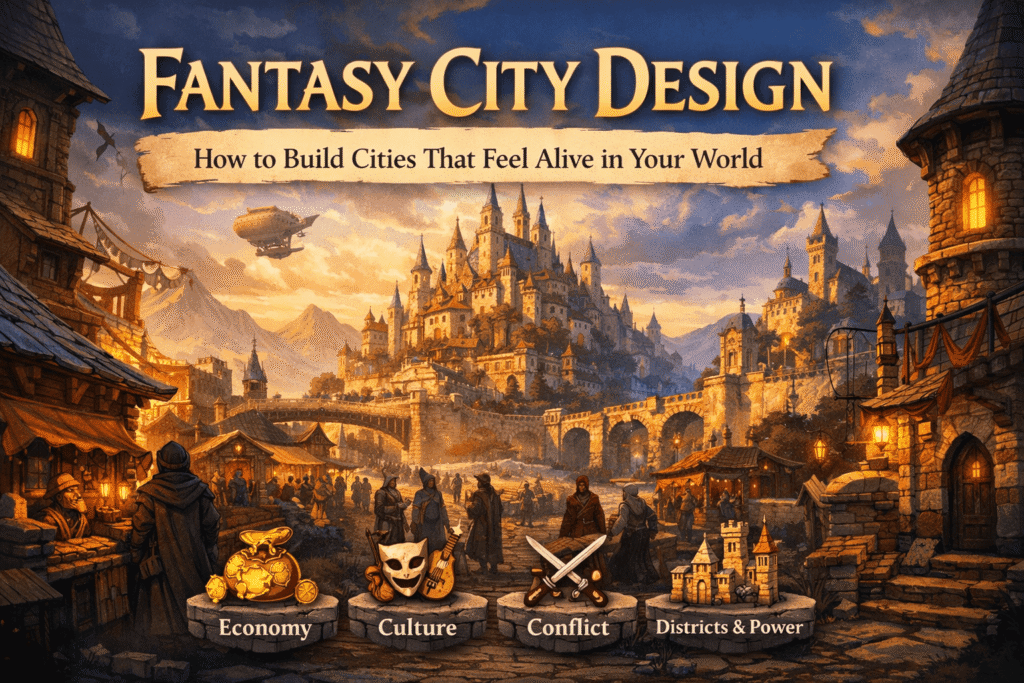
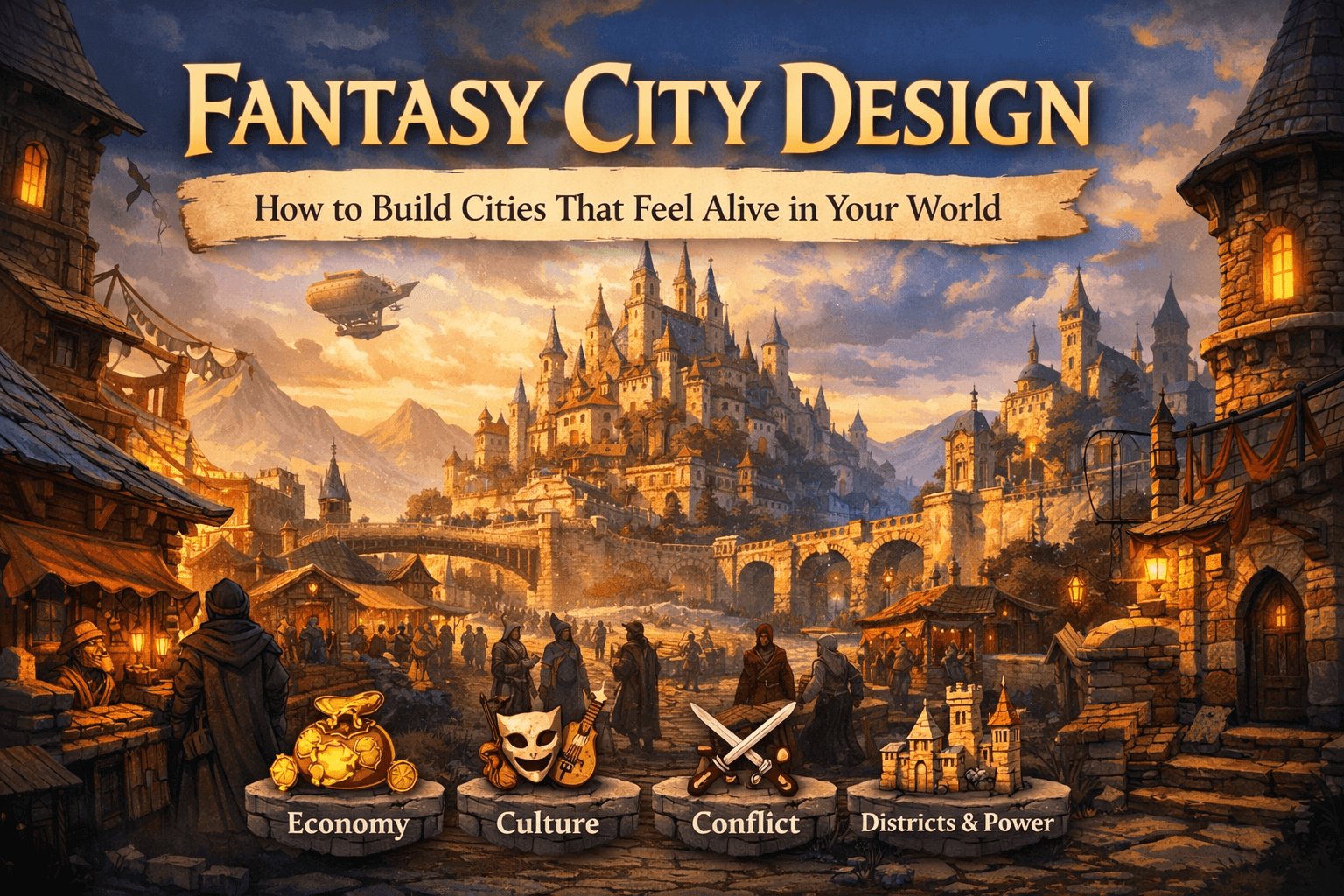
Learn fantasy city design techniques used by worldbuilders, RPG creators, and fantasy writers. Discover how to build cities that feel alive and generate locations instantly with AI tools like Summon Worlds.

  • March 13, 2026
  • Andrea Chavez

Most fantasy cities in books, RPG campaigns, and games have the same problem.

They look amazing on a map…

But they feel completely dead.

The streets are empty.
The taverns are generic.
The citizens feel like background props.

If you want your fantasy world to feel real, your cities must behave like living organisms.

They need politics. Trade. Rivalries. Neighborhoods. Hidden secrets.

In this guide, you’ll learn how to design fantasy cities that feel alive, whether you’re a writer, dungeon master, or RPG creator. You’ll also see how AI tools like Summon Worlds can help you generate entire cities, characters, and locations in minutes instead of weeks.

Table of Contents

What Makes a Fantasy City Feel Alive?

A fantasy city feels alive when it has dynamic systems that interact with each other, such as economy, culture, politics, and daily life.

In other words:

A living city isn’t just a location, it’s a network of stories waiting to happen.

Great fantasy cities include:

  • Distinct districts with purpose

  • Conflicting factions and politics

  • Active trade and economy

  • Cultural traditions and beliefs

  • Characters that shape the city’s identity

Think about cities like:

  • King’s Landing (Game of Thrones)

  • Ankh-Morpork (Discworld)

  • Baldur’s Gate (D&D)

They feel real because every street suggests new stories, quests, or secrets.

Try Summon Worlds for free.

"Download on the App Store"

"GET IT ON Google Play"

The 5 Elements Every Living Fantasy City Needs
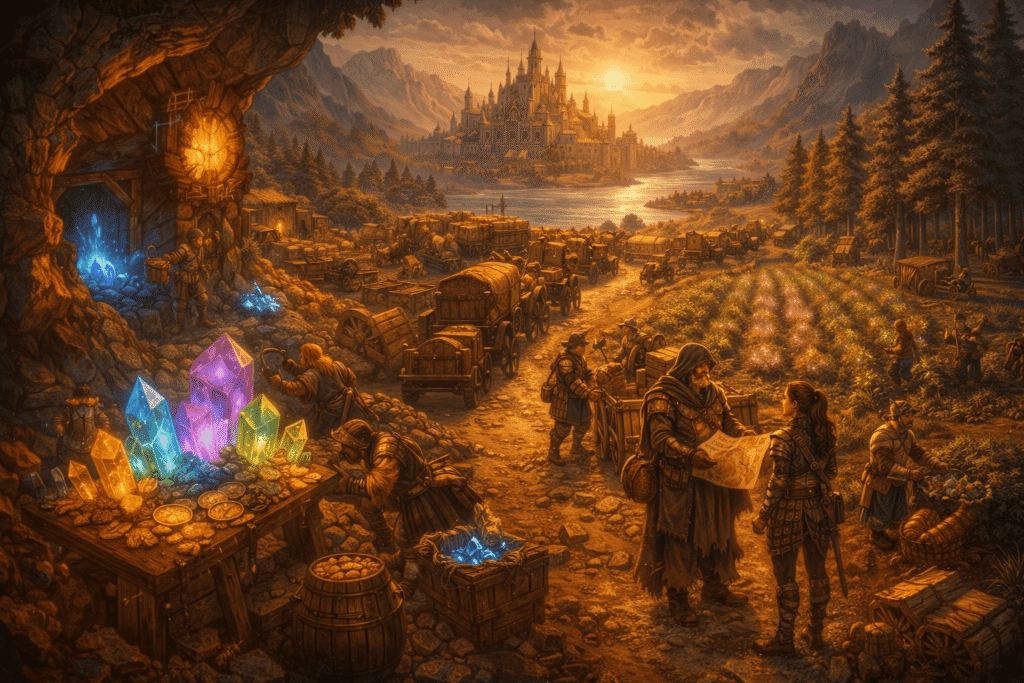
fantasy currency system

If your city includes these five elements, it will instantly feel more immersive.

1. Economy (Why the City Exists)

Every real city exists for a reason.

Ask yourself:

Why was this city built?

Examples:

  • Trade port between kingdoms

  • Mining city near magical crystals

  • Religious capital built around a sacred temple

  • Military fortress guarding a mountain pass

Your city’s economy determines:

  • Who lives there

  • What goods are traded

  • Which factions gain power

For example:

A port city will have:

  • sailors

  • smugglers

  • merchants

  • dockside taverns

The economy creates stories automatically.

2. Culture and Identity

Cities feel alive when they have unique cultural traits.

Ask questions like:

  • What festivals happen here?

  • What foods are famous?

  • What religion dominates the city?

  • What language or slang do locals use?

Small cultural details make cities memorable.

Example:

A desert city might have:

  • night markets instead of daytime markets

  • water rituals

  • lantern festivals

Culture turns a location into a place people remember.

3. Conflict (The Engine of Stories)

No great fantasy city is peaceful.

Conflict drives everything.

Possible city conflicts include:

  • noble houses competing for power

  • religious factions arguing over prophecy

  • criminal guilds controlling the streets

  • rebellion against a tyrant ruler

  • magical disasters hidden by authorities

Conflict creates:

  • quests

  • plot hooks

  • character motivations

Without conflict, a city is just scenery.

4. Districts and Neighborhoods

Real cities have distinct districts with different personalities.

Your fantasy city should too.

Common district types:

  • merchant quarter

  • noble district

  • slums

  • temple district

  • harbor

  • mage academy

  • black market

Each district should feel like a different world.

Example:

A noble district might feature:

  • marble towers

  • guarded gates

  • political intrigue

Meanwhile, the slums might have:

  • hidden gangs

  • secret tunnels

  • underground resistance

Districts make cities explorable.

5. Power Structures

Who really controls the city?

Official rulers are rarely the only power.

Your city may include:

  • kings or governors

  • merchant councils

  • religious leaders

  • crime syndicates

  • secret magical orders

Sometimes the real power is hidden.

Example:

The king rules publicly…

But the thieves guild controls the city from the shadows.

These power dynamics create endless story opportunities.

The Biggest Mistakes When Designing Fantasy Cities
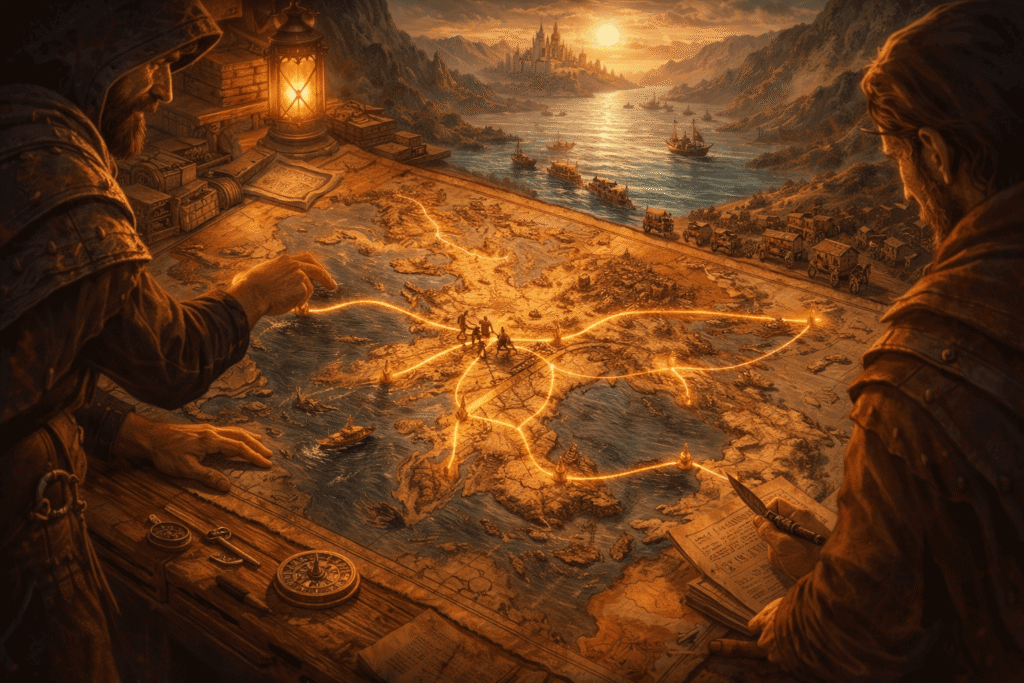
fantasy trade routes

Many worldbuilders accidentally create cities that feel fake.

Here are the biggest mistakes to avoid.

Mistake 1: Cities Without Purpose

If you can’t answer why the city exists, the location will feel shallow.

Always define:

  • trade

  • resources

  • strategic importance

Mistake 2: One-Note Locations

If your city has only one defining trait, it becomes boring.

Example:

“City of Wizards.”

That’s not enough.

Instead create layers:

  • magical university

  • anti-magic rebellion

  • illegal spell market

Now the city feels complex.

Mistake 3: Too Much Planning

Ironically, overplanning kills creativity.

Many writers spend weeks building city lore…

but never use it in stories.

Instead, design a few strong systems and let the rest emerge naturally during storytelling.

How AI Tools Can Help You Design Fantasy Cities Faster

Modern worldbuilders are starting to use AI worldbuilding tools to speed up creative work.

Instead of spending hours brainstorming locations, you can generate:

  • fantasy city concepts

  • districts and locations

  • NPC characters

  • factions and guilds

  • city artwork

  • lore descriptions

This dramatically reduces worldbuilding burnout.

Platforms like Summon Worlds allow creators to instantly generate locations, characters, and AI artwork for entire cities inside one creative ecosystem.

For example, you can:

  • create a city location

  • generate characters who live there

  • produce AI artwork for districts

  • roleplay with NPCs to expand lore

All inside one app.

The result is faster worldbuilding and deeper storytelling.

Creating Your First Fantasy City with Summon Worlds

If you want to build a living fantasy city quickly, here’s a simple workflow used by many creators.

Step 1: Generate a City Location

Use AI to generate your city concept.

Example prompt:

“Ancient port city built on floating islands connected by chains and bridges.”

The AI generates:

  • location description

  • artwork

  • lore ideas

Step 2: Create Key Characters

Populate your city with characters.

Examples:

  • harbor master

  • smuggler queen

  • temple priest

  • rebellious noble

Summon Worlds allows you to create characters with AI-generated backstories and personalities.

Step 3: Build Districts

Create several important locations such as:

  • harbor district

  • royal palace

  • criminal underground

  • mage academy

Each location becomes a storytelling hub.

Step 4: Roleplay and Expand Lore

One of the most powerful features is AI character chat.

You can talk with characters and develop storylines dynamically.

For example:

Ask the smuggler:

“Who controls the docks?”

Now the world begins expanding naturally.

This turns worldbuilding into interactive storytelling instead of static planning.

Final Thoughts: Cities Are Stories Waiting to Happen
A fantasy city should never feel like a static backdrop.

It should feel like a living ecosystem of stories.

The best cities include:

  • active economies

  • unique cultures

  • political conflict

  • memorable districts

  • powerful factions

When these elements interact, your city becomes a place players or readers want to explore.

And if you want to accelerate the entire process, tools like Summon Worlds let you generate characters, locations, artwork, and lore instantly, helping creators focus on storytelling instead of tedious setup.

If you’re ready to bring your fantasy worlds to life, try creating your first city today.

Download Summon Worlds and start building your universe.

Start building your World!

"Download on the App Store"

"GET IT ON Google Play"

Disclaimer: Summon Worlds and the content on summonworlds.com are not affiliated with, endorsed by, or sponsored by Wizards of the Coast LLC. Dungeons & Dragons, D&D, and related terms are registered trademarks of Wizards of the Coast. Any references to D&D game mechanics, settings, or terminology are made for educational, commentary, and fan content purposes only. This blog does not reproduce or distribute official D&D content. All original ideas, characters, and creative content in this post are the intellectual property of OpenForge LLC, the parent company of Summon Worlds.
Previous
Share the Post:

Related Posts

fantasy creature design

How to Create Fantasy Creatures That Fit Your World

Read More
March 13, 2026
fantasy city design

Fantasy City Design: How to Build Cities That Feel Alive in Your World

Read More
March 13, 2026

What is a fantasy economy?

A fantasy economy is the system that controls how resources, trade, and currency function in a fictional world. It explains how kingdoms produce goods, exchange value, and transport materials across regions.

How do you design a fantasy currency system?

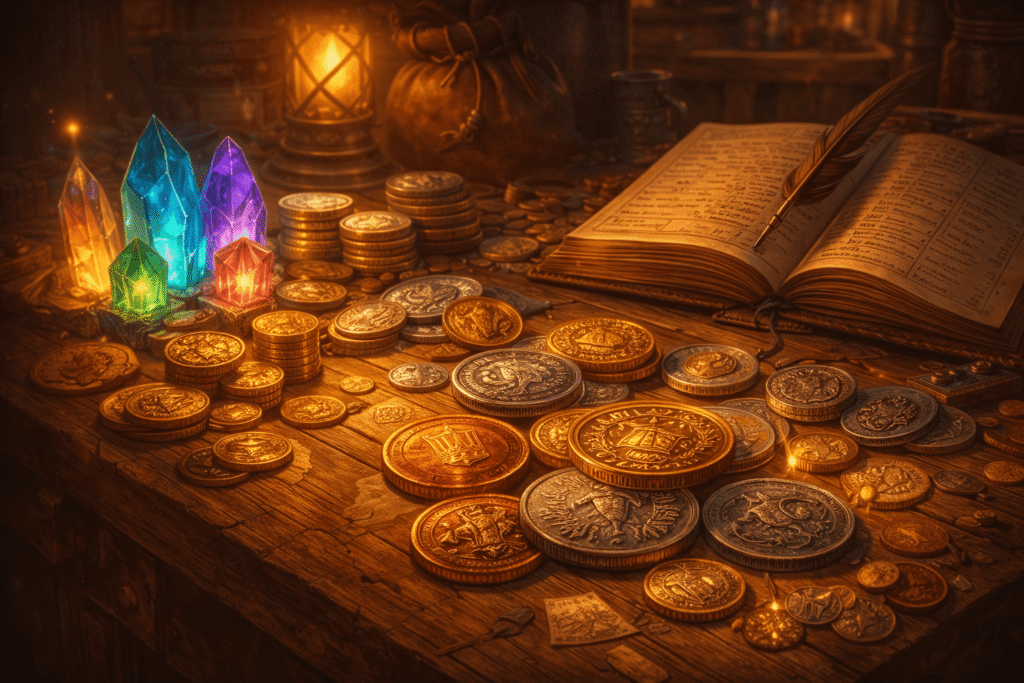
Start by identifying what your culture values. Some worlds use metal coins like gold and silver, while others use magical crystals, guild tokens, or resource-based currency tied to lore and scarcity.

Why are trade routes important in worldbuilding?

Trade routes determine where cities develop, how resources move, and why conflicts occur. Major trade intersections often become wealthy political centers.

What resources should exist in a fantasy world?

Common resources include metals, timber, food, magical ingredients, and rare artifacts. Each region should specialize in different materials based on geography.

What tools help create fantasy economies?

AI worldbuilding tools like Summon Worlds can help creators generate locations, characters, resources, and items while keeping everything connected inside a structured fantasy world.
Read More
fantasy city design
March 13, 2026
by Andrea ChavezBlog

Fantasy City Design: How to Build Cities That Feel Alive in Your World

Fantasy City Design: How to Build Cities That Feel Alive in Your World

fantasy creature design

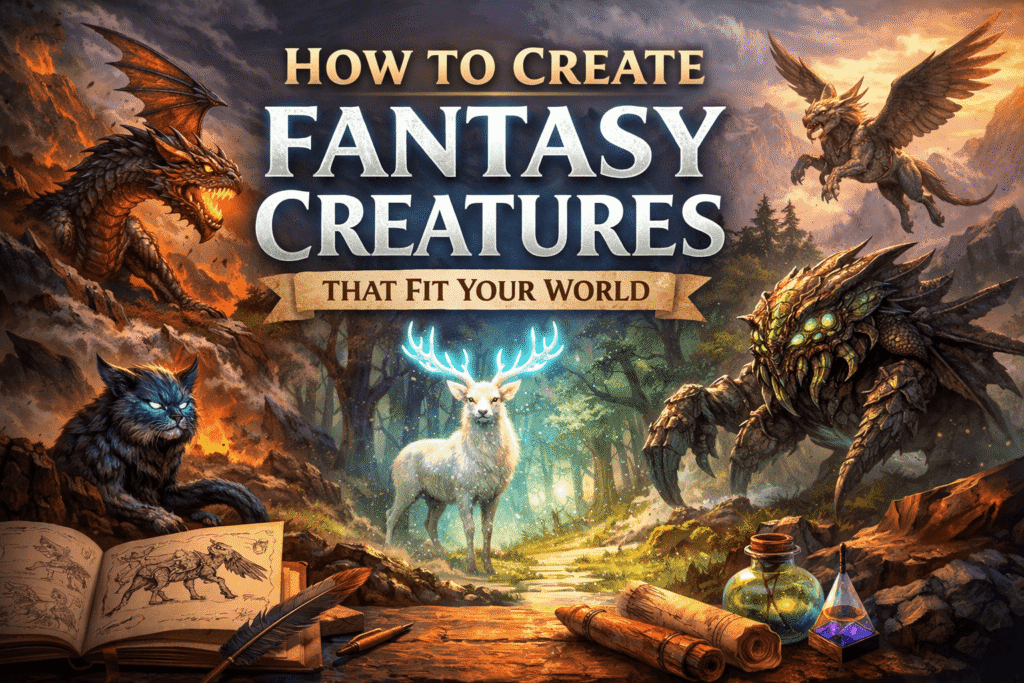
👉Learn how to create fantasy creatures that truly fit your world. This step-by-step fantasy creature design guide shows writers and RPG creators how to build unique monsters, plus how AI tools like Summon Worlds can generate creature art, lore, and characters instantly.

  • March 13, 2026
  • Andrea Chavez

What makes a fantasy creature feel real instead of random?

The difference isn’t the number of horns, wings, or glowing eyes. The difference is context.

The best fantasy creatures feel like they belong in the world they inhabit. Dragons in Game of Thrones, the creatures of The Witcher, or Pokémon all work because they follow the rules of their worlds.

If you’re building a fantasy world, running a D&D campaign, or writing a novel, designing creatures that fit your setting is one of the most powerful tools you have.

In this guide, you’ll learn:

  • How to design creatures that feel natural in your world

  • The biggest mistakes fantasy creators make

  • A simple 5-step creature design framework

How AI tools can generate creature art and lore instantly

Table of Contents

What Makes a Fantasy Creature “Fit” a World?

A creature fits a fantasy world when it follows the same rules as the rest of the setting.

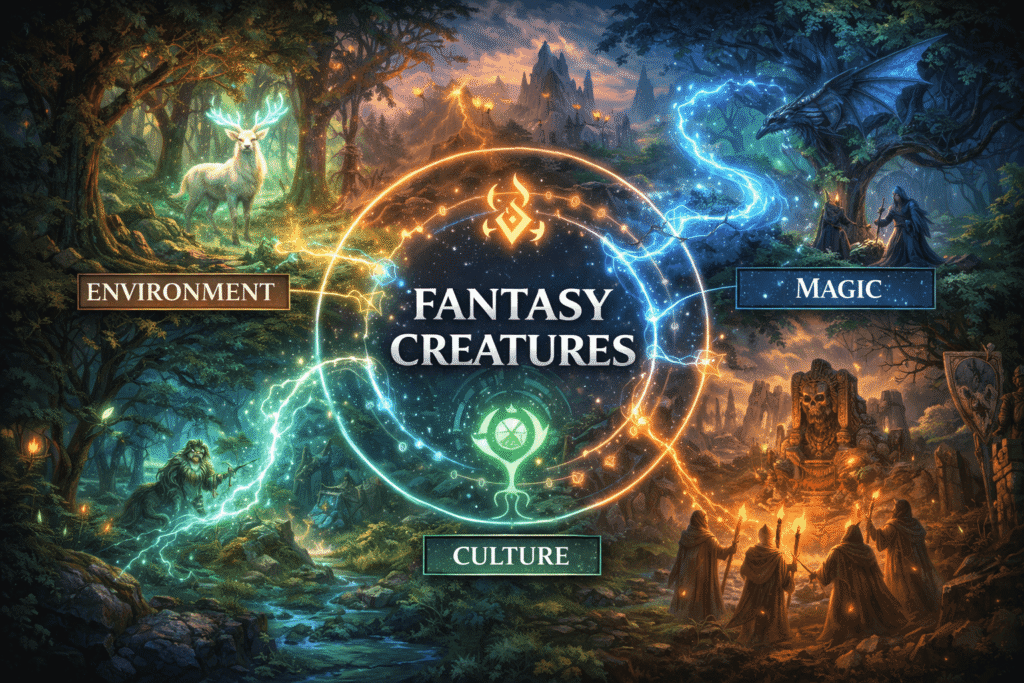
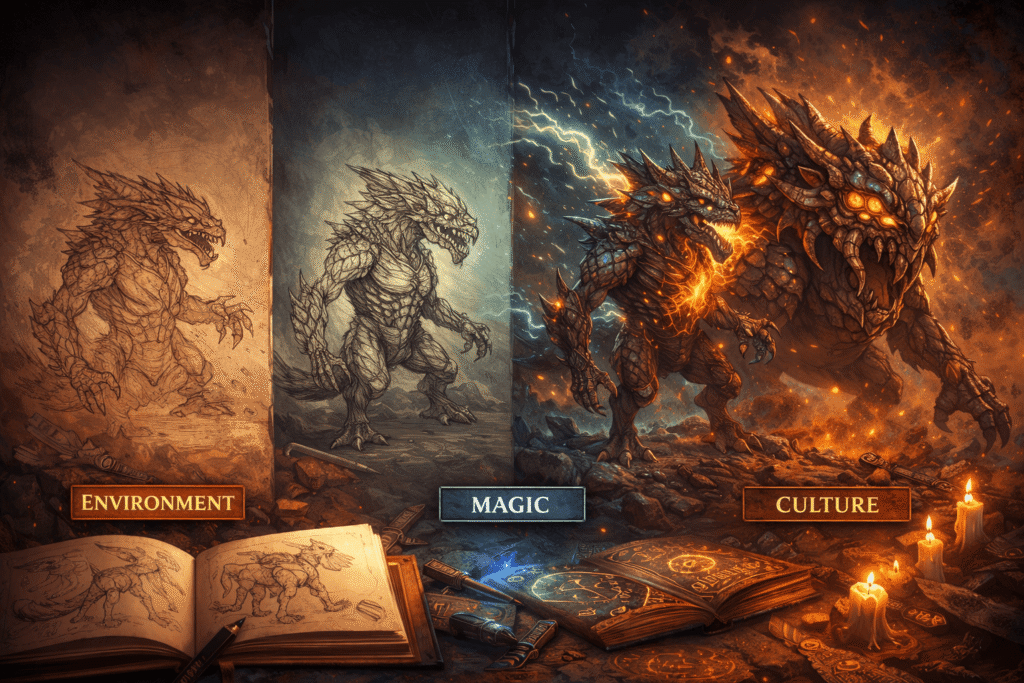
In practical terms, this means the creature connects to three key elements:

1. Environment

Where does the creature live?

  • frozen mountains

  • enchanted forests

  • desert kingdoms

  • underwater civilizations

Creatures evolve around their environment just like animals in the real world.

Example:

A swamp creature might have

  • webbed limbs

  • camouflage skin

  • bioluminescent eyes for fog

2. Magic System

Every fantasy world has rules about magic.

Ask:

  • Was the creature created by magic?

  • Does it generate magic?

  • Is it immune to magic?

A creature tied to your magic system will automatically feel more believable.

3. Culture and Lore

The most memorable creatures affect the people in your world.

They might be:

  • sacred animals

  • feared monsters

  • war mounts

  • ancient gods

When creatures influence culture, they stop being “monsters” and become part of the world’s ecosystem.

Try Summon Worlds for free.

"Download on the App Store"

"GET IT ON Google Play"

The Biggest Mistake Creators Make With Fantasy Creatures

Most beginner worldbuilders design creatures like this:

“What would look cool?”

Cool designs are fun, but without context they feel random.

A dragon with three heads, glowing wings, and lightning claws might look impressive.

But if the creature has no role in the world, readers or players subconsciously feel something is wrong.

Instead, ask a different question:

“Why does this creature exist in my world?”

Once you answer that, everything else becomes easier.

The 5-Step Framework for Fantasy Creature Design

Here is a simple framework professional worldbuilders often use.

Follow these five steps and your creatures will instantly feel more believable.

Step 1: Start With the Environment

The environment shapes the creature.

Ask yourself:

  • What terrain does it live in?

  • What predators exist there?

  • What food sources are available?

Example:

A creature from volcanic regions might have:

  • heat resistant scales

  • fire breathing abilities

  • rock-like camouflage

Environment-first design prevents creatures from feeling random.

Step 2: Define the Creature’s Role

Every creature needs a function in the ecosystem.

Possible roles include:

  • apex predator

  • scavenger

  • magical guardian

  • symbiotic companion

  • domesticated animal

  • mythological symbol

Example:

If the creature is a guardian of ancient ruins, it might:

  • live underground

  • be bound to magical artifacts

  • attack intruders

Now it has narrative purpose.

Step 3: Design Physical Traits That Make Sense

Physical traits should solve problems.

Ask:

  • How does the creature hunt?

  • How does it defend itself?

  • How does it survive?

Example traits:

Trait

Purpose

Night vision

Hunting in darkness

Wings

Traveling long distances

Armored scales

Protection

Poison

Defense against predators

Design follows function.

Step 4: Create Lore and Mythology

This is where creatures become legendary.

Ask:

  • How do people view this creature?

  • Is it feared or worshipped?

  • Are there myths about it?

Example lore:

“The Ember Stag appears only once every hundred years, and wherever it walks, forests grow again.”

Suddenly the creature becomes part of the world’s history.

Step 5: Visualize the Creature

Finally, bring the creature to life visually.

This includes:

  • sketches

  • creature portraits

  • 3D environments

  • world map placement

Visual design helps writers, players, and readers connect emotionally with the creature.

Today, many worldbuilders use AI art tools to generate creature visuals instantly.

How AI Tools Are Changing Fantasy Creature Design

Creating creatures used to take days of sketching and writing.

Now AI tools can generate complete creature concepts in minutes.

Modern worldbuilding platforms allow you to:

  • generate creature artwork

  • create backstories

  • build RPG stat sheets

  • roleplay with AI characters

For example, Summon Worlds lets creators generate fantasy characters, creatures, and items using AI prompts and art styles like epic fantasy, anime, or steampunk.

Inside the app you can:

  • generate creature artwork

  • assign abilities and stats

  • bind creatures to locations in your world

  • interact with them through AI chat

The platform even allows characters to understand the world, location, and equipment around them, creating immersive roleplay scenarios.

For writers and game masters, this dramatically speeds up the creative process.

Instead of spending hours designing a monster, you can generate multiple concepts instantly and refine the best one.

Example: Turning a Simple Idea Into a Fantasy Creature

Let’s apply the framework.

Starting Idea

“A glowing deer creature.”

Not very exciting yet.

Step 1: Environment

Ancient enchanted forest.

Step 2: Role

Protector of sacred groves.

Step 3: Traits

  • glowing antlers

  • silent footsteps

  • ability to teleport through trees

Step 4: Lore

Villagers believe seeing the creature means the forest spirits are watching.

Hunters who harm it are cursed.

Step 5: Visualization

Using an AI art generator, you might create:

  • bioluminescent antlers

  • moss-covered fur

  • floating leaves around the creature

Now you have a complete fantasy creature that fits the world.

Why Unique Creatures Make Worlds More Memorable

ai fantasy creature generator

Think about the most famous fantasy worlds.

They all have iconic creatures:

  • dragons

  • balrogs

  • white walkers

  • griffins

  • Pokémon

Creatures act as symbols of the world itself.

They represent its:

  • magic

  • danger

  • history

  • mythology

The more unique your creatures are, the more memorable your world becomes.

Key Takeaways

Designing fantasy creatures isn’t about making the most powerful monster.

It’s about building creatures that feel like they evolved inside your world.

Follow these rules:

  1. Start with the environment

  2. Give the creature a role

  3. Design traits with purpose

  4. Create mythology around it

  5. Visualize it with art and storytelling

And if you want to accelerate your worldbuilding process, AI tools can help generate creature art, lore, and characters instantly.

Platforms like Summon Worlds allow you to create creatures, generate fantasy artwork, and interact with your creations through AI roleplay, turning your ideas into a living fantasy universe.

If you’re building a world, running a campaign, or writing a fantasy novel, it might be the fastest way to bring your creatures to life.

Start building your World!

"Download on the App Store"

"GET IT ON Google Play"

Disclaimer: Summon Worlds and the content on summonworlds.com are not affiliated with, endorsed by, or sponsored by Wizards of the Coast LLC. Dungeons & Dragons, D&D, and related terms are registered trademarks of Wizards of the Coast. Any references to D&D game mechanics, settings, or terminology are made for educational, commentary, and fan content purposes only. This blog does not reproduce or distribute official D&D content. All original ideas, characters, and creative content in this post are the intellectual property of OpenForge LLC, the parent company of Summon Worlds.
Previous
Next
Share the Post:

Related Posts

fantasy creature design

How to Create Fantasy Creatures That Fit Your World

Read More
March 13, 2026
fantasy city design

Fantasy City Design: How to Build Cities That Feel Alive in Your World

Read More
March 13, 2026

What is fantasy creature design?

Fantasy creature design is the process of creating unique monsters, animals, or magical beings for fictional worlds. It combines worldbuilding, ecology, mythology, and visual design to create creatures that feel believable within a fantasy setting.

How do you create unique fantasy creatures?

Start with the creature’s environment and role in the world. Then design traits that help it survive there. Finally, develop lore and mythology around the creature to make it feel connected to the culture and history of your world.

What is the best way to design monsters for D&D campaigns?

Design monsters based on the ecosystem of your campaign setting. Consider where they live, what they eat, and how they interact with other creatures. Adding lore, cultural significance, and unique abilities makes encounters more memorable.

Can AI generate fantasy creatures?

Yes. AI tools can generate creature artwork, descriptions, and character stats instantly. Apps like Summon Worlds allow creators to generate creatures, build lore, and interact with characters through AI-powered roleplay.

What tools help create fantasy creatures?

Common tools include creature generators, AI art tools, and RPG worldbuilding platforms. These tools help generate visuals, backstories, and game mechanics so creators can focus on storytelling instead of starting from scratch.
Read More
how to design a fantasy economy with summon worlds
March 13, 2026
by Andrea ChavezBlog

How to Design a Fantasy Economy (Trade, Currency, Resources)

How to Design a Fantasy Economy (Trade, Currency, Resources)

how to design a fantasy economy with summon worlds

👉Learn how to design a fantasy economy with trade routes, currency systems, and resources. Build realistic RPG worlds faster using AI worldbuilding tools like Summon Worlds.

  • March 13, 2026
  • Andrea Chavez

A king commands armies, cities flourish, merchants travel continents — yet no one ever explains how the economy actually works.

But if you’re writing a novel, building a D&D campaign, or designing an RPG world, economics quietly shapes everything:

  • Why kingdoms fight wars
  • Why cities exist in certain places
  • Why rare materials are valuable
  • Why certain guilds control power

A believable fantasy economy makes your world feel alive.

And the good news?

You don’t need a PhD in economics. You just need three core systems working together:

  1. Resources
  2. Currency
  3. Trade

Let’s break it down.

Table of Contents

What Is a Fantasy Economy?

A fantasy economy is the system that explains how resources, trade, and currency move through your world.

In simple terms, it answers three questions:

  • What does your world produce? (resources)
  • How do people exchange value? (currency)
  • How do goods move between regions? (trade)

When these systems connect logically, your world stops feeling like a stage set and starts feeling like a living civilization.

Try Summon Worlds for free.

"Download on the App Store"

"GET IT ON Google Play"

The 3 Pillars of Fantasy Economies

fantasy currency system

1. Resources: What Your World Produces

Every economy begins with resources.

Different regions should specialize in different materials based on geography.

Examples:

Region

Resource

Why

Mountain kingdoms

Iron, gold, gemstones

Natural mineral deposits

Coastal cities

Fish, salt, trade goods

Maritime trade routes

Forest regions

Timber, herbs, magical plants

Dense natural ecosystems

Desert kingdoms

Rare spices, glass, artifacts

Harsh climate creates rarity

These differences create interdependence between nations, which leads to trade, alliances, and conflict.

Example worldbuilding logic:

  • A kingdom rich in iron becomes a weapons powerhouse.
  • A neighboring forest nation supplies rare magical herbs.
  • Both depend on each other economically.

Suddenly your world has politics, trade disputes, and economic alliances.

2. Currency: How Value Is Measured

Currency defines how wealth moves through your world.

Most fantasy settings default to gold coins, but that’s often the least interesting option.

Try thinking about what your society values most.

Examples of fantasy currency systems:

Metal Currency

Classic RPG style.

  • Copper (everyday purchases)
  • Silver (trade)
  • Gold (wealth)

Example: D&D style economies.

Resource-Based Currency

Some societies use valuable materials instead of coins.

Examples:

  • Crystals infused with magic
  • Rare dragon scales
  • Alcanite ore used in spellcasting

This makes currency part of the world lore.

Cultural Currency

Some civilizations value reputation or service.

Examples:

  • Favor tokens from nobles
  • Guild contracts
  • Magical debt markers

This creates fascinating political storytelling.

3. Trade Routes: How Goods Move


Trade routes are the veins of your world.

They determine where cities grow and why kingdoms become wealthy.

Trade routes usually follow:

  • Rivers
  • Coastlines
  • Mountain passes
  • Magical teleportation gates

Example:

A city located where three major trade routes intersect becomes an economic powerhouse.

That’s exactly why cities like:

  • Constantinople
  • Venice
  • Alexandria

became rich in the real world.

The same logic works in fantasy.

Common Fantasy Economy Mistakes

fantasy trade routes

Many worlds feel unrealistic because of these mistakes.

Mistake 1: Every Region Produces Everything

If every kingdom has:

  • food
  • metal
  • magic
  • timber

Then trade becomes pointless.

Economies thrive on specialization.

Mistake 2: Cities Exist Without Trade

Cities need economic purpose.

They usually exist because they are:

  • Trade hubs
  • Resource extraction centers
  • Political capitals
  • Strategic ports

If your city has no economic reason to exist, readers will subconsciously notice.

Mistake 3: Magic Breaks the Economy

Magic often destroys economic logic.

Examples:

If wizards can create gold, why does currency matter?

If teleportation is common, why do trade routes exist?

The key is limits.

Magic should have costs.

How AI Makes Economic Worldbuilding Faster

Designing an economy manually can take hours.

You must think about:

  • resources
  • locations
  • factions
  • cities
  • trade networks
  • political alliances

That’s where AI worldbuilding tools can help.

Instead of writing everything manually, you can generate:

  • cities
  • locations
  • characters
  • resources
  • factions
  • artwork

inside a single creative workflow.

Apps like Summon Worlds allow creators to build these interconnected elements quickly using AI-generated characters, locations, and items.

Designing a Fantasy Economy in Summon Worlds

Inside Summon Worlds, you can structure your economy naturally through worldbuilding elements.

The app allows you to create:

  • Worlds
  • Locations
  • Characters
  • Items
  • Equipment
  • Spells

all connected within a single world structure.

Here’s how creators often build economic systems inside the app.

Step 1: Create Resource Locations

Example locations:

  • Ironpeak Mines
  • Whisperwood Herb Forest
  • The Sapphire Coast

Each location produces different resources.

Step 2: Add Characters or Guilds

Examples:

  • Merchant guilds
  • Caravan traders
  • Mining companies
  • Pirate factions

These characters become the economic actors in your world.

Step 3: Generate Items and Resources

You can create:

  • magical ore
  • enchanted weapons
  • rare potions
  • trade artifacts

Each item becomes part of the economic ecosystem.

Step 4: Use AI Art to Visualize Resources

The AI art generator lets creators generate visuals for:

  • weapons
  • trade goods
  • artifacts
  • locations

This turns abstract ideas into visual storytelling assets.

Step 5: Roleplay Economic Events

With AI character chat, you can simulate interactions like:

  • trade negotiations
  • guild disputes
  • political deals
  • black market transactions

The characters remember their world context, making the storytelling immersive.

Key Takeaways

A compelling fantasy economy doesn’t require complicated math.

It only needs three systems working together:

Resources → Currency → Trade

Once those elements connect logically:

  • cities gain purpose
  • politics become believable
  • conflicts feel natural
  • your world feels alive

And with modern AI tools like Summon Worlds, creators can build entire economic systems faster — generating locations, items, characters, and visual assets all inside one collaborative worldbuilding platform.

If you’re building a fantasy world, campaign, or RPG setting, try designing your economy next.

You might discover it unlocks new story possibilities you never expected.

Start building your World!

"Download on the App Store"

"GET IT ON Google Play"

Disclaimer: Summon Worlds and the content on summonworlds.com are not affiliated with, endorsed by, or sponsored by Wizards of the Coast LLC. Dungeons & Dragons, D&D, and related terms are registered trademarks of Wizards of the Coast. Any references to D&D game mechanics, settings, or terminology are made for educational, commentary, and fan content purposes only. This blog does not reproduce or distribute official D&D content. All original ideas, characters, and creative content in this post are the intellectual property of OpenForge LLC, the parent company of Summon Worlds.
Previous
Next
Share the Post:

Related Posts

fantasy creature design

How to Create Fantasy Creatures That Fit Your World

Read More
March 13, 2026
fantasy city design

Fantasy City Design: How to Build Cities That Feel Alive in Your World

Read More
March 13, 2026

What is a fantasy economy?

A fantasy economy is the system that controls how resources, trade, and currency function in a fictional world. It explains how kingdoms produce goods, exchange value, and transport materials across regions.

How do you design a fantasy currency system?

Start by identifying what your culture values. Some worlds use metal coins like gold and silver, while others use magical crystals, guild tokens, or resource-based currency tied to lore and scarcity.

Why are trade routes important in worldbuilding?

Trade routes determine where cities develop, how resources move, and why conflicts occur. Major trade intersections often become wealthy political centers.

What resources should exist in a fantasy world?

Common resources include metals, timber, food, magical ingredients, and rare artifacts. Each region should specialize in different materials based on geography.

What tools help create fantasy economies?

AI worldbuilding tools like Summon Worlds can help creators generate locations, characters, resources, and items while keeping everything connected inside a structured fantasy world.
Read More
How to Create Fantasy Factions and Power Struggles
March 12, 2026
by Andrea ChavezBlog

How to Create Fantasy Factions and Power Struggles

How to Create Fantasy Factions and Power Struggles

How to Create Fantasy Factions and Power Struggles

👉Learn how to create compelling fantasy factions and power struggles for your world. Discover worldbuilding strategies, faction conflict ideas, and how AI tools like Summon Worlds help you design immersive RPG politics.

  • March 12, 2026
  • Andrea Chavez

Every great fantasy world has one thing in common:

Someone wants power.

Maybe it’s a secret guild controlling trade routes, a religious order shaping the kingdom’s laws, or a rebellious faction trying to overthrow the empire.

These competing interests create conflict, and conflict creates story.

If you’re building a fantasy world for a novel, RPG campaign, or roleplay setting, learning how to create compelling fantasy factions and power struggles is one of the fastest ways to make your world feel alive.

In this guide, you’ll learn:

  • How fantasy factions work in worldbuilding

  • Why political power struggles make stories more immersive

  • A simple system to design believable factions

  • How AI tools like Summon Worlds help generate factions, characters, and story conflicts instantly

Table of Contents

What Are Fantasy Factions in Worldbuilding?

A fantasy faction is a group of characters united by a shared goal, ideology, or power structure.

They might be:

  • Political organizations

  • Religious orders

  • Merchant guilds

  • Rebel groups

  • Secret societies

  • Military alliances

In worldbuilding, factions create systems of influence.

Instead of a static world where events just happen, factions create a world where groups actively compete for control.

For example:

Faction

Goal

Power Source

The Iron Council

Control all trade routes

Wealth

The Moon Clerics

Spread religious doctrine

Faith

The Ember Rebellion

Destroy the monarchy

Popular support

Now your world instantly has:

  • political tension

  • alliances

  • betrayals

  • story hooks

This structure is what transforms a setting into a living ecosystem of power.

Try Summon Worlds for free.

"Download on the App Store"

"GET IT ON Google Play"

Why Power Struggles Make Fantasy Worlds Feel Real

fantasy-faction-hierarchy-structure-worldbuilding

Readers and RPG players instinctively understand power struggles because they mirror real history.

Kingdoms rise and fall.

Empires compete.

Religions clash.

When factions fight for influence, your world gains three powerful storytelling advantages:

1. Natural Conflict

Instead of inventing plot events, factions naturally generate them.

Example:

A merchant guild raises taxes → farmers revolt → rebels gain support.

Boom. Story.

2. Moral Complexity

Factions are rarely purely good or evil.

A religious order might protect the poor but suppress magic users.

A rebel group might fight tyranny but commit brutal acts.

This gray area makes worlds feel deeper and more believable.

3. Endless Story Hooks

Each faction becomes a story engine.

Possible plot hooks:

  • espionage missions

  • political marriages

  • assassination attempts

  • trade wars

  • secret alliances

For RPG campaigns or roleplay worlds, factions create unlimited quests.

Common Mistakes When Creating Fantasy Factions

fantasy-political-map-rival-factions

Many worldbuilders unintentionally make factions feel shallow.

Here are the biggest mistakes to avoid.

1. “Good vs Evil” Factions

If one faction is purely good and the other purely evil, the world becomes predictable.

Instead, give every faction a reason they believe they’re right.

2. No Resources or Power

A faction without influence is just a club.

Ask yourself:

  • What resources do they control?

  • Who funds them?

  • What territory do they influence?

Power always comes from something.

3. No Internal Conflict

Real organizations fight internally.

Examples:

  • rival leaders

  • ideological splits

  • corruption scandals

Internal tension adds realism and plot potential.

4. Factions That Never Interact

The most interesting worlds happen when factions collide.

If your factions never interfere with each other, they feel isolated.

Power struggles require constant friction.

5 Steps to Build Powerful Fantasy Factions

Here’s a simple framework used by many RPG writers and worldbuilders.

Step 1: Define the Faction’s Core Ideology

Ask:

What does this faction believe?

Examples:

  • Magic should be controlled

  • The monarchy must fall

  • Knowledge should belong to scholars

  • Only warriors deserve power

Ideology drives every action the faction takes.

Step 2: Give Them Resources

Power comes from resources.

Your faction might control:

  • armies

  • trade networks

  • magical artifacts

  • political influence

  • secret information

Example:

A spy network might control knowledge, making them incredibly powerful without armies.

Step 3: Create Rival Factions

A faction becomes interesting only when it faces opposition.

For every faction, create:

  • a rival

  • an ally

  • a neutral party

This triangle instantly generates complex politics.

Step 4: Add Internal Conflict

Even powerful factions have weaknesses.

Possible internal conflicts:

  • corrupt leaders

  • ideological disagreements

  • hidden traitors

  • power struggles within leadership

These tensions create unexpected story twists.

Step 5: Show How They Affect the World

Finally, ask:

How does this faction change everyday life?

Examples:

  • taxes increase

  • magic becomes illegal

  • trade routes become dangerous

  • religious laws reshape culture

When factions influence the world around them, the setting feels dynamic.

Using AI to Create Fantasy Factions Faster

Designing factions manually can take hours.

You have to invent:

  • leaders

  • lore

  • rivalries

  • symbols

  • characters

  • visual designs

This is where AI worldbuilding tools change the game.

Apps like Summon Worlds let creators instantly generate:

  • faction leaders

  • faction characters

  • faction artwork

  • lore descriptions

  • faction locations

Because the platform combines AI character generation, worldbuilding, and roleplay, you can test faction dynamics instantly.

For example, you can:

  • generate a faction leader

  • chat with them in character

  • create faction members

  • generate faction locations

  • visualize the faction’s armor, weapons, and symbols

All inside a single worldbuilding environment.

Summon Worlds was specifically designed for fantasy creators, RPG players, and storytellers building immersive worlds.

Example: Creating a Fantasy Faction With AI

Let’s build a faction using this system.

Faction Name

The Obsidian Archive

Ideology

Knowledge must be controlled to prevent magical disasters.

Resources

  • ancient libraries

  • magical artifacts

  • secret archives

Rivals

  • rebel mages seeking forbidden knowledge

Internal Conflict

Some members believe knowledge should be shared freely.

Visual Identity

  • black robes

  • obsidian masks

  • arcane sigils

Using an AI worldbuilding tool, you could instantly:

  • generate members of the faction

  • create their magical artifacts

  • design their headquarters

  • roleplay conversations with faction leaders

This speeds up worldbuilding dramatically.

Start building your World!

"Download on the App Store"

"GET IT ON Google Play"

Disclaimer: Summon Worlds and the content on summonworlds.com are not affiliated with, endorsed by, or sponsored by Wizards of the Coast LLC. Dungeons & Dragons, D&D, and related terms are registered trademarks of Wizards of the Coast. Any references to D&D game mechanics, settings, or terminology are made for educational, commentary, and fan content purposes only. This blog does not reproduce or distribute official D&D content. All original ideas, characters, and creative content in this post are the intellectual property of OpenForge LLC, the parent company of Summon Worlds.
Previous
Next
Share the Post:

Related Posts

fantasy creature design

How to Create Fantasy Creatures That Fit Your World

Read More
March 13, 2026
fantasy city design

Fantasy City Design: How to Build Cities That Feel Alive in Your World

Read More
March 13, 2026

What is a fantasy faction?

A fantasy faction is a group of characters united by shared goals, ideology, or power structures within a fictional world. These groups compete for influence, resources, or political control, creating conflict and story opportunities in fantasy novels, RPG campaigns, and worldbuilding projects.

How do you create factions in worldbuilding?

To create factions, define their ideology, power sources, rival groups, and internal conflicts. Effective factions influence the world around them through politics, culture, or military strength, creating natural tension and storytelling opportunities.

Why are factions important in fantasy worlds?

Factions make fantasy worlds feel alive because they create competing interests and power struggles. These conflicts generate plot hooks, alliances, betrayals, and political tension that drive stories and RPG campaigns.

What are examples of fantasy factions?

Common fantasy factions include religious orders, merchant guilds, secret societies, rebel movements, magical academies, and royal courts. Each faction typically has unique goals, resources, and relationships with other groups in the world.

What tools help create fantasy factions?

AI worldbuilding tools like Summon Worlds help creators generate faction characters, artwork, lore, and story elements quickly. These tools allow writers and RPG creators to build immersive worlds with interconnected factions and roleplay interactions.
Read More
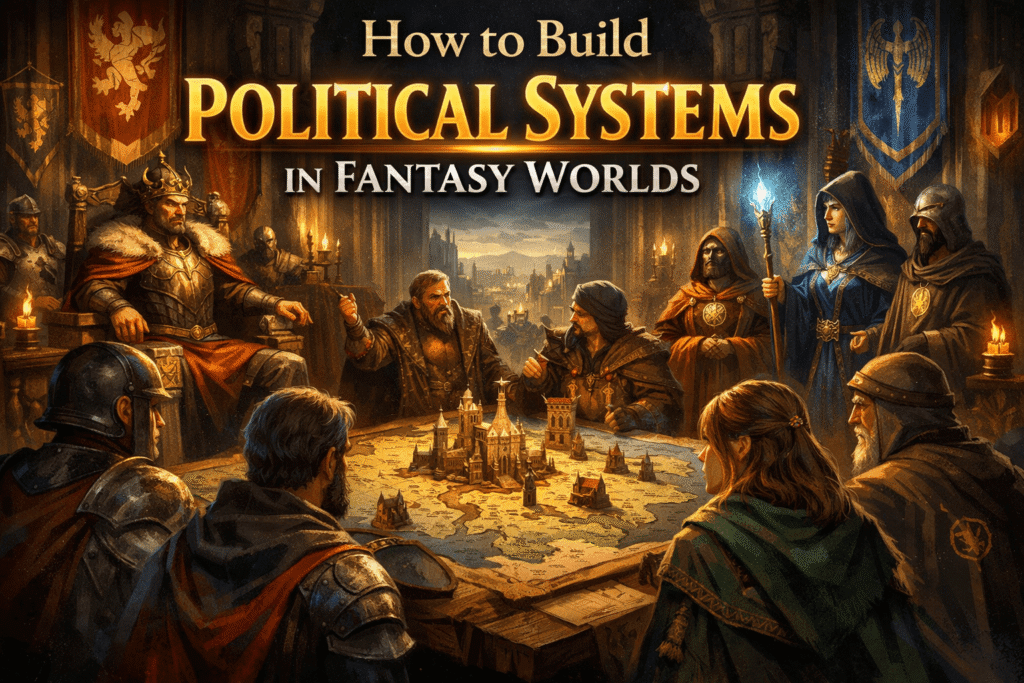
How to Build Political Systems in Fantasy Worlds
March 12, 2026
by Andrea ChavezBlog

How to Build Political Systems in Fantasy Worlds (That Actually Drive Your Story)

How to Build Political Systems in Fantasy Worlds (That Actually Drive Your Story)

How to Build Political Systems in Fantasy Worlds

👉 Learn how to design compelling fantasy political systems that create conflict, alliances, and unforgettable stories. Discover how AI worldbuilding tools like Summon Worlds help writers and RPG creators build kingdoms, factions, and power struggles faster.

  • March 12, 2026
  • Andrea Chavez

Most fantasy worlds have dragons, magic, and epic battles.

But strangely… they often have boring politics.

A king sits on a throne.
Everyone obeys.
And the story moves on.

Real worlds, and great fantasy stories, are far messier.

Power shifts.
Factions clash.
Allies betray each other.

Politics is where stories truly ignite.

If you’re a fantasy writer, RPG creator, or dungeon master, learning how to build believable political systems can transform your world from a static setting into a living ecosystem.

In this guide, you’ll learn:

  • How fantasy political systems work

  • The biggest mistakes worldbuilders make

  • 5 powerful political structures you can use immediately

  • How AI tools can help you generate complex governments faster

Let’s dive in.

Table of Contents

What Is a Political System in a Fantasy World?

A fantasy political system defines who holds power and how decisions are made in your world.

It answers questions like:

  • Who rules the kingdom?

  • How are leaders chosen?

  • What groups compete for influence?

  • What happens when someone challenges authority?

Political systems shape everything:

  • wars

  • alliances

  • character motivations

  • economic systems

  • cultural conflicts

Without politics, a fantasy world becomes a static backdrop instead of a dynamic environment.

Great fantasy worlds use politics as story engines.

Examples include:

  • Game of Thrones → feudal power struggles

  • Dune → noble houses competing for resources

  • The Witcher → fragile alliances between kingdoms

Your political structure determines where the tension lives.

Try Summon Worlds for free.

"Download on the App Store"

"GET IT ON Google Play"

Common Mistakes When Designing Fantasy Politics

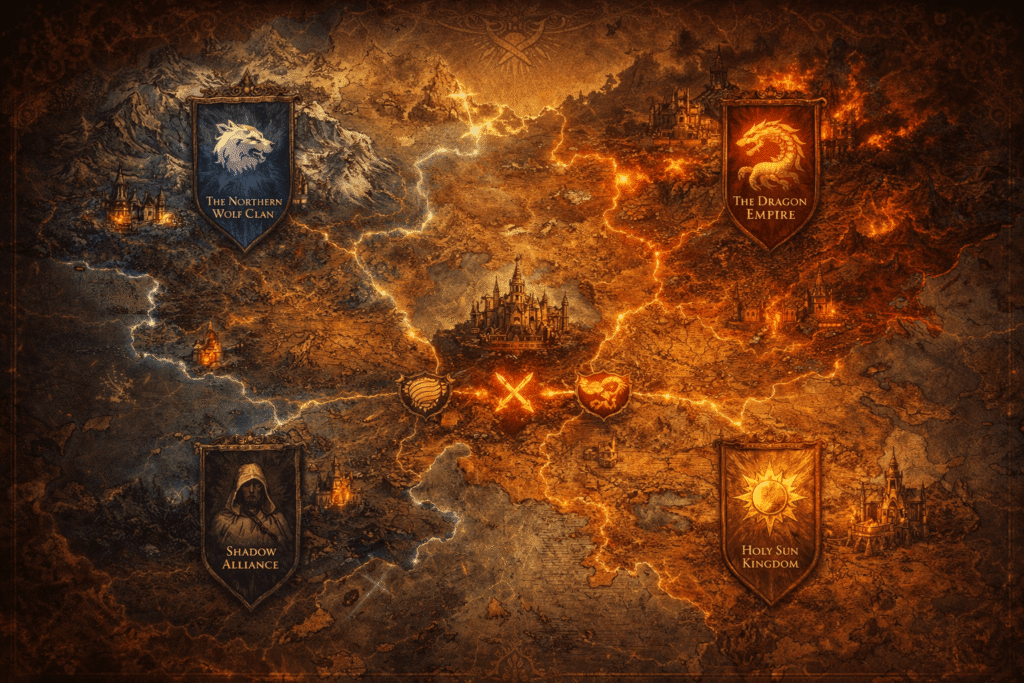
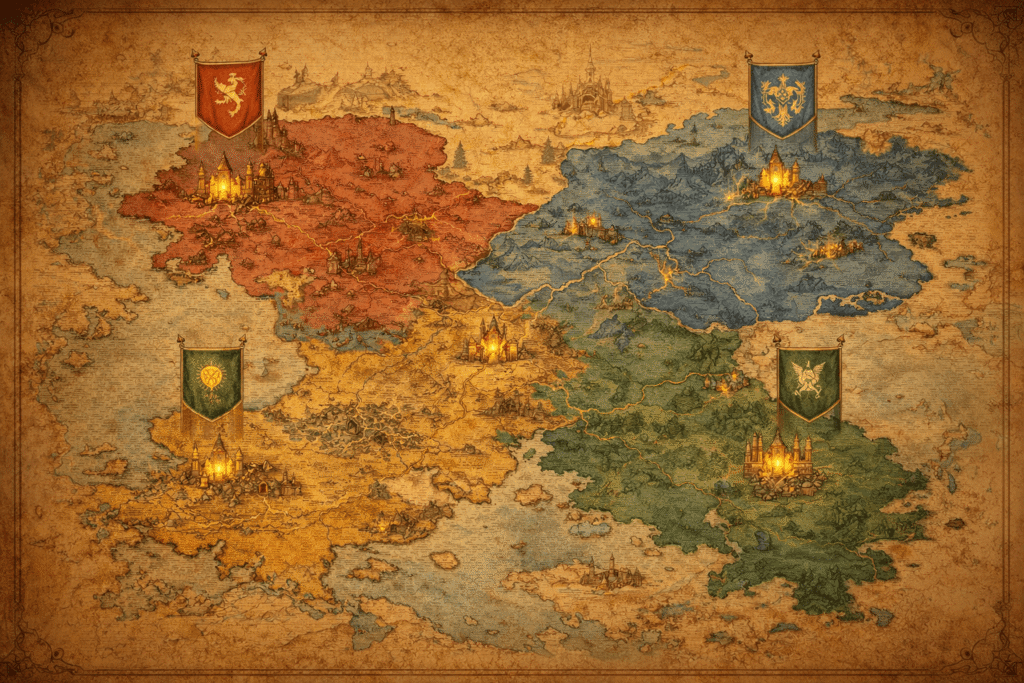
fantasy-political-factions-map

Many worldbuilders overcomplicate lore but oversimplify power.

Here are the most common mistakes.

1. The “Perfect King” Problem

Many fantasy worlds assume rulers are absolute and uncontested.

But power is never that stable.

Even powerful monarchies face:

  • noble rivalries

  • religious pressure

  • economic influence

  • rebellions

Conflict creates story fuel.

2. No Political Factions

Real politics always involves groups competing for influence.

Your world should include factions such as:

  • noble houses

  • merchant guilds

  • religious orders

  • military commanders

  • magical academies

These groups give your world internal tension.

3. Governments That Never Change

Political systems evolve.

Wars, revolutions, and disasters reshape governments constantly.

If your world has existed for centuries, its political structure should show historical layers.

4. Politics That Don’t Affect Characters

The best political systems impact the characters directly.

Examples:

  • A knight must choose loyalty between crown and family.

  • A wizard council bans certain magic.

  • A merchant guild controls trade routes.

Politics should shape character choices.

5 Political Systems That Work Perfectly for Fantasy Worlds

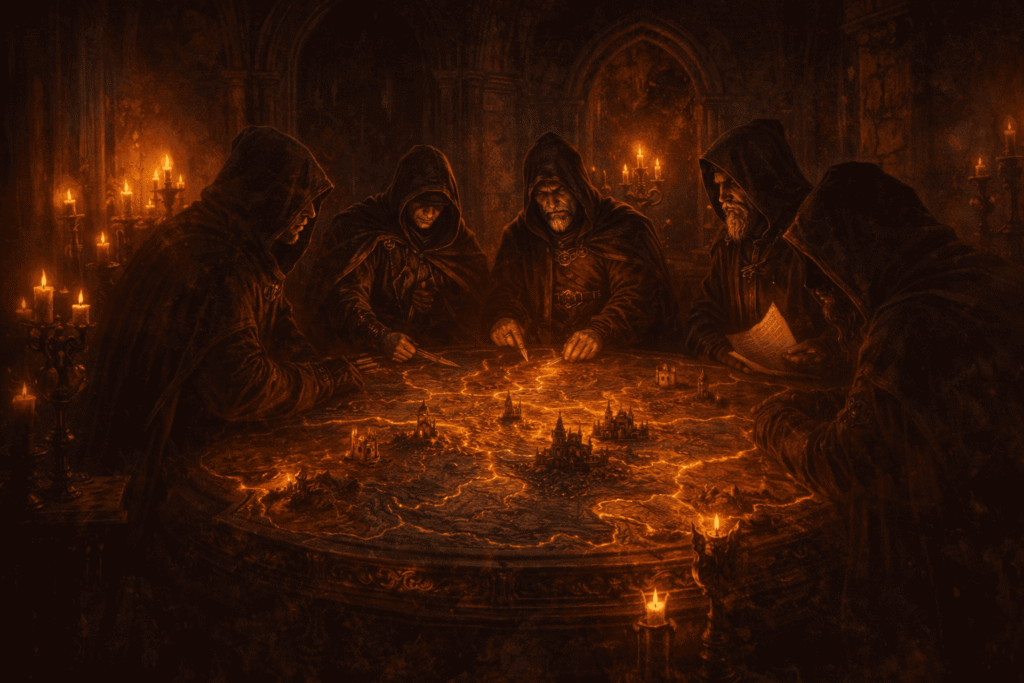
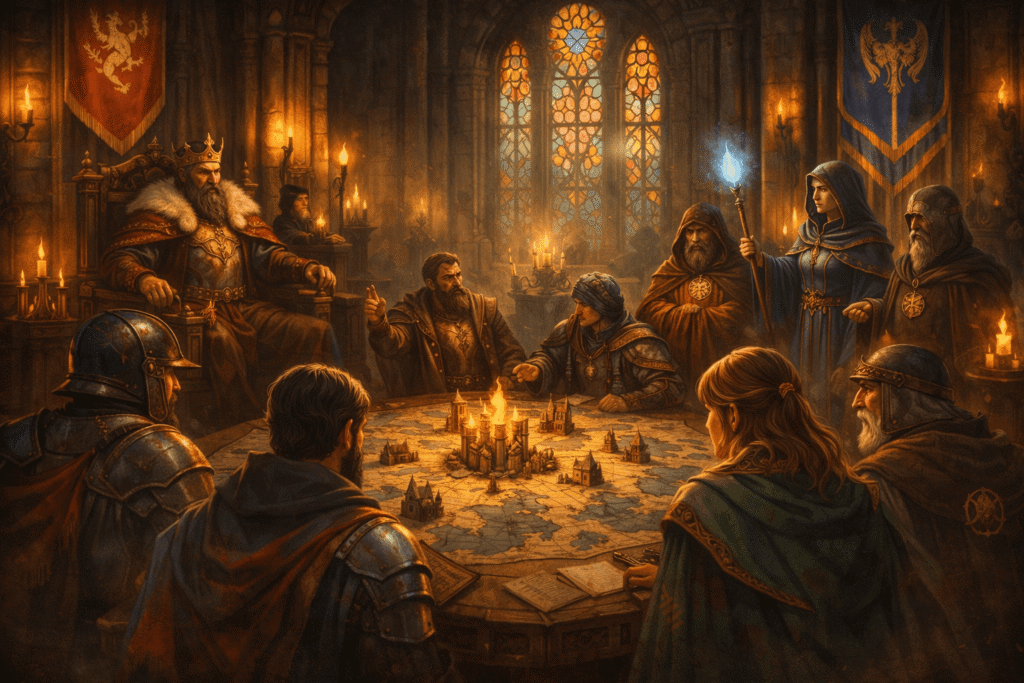
fantasy-political-council-meeting


You don’t need to reinvent politics.

Some systems consistently produce strong narrative tension.

1. Feudal Monarchies

This is the classic fantasy structure.

A king rules, but powerful nobles control regions.

Power struggles occur between:

  • royal families


  • noble houses


  • regional lords


This system naturally creates alliances, betrayals, and succession wars.

Great for:

  • epic fantasy


  • medieval worlds


  • political intrigue stories


2. Mage Councils

In magic-heavy worlds, spellcasters may control government.

Power belongs to a council of powerful mages who regulate magic and influence politics.

Conflict often arises from:

  • forbidden magic


  • magical experimentation


  • rivalry between magical schools


Perfect for worlds where magic is the dominant power.

3. Merchant Republics

Trade empires are an underrated fantasy political system.

Instead of kings, wealthy merchant families control the state.

Power depends on:

  • trade routes


  • economic alliances


  • political bribery


This system produces stories about wealth, influence, and espionage.

4. Religious Theocracies

In this system, the ruling authority is a religious order.

The government claims divine authority.

Conflicts emerge from:

  • heresy accusations


  • religious wars


  • rival interpretations of prophecy


This creates strong moral and ideological tension.

5. Fractured Kingdoms

Instead of one government, the land is divided into competing territories.

Think:

  • independent cities


  • rival clans


  • warring kingdoms


This system creates a world where no one truly controls everything.

Perfect for RPG campaigns.

How AI Tools Help You Build Fantasy Governments Faster

Designing complex political systems can take hours.

Or days.

But AI tools can dramatically speed up the process.

Platforms like Summon Worlds allow creators to build structured fantasy worlds where politics, characters, and locations connect organically.

Instead of writing endless notes, you can:

  • generate political factions

  • create ruling characters

  • visualize kingdoms and locations

  • test story conflicts through AI character chat

Summon Worlds acts like a creative worldbuilding studio in your pocket.

You can:

  • generate AI characters with detailed backstories

  • create locations tied to political factions

  • visualize rulers, armies, and cities with AI art

  • roleplay political conflicts through AI chat

Everything connects within a structured World → Location → Character hierarchy, making it easier to track relationships and power dynamics.

Instead of juggling spreadsheets, your entire political ecosystem lives inside one interactive

Example: Building a Fantasy Political System Step-by-Step

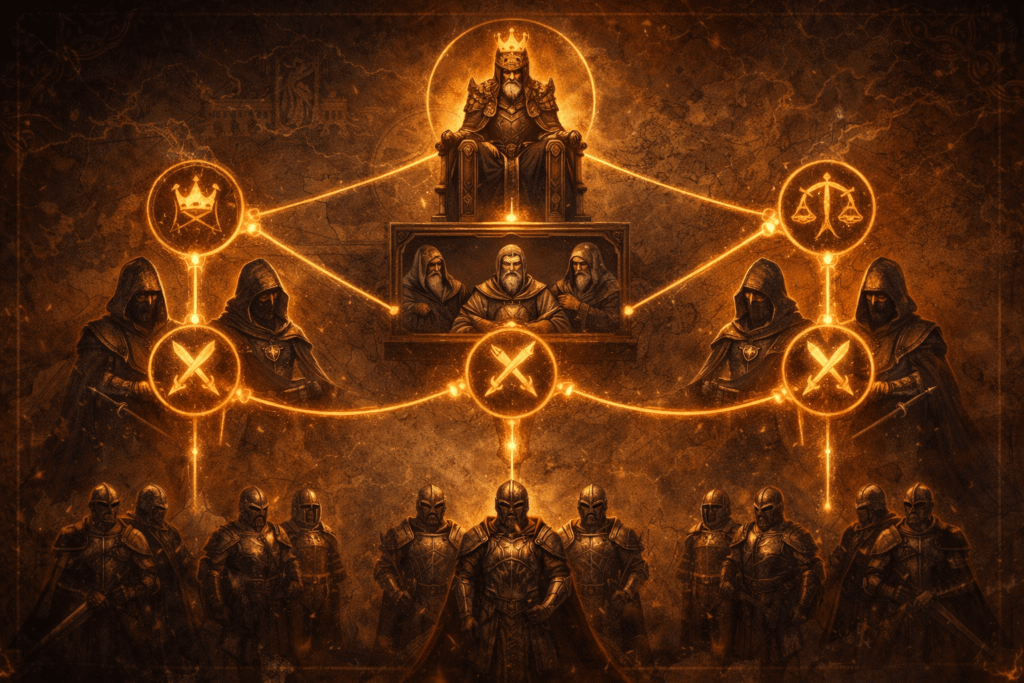
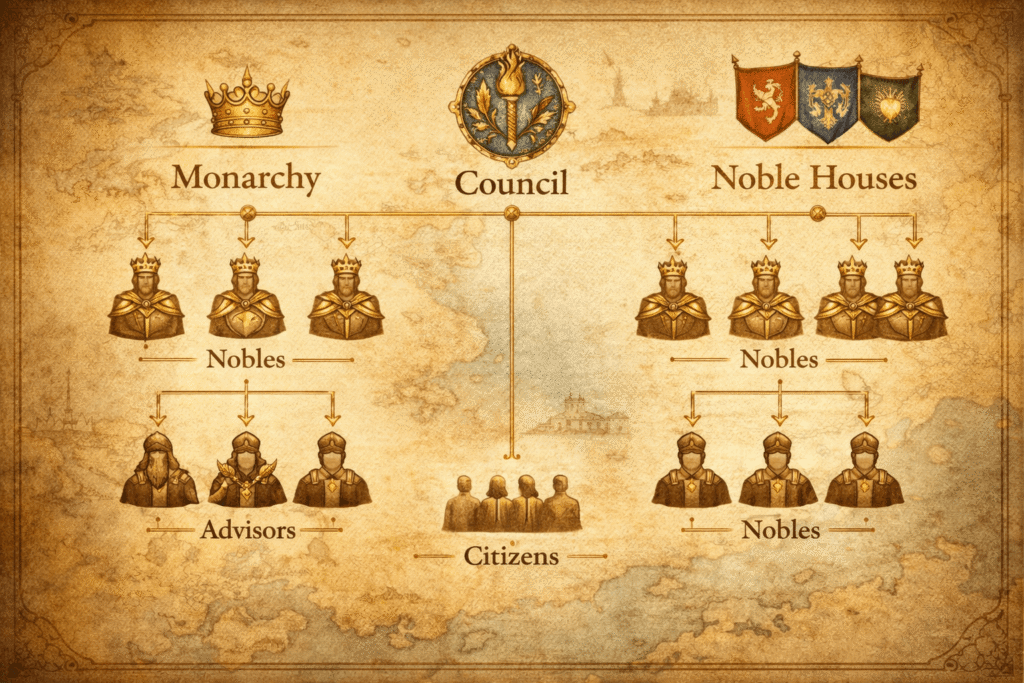
fantasy-government-structure-diagram

Here’s a simple framework you can use.

Step 1: Choose the Core Government

Example:

The Kingdom of Valdris is ruled by a monarch.

But the king must answer to five powerful noble houses.

Step 2: Add Competing Factions

Create groups with competing interests.

Example factions:

  • House Arven — controls the army

  • House Virell — controls trade routes

  • The Sun Church — controls religion

  • The Arcane College — controls magic

Now power is divided.

Step 3: Create Political Conflict

Conflict drives story.

Example:

  • The church wants to outlaw magic.

  • The Arcane College secretly supports rebellion.

  • Merchant guilds finance both sides.

Suddenly, the political system generates story arcs automatically.

Step 4: Populate the World

Add characters who represent each faction.

Examples:

  • a conflicted prince

  • a radical archmage

  • a merchant spy

  • a religious inquisitor

With tools like Summon Worlds, you can generate these characters instantly and even roleplay conversations between them to test story ideas.

Your political system becomes interactive storytelling.

Conclusion: Politics Makes Worlds Feel Alive

Magic may attract readers.

But politics keeps them invested.

When your world has real power structures, every decision matters.

A single vote, betrayal, or alliance can reshape the entire story.

That’s why strong political systems turn good fantasy worlds into legendary ones.

If you want to build deeper worlds faster, tools like Summon Worlds help you create characters, factions, and entire political ecosystems in minutes.

Instead of staring at a blank page, you can generate, visualize, and roleplay your world instantly.

Start building your world today.

Download Summon Worlds and bring your fantasy universe to life.


Start building your World!

"Download on the App Store"

"GET IT ON Google Play"

Disclaimer: Summon Worlds and the content on summonworlds.com are not affiliated with, endorsed by, or sponsored by Wizards of the Coast LLC. Dungeons & Dragons, D&D, and related terms are registered trademarks of Wizards of the Coast. Any references to D&D game mechanics, settings, or terminology are made for educational, commentary, and fan content purposes only. This blog does not reproduce or distribute official D&D content. All original ideas, characters, and creative content in this post are the intellectual property of OpenForge LLC, the parent company of Summon Worlds.
Previous
Next
Share the Post:

Related Posts

fantasy creature design

How to Create Fantasy Creatures That Fit Your World

Read More
March 13, 2026
fantasy city design

Fantasy City Design: How to Build Cities That Feel Alive in Your World

Read More
March 13, 2026

What is a political system in fantasy worldbuilding?

A political system in fantasy defines who holds power and how authority is organized. This includes monarchies, councils, religious governments, or competing factions. Political systems shape conflicts, alliances, wars, and character motivations, making the world feel realistic and dynamic.

How do you create believable politics in fantasy worlds?

Start by defining who controls power, what factions compete for influence, and how leaders gain authority. Add tension through rival houses, religious institutions, or economic guilds. Political conflict should influence characters and events throughout the story.

What political systems work best in fantasy stories?

Common fantasy political systems include feudal monarchies, mage councils, merchant republics, religious theocracies, and fractured kingdoms. Each structure creates different types of conflicts and power struggles that drive storytelling.

Why are political systems important in worldbuilding?

Politics create stakes and conflict. Without them, fantasy worlds feel static. Governments, factions, and power struggles determine wars, alliances, and character decisions, making the setting feel alive.

What tools help build fantasy political systems faster?

AI worldbuilding tools like Summon Worlds help creators generate characters, factions, locations, and lore quickly. Writers and RPG creators can visualize political structures, create AI characters, and simulate interactions to develop complex worlds faster.
Read More
fantasy world geography
March 12, 2026
by Andrea ChavezBlog

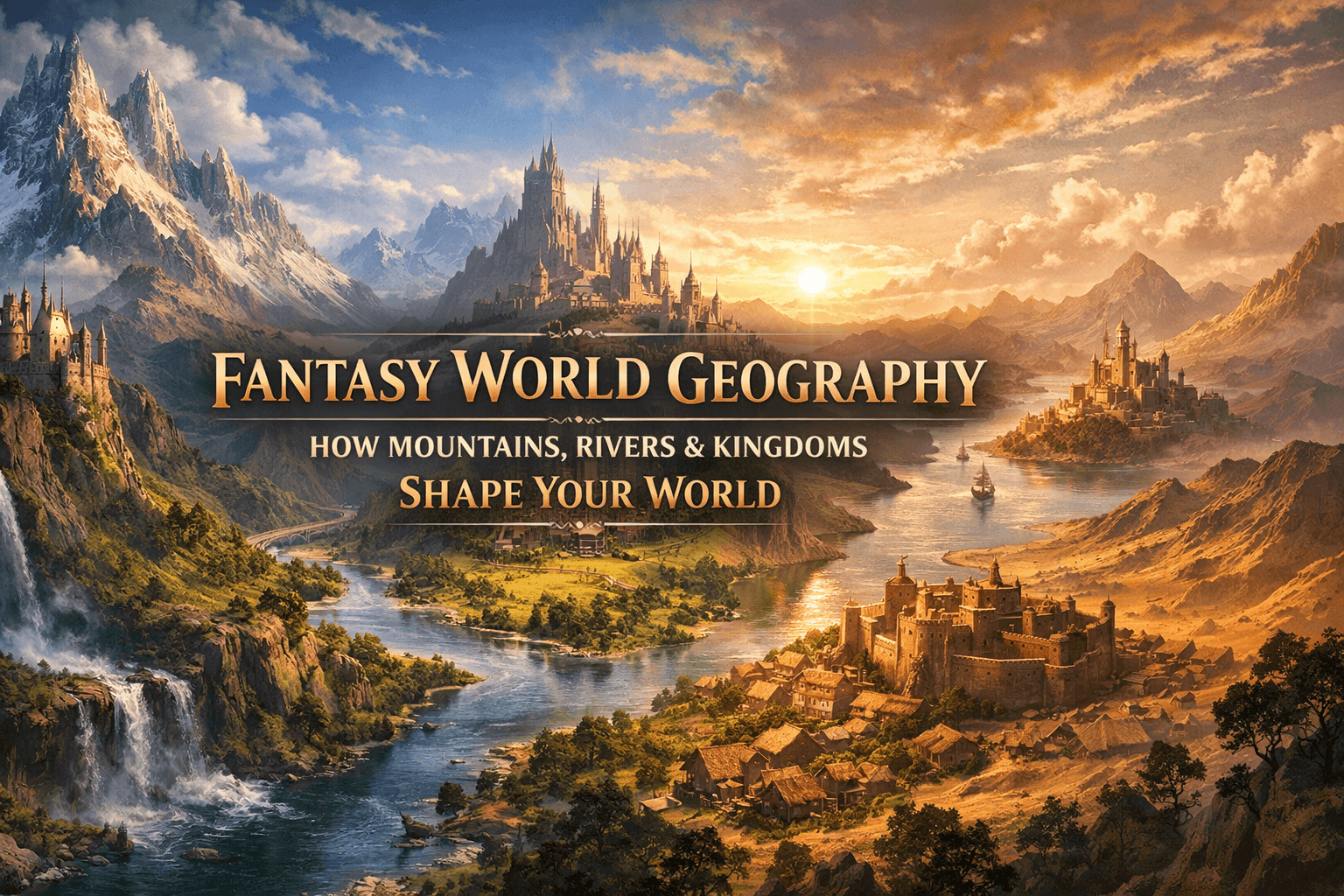
Fantasy World Geography: How Mountains, Rivers, and Kingdoms Shape Your World

Fantasy World Geography: How Mountains, Rivers, and Kingdoms Shape Your World

fantasy world geography

👉Learn how fantasy world geography shapes mountains, rivers, and kingdoms in your worldbuilding. Discover practical tips and create immersive maps using AI tools like Summon Worlds.

  • March 12, 2026
  • Andrea Chavez

Why do some fantasy worlds feel alive while others feel like random maps?

The answer is geography.

In the real world, mountains decide borders, rivers determine cities, and coastlines shape empires. The same rules apply to fantasy worlds. When geography makes sense, your kingdoms, cultures, and conflicts feel believable.

This guide will show you how mountains, rivers, and terrain shape fantasy civilizations, and how creators today use tools like AI worldbuilding platforms such as Summon Worlds to design entire worlds faster.

Table of Contents

Why Geography Is the Hidden Engine of Every Fantasy World

Most beginner worldbuilders start with kingdoms.

But historically, kingdoms come after geography.

In real history:

  • Cities formed around rivers

  • Trade routes followed valleys

  • Mountains created borders

  • Deserts isolated civilizations

Geography determines:

  • Where people live

  • Where wars happen

  • How cultures develop

  • Which kingdoms become powerful

If your world ignores geography, readers subconsciously feel something is wrong.

But if geography drives the story, your world becomes believable instantly.

Quick rule:
Terrain creates culture → culture creates kingdoms → kingdoms create conflict.

Try Summon Worlds for free.

"Download on the App Store"

"GET IT ON Google Play"

Mountains: The Natural Borders That Shape Empires

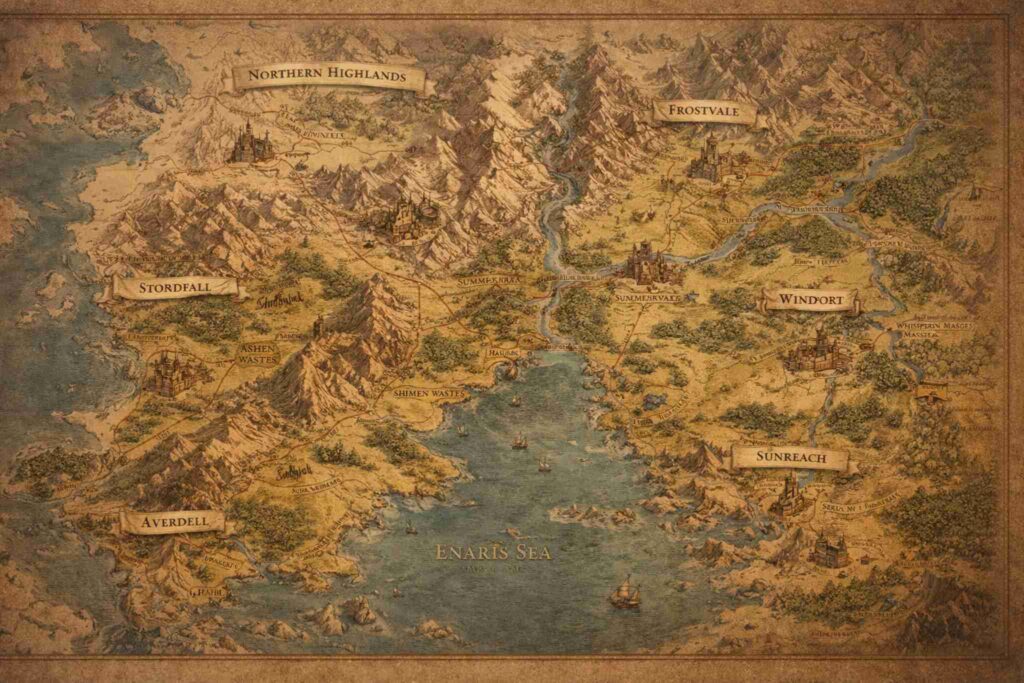
fantasy-world-geography-map-rivers-mountains

Mountains are one of the most powerful forces in worldbuilding.

They shape everything from politics to mythology.

Why mountains matter

Mountain ranges often:

  • Block travel

  • Create natural borders

  • Form cultural divides

  • Protect civilizations

Examples in real history:

  • The Himalayas isolated civilizations

  • The Alps shaped European warfare

  • The Andes created unique cultures

Fantasy worlds follow the same rules.

How mountains influence worldbuilding

Mountains affect:

  1. Political borders

Kingdoms rarely expand across massive mountain ranges.

Mountains create natural defensive lines.

  1. Climate

Mountains influence rainfall and weather.

One side may be fertile forests while the other becomes desert.

  1. Resources

Mountains contain:

  • metals

  • gemstones

  • magical materials in fantasy settings

This makes them centers for dwarven kingdoms, mining cities, or dragon lairs.

A practical worldbuilding trick

Instead of placing mountains randomly:

  • Draw tectonic lines across your map

  • Create one or two large mountain ranges

  • Place kingdoms on the edges, not the middle

This instantly makes your map feel realistic.

Rivers: Why Civilizations Always Form Around Water

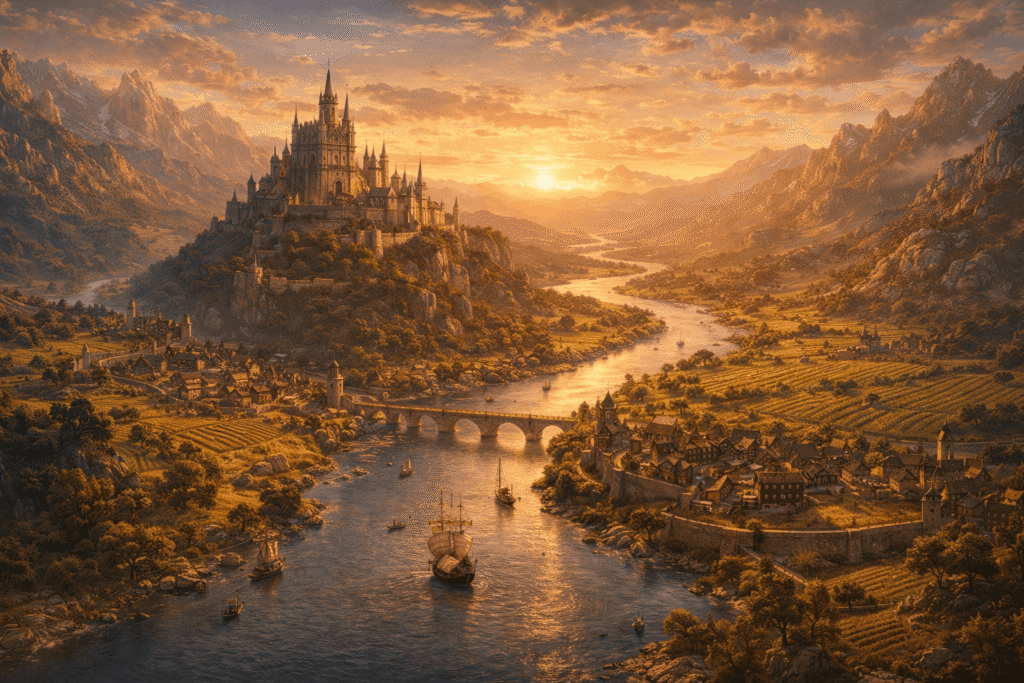
fantasy river kingdom

Almost every major civilization in history formed near rivers.

Examples include:

  • Nile (Egypt)

  • Tigris & Euphrates (Mesopotamia)

  • Yellow River (China)

The same rule applies to fantasy worlds.

Why rivers are essential

Rivers provide:

  • drinking water

  • transportation

  • fertile farmland

  • trade routes

Because of this, cities almost always form near rivers.

The most common fantasy map mistake

Many fantasy maps show rivers that:

  • split unnaturally

  • flow uphill

  • connect oceans incorrectly

In reality, rivers always follow a simple rule:

Rivers flow downhill and merge together.

They rarely split apart.

How to design believable rivers

Follow these steps:

  1. Start rivers in mountains

  2. Flow downhill toward oceans

  3. Merge smaller rivers into larger ones

  4. Place cities where rivers meet

These locations become:

  • trading hubs

  • capitals

  • strategic cities

This is where stories happen.

Kingdom Placement: Why Politics Follows Geography

Geography doesn’t just shape land.

It shapes power.

A kingdom with fertile farmland and trade access will become wealthy.

A kingdom isolated in mountains will become defensive and militaristic.

Geography creates different types of kingdoms

River kingdoms

  • trade-focused

  • wealthy cities

  • large populations

Mountain kingdoms

  • defensive cultures

  • mining economies

  • smaller populations

Island kingdoms

  • naval power

  • trade dominance

  • exploration

Desert kingdoms

  • caravan trade

  • oasis cities

  • strong survival cultures

Each terrain type produces different politics and stories.

This is why worlds like Middle-earth or Westeros feel believable.

Their geography shapes the entire narrative.

How to Design a Realistic Fantasy Map (Without Burning Out)

Many creators get stuck here.

Designing a realistic map can feel overwhelming.

But it doesn’t have to be.

Use this simple worldbuilding framework.

Step 1: Draw the continents

Start with large shapes.

Avoid perfect circles.

Real landmasses are irregular.

Step 2: Add mountain ranges

Place 2–4 major ranges.

Mountains should run in long chains.

These will become:

  • borders

  • cultural divides

  • sources of rivers

Step 3: Create rivers

Start rivers in mountains.

Flow them toward the ocean.

Merge rivers naturally.

Step 4: Place cities

Cities form where trade happens:

  • river crossings

  • river mouths

  • coastlines

  • mountain passes

Step 5: Place kingdoms last

Once geography exists, kingdoms appear naturally.

This approach makes your world feel realistic instantly.

How AI Tools Help You Build Geography Faster

Modern worldbuilders increasingly use AI tools to speed up world creation.

Instead of spending weeks drawing maps and characters, creators can now generate:

  • landscapes

  • cities

  • kingdoms

  • characters

  • lore

Apps like Summon Worlds allow creators to build entire worlds with AI assistance.

Inside the app you can:

  • generate fantasy locations and landscapes

  • create AI characters with backstories

  • build worlds with locations and entities

  • roleplay with AI characters that understand your world lore

The platform even lets creators bind characters to specific locations, creating immersive storytelling environments where characters understand their world and surroundings.

This means your geography isn’t just a map.

It becomes an interactive story world.

Instead of imagining your kingdoms, you can explore them, visualize them, and roleplay inside them.

Key Takeaways

If you want your fantasy world to feel real, start with geography.

Remember these rules:

  • Mountains shape borders

  • Rivers create civilizations

  • Trade routes create cities

  • Geography shapes politics

When terrain drives your worldbuilding, everything else becomes easier:

  • stories

  • cultures

  • conflicts

  • characters

And with AI-powered creative tools like Summon Worlds, you can now build entire fantasy worlds faster than ever.

Download the app and start designing your own geography-driven fantasy world today.

Start building your World!

"Download on the App Store"

"GET IT ON Google Play"

Disclaimer: Summon Worlds and the content on summonworlds.com are not affiliated with, endorsed by, or sponsored by Wizards of the Coast LLC. Dungeons & Dragons, D&D, and related terms are registered trademarks of Wizards of the Coast. Any references to D&D game mechanics, settings, or terminology are made for educational, commentary, and fan content purposes only. This blog does not reproduce or distribute official D&D content. All original ideas, characters, and creative content in this post are the intellectual property of OpenForge LLC, the parent company of Summon Worlds.
Previous
Next
Share the Post:

Related Posts

fantasy creature design

How to Create Fantasy Creatures That Fit Your World

Read More
March 13, 2026
fantasy city design

Fantasy City Design: How to Build Cities That Feel Alive in Your World

Read More
March 13, 2026

What is fantasy world geography?

Fantasy world geography is the design of landscapes, mountains, rivers, oceans, and climates, that shape civilizations in fictional worlds. Realistic geography helps fantasy settings feel believable and influences where cities, kingdoms, and cultures develop.

How do mountains affect fantasy worldbuilding?

Mountains often act as natural borders between kingdoms, influence climate, and contain valuable resources. Because they are difficult to cross, mountain ranges frequently separate cultures and shape trade routes, warfare, and exploration.

Why are rivers important in fantasy maps?

Rivers provide water, trade routes, and fertile farmland. Most civilizations historically formed near rivers, so placing cities along riverbanks makes fantasy maps feel realistic and believable.

How do you design a realistic fantasy map?

Start with continents, then add mountain ranges. Rivers should begin in mountains and flow toward oceans. Cities typically appear near river intersections, coastlines, or trade routes. Kingdoms should emerge naturally from these geographic features.

What tools can help create fantasy worlds?

Many creators now use AI worldbuilding tools to generate characters, maps, and locations quickly. Platforms like Summon Worlds allow users to create AI characters, generate fantasy landscapes, and build interactive worlds for storytelling and RPG campaigns.
Read More
M
January 30, 2026
by Andrea ChavezBlog

AI-Powered Worldbuilding Generators: 2026 Comparison Workflow

AI-Powered Worldbuilding Generators: 2026 Comparison Workflow

👉 Compare worldbuilding generators in 2026, follow a clear workflow and use a simple process so people can find your world pages.

  • January 30, 2026
  • Andrea Chavez

You want a world that feels alive. You also want your time back. If you are a GM or a writer, you know the pAIn: prep late at night, flat NPCs, and lore that shifts every time you touch it. 😩

That is why an AI worldbuilding generator matters in 2026. It can draft places, people, and hooks fast. Then you choose what is canon and move on.

Table of Contents

What Good Worldbuilding Tools Must Do In 2026 ✅

In 2026, “cool output” is not enough. You need results you can use, and you need consistency. If a tool forgets your rules, it creates extra work.

Any tool you test should do three things well. It should draft usable pieces fast (NPCs, items, locations). It should keep rules and names steady. It should let you save, edit, and reuse what you keep.

Summon Worlds is built around that mix. Its store listings describe instant generation of worlds, characters, spells, items, and lore, plus real-time collaboration and chat roleplay with characters.

If you want an AI fantasy world generator, start with a repeatable test, not a “gut feel.” 🙂

Try Summon Worlds for free.

"Download on the App Store"

"GET IT ON Google Play"

AI Worldbuilding Generator Comparison Workflow 🧪

Stop picking tools by hype. Run this same test on every tool you try. It takes about 20 minutes, and it saves you hours later.

1) One seed prompt everywhere

Use one seed prompt with mood, conflict, and one weird detAIl. Here is a good seed prompt: “Port city built from whale bone. Salt-mages run the docks. The ruler hides a sea-god pact.” Copy it and reuse it everywhere.

When every tool gets the same seed, the comparison is fAIr. You can judge the output, not the prompt.

2) One hard rule, then a memory check

Add one rule that cannot change. Use something clear like: “Salt-magic needs seawater. It leaves white scars.” Now ask for two new scenes and one NPC.

If the rule gets ignored, the tool will ignore your canon too. That turns “help” into cleanup.

3) Ask for a session pack (not a story)

A real AI rpg world generator should handle prep. Ask for a pack you can use tonight:

  • 3 NPCs with goals and secrets
  • 6 rumors (2 true, 2 half-true, 2 false)
  • 1 tense location with a hazard
  • 1 non-combat problem with three clues

Score it on clarity. Score it on how little you must fix. If you keep rewriting everything, the tool is not saving you time.

4) Check storage and teamwork

Ask a simple question: where does truth live? Can you search fast mid-session? Can you share with a co-GM or co-writer? If the tool can’t store clean canon, it will feel fun but fragile.

Summon Worlds highlights real-time collaboration and “build together” play, so teamwork is part of the product, not a workaround.

5) Optional: repeat visuals 🎨

If you need images, do a repeat test. Generate a portrAIt, then request the same character with one small change. The face and vibe should stay steady.

Summon Worlds promotes high-res art and style choices (including anime and dark fantasy) and saves images into your collection.

A Summon Worlds Workflow That Stays Fast And Consistent ⚔️

This loop fights burnout. It also keeps your world steady from week to week. You can run it for tabletop prep or story drafting.

Step 1: Set three world rules first

Write three strict rules. Keep them short, and keep them visible.

  • Magic always costs something.
  • Names bind promises.
  • The sea has a mind.

These rules keep worldbuilding with AI from drifting into random output. They also keep your tone steady, even when you create fast.

Step 2: Build four anchors (your world’s spine)

of unlinked ideas.

  • One home base location
  • One threat faction
  • One ally faction
  • One mystery object

Summon Worlds describes creating characters, items, spells, and lore together, so anchors can sit beside the rest of your canon.

Step 3: Pressure-test NPCs with character chat 😈

NPCs become real when they want something. Give each NPC three lines: what they want, what they fear, and the line they won’t cross (yet). Then talk to them and see if they sound like a person.

Summon Worlds highlights chat roleplay where characters answer in character and help refine backstories and plot twists. That is AI storytelling worldbuilding you can actually use at the table.

Step 4: Store “packs,” not long lore

Long lore is easy to write and hard to use. Store packs instead, so you can grab what you need in seconds.

For each location, save three sensory detAIls, one local law, one hidden danger, and one secret. For each key item, save what it does, what it costs, and who wants it. This is where AI tools for worldbuilding pay off, because you end with reusable parts.

Common Mistakes (And Quick Fixes) 🧯

Bad results often come from simple habits. Fix the habit, and the output improves fast.

First, do not use vague prompts. Add limits like “iron is rare” or “magic scars the user.” That single line sharpens results right away.

Second, do not flood your world with NPCs. Start with six, give them clashing wants, and expand later. Third, lock canon after each session or chapter with a short recap. Your future self will thank you. 🙂

Pick The Tool That Keeps You Creating 🚀

The best tool is not the one that writes the most. It is the one that keeps your canon steady and your prep small. Use the comparison workflow above, and you will spot weak tools fast.

If you want one place to generate fantasy assets, chat-test NPCs, and collaborate live on mobile, Summon Worlds is built for that job. That is why many creators treat it as their dAIly AI worldbuilding generator while using map tools only when needed.

If you want maps too, tools like Inkarnate and Azgaar’s Fantasy Map Generator cover geography work. Now go build something you actually want to run. 😄

Download Summon Worlds: 

  • Android (Google Play) 
  • iPhone (App Store)

Start building your World!

"Download on the App Store"

"GET IT ON Google Play"

Disclaimer: Summon Worlds and the content on summonworlds.com are not affiliated with, endorsed by, or sponsored by Wizards of the Coast LLC. Dungeons & Dragons, D&D, and related terms are registered trademarks of Wizards of the Coast. Any references to D&D game mechanics, settings, or terminology are made for educational, commentary, and fan content purposes only. This blog does not reproduce or distribute official D&D content. All original ideas, characters, and creative content in this post are the intellectual property of OpenForge LLC, the parent company of Summon Worlds.
Previous
Next
Share the Post:

Related Posts

fantasy creature design

How to Create Fantasy Creatures That Fit Your World

Read More
March 13, 2026
fantasy city design

Fantasy City Design: How to Build Cities That Feel Alive in Your World

Read More
March 13, 2026

What is an AI worldbuilding generator?

An AI worldbuilding generator drafts world parts from a short prompt. It can create locations, factions, items, and NPC hooks quickly. You still decide what is canon. The best tools also help you save, search, and reuse your final versions, so your world stays steady.

How do AI worldbuilding tools help a GM with prep?

AI worldbuilding tools help when prep time is tight. You can request rumors, NPC goals, and a ready location in one go. Then you cut what you do not need and keep what fits your rules. This keeps sessions moving and reduces last-minute stress.

What makes an AI fantasy world generator feel original?

An AI fantasy world generator feels original when you set strong limits. Use three world rules, one conflict, and one resource problem. Ask for costs and tradeoffs, not just cool names. Then rewrite in your voice. Your edits turn drafts into a world with identity.

How do AI tools for worldbuilding stay consistent across chapters?

AI tools for worldbuilding stay consistent when you keep a canon list. Store rules for magic, names, and key facts. Reuse those rules in every prompt. After each chapter, write a short recap and lock it as canon. Consistency comes from what you save.

Why is an AI world generator for writers useful for scene planning?

An AI world generator for writers helps you plan scenes by creating options fast. You can ask for three conflicts, three motives, and three consequences tied to one location. Then you pick the best path and write it in your voice. It speeds planning without stealing the story.
Read More
b
January 28, 2026
by Andrea ChavezBlog

How to Use AI Worldbuilding Tools​ in 2026

How to Use AI Worldbuilding Tools​ in 2026

👉 Learn how to use the best AI Worldbuilding Tools​ in 2026 in 2026 with a clear, repeatable workflow for lore, characters, worlds.

  • January 28, 2026
  • Andrea Chavez

Got a session, chapter, or lore drop due soon, but your notes look like a mess? You are not alone. 😅

In 2026, AI worldbuilding can help you turn loose ideas into places, characters, and rules you can use. You make the calls. You edit hard.

Table of Contents

What Changed For Worldbuilding In 2026

Old-world building meant scattered notes. You improvised names like “Uh… Boblin.” 😬

Maps still matter because they shape travel, trade, and conflict. People notice fast. Summon Worlds’ map guide says a map helps keep that “spatial logic” tight, so the world feels real.

New rule: generate fast, then lock canon fast. Keep it small at first. Grow it only when you play it or write it.

Try Summon Worlds for free.

"Download on the App Store"

"GET IT ON Google Play"

A Simple Workflow You Can Repeat Every Week

This is worldbuilding with AI that stays human. It keeps your voice in charge.

Step 1: Write Three World Pillars

Before you generate anything, write three short lines:

  • Tone (cozy, grim, wild, hopeful)
  • Theme (duty, hunger, faith, revenge)
  • Twist (what makes your world different)

These pillars stop “generic fantasy soup.” They keep your voice steady.

Step 2: Keep A One-Page Canon Note

Do not write 40 pages. Write one page you will keep updating:

  • Rules (magic limits, tech level)
  • People (3 factions, 3 conflicts)
  • Place (climate, travel times)

Tools like Sudowrite’s Story Bible and NovelAI’s Lorebook store world facts and can feed them back as context while you write. This cuts lore drift.

Pick one place where “truth lives.” Everything else is a draft.

Step 3: Generate Places With Problems

Stop asking for “a cool city.” Ask for a place with a job and a wound:

  • What does it make or guard?
  • What does it lack?
  • What do people fight over?

Generate 3 options. Mix parts. 🗺️

Step 4: Build Characters By Testing Pressure

A good NPC is not a list. It is a pattern under stress:

  • Want: what they chase today
  • Fear: what they hide
  • Line: what they will not do

Then write one scene idea where that line gets tested. Now you can play them clean.

Step 5: Turn Lore Into Hooks

Lore that never shows up is dead weight. Convert lore into prompts:

  • “If you break this law, what happens?”
  • “What rumor is true, but ignored?”
  • “What does this faction pay for in blood?”

That is what an AI lore generator should give you: playable problems. If it spits trivia, push it for conflict.

Mistakes That Make Your Output Feel Fake

You can avoid most “robot text” with a few rules. Use these fixes each time.

You Skip Tone, So The Tool Picks One

Fix: paste your three pillars into every request. Add one style rule: “Short sentences. Plain words.”

You Build Too Big, Then You Freeze

Fix: start with one region. One main city. One villain. Expand after you play or write.

You Trust Every Detail

Fix: treat outputs like rumors. Move only approved facts into your canon note.

Best AI Worldbuilding Tools 2026: What To Look For

People search for “AI worldbuilding tools” and hope for one magic button. That does not exist. The best tools do four things well:

  1. Store canon in one place
  2. Let you test voices fast (chat)
  3. Let you make matching visuals
  4. Make sharing and teamwork easy

How Summon Worlds Makes The Workflow Faster

Summon Worlds supports creating worlds, characters, spells, items, and lore, and it is built around collaborative worldbuilding. Build with friends in one canon.

Here is how to use AI for worldbuilding inside Summon Worlds without losing control. Use it like a workshop.

Use Summoning For Drafts You Can Fix

Summoning lets you describe a character, location, item, or spell and get a draft with stats, backstory, and images. Take that draft, then do a quick “human pass”:

  • Add one flaw
  • Add one odd habit
  • Add one detail you have never seen before

Now it sounds like you, not a template. ⚔️ Readers and players will feel the difference.

Use Character Chat To Test Voices And Choices

You can start chats from a character profile, and the character can be aware of its own backstory and stats. The guide also explains Regular Chats for quick roleplay, and Bound Chats where a character sits in a specific World and Location. Bound Chats can include World Knowledge and Memory when you need longer story threads.

Try three quick tests:

  1. “Tell me what you want, but lie once.”
  2. “React to an insult from a stranger.”
  3. “Offer a deal that sounds fair, but isn’t.”

Use Settings To Control Tone, Memory, And Spend

In the Chat Settings Tray, you can pick safety level, choose an AI model, and toggle Instructions, Memory, and World Knowledge. The guide also notes a real-time cost chart, so you can see how settings change Mana cost.

Use Mana Like A Budget

Mana powers actions. The Mana guide explains daily free claims and shows example costs for creating worlds, locations, and characters. Spend more for deep, bound context. Spend less for quick sparks.

Three Quick Use Cases

For Game Masters: Prep In 30 Minutes

Create one location. Create three NPCs tied to it. Do one short chat with each NPC to lock their voice. Generate one image for the main landmark. Finish with five bullet hooks. 🔥

For Writers: Plan A Strong Scene

Create your lead and your opponent. Chat to find what each side refuses to give up. Create one item or spell that shifts power. Then write the scene with clear stakes.

For Co-Creators: Keep Canon Tight

Agree on the three pillars first. Build one shared location. Bind key characters to that place. Use Bound Chat with World Knowledge on when you need long continuity. 🤝

Key Takeaways And A Clear Next Step

AI worldbuilding works when you stay picky. Write pillars. Keep a one-page canon note. Generate drafts fast. Then edit hard until it sounds like you. ✅

If you want an AI fantasy world generator that keeps creation, art, and character testing in one mobile-first place, try Summon Worlds. It is also a strong pick for anyone searching for AI tools for writers worldbuilding, AI storytelling tools, or an AI world generator for writers that supports teamwork and in-character testing.

Ready to build? Download Summon Worlds on the App Store for iOS or on Google Play for Android and start your next world today. 📲🍎

Start building your World!

"Download on the App Store"

"GET IT ON Google Play"

Disclaimer: Summon Worlds and the content on summonworlds.com are not affiliated with, endorsed by, or sponsored by Wizards of the Coast LLC. Dungeons & Dragons, D&D, and related terms are registered trademarks of Wizards of the Coast. Any references to D&D game mechanics, settings, or terminology are made for educational, commentary, and fan content purposes only. This blog does not reproduce or distribute official D&D content. All original ideas, characters, and creative content in this post are the intellectual property of OpenForge LLC, the parent company of Summon Worlds.
Previous
Next
Share the Post:

Related Posts

fantasy creature design

How to Create Fantasy Creatures That Fit Your World

Read More
March 13, 2026
fantasy city design

Fantasy City Design: How to Build Cities That Feel Alive in Your World

Read More
March 13, 2026

What Is AI Worldbuilding?

AI worldbuilding means using tools to draft parts of a setting faster: places, people, rules, and lore. You still decide what is true. You keep the strong parts, cut the weak parts, and move approved facts into your canon note. Done right, it saves time and reduces blank-page stress.

How To Use AI For Worldbuilding Without Getting Generic Results?

Start with three pillars (tone, theme, twist). Ask for three options, not one. Mix parts. Then do a human edit pass: add one flaw, one odd detail, and one clear stake. Keep a one-page canon note and update it after every good result.

Why Do AI Storytelling Tools Forget Or Clash With Lore?

They only use what you give them. If you do not store canon in a clear place, you will get drift. Use a world note or lore entries as your source of truth. In tools with Memory or World Knowledge settings, turn them on only when you need long continuity.

Best AI Worldbuilding Tools 2026: Which Features Matter Most?

Look for canon storage, chat for voice tests, good visuals, and easy sharing. Also look for clear settings that let you control tone and memory. If you can bind a character to a place and keep that context in chat, your prep and drafting time drops fast.

How Can An AI World Generator For Writers Help With Drafting?

It helps you turn setting into story fuel. Generate a location with a problem, a character with a want, and one rule that can be broken. Then write the scene that puts pressure on those parts. Use the tool for options, not final text, and your voice stays yours.
Read More
x
January 26, 2026
by Andrea ChavezBlog

How to Use AI Character Headcanon Generator

How to Use AI Character Headcanon Generator

👉 Learn How to Use AI Character Headcanon Generator without bland results. See how Summon Worlds helps writers and GMs store headcanons, backstory, and roleplay in one place.

  • January 26, 2026
  • Andrea Chavez

You know that feeling when a character is almost perfect, but something is missing?

Maybe they look cool, fight well, and talk big… but they still feel flat. That is where AI character headcanons can help you fast.

A headcanon is a personal detail you believe about a character, even if the story never confirms it. It is “true” in your head, and it helps the character feel more human.

In this post, I’ll show you how to generate headcanons with AI in a way that stays in-character. You will get a simple method, clear examples, and copy-ready prompt packs. 🙂

Table of Contents

What A Headcanon Is?

A headcanon is something you imagine about a character that is not shown on the page or screen. It might be a habit, a fear, a past event, or a private rule they live by.

This matters because stories do not show everything. Games do not show everything either. Even the best writers leave gaps, on purpose. Those gaps are where your headcanons live.

Headcanons also help when you write fan work, roleplay, or run an RPG. They give you “why,” not just “what.” When a character has a clear “why,” they stop feeling like a cardboard cutout. 🎭

Try Summon Worlds for free.

"Download on the App Store"

"GET IT ON Google Play"

Why Most Headcanons Feel Fake (And How To Avoid That)

Let’s be honest. A lot of headcanons fail for the same reasons.

First, they are too random. A detail that does not match the character’s choices will always feel off. You can’t glue a new trait on top of a character and hope it sticks.

Second, they are too big. “Secret royalty” is a whole plot. It can work, but it often blows up the character’s core. Small headcanons tend to feel more real.

Third, they do not change anything. If your headcanon never affects a scene, it is just trivia. Trivia is fine, but it won’t help your writing or your game.

So here is the rule that saves you: A good headcanon must change a choice. If it does not change a choice, it does not matter yet.

The Headcanon Engine: 6 Steps That Work Every Time 🔥

This is the method. It is fast, clear, and easy to repeat. You can use it for fandom, for your novel, or for your next session prep.

Step 1: Lock the “core” in 3 lines

Write these three lines before you ask for anything:

  • What do they want right now?
  • What do they fear losing?
  • What line won’t they cross (yet)?

It gives you a stable base. A character needs clear motive, or they drift.

Also, “want vs need” helps you build inner push and pull. It is one of the cleanest ways to create real conflict inside one person.

Step 2: Pick one “headcanon job”

Choose one job per headcanon. Do not mix jobs. Keep it clean.

Common jobs that actually help:

  • Make their fear visible
  • Add a flaw that causes trouble
  • Add a soft spot that creates stakes
  • Explain a repeating habit
  • Create tension with another character

When you do this, you stop collecting random facts. You start building story fuel. ⛽

Step 3: Choose 3 headcanon lanes (no more)

Pick three lanes only. Too many lanes makes mush.

Good lanes:

  1. A private habit
  2. A hidden wound
  3. A secret joy

This creates balance. You get texture without turning the character into a messy pile of traits.

Step 4: Ask sharp questions (then keep only the best answers)

Questions force detail. That is why writers love them.

Use 6 questions like these:

  • What do they lie about, and why?
  • What do they avoid, even when it matters?
  • Who do they miss, but won’t admit it?
  • What do they do when nobody watches?
  • What praise makes them angry?
  • What small thing makes them feel safe?

Answer in short lines. Then pick the top two answers only. You are building quality, not volume.

Step 5: Turn answers into “showable” headcanons

This step is where most people slip. They stay vague.

Vague: “They feel guilty.”
Showable: “They can’t eat until everyone else has a plate.”

Vague: “They are lonely.”
Showable: “They keep two mugs on the shelf and dust both.”

If you can picture it in a scene, you can use it in a scene. That is the whole point.

Step 6: Test the headcanon with voice

Now pressure-test it. Put it in motion.

Write one mini moment:

  • 5 lines of talk, OR
  • a 60-second scene, OR
  • a quick roleplay chat

If the headcanon makes the character sound wrong, fix it. If it makes them sound sharper, keep it. 🎲

This is where a good tool can save you time. Any AI headcanon generator is only useful if it helps you test voice and stay consistent across scenes. That is the gap most tools fail to fill.

Prompt Packs That Make Headcanons Usable ⚡

Your prompts should be short. They should also force specific output.

I keep two folders for this. One folder is named AI storytelling prompts characters. The other is named AI writing prompts for characters. The names are weird, but the system works, and it keeps my ideas sorted. 🙂

1) Headcanon batch (fast + controlled)

Ask for headcanons that have rules:

“Give me 12 headcanons for this character. Each one must be 1–2 short sentences. Each one must link to their fear or want. No modern slang. No romance unless I ask.”

This pushes the result toward character logic, not random traits.

2) Conflict headcanons (for plot and scenes)

“Give me 8 headcanons that cause conflict. Each must affect a choice in a scene. Include at least 2 that create trouble with allies.”

You want headcanons that do something. This prompt forces action.

3) Soft-side headcanons (without getting cheesy)

“Give me 6 small headcanons that show kindness or warmth. Keep them subtle. Avoid big speeches.”

Small actions hit harder than long speeches. That is true in fiction and at the table.

4) Voice test (the quickest lie detector)

“Write a short argument between this character and a friend. Make the argument show a hidden fear. Keep it under 160 words.”

If the voice rings true, you are good. If it sounds off, your headcanon needs a tweak.

Key Takeaways And Next Step 📲

You can make AI character headcanons that feel real, but you must stay sharp. Keep your headcanons small, tied to motive, and tested in voice. When you do that, your character stops feeling like a template and starts feeling like a person.

Here is the simple plan:

  • Lock the core (want, fear, line they won’t cross).
  • Pick a headcanon job.
  • Turn answers into showable actions.
  • Test with a mini scene or chat.
  • Save what works so it stays consistent.

If you want one tool that supports character creation, backstory, roleplay chat, and fantasy visuals in one place, try Summon Worlds. It is built for GMs and writers, and it keeps your world and character work connected.

✅ Download for Android: Google Play
✅ Download for iPhone: Apple App Store 🍎

Start building your World!

"Download on the App Store"

"GET IT ON Google Play"

Disclaimer: Summon Worlds and the content on summonworlds.com are not affiliated with, endorsed by, or sponsored by Wizards of the Coast LLC. Dungeons & Dragons, D&D, and related terms are registered trademarks of Wizards of the Coast. Any references to D&D game mechanics, settings, or terminology are made for educational, commentary, and fan content purposes only. This blog does not reproduce or distribute official D&D content. All original ideas, characters, and creative content in this post are the intellectual property of OpenForge LLC, the parent company of Summon Worlds.
Previous
Next
Share the Post:

Related Posts

fantasy creature design

How to Create Fantasy Creatures That Fit Your World

Read More
March 13, 2026
fantasy city design

Fantasy City Design: How to Build Cities That Feel Alive in Your World

Read More
March 13, 2026

What is an AI headcanon generator?

An AI headcanon generator is a tool that helps you create extra character details that are not confirmed in the original story. The useful ones stay consistent with the character’s motive and voice. The best results come when you give clear limits, then test the headcanon in a short scene.

How do I generate headcanons with AI without bland results?

To generate headcanons with AI and avoid boring output, start with a clear core: want, fear, and a line they won’t cross. Ask for short headcanons that affect choices, not trivia. Then test one headcanon in dialogue to see if it sounds true.

Why are AI tools for character headcanons useful for writers and GMs?

AI tools for character headcanons help you move faster when you are stuck or short on prep time. They can spark habits, fears, and secrets that make characters feel real. For GMs, this means better NPCs. For writers, it means stronger scenes with less strain.

How does an AI character backstory generator help with headcanons?

An AI character backstory generator helps because backstory gives headcanons roots. When a headcanon connects to a past event, it feels earned. You can then show it through behavior, like a fear response or a coping habit, instead of stating it as a fact.

What is the best way to use an AI character personality generator?

An AI character personality generator works best when you use it to test voice. Ask the character hard questions. Push them into stress. Watch how they answer. If the headcanon makes the voice sharper and more stable, keep it. If it makes them act weird, adjust it.
Read More
1
January 24, 2026
by Andrea ChavezBlog

How to Use AI Chat and Roleplay (Best Tools in 2026)

How to Use AI Chat and Roleplay (Best Tools in 2026)

👉 Learn how to use AI for chat roleplaying in 2026, avoid common mistakes, and try Summon Worlds to build characters and roleplay scenes faster.

  • January 24, 2026
  • Andrea Chavez

You sit down to roleplay. You want a sharp scene and a strong voice. Then your brain goes quiet. Prep feels heavy, and the story stalls.

That is where AI chat roleplaying tools can help. They keep the back-and-forth going. They help you test scenes, build NPCs, and break art block.

This guide is for fantasy writers, GMs, and roleplayers. It is simple on purpose. It is also honest about what works in 2026. 😊

Table of Contents

AI Chat Roleplaying Tools: What They Are And Why They Matter 🧩

Chat roleplay is a scene in a chat window. You type as your character. The tool replies as another character, or as the world around you.

When it works, you get faster prep and stronger ideas. You also get practice runs before you show a scene to players. Summon Worlds is built around that creator loop on mobile, with world and character creation plus fantasy art.

In the old way, you wrote notes and hoped they worked. You guessed how an NPC would sound. You found problems at the table, when it was too late.

With chat roleplay, you can test the scene first. You can hear the NPC voice in two minutes. You can fix the weak parts before your players ever see them.

Try Summon Worlds for free.

"Download on the App Store"

"GET IT ON Google Play"

How To Use AI For Roleplaying And Keep Your Style 🎭

Most bad roleplay chats fail for one reason. The scene has no anchor. Fix that with a tiny setup.

1) Write six scene lines

Keep it short. Use easy words.

  • Place
  • Time
  • Mood
  • Who is present
  • What they want
  • What can go wrong

Those six lines stop the chat from drifting.

2) Add one hard rule

Pick one rule that fixes your biggest problem.

Examples:

  • “Stay in character.”
  • “Do not end conflict early.”
  • “Ask me a question if unsure.”

One rule you follow beats ten rules you forget.

3) Use action beats

Do not write only talk. Add small actions and feelings. Replika’s help page even suggests action text between asterisks for roleplay.

Example: He taps the dagger on the table. “Tell me the true price.”

4) Save what hits

Save great lines and great quirks. Summon Worlds is designed to keep your creations and reuse them later, which helps long campaigns.

Common Problems And Quick Fixes 🛠️

“My NPCs feel generic”

Give each NPC one want and one fear. Then make them protect that fear. Ask, “What are you scared I will notice?” You will get better voice right away.

“The chat agrees too much”

Force a cost. Say, “Yes is fine, but it must hurt.” Or say, “Give me two bad options and make me pick.” This creates drama fast.

“The tool forgets key facts”

Drop a short recap every few turns. Keep it to one line. Also pick tools with clear memory options. Summon Worlds lists context memory and memory controls for roleplay chat.

If you are browsing AI RP tools online, run the same test scene twice. If it forgets names in five turns, move on.

Best AI Tools For Chat Roleplay In 2026 🏆

Here is the truth. “Best” depends on your goal. So I am matching tools to clear needs, using official pages where possible.

Summon Worlds (best for fantasy build + chat)

Summon Worlds is a fantasy world generator for GMs and writers. Its store pages highlight generating worlds, characters, spells, items, and lore, plus fantasy art styles and real-time collaboration.

Its roleplay feature list includes character chat, memory, voice options, and visual replies during chat. If you want an AI roleplay assistant that stays tied to your world and your cast, this fits.

Character.AI (best for public character choice)

Character.AI focuses on chatting with many user-made characters and creating your own.
It also has group chat, which can help party scenes.

Note: access rules for younger users changed in late 2025, so check age limits if that matters.

Replika (best for companion tone)

Replika is positioned as a companion app. It supports roleplay formatting and voice calls in the app. If you want an AI companion roleplay app with a softer vibe, it can work.

NovelAI (best for long story play)

NovelAI supports Text Adventure mode with action-style inputs, and it documents chat-like formats for dialogue. This is great for writers who like longer scenes.

Choosing An AI Roleplaying Chatbot In 60 Seconds ⏱️

Use this fast filter for any AI roleplaying chatbot you test:

  • Can it keep tone for 20 turns?
  • Can it remember names and goals?
  • Can you save characters and reuse them?

If the answer is “no” twice, drop it. That is how you find the real AI chat roleplay platforms that fit you.

Also, “AI roleplay generator 2026” should mean ongoing play. If the tool cannot hold a story across sessions, it is not worth your time.

Summon Worlds Playbook: Two Setups That Just Work ✍️

The 10-minute NPC voice test 🎲

Build an NPC with a goal, a flaw, and one secret. Then chat and ask:

  • “What do you want from me?” 
  • “What lie do you tell to stay safe?”
  • “What would make you betray an ally?”

Save the best answers. Now your AI roleplaying games chat has NPCs who feel human.

The visual spark for art block 🎨

Summon Worlds supports fantasy art generation in many styles, based on its store listings. Generate one location image. Then roleplay one scene inside it. Ask for one smell, one sound, and one danger clue. You get a hook in minutes.

Final Thoughts

You now know how to use AI for roleplaying without getting bland scenes. Anchor the scene in six lines. Add one rule. Use action beats. Save what hits, and reuse it.

In 2026, the best AI chat roleplaying tools are simple to use and strong on memory. If you are a fantasy GM or writer, Summon Worlds stands out because it blends creation and chat in one place, without forcing a desktop setup.

Try one NPC tonight. Run one tense scene. End it on a hook. You will feel the difference fast. 😄

Android users can grab it on Google Play, and iPhone users can grab it on App Store.

Download Summon Worlds (free):

  • Android (Google Play)
  • Apple (App Store)

Start building your World!

"Download on the App Store"

"GET IT ON Google Play"

Disclaimer: Summon Worlds and the content on summonworlds.com are not affiliated with, endorsed by, or sponsored by Wizards of the Coast LLC. Dungeons & Dragons, D&D, and related terms are registered trademarks of Wizards of the Coast. Any references to D&D game mechanics, settings, or terminology are made for educational, commentary, and fan content purposes only. This blog does not reproduce or distribute official D&D content. All original ideas, characters, and creative content in this post are the intellectual property of OpenForge LLC, the parent company of Summon Worlds.
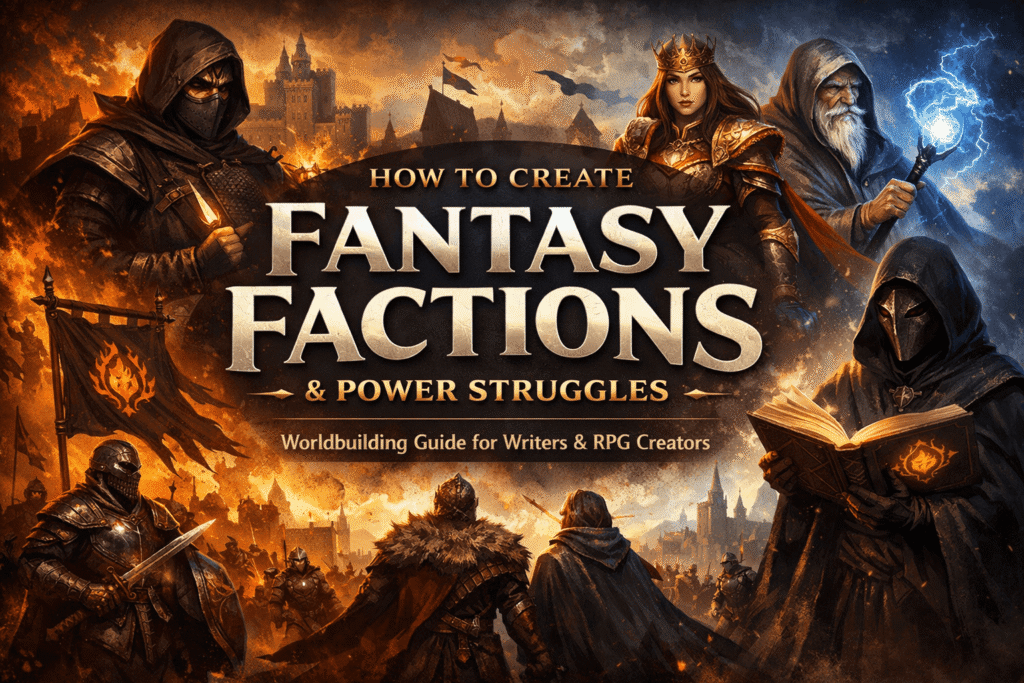
Previous
Next
Share the Post:

Related Posts

fantasy creature design

How to Create Fantasy Creatures That Fit Your World

Read More
March 13, 2026
fantasy city design

Fantasy City Design: How to Build Cities That Feel Alive in Your World

Read More
March 13, 2026

What is an AI roleplay assistant?

An AI roleplay assistant is a chat tool that helps you play scenes in-character. You write actions and lines, and it replies as the world or another character. The best ones can remember key facts, keep tone steady, and let you save characters so your story can continue later.

How to use AI for roleplaying if I am a GM with no prep time?

Start with one NPC and one goal. Write six scene lines, then run a short chat to test the NPC voice. Ask for a secret and a fear. Save the best lines. You will walk into your session with usable dialogue and hooks in minutes.

Why do AI chat roleplay platforms sometimes feel too “nice”?

Many tools try to end conflict fast. That can kill drama. Fix it by adding a cost. Ask for two bad options and pick one. Tell the character to resist, stall, or hide a truth. Conflict creates story, even in a short chat scene.

Best AI tools for chat roleplay for fantasy stories?

Summon Worlds fits fantasy creators who want creation plus chat. Character.AI fits people who want lots of public characters. Replika fits companion-style roleplay with voice calls. NovelAI fits long text scenes and story play. Pick based on your goal, then stop shopping and start playing.

What is the best way to compare AI RP tools online?

Run the same scene in two tools. Keep the same character rules and stakes. Check memory, tone, and pacing. If it forgets names quickly, drop it. If it wraps up conflict too fast, drop it. This test beats reading long review lists.
Read More
  • 1
  • 2
  • 3
  • …
  • 7
summon worlds ai art

SUMMON WORLDS IS THE PLATFORM FOR COLLABORATIVE WORLDBUILDING, CHARACTER CREATION, AND INTERACTIVE STORYTELLING

Join Our Community

Build Worlds. Meet Friends. Share Stories
D&D Character Art

Join thousands of writers, game masters, and artists sharing inspiration, tutorials, and Collaborative Worldbuilding projects!

YouTube

Tiktok

Reddit

Instagram

About Cookies | Terms and Conditions | Privacy Policy 

Copyright © 2025 OpenForge LLC. All Rights Reserved.

Back To Top