World Of Dragon's End
Locations
Browse the public locations that belong to this world. Select a card to read more.
Public locations roster

Citadel of the Twelve
Rising majestically from the heart of the city for over a century, the Citadel of the Twelve stands as an enduring monument to noble power and governmental authority. Its imposing stone walls, reinforced through generations of careful restoration, have witnessed countless political maneuverings as the city's most influential aristocrats convene within its grand halls to determine the fate of thousands. The fortress operates with impressive efficiency, its corridors bustling with well-trained soldiers, attentive servants, and scribes who meticulously record the decisions that shape policy and commerce. Within these stalwart chambers, alliances are forged and dissolved with equal measure, while schemes of ambition and whispers of betrayal echo through tapestry-lined corridors. The Citadel remains the undisputed center of power, so thoroughly entrenched in the city's infrastructure that the common saying "All roads lead to the Citadel" reflects both literal geography and the inescapable influence of its noble council. Visitors and petitioners traverse these halls seeking favor, justice, or simply acknowledgment from those who hold the city's destiny in their hands. The fortress's reputation for stability attracts merchants, diplomats, and ambitious nobles alike, all recognizing it as the true seat where meaningful decisions are made. Its well-maintained battlements and organized guard rotations speak to a government confident in its position, though the constant presence of political intrigue ensures that danger lurks beneath the surface of civility and protocol.
View details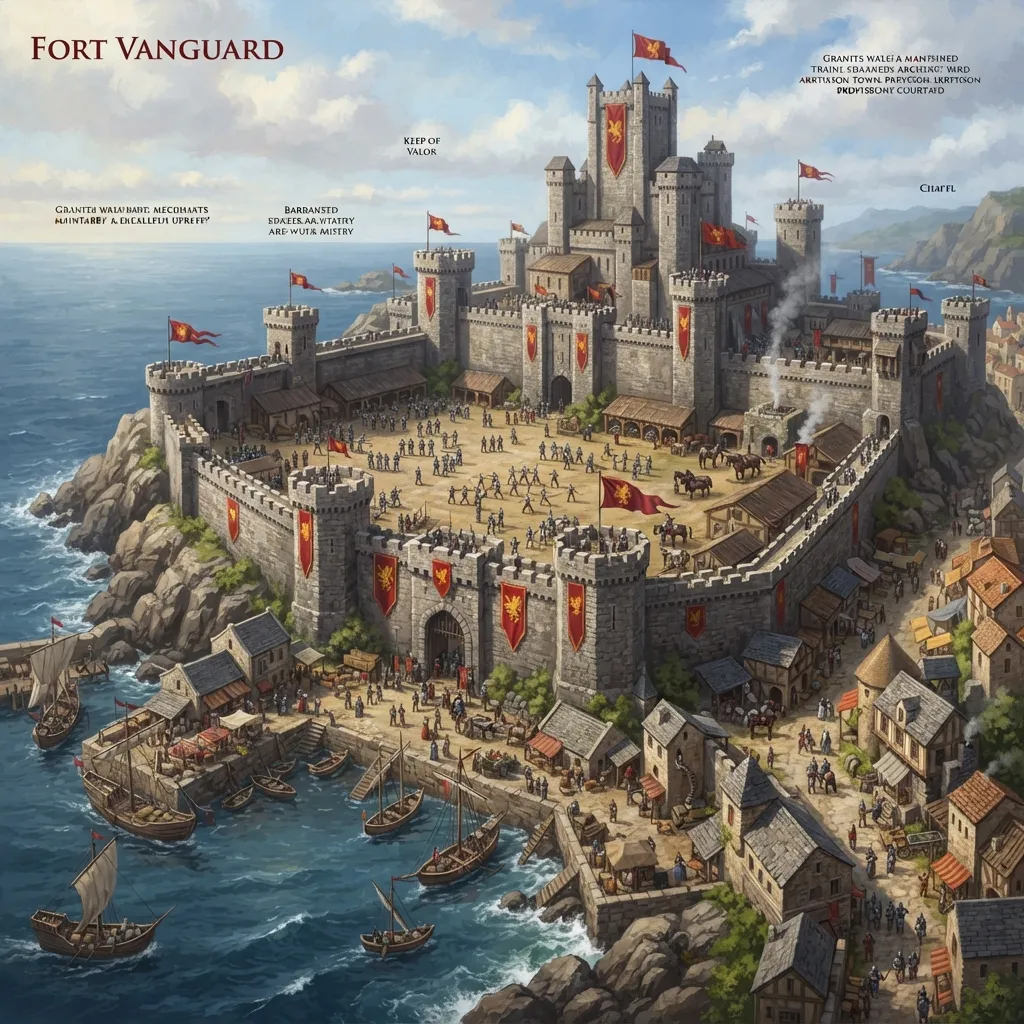
Fortress of the Red Guard
Rising from the heart of the city like a granite sentinel, the Fortress of the Red Guard stands as a testament to centuries of martial tradition and civic protection. Its imposing walls of grey stone, weathered by countless seasons yet unyielding, encircle sprawling courtyards where the sounds of training echoes daily—the clash of steel, the thunder of hoofbeats, and the rhythmic cadence of drilling guards. The fortress began as a modest castle during the early days of the city's founding, but successive rulers recognized the need for greater defensive capacity and expanded it methodically over the generations, adding barracks, stables, armories, and administrative buildings that now form a self-sufficient military complex. Today, the Red Guard maintains immaculate standards throughout the compound, with well-organized barracks housing hundreds of soldiers, stables sheltering elite cavalry mounts, and training grounds bustling with activity as new recruits are molded into disciplined protectors. Beyond the outer defensive wall lies a thriving garrison town where merchants peddle supplies to off-duty guards, smiths repair weapons and armor, and taverns fill each evening with the camaraderie of soldiers. The fortress serves not merely as a military installation but as the beating heart of the city's law and order, its towers flying the crimson banner of the Red Guard visible from distant streets. Visitors seeking audience with commanders or requiring official guard business navigate through guarded gates into an environment of purposeful efficiency and vigilant readiness, where the traditions of service run as deep as the stone foundations beneath their feet.
View details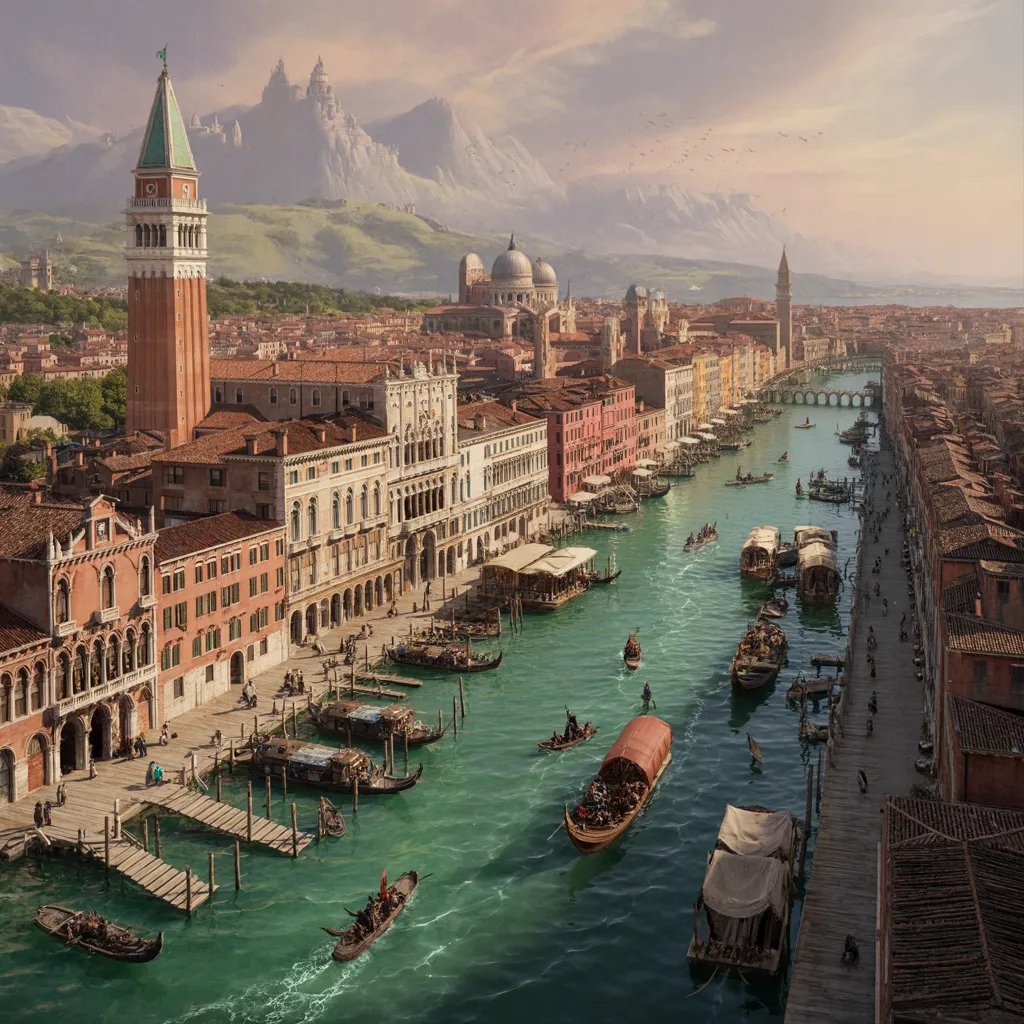
City of Filorenz
Filorenz stands as one of the continent's most venerable settlements, its distinctive russet and terracotta architecture rising majestically from the intricate network of canals and wetlands that define its geography. The city's foundations were laid over a millennium ago by merchants who recognized the strategic advantage of the marshland's natural waterways, transforming what could have been an impediment into the lifeblood of commerce. Today, elegant palaces and sprawling manors line the broader canals, their ornate facades reflecting centuries of accumulated wealth, while countless temples dedicated to various faiths stand as testaments to the city's cosmopolitan nature. Narrow streets and winding squares connect countless workshops, markets, and inns where artisans and traders conduct their business with practiced efficiency, their goods flowing from across the known world. The convergence of the mighty Meridian River with the ocean has established Filorenz as an unparalleled trading hub, where merchant vessels from distant lands dock alongside river barges laden with inland treasures. The city's infrastructure of bridges, waterways, and carefully maintained pathways demonstrates generations of skilled engineering, allowing both foot traffic and commerce to flow smoothly through its quarters. A thriving population of merchants, craftspeople, scholars, and laborers maintains the city's bustling atmosphere, supported by well-established markets, guildhalls, and hospitality establishments. The marshland surrounding Filorenz requires constant vigilance and maintenance to preserve the delicate balance between habitation and nature, a responsibility the city has managed admirably throughout its long history.
View details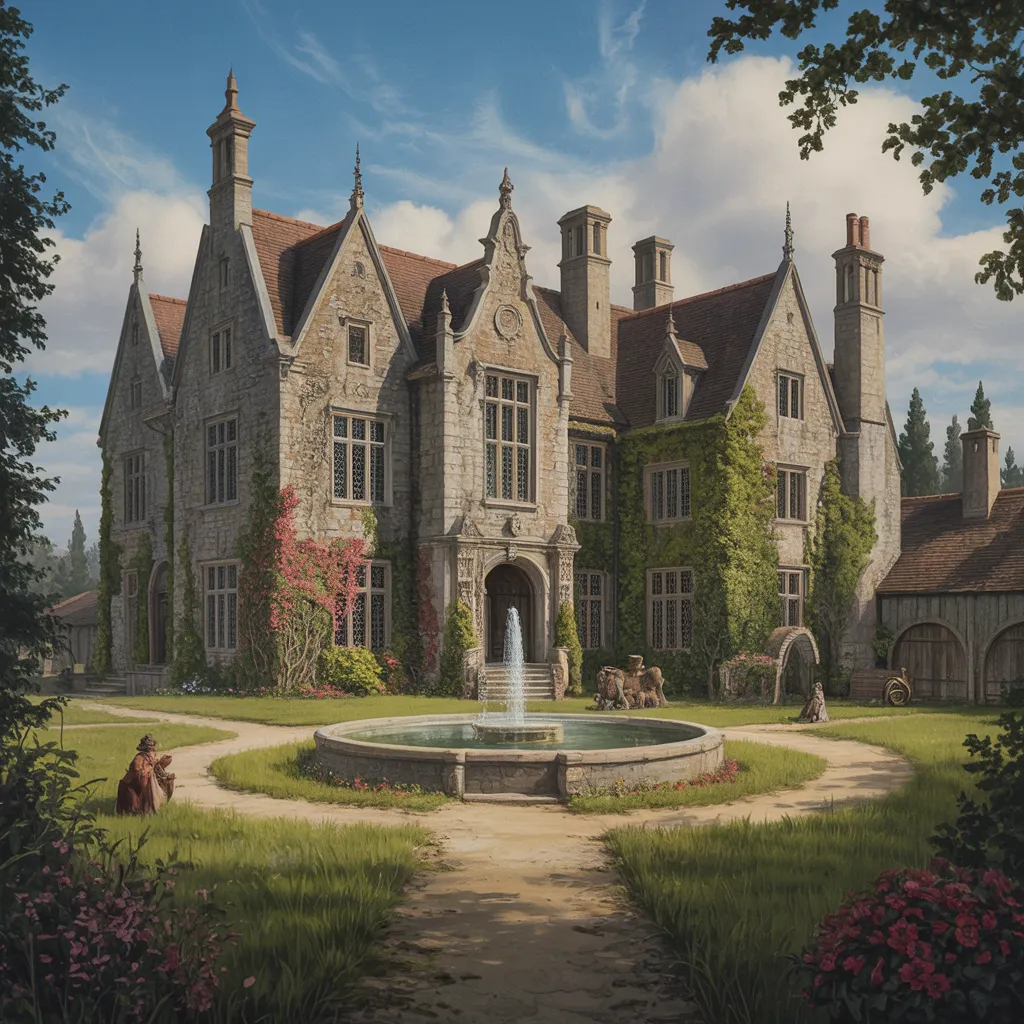
Steele'S Estate
Nestled on the western periphery of King's Gate, Steele's Estate stands as a testament to generations of merchant prosperity and refined living. The property is anchored by an impressive stone manor, its weathered facade bearing witness to centuries of careful stewardship by the Steele family. Within the protective embrace of sturdy stone walls lies an expansive courtyard that serves as the beating heart of the estate, where a graceful fountain provides both aesthetic beauty and practical water management. Surrounding the main residence are numerous craft buildings and well-maintained stables, reflecting the estate's historical role in supporting both artisan endeavors and an impressive collection of horses. Beyond the courtyard walls, carefully cultivated orchards and ornamental gardens flourish, their seasonal bounty and colorful blooms attracting visitors and providing sustenance year-round. The current master, the elderly Franklin Steele, maintains the traditions established by his ancestors, operating the estate as a beacon of charitable work and community support. His retainers—skilled craftspeople, gardeners, and household staff—preserve the meticulous standards that have defined Steele's Estate throughout its storied existence. The combination of architectural grandeur, productive lands, and the family's deep commitment to peace and benevolence has earned the estate a reputation as one of King's Gate's most respected and welcoming noble properties. What began as a merchant's holding has evolved into a symbol of stability and generosity within the region.
View details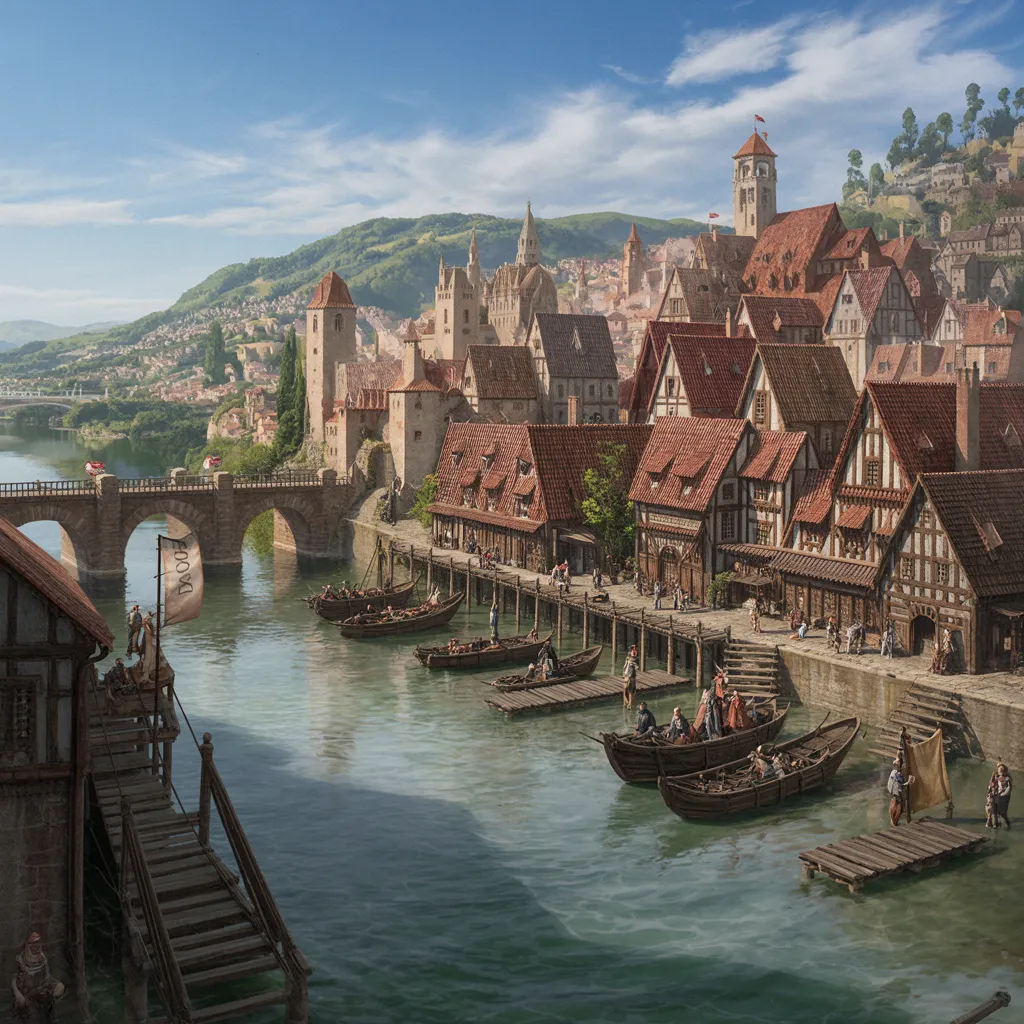
King's Gate
King's Gate stands as a magnificent testament to commerce and diplomacy, sprawling across both banks of the Meridian River amid the gentle hills of the Midlands. The city's distinctive architecture blends sturdy timber frameworks with pale stone foundations, while countless terracotta-tiled roofs create a warm, unified aesthetic across the skyline. A grand arched stone bridge, the engineering marvel known as the Crown's Span, connects the two halves of the city and serves as the symbolic heart of King's Gate's identity. The riverbanks bustle with activity—warehouses line both shores, their doors perpetually open to merchant caravans, while numerous docks accommodate trading vessels that navigate the Meridian's commerce routes. Towering stone manors belonging to wealthy trading families and diplomatic envoys dot the city's quarters, their elegant facades reflecting the prosperity that has flourished here for generations. King's Gate earned its reputation as a neutral ground when the Empire of Valdor and the Confederacy of Asthenmere, facing mutual destruction through prolonged conflict, chose to negotiate their historic peace accords within these walls rather than continue their ruinous war. This pivotal moment transformed the city into a sanctuary for commerce, espionage, and cultural exchange, where merchants from both realms conduct business alongside diplomats, spies, and adventurers seeking fortune or information. Today, King's Gate thrives as a cosmopolitan hub where the rules of neutrality are fiercely maintained, ensuring that both kingdoms benefit equally from the wealth and knowledge flowing through its streets.
View details
The Sand Strider
The Sand Strider stands as one of the most recognizable vessels along the Meridian River, a sturdy barge stretching thirty feet in length with a distinctive low-slung profile that allows it to navigate both shallow tributaries and deeper channels with remarkable ease. Built from aged timber harvested decades ago from the forests beyond the Dragonbone Mountains, the vessel bears the weathered character of a ship that has earned its place in regional maritime history through tireless service. Captain Samuel Berros has commanded this floating trading post for the past ten years, establishing himself as a trusted merchant whose reputation for fair dealings has made the Sand Strider a welcome sight in river settlements from the mountain headwaters all the way to the coastal ports of the southern sea. The boat's central section houses modest cabins where the captain and crew reside during their lengthy trading voyages, while the expansive deck above serves as a towering marketplace laden with goods ranging from exotic spices harvested in distant lands to practical cookware and finely-crafted weapons. Propelled by a combination of oars manned by experienced sailors and modest canvas sails that catch the river winds, the Sand Strider moves with surprising grace despite its heavy cargo load. Over its decade of operation, the vessel has become more than mere transportation—it serves as a floating hub of commerce and culture, connecting isolated river communities to broader trade networks and bringing news of distant events to those who dwell along the Meridian's banks.
View details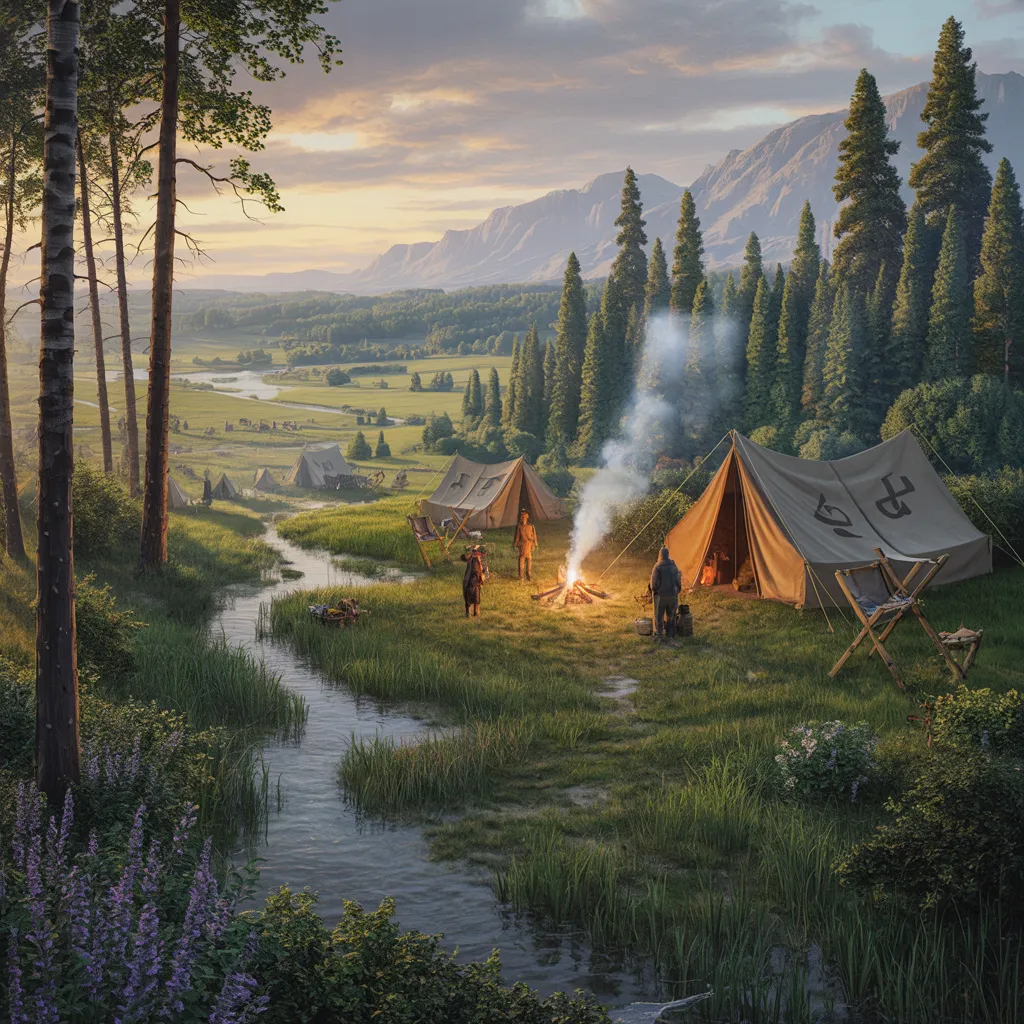
Hunter's Rest
Nestled within the expansive Battle Plains of Meridian lies Hunter's Rest, a verdant sanctuary of towering deciduous trees that stands as the most significant wooded expanse across the otherwise open grasslands. A gentle, meandering stream winds through the heart of the grove, providing fresh water and sustenance to the hunters and traders who converge at this legendary encampment throughout the seasons. The clearing is dotted with an array of canvas tents and rustic lean-tos, their weathered frames bearing testament to countless expeditions and harsh weather endured over generations. Smoke from numerous campfires curls lazily through the canopy, creating a perpetual haze that can be spotted from miles across the plains, serving as a beacon for weary travelers. Tanning racks line the perimeter of the settlement, where hides and furs are meticulously processed into valuable goods that fuel the region's economy and reputation for quality craftsmanship. The camp operates as an open haven for all who seek respite, commerce, or camaraderie, welcoming adventurers, merchants, and wanderers with equal hospitality. However, those who arrive with ill intent or bring violence and danger to the community find themselves swiftly and firmly expelled from the grove. The hunters who call this place home maintain a code of honor that has preserved Hunter's Rest as a neutral ground where disputes are settled through dialogue rather than bloodshed. Over the years, the location has evolved from a simple hunting ground into a thriving hub of trade, storytelling, and cultural exchange that defines the spirit of the Battle Plains.
View details
Battle Plains Of Meridian
The Battle Plains of Meridian stretch across hundreds of leagues as a sprawling expanse of undulating grassland, where verdant hills roll gently beneath an ever-changing sky. The mighty Meridian River carves its way through this landscape like a silver thread, flowing southward from the snow-capped peaks of the Dragonbone Mountains before eventually emptying into the distant Everlast Sea to the south. Scattered throughout the plains are crystalline lakes that catch the sunlight, alongside groves of ancient oak and willow trees that provide shelter from the elements. This terrain has witnessed countless conflicts throughout the ages—from the legendary Great Culling when great wyrms descended upon human armies, to the bitter feuds between rival kingdoms that once vied for dominance over these lands. The scars of these historical battles remain etched into the very earth, with certain valleys and ridges still bearing the names of famous sieges and confrontations. Today, the plains remain largely wild and untamed, populated primarily by herds of grazing beasts and predators that have reclaimed much of the territory. Despite the dangers posed by both wilderness and history, a hardy few communities have established themselves here, their inhabitants drawn by the land's natural resources and haunting beauty. The ever-present wind carries the whispered memories of fallen warriors across the grasslands, while golden sunlight filters through the perpetual cloud cover, casting the entire region in an ethereal, timeless glow.
View details
Dragonbone Mountains
Traveling north up the Meridian River will lead you to the Dragonbone Mountains that form a formidable spine across the continent, their peaks eternally crowned with snow and ice that gleams brilliantly in sunlight. Between these towering summits lie verdant valleys teeming with ancient forests, where crystal-clear streams cascade down rocky slopes and sustain ecosystems of remarkable biodiversity. Scattered throughout the range are numerous volcanic peaks, some still bearing signs of geothermal activity, their slopes scarred by ancient lava flows and fumaroles that release wisps of sulfurous steam. The most distinctive and haunting feature of the mountains, however, is the abundance of colossal dragon bones that protrude from the earth and mountainsides—bleached white by decades of exposure, these skeletal remains serve as grim monuments to a cataclysmic conflict long past. During the era known as the Great Purge, human kingdoms launched a coordinated assault against the dragon populations that had made these mountains their domain, resulting in devastating warfare that reshaped the landscape itself. The bones scattered across the terrain represent countless dragons slain during this brutal campaign, transforming the mountains into a macabre ossuary that reminds all who travel here of the dragons' former dominion. Yet despite the apparent totality of this extinction, local inhabitants and experienced mountaineers speak in hushed tones of rumors suggesting that some dragons may have survived the purge, dwelling in hidden caverns or remote peaks beyond the reach of their ancient enemies. These whispered legends persist among scholars and adventurers, fueling speculation about what secrets the highest and most inaccessible peaks might still conceal.
View details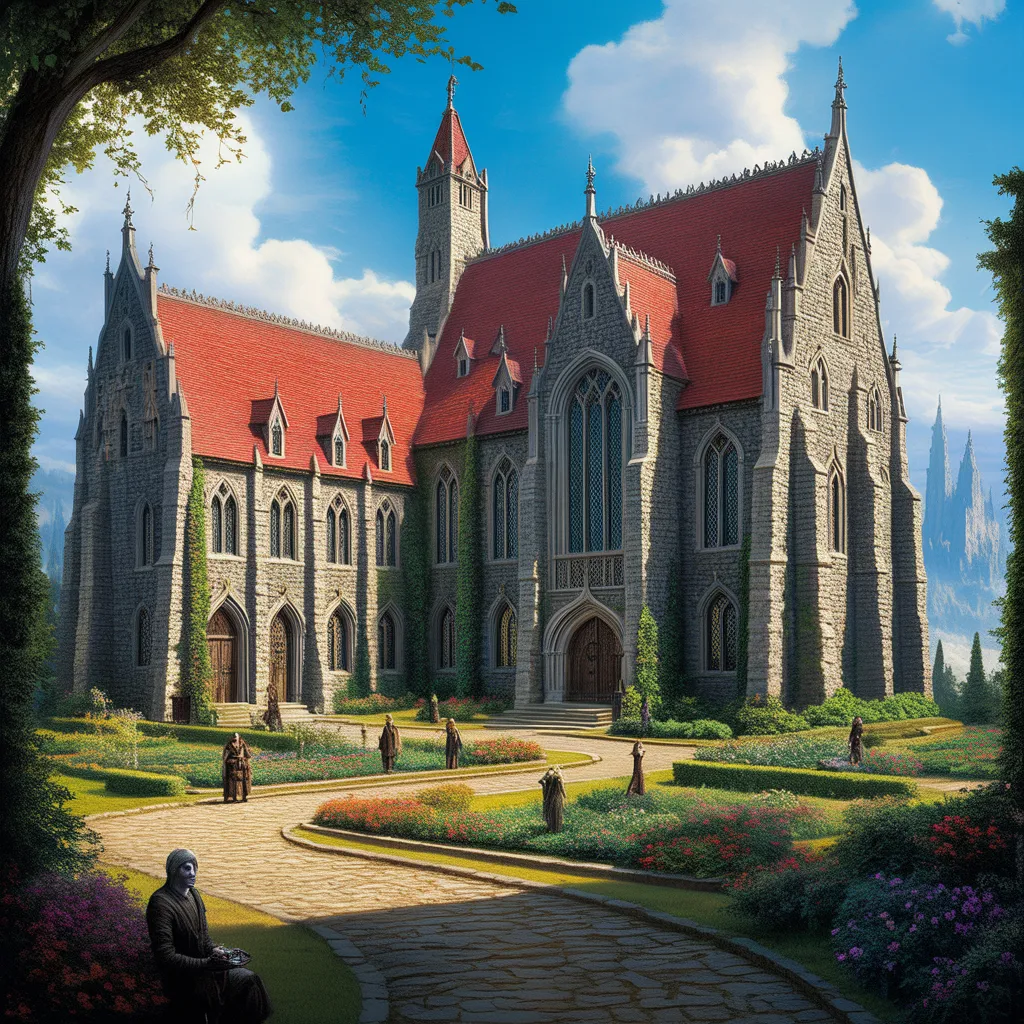
Grand Council Hall
The Grand Council Hall stands as the imposing centerpiece of Squire's Cross Ferry, a magnificent structure of dressed stone that has dominated the city's heart for decades. Its distinctive red slate roof, steeply pitched against the region's frequent rains, creates a striking silhouette visible from nearly every quarter of the city. The building's architecture emphasizes verticality, with soaring towers that punctuate the skyline and tall, narrow windows that seem to pierce the thick stone walls like watchful eyes. Massive wooden doors, reinforced with iron bands and carved with the seals of the founding families, provide the primary entrance to this seat of power. Within the last decade, elaborate garden courtyards have been added to the structure, ostensibly as spaces for civic reflection and noble gatherings. However, these additions have coincided with troubling rumors of embezzlement, as members of the ruling council have allegedly diverted substantial sums from the city treasury to fund these expansions and personal enrichments. The grand council chamber remains the official venue where investigations are conducted and policies debated before the assembled representatives, all conducted with the appearance of transparency and democratic process. Yet beyond the ornate halls and beneath the foundations themselves, a darker reality persists in the labyrinthine back rooms and cellars, where whispered conversations, coercive interrogations, and morally questionable dealings occur far from public scrutiny.
View details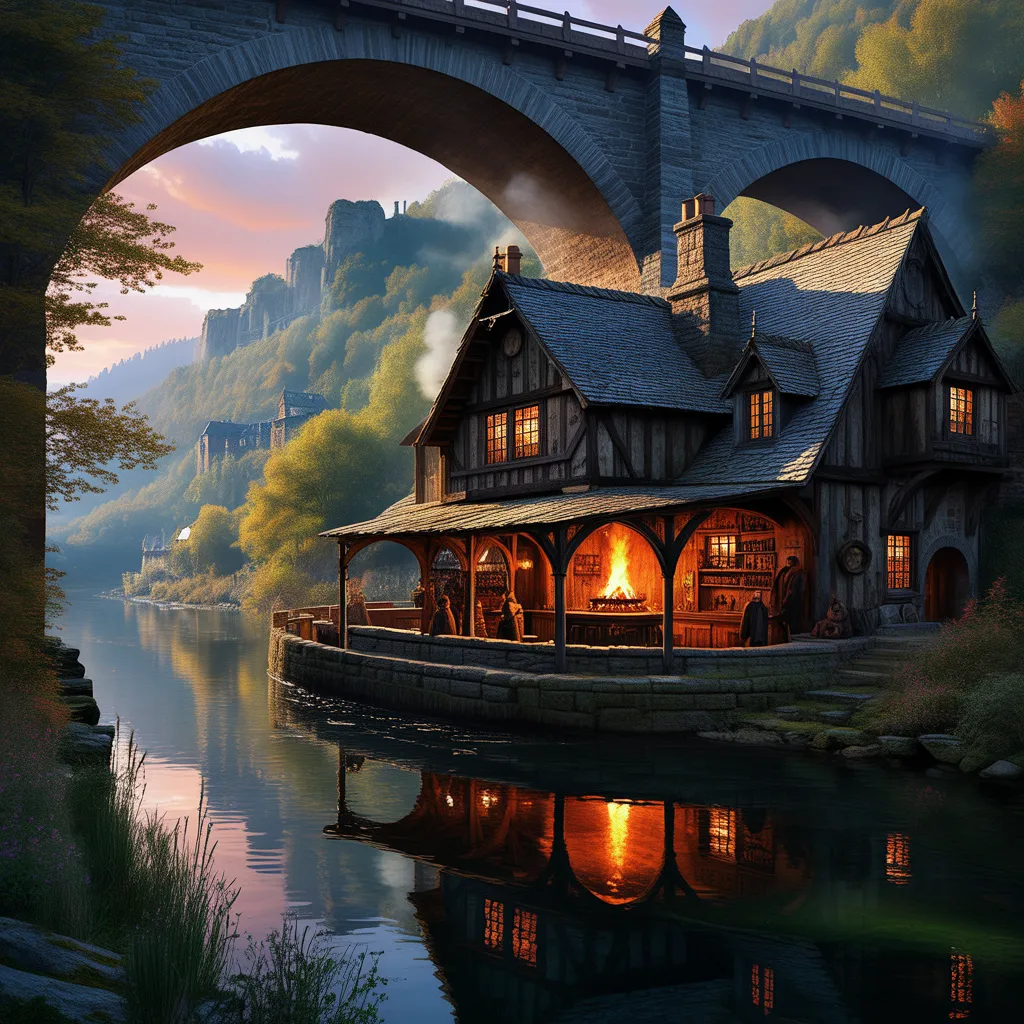
Bridgegate Tavern
In Squire's Cross Ferry the Bridgegate Tavern stands as a weathered fixture along the river docks, its modest single-story structure nestled directly beneath the towering stone arches of the grand bridge that spans the waterway. Once notorious as a den of criminal enterprise and unsavory dealings, the establishment has undergone a quiet transformation over the past several years, gradually earning its reputation as a sanctuary for ordinary citizens seeking refuge from the city guard's oppressive enforcement. The tavern's interior maintains an inviting atmosphere despite its age, with well-maintained wooden floors and tables that speak to careful upkeep, while large windows perpetually shrouded in smoke hint at the constant activity within. A cheerful hearth radiates warmth throughout the common room, providing comfort against the damp river air that seeps through the tavern's aged walls. Behind the long bar, Phineas serves both food and drink to a diverse clientele who value discretion and anonymity above all else. The tavern's true significance lies in its hidden depths—a cellar level conceals a secret passage that connects to a concealed barge moored along the riverbank, facilitating the quiet departure of those seeking to escape the city's authorities. This clandestine operation has become the Bridgegate's most valuable asset, allowing it to serve as a crucial waystation for fugitives and refugees navigating the treacherous politics of urban life. The tavern has thus evolved from a lawless haven into something far more essential: a lifeline for those caught between injustice and survival.
View details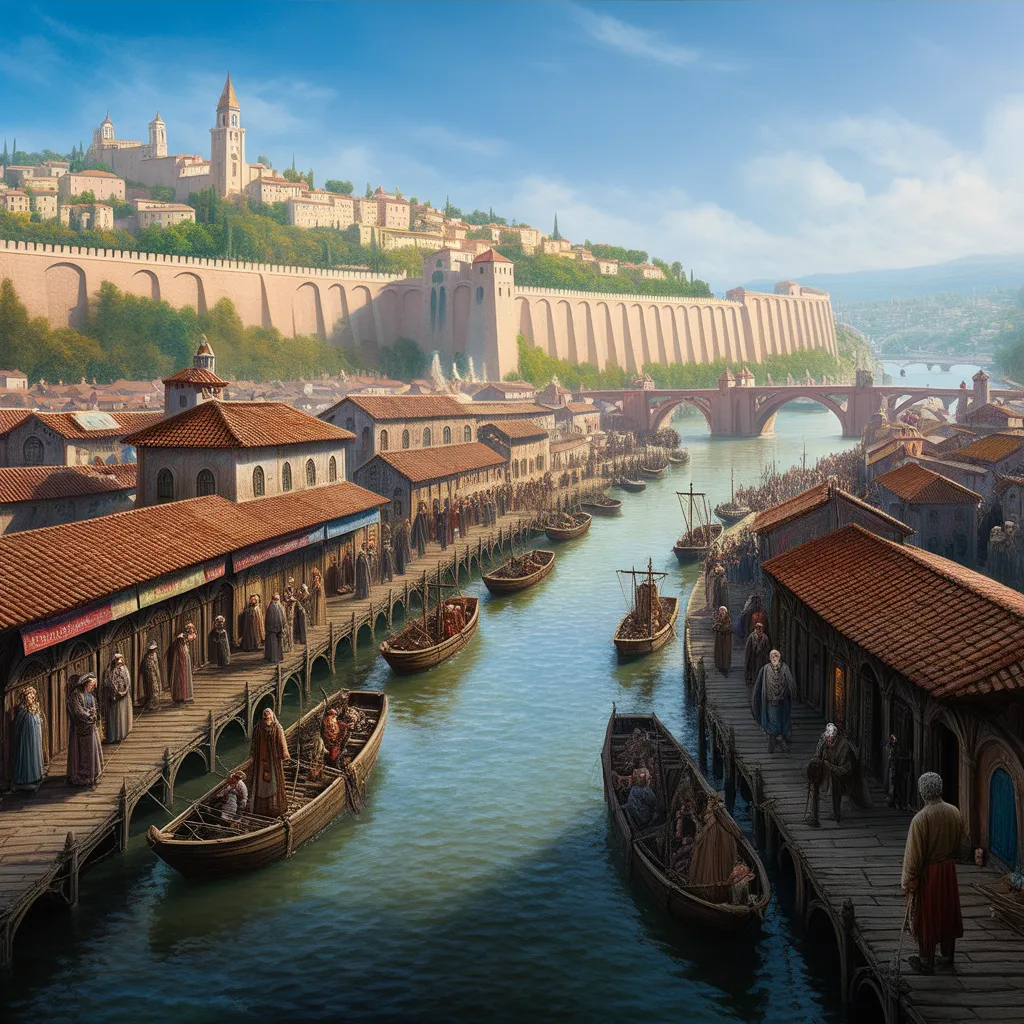
Squire's Cross Ferry
Squire's Cross Ferry stands as the preeminent settlement of the western territories, a sprawling walled city that has flourished along the banks of the Meridian River for generations. The city's origins trace back roughly a century to a military encampment established by frontier soldiers seeking to secure the western passes, though it has since evolved into a thriving commercial hub that rivals even the great capitals of the eastern realms. The river that bisects the city serves as its lifeblood, supporting a bustling economy centered around riverboat trade and commerce, with numerous docks lining both banks where merchant vessels and transport barges arrive daily laden with goods from distant lands. A magnificent arching bridge of pale stone spans the water's width, serving as both a critical infrastructure link and an iconic symbol of the city's engineering prowess and prosperity. The urban landscape features tightly clustered neighborhoods of sturdy stone construction, with residences, inns, and taverns displaying distinctive red slate tile roofs that have become characteristic of the region's architectural style. Beyond the protective walls lies a patchwork of productive farmland that sustains the city's growing population and feeds the countless travelers passing through its gates. The city derives its name from a legendary squire who made the ultimate sacrifice defending his mortally wounded knight during the settlement's earliest and most perilous days, an act of valor that transformed a simple military camp into a beacon of civilization in the untamed west.
View details